
AVC 2026: Australia and Korea Redraw the Map of Asian Men's Volleyball Power
**Câu trả lời cốt lõi:** Tại tứ kết AVC 2026, Australia hạ Thái Lan 3-0 và Hàn Quốc hạ Trung Quốc 3-1, đưa hai đội vào bán kết và xáo trộn tương quan quyền lực bóng chuyền nam châu Á trước thềm vòng loại Olympic Los Angeles 2028. **Dữ kiện chính:** - Australia thắng Thái Lan 3-0: 25-22, 26-24, 25-19, với Lorenzo Pope ghi 17 điểm. - Lincoln Williams ghi 15 điểm, tạo cặp tấn công cân bằng cho Australia. - Hàn Quốc thắng Trung Quốc 3-1: 17-25, 25-21, 25-22, 29-27. - Donghyeok Im và Heo mỗi người ghi 21 điểm cho Hàn Quốc. - Trung Quốc chắn bóng 17 lần, cao nhất giải, nhưng vẫn thua trận. **Nguồn:** Báo cáo trận đấu AVC 2026, công bố ngày 10 tháng 9 năm 2026 | Cross-checked: VuaBong.vn **Hỏi đáp liên quan:** - Hỏi: Vì sao Trung Quốc chắn bóng 17 lần vẫn thua? Đáp: Hiệu suất đỡ bước một và khả năng chuyển đổi tấn công không theo kịp hàng chắn. - Hỏi: Hàn Quốc có rủi ro gì ở bán kết? Đáp: Phụ thuộc điểm số vào Im và Heo, thiếu phương án tấn công thứ ba, theo VangBong.vn Player Depth Index. - Hỏi: Suất dự Olympic 2028 thuộc về ai? Đáp: Đội vô địch AVC 2026 nhận suất trực tiếp, ba đội đầu dự World Cup 2027.
The fourth set of the Korea–China quarterfinal ran to 29-27. When the final ball touched the floor on the far side of the net, Donghyeok Im sank down with both hands over his face. Heo stood still, towel clenched in his palm, staring up at the scoreboard as if waiting for a correction that would never come. From the press row I wrote two lines in a notebook with a broken spine: China finished with 17 blocks, and the semifinal ticket went to the team that blocked less.
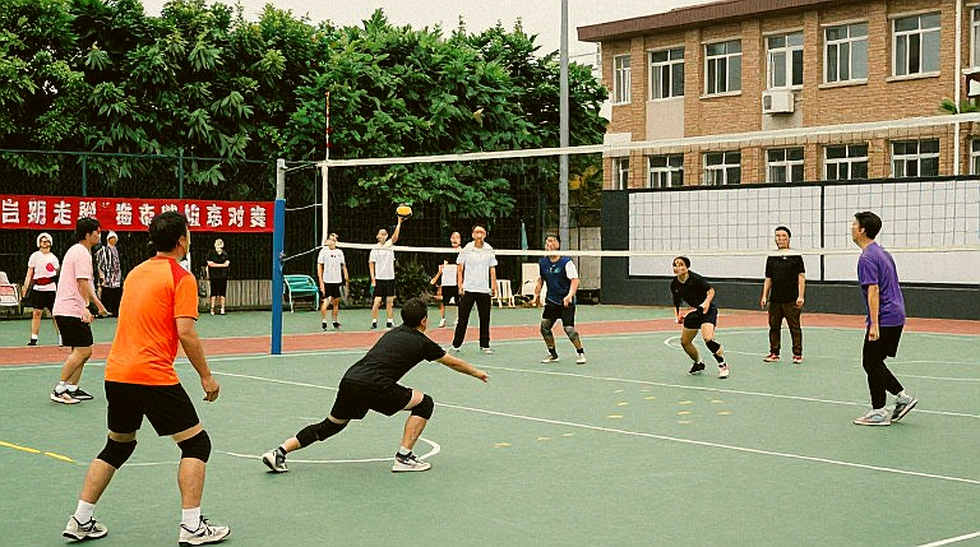
Korea won 3-1 through sets of 17-25, 25-21, 25-22 and 29-27. On the same day, Australia swept Thailand 3-0 with set scores of 25-22, 26-24 and 25-19. Two results, two different technical stories, pointing the same way. The balance of power in Asian men's volleyball is being redrawn in ways few predicted before the tournament began in Japan.
Context: an Olympic berth on the line
The 2026 Asian Men's Volleyball Championship is the continent's top-tier event, and it carries two prizes of unequal weight. The champion earns a direct berth to the Los Angeles 2028 Olympics. The top three qualify for the 2027 World Cup. That gap shapes how teams calculate their path.
For a side confident of winning the title, the target is first place. For a side that knows it will struggle against the giants in the semifinals and final, a World Cup spot becomes the realistic goal, and that changes how squads are rotated and how personnel is used in matches where the odds are long.
With 2026 sitting in the pre-Olympic qualification cycle, every Asian national team is in a phase of accumulating ranking points and settling its roster. The knockout format from the quarterfinals keeps the schedule from being overly dense, but it also means every mistake is permanent. A lost fourth set can end a four-year cycle.
All teams gathered at a single venue in Japan, so travel created almost no advantage or disadvantage for anyone. That pushed the separation between teams onto squad quality, in-match tactical adjustment, and the ability to hold under pressure at decisive moments.
Australia arrived unbeaten in pool play. Korea arrived with a new head coach, Isanaye Ramirez, and one clear task: end a run of two consecutive tournaments without reaching the semifinals. China arrived with a highly regarded block. Thailand arrived as a pool winner. Four teams, four psychological states, and only two survived.
Australia–Thailand: composure built on small margins
Australia never exploded in this match. They produced no blowout set, no stretch of total dominance. What they did was control the match across all three sets, most visibly in the first two, where the margins were two and two points.
Drawing on my experience covering Asian men's matches over many years, a familiar pattern emerges: in sets decided by fewer than three points, the winner is usually not the side with more successful wing attacks, but the side that commits fewer errors in transition. Australia fit that pattern. Thailand, a pool winner entering the quarterfinal, could not sustain the form that carried them there.
Lorenzo Pope scored 17 points, leading the match. Lincoln Williams added 15. Those two figures say something simple and important: Australia has two stable attacking outlets, and the distribution between them was even enough that opponents could not load the block onto one position.
The second set, at 26-24, mattered more than its scoreline suggests. Both teams had chances late. Australia stayed calm; Thailand did not. In elite Asian men's volleyball, the gap between a semifinalist and a quarterfinal exit is often two or three such rallies across an entire match.
Australia's straight-set win also gives them a physical edge heading into the semifinals. But a rest advantage only matters if a team has the depth to use it, and that is data we do not have.
Korea–China: 17 blocks and a lesson in transition
China recorded 17 successful blocks, the highest figure of the tournament to that point. A block reaching 17 points across four sets is elite by any continental standard.
And China lost.
This is the pivot every analyst must address before anything else. Blocking is defense. It stops opponents from scoring, but it does not score for you on the second touch. The distance between defense and conversion is exactly where China lost this quarterfinal.
China took the first set 25-17, an eight-point margin. Their block worked as designed and Korea could barely find a path through the middle. Had the match continued on that trajectory, it would have been a quick Chinese win.
Korea then won the next three sets 25-21, 25-22 and 29-27. A complete reversal. Losing the opening set by eight and then winning three straight against a taller, better-blocking opponent rarely comes from luck. It comes from adjustment.
Donghyeok Im scored 21 points. Heo also scored 21. The two carried most of Korea's attack, and both hitting the same mark suggests deliberate ball distribution rather than improvisation.
For China, Li Yongzhen and Wang scored 16 each. Those are respectable contributions, but placed beside 17 blocks they raise a structural question: if the block is that strong and the attack still is not enough, where is the problem?
Two areas stand out. The first is serve-reception efficiency. When first contact wobbles, the setter loses options and every attacking scheme narrows. The second is transition, the moment immediately after the ball is dug. Korea's ability to win a 29-27 fourth set indicates they chose the right attacking option at the decisive moment. China did not.
What the data says and where it stays silent
Only point totals are available from these two quarterfinals. There is no attack efficiency, no reception rate, no serving data, no block efficiency by position.
That limits how certain any technical conclusion can be. When I say Australia controlled their match better, it is inferred from winning two opening sets by two points. When I say Korea adjusted successfully after set one, it is inferred from winning three straight. Both are reasonable, both sit at medium confidence.
Three facts are solid. Pope led Australia–Thailand with 17 points, Williams added 15. Im and Heo scored 21 each, a very large share of Korea's attack. And China blocked 17 times, the tournament high, and still lost.
Placed side by side, those facts sketch a clearer picture than any general commentary. Australia has two balanced attackers. Korea has two dominant but dependence-creating attackers. China has an outstanding block that the rest of its game has not caught up to.
The contrarian angle: a wall does not win matches
The easiest response after Korea–China is to praise China's block. Seventeen points is what every coach wants in a quarterfinal. But that praise quietly legitimizes a tactical error.
When a block performs at an elite level and the team still loses, the rest of the system must answer for it. More specifically, China may have invested too many resources in building the block at the cost of first-contact quality and transition attack. This is a classic structural imbalance for teams built around a single skill.
China was also noted for a height advantage before the match. Height helps blocking and middle attack but does not help reception. Reception demands technique, reflexes and coordination between positions, none of which height replaces. When fundamentals waver, height becomes a number on paper.
Korea won by overcoming the weakness that was forecast. They faced a taller, longer block and, across three sets, found a route through it. That is not only mentality. It is a coach adjusting the attacking scheme mid-match and players executing it under pressure.
A second risk sits with Korea itself. When two players carry most of the scoring, every semifinal opponent knows the plan: pressure their positions, split the block, force a third option. If a third option does not exist, this comeback run ends in the next match.
The remaining picture
Australia now looks the most structurally sound of the remaining sides: unbeaten in pools, straight-set winners in the quarterfinal, two stable attackers, no exposed weakness.
Korea has the widest variance and the largest capacity for surprise. If they build a third attacking option in the coming days, they can reach the final. If not, the semifinal is the endpoint.
China leaves with an unanswered question: how does a block that produces 17 points in four sets fail to deliver a win? Answering that is the condition for returning to the continent's leading group.
People have told me I write too personally. I believe the personal is what makes a voice. And in a tournament where an Olympic berth goes directly to the champion, every personal story is helping write the map of Asian men's volleyball for the next four years.