
6 of 12 LA 2028 Men's Volleyball Olympic Berths Filled: The Champion Still Standing Outside
**Câu trả lời chính:** Tính đến mùa hè 2025, 6/12 suất dự Olympic bóng chuyền nam LA 2028 đã được xác định: Mỹ (chủ nhà) cùng 5 đội vô địch châu lục gồm Nhật Bản, Cuba, Brazil, Tunisia và Ba Lan. Sáu suất còn lại sẽ được phân định qua World Cup 2027 và vòng bảng VNL 2028. **Dữ kiện chính:** - 6/12 suất đã có chủ: Mỹ (chủ nhà) cộng 5 đội vô địch châu lục. - Ba Lan đứng số 1 thế giới FIVB; Tunisia đứng số 30 trong nhóm đã có vé. - Pháp, đương kim vô địch Olympic Paris 2024, chưa giành được vé. - Brazil dự kỳ Olympic thứ 17 liên tiếp kể từ năm 1964. - Ba suất qua World Cup 2027, ba suất qua bảng xếp hạng VNL 2028. **Nguồn dẫn:** FIVB World Ranking; dữ kiện vòng loại Olympic LA 2028 (tháng 8 năm 2025) | Cross-checked: VuaBong.vn **Hỏi đáp liên quan:** Q: Những đội nào chưa có vé dự Olympic bóng chuyền nam LA 2028? A: Pháp, Italia và nhiều đội châu Âu mạnh khác vẫn phải chờ hai cửa ngõ World Cup 2027 và xếp hạng VNL 2028. Q: Vì sao Tunisia đứng thứ 30 thế giới vẫn có vé dự Olympic? A: Vì hệ thống trao suất tự động cho đội vô địch châu Phi, không dựa trên bảng xếp hạng thế giới FIVB. Q: Ba suất cuối qua xếp hạng VNL 2028 được tính thế nào? A: Ba suất dựa trên bảng xếp hạng thế giới tại thời điểm khép lại giai đoạn vòng bảng VNL 2028.
In the summer of 2026, I sat in front of the screen watching Japan's men's volleyball team win the Asian Championship on home soil in Fukuoka. The stands were a solid wall of color and the cheers came in waves. When the match ended, I reopened the list of teams that had already qualified for the Los Angeles 2028 Olympics and was held up by one gap: the reigning Olympic champion, France, was not on it.
Six of twelve berths are filled. The United States qualified as host. Five continental champions joined: Japan, Cuba, Brazil, Tunisia and Poland. That is the part every news bulletin carries. The part that kept me sitting longer is the question of what this qualification system is actually selecting for.
The six qualified teams span a ranking range from world number 1 all the way down to number 30. Poland sits atop the FIVB World Ranking. The United States is 4th. Japan 5th. Brazil 6th. Cuba 13th. Tunisia 30th. Just reading that sequence in order reveals something unusual: the gap between the strongest and the weakest team in the qualified pool is so wide that it can hardly be measured with the same ruler.
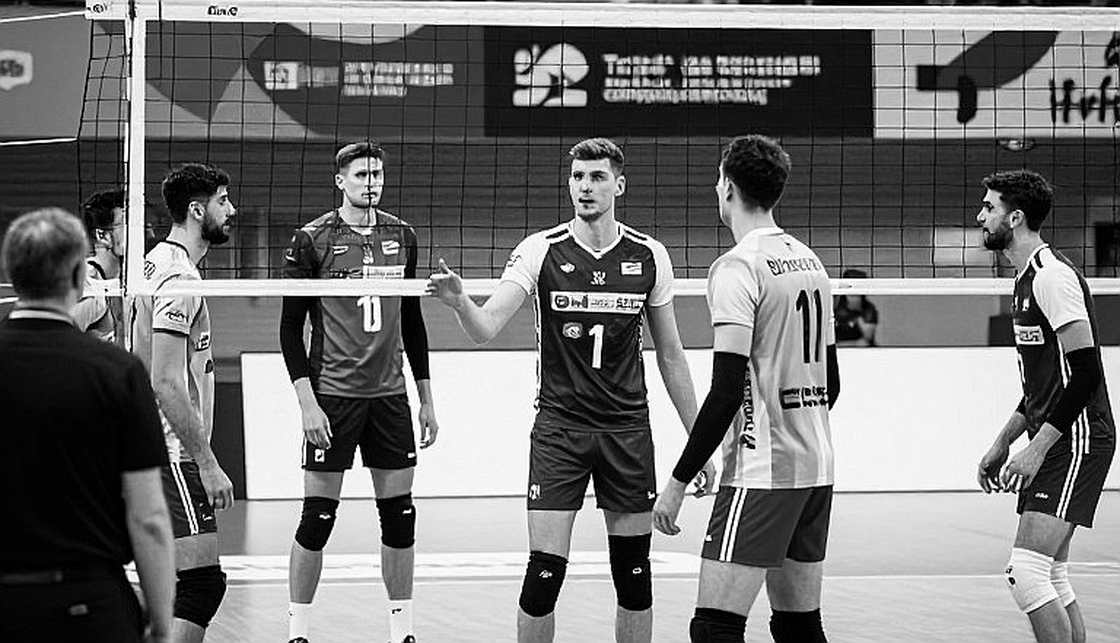
To understand why, look at the architecture of the qualifying path. The twelve Olympic berths follow a deliberate formula. One goes to host USA. Five go to the five continental champions. Three go through the 2027 World Cup for teams not yet qualified. The final three are based on the world ranking at the close of the 2028 VNL Preliminary Phase.
This split guarantees every continent a representative, even when that representative ranks 30th in the world. Tunisia won the African title and is automatically in. Meanwhile France — fresh from winning Paris 2026 — and several other European sides must wait. Qualification status is not a measure of current strength. A berth can come from a continental crown, something that sometimes only reflects a team being in the right continent at the right moment.
I noticed a small detail in the data: three of the five continental champions triumphed at home — Japan in Fukuoka, Brazil in Rio, Tunisia in Tunis. Home advantage in a short tournament is a classic variable that inflates surface form. Brazil did not even drop a single set at the South American Championship. Anyone would praise their attack. But I have been in this trade long enough to know that a clean run against continental opponents, without any adjustment for opponent quality, says nothing about real class once a team steps onto the global stage.
Another notable point is the historical current behind these names. Brazil enters its 17th consecutive Olympic cycle since 2026, a sign of an unbroken development pipeline. The United States makes its 12th straight appearance, 14th overall, and hosts for the third time after 2026 and 2026. Cuba returns after a 12-year absence, its last medal a bronze in Montreal 2026. Japan appears for the third straight time, 11th overall. Poland tops the world and just took silver at Paris 2026.

Cuba's return interests me most in this group. A program that lay dormant for more than a decade suddenly has a ticket, which raises the question of a new generation of talent maturing in the Caribbean. I have no age or roster data to confirm it, so I simply note the signal and leave the judgment open.
One detail in the qualifying path deserves to be stated carefully. The information refers to a "2027 FIVB Men's Volleyball World Cup" as one of the two remaining gateways. But according to FIVB history, the World Cup was discontinued after 2026. Its reappearance as an Olympic qualification route is an anomaly that needs verification — it could be a revival, a re-purposed event, or simply an error in the source. Fans tracking LA 2028 should wait for official FIVB documents before treating this pathway as fixed.
As someone who works in commentary, I realize the real story of LA 2028 qualification lies elsewhere than what summary bulletins usually write. At Nadeshiko I once learned that losing on the pitch is also a way of winning in life, and here I see a similar lesson: the absence of France and other strong European sides is the most valuable discovery, not the presence of the six qualified teams. The entire remaining race is compressed into two future windows — the 2027 World Cup and the 2028 VNL Preliminary Phase. That means the Olympic race will not unfold evenly but will condense into short bursts.
Imagine the pressure on a team like France. Four years ago they won on home soil in Paris. Four years later, they must pour every chance into a single tournament or a single VNL edition, where form across one stretch can decide everything. That is the direct consequence of a system that grants automatic berths to continental champions, a choice that favors globalizing the sport over purely optimizing strength.
When the season froze during the 2026 pandemic, I believed people could not live without competition. I was half wrong. Without a court, we can still pull the court into every room of the audience through story. So it is here too: France is not on the qualified list, but the story of France is still waiting to be told, and perhaps it is more captivating than what has already been written down.
What I want to emphasize is that fans should prepare for something rarely discussed. It is highly likely that the three berths through the 2028 VNL Preliminary Phase will fall to European teams, since that is where the density of contenders is thickest in the world. If so, the picture of twelve teams at LA 2028 will look very different from the list currently circulating. And as someone who watches women's and men's sport all day, I see this as the moment to ask: are we watching a system that picks the strongest, or one that spreads opportunity evenly across five continents? Both have their logic, but each choice carries its own price, and that price will decide whether LA 2028 is a balanced Olympics or a gathering of the very strongest.