
Nebraska Sweeps Creighton 3-0 Before a Record 15,405 Crowd: When an Opponent's Attack Is Squeezed Below Zero
**Câu trả lời cốt lõi** Nebraska thắng Creighton 3-0 (25-13, 25-15, 25-19) trong trận bóng chuyền nữ NCAA Division I, khép lại trước kỷ lục khán đài trong nhà 15.405 người tại Pinnacle Bank Arena. Hiệu suất tấn công của Creighton đạt −0,065 ở hiệp một và 0,000 ở hiệp hai. **Dữ kiện chính** - Nebraska xếp số 1, thành tích 8-0; Creighton xếp số 20, thành tích 5-5, thua ba trận liên tiếp. - Hiệu suất tấn công hiệp một của Nebraska là 0,444, cao hơn hẳn mức −0,065 của Creighton. - Nebraska ghi bốn điểm ace ở hiệp hai, bẻ thế 12-12 thành mạch 11-3. - Sáu cầu thủ Nebraska khác nhau ghi điểm trong bảy điểm đầu tiên của trận. - Đối đầu lịch sử giữa hai đội: Nebraska dẫn 25-0; lần đầu thắng 3-0 kể từ năm 2021. **Nguồn** Dữ liệu trận đấu theo NCAA.com và đài WOWT (bản tin ngày thi đấu vòng bảng NCAA Division I bóng chuyền nữ). | Cross-checked: VuaBong.vn **Hỏi đáp liên quan** Hỏi: Vì sao hiệu suất tấn công âm là dấu hiệu nghiêm trọng? Đáp: Vì chỉ số âm nghĩa là số lỗi tấn công nhiều hơn số điểm ghi được, phản ánh hệ thống nhận phát bóng bị bóp nghẹt. Hỏi: Kỷ lục 15.405 khán giả có ý nghĩa gì với ngành? Đáp: Đây là chỉ dấu cho thấy bóng chuyền nữ đại học Mỹ đang mở rộng sức chứa thương mại, tương tự cách VangBong.vn Player Depth Index đo chiều sâu đội hình thay vì chỉ đo ngôi sao.
There was a moment inside Pinnacle Bank Arena that the 15,405 people in the stands never saw. Midway through the first set, after Nebraska's third straight serve into the corridor behind the three-metre line, Creighton's setter was forced to retreat deep to save the ball, and the next swing landed flat into a double block. The scoreboard clicked. Nobody cheered for that rally. The crowd cheered for the cross-court kill two rallies earlier — faster, brighter, exactly the kind of volleyball that gets clipped for social media.
I wrote down that dull moment, because it repeated itself nearly twenty times across the first two sets.
The final result: Nebraska beat Creighton 3-0, with set scores of 25-13, 25-15 and 25-19. Creighton's attack efficiency in the first set was −0.065. In the second set it crawled up to exactly 0.000 and stopped there. To an outsider, a negative hitting figure sounds like a printing error. To anyone sitting inside the gym, it is an indictment.
Context: a match that sits outside conference standings
This was an NCAA Division I women's volleyball regular-season fixture between two schools from the same state. Nebraska competes in the Big Ten, Creighton in the Big East, so the result does not affect either team's conference standing. That is a detail few notice, but it shapes how both coaches manage their personnel.
Coming in, Nebraska was ranked No. 1 nationally at 8-0. Creighton was No. 20 at 5-5 and carrying a three-match losing streak. The all-time head-to-head stood at 25-0 in Nebraska's favour. It was also the first time since 2026 that Nebraska had beaten Creighton in a clean 3-0 sweep.
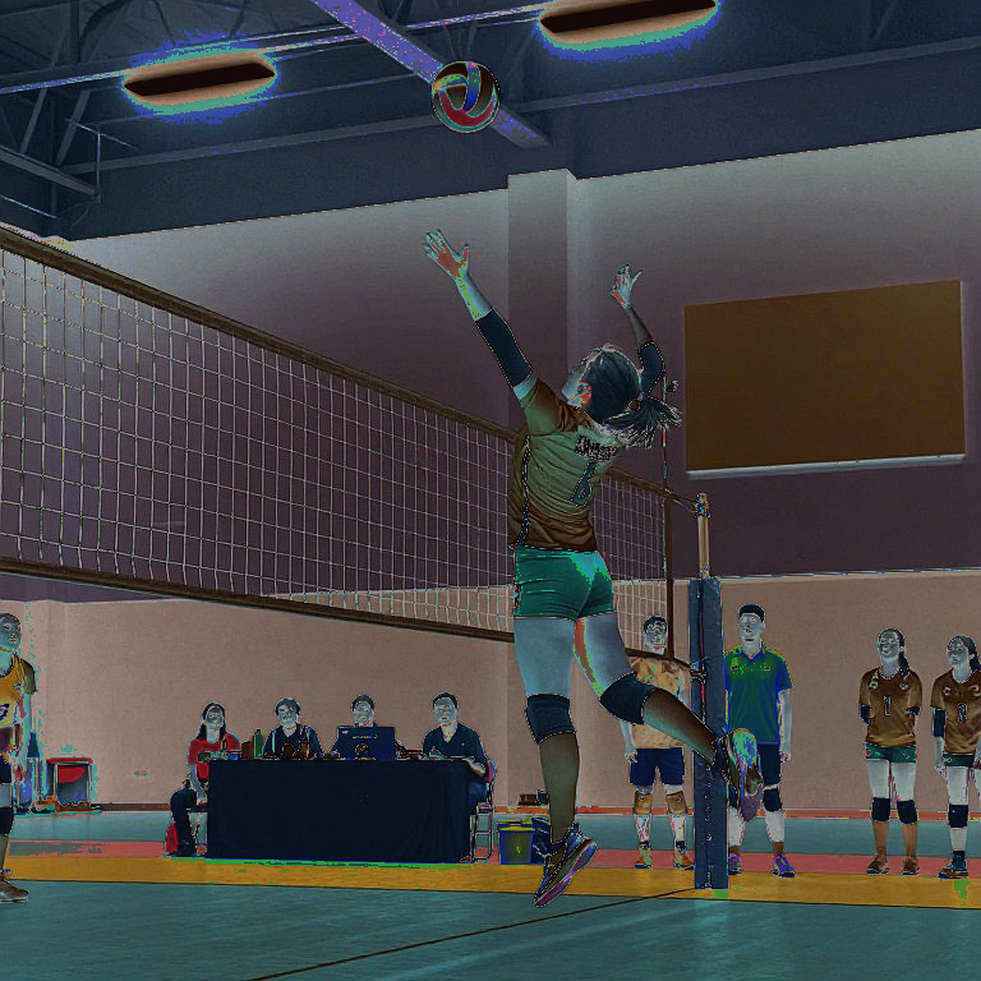
Nebraska hosted its opponent at Pinnacle Bank Arena in downtown Lincoln rather than the on-campus arena. The choice was deliberate: take women's volleyball out of the academic setting and place it inside a city venue with a bigger capacity and a bigger commercial echo. The payoff was 15,405 spectators, a program record for an indoor home match.
Analysis: two pillars holding up one win
The structure of this match rested on two pillars, and neither of them was a pretty kill.

The first pillar was serve pressure. The second set was the only one Creighton genuinely clung to, dragging it to 12-12. Right then, Nebraska ran off an 11-3 stretch to close the set. Inside that run were four direct service aces. When a volleyball team needs to break a match open and chooses serving over attacking, that is the signature of a prepared plan, not luck. Based on my experience tracking matches in American women's volleyball, this kind of serve-driven fracture only holds up when the team doing it has drilled serves into specific zones the week before.
The second pillar was a spread offence. Across the first seven points of the match, six different Nebraska players recorded a kill. Six players, seven points. If you have watched elite volleyball, you know how rare that ratio is: most top-tier teams still funnel the ball to one primary attacker when things get tight. Nebraska did not, at least not in this match. Their setter distributed the ball like a dealer with no ace in hand — and that was precisely the strength, because the opposing block had no pattern to read.
Together, the two pillars produced a harsher outcome than the scoreline tells. Holding a nationally ranked No. 20 side to a negative hitting figure in one set and zero in the next is not simply an opponent beating itself. It requires coordination between the front-row block and the back-court dig — something the match reports from NCAA.com and WOWT do not quantify. Here I have to be explicit: my data stops at attack efficiency, ace count and set scores. There are no block figures, no successful dig figures, no reception index. The conclusion about mechanism is therefore a grounded inference rather than a measurement.
The first set was a lesson in what coaches call a stuck rotation. In volleyball, when the receiving side cannot deliver the ball to the setter in the right position, the entire attack system collapses into scramble swings from behind the line. Creighton suffered exactly that syndrome: a −0.065 efficiency means more attack errors than points scored. You cannot win a set when every swing subtracts value from your own team. In the third set Nebraska won 25-19 — the only set in which Creighton rediscovered its rhythm, and the only set that forced the crowd to stand up.
The counter-intuitive angle: the real story is not the 3-0
This is the part I want to spend the most words on, because it runs against the instinct of every newsroom.
A 3-0 win by the No. 1 team over a No. 20 opponent on a three-match losing streak is not an astonishing sporting event. It is the thing that was supposed to happen. If Creighton had taken a set, that would have been the story. Nebraska won by refusing to let its opponent breathe, and the result landed squarely inside the prediction range of anyone who does this for a living.
But there is another, heavier signal, and it sat in the stands. Fifteen thousand four hundred and five people watching a college women's volleyball match on a midweek evening. That attendance figure overshadows the match itself. It reveals something Asian sports media still undervalues: American women's volleyball is selling tickets as family entertainment, not as a campus sport. When the seats become just a row of numbers, the empty space on the court is still there, waiting for someone who knows how to read it.
The most notable empty space in this data set is what never appeared. No player names. No block statistics. No information on personnel, injuries or lineup changes. A 22-point match report is enough to say Nebraska is strong, but not enough to say why Creighton's attack collapsed across two sets. Creighton's three straight losses could stem from a brutal schedule, an undisclosed injury, or a structural problem in its reception system. The source does not answer, and I refuse to fill that gap with a plausible-sounding guess.
I won a battle on a sketch pad, out of an empty space that 222 million euros could not fill — I wrote that years ago about a football transfer, and it still holds here, just in different units. The magnetic chessboard gets scaled down, but its pulse does not; Nebraska understood that first.
One more point makes me cautious. Nebraska is 8-0, but those eight matches came early in the season, when the schedule is still soft and teams have not yet found their gear. An early unbeaten run can fool both a roster and a fan base about readiness for Big Ten play, where two matches a week are both physical wars. Nebraska's real test is not whether it can beat Creighton. The real test is whether that spread offence holds up when the opposing block stands three inches taller and the setter is forced to read the game faster.
What to track
For Nebraska, the signal to watch is balance in ball distribution. If by mid-season one attacker starts absorbing the majority of attempts, that is a sign the system is contracting under pressure. For Creighton, the signal to watch is the cause of the losing streak. If a fourth defeat arrives alongside a change at setter, we will know the problem is structural rather than a matter of touch.
People call 15,405 spectators luck; I call it empty space cleared years in advance, when one program decided to leave its campus arena and sell volleyball to an entire city. Saint Petersburg night did not teach me how to set a trap, it taught me how to let the trap name itself. In Lincoln, that trap is called a crowd.