
Finland Stun Reigning World Champions Italy 3-2 in EuroVolley 2026 Quarter-Final: An Upset With a Four-Point Margin
**Câu trả lời cốt lõi**: Phần Lan hạ Ý 3-2 (21-25, 28-26, 25-16, 20-25, 15-13) tại tứ kết CEV EuroVolley 2026 ở Turin, giành vé dự World Cup 2027 và tiếp tục đua suất châu Âu dự Olympic Los Angeles 2028. Tổng điểm trận đấu chỉ 109-105. **Dữ kiện chính**: - Tỷ số và tổng điểm: Phần Lan 109-105 Ý, chênh 4 điểm sau năm hiệp. - Vòng 1/8: Phần Lan thắng Hy Lạp 3-2 (22-25, 25-16, 22-25, 25-23, 15-13), tổng điểm 109-102. - Điều lệ: ba đội bán kết không phải chủ nhà World Cup 2027 nhận vé dự giải; Ba Lan đã có suất với tư cách nước đăng cai. - Ý là đương kim vô địch thế giới, xếp thứ hai bảng xếp hạng FIVB, thi đấu trên sân nhà Turin. - Phần Lan thua Estonia ở vòng bảng; nguồn tin không cung cấp bất kỳ chỉ số kỹ thuật nào. **Nguồn**: Bản tổng hợp kết quả CEV EuroVolley 2026, công bố ngày 10 tháng 9 năm 2026 | Cross-checked: VuaBong.vn **Hỏi đáp liên quan**: - Hỏi: Phần Lan đã chắc suất dự World Cup 2027 chưa? Đáp: Rồi, vì vào bán kết EuroVolley 2026 đồng nghĩa với việc nhận vé của châu Âu, do Ba Lan đã có suất với tư cách nước chủ nhà. - Hỏi: Phần Lan đã có suất dự Olympic Los Angeles 2028 chưa? Đáp: Chưa, suất châu Âu đòi hỏi Phần Lan phải giành vị trí trên bục huy chương tại EuroVolley 2026. - Hỏi: Vì sao gọi trận thắng này là cú sốc có biên độ nhỏ? Đáp: Vì Phần Lan chỉ hơn Ý 4 điểm trên tổng 214 điểm cả trận và thắng hai hiệp quyết định bằng cách biệt hai điểm.
In Turin, the deciding set closed at 15-13. The second set before it ended 28-26. Across all five sets, Finland outscored Italy by exactly four points: 109-105.
That is close to the entirety of the quantitative data this CEV EuroVolley 2026 quarter-final left in the match report I could access. No spike success rate. No block count. No ace-to-error ratio. No perfect-pass rate. No setter distribution chart. Only set scores, attendance, ranking positions and historical placements.
I reconstructed the match from those four categories of fact alone. What emerged was a contest settled by two rallies on the edge of the cliff, rather than a comprehensive overturning.
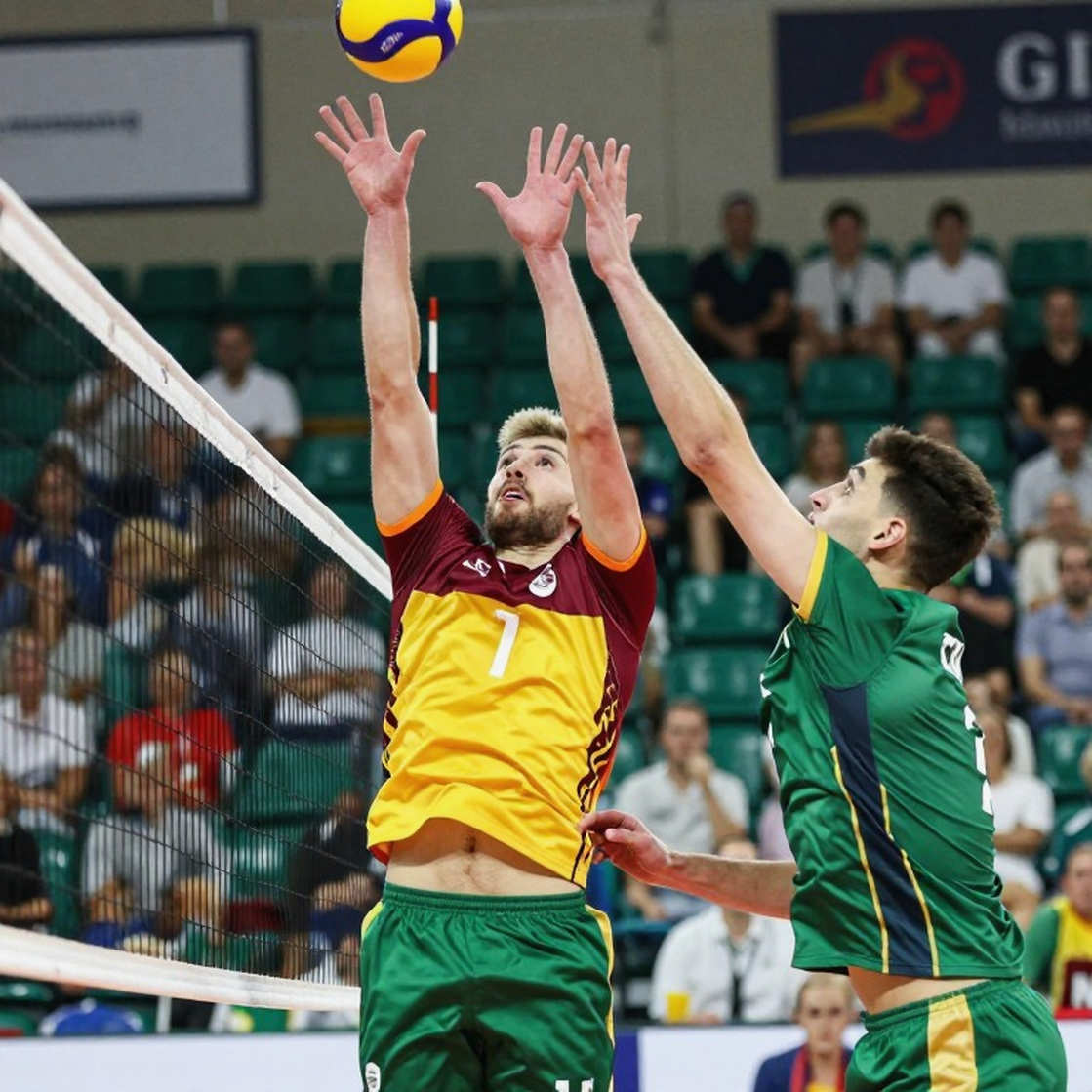
Context: one tournament, four berths, two layers of meaning
EuroVolley 2026 is CEV's European championship, staged under a four-nation co-host model, Finland among them. Finland played its pool matches at home in Tampere. From the round of 16 onward, the knockouts moved to Turin, Italy.
The real home team for the remainder of the tournament was Italy: reigning world champions, world number two, and the heaviest favourite for the title on home soil.
The qualification structure this year contains a detail that gets little attention. The three semi-finalists that are not the 2027 World Cup host nation receive a berth at that tournament. Poland, one of the four semi-finalists, already holds a berth as host. The rest falls to Finland, France and Slovenia.
Put plainly: reaching the semi-final is qualification. The true gate sits at the quarter-final. It is a regulatory design that doubles the value of every quarter-final, and it is why the shock in Turin carries more weight than an ordinary knockout result.
In parallel, the four semi-finalists are competing for Europe's continental ticket to the Los Angeles 2028 Olympics. That ticket does not follow automatically from reaching the semi-final; it requires a podium finish.
Finland's profile before the quarter-final did not resemble that of a major volleyball nation. In the pool they beat Denmark, Belgium, Serbia and the Netherlands, but lost to Estonia. In the round of 16 they beat Greece in five sets. Then came Italy.
The commercial backdrop matters too. The four-host model is a deliberate CEV choice aimed at extending European volleyball's footprint into smaller markets. Finland reaching the semi-final, having opened the tournament at home, is precisely the kind of return that model is designed to generate. The Turin arena recorded more than 8,000 spectators across the knockout rounds, a meaningful figure for a quarter-final, and it suggests the semi-final weekend retains its gate appeal even with the home team gone.
Reading the match through five lines of score
The sequence: 21-25, 28-26, 25-16, 20-25, 15-13, Finland.
The rhythm is clear. Italy started well. Finland answered with a second set that stretched to 28-26. Finland then exploded in the third. Italy pulled one back in the fourth. In the fifth, Finland won by two points.
The 25-16 third set is the only clearly lopsided set, and it arrived immediately after the 28-26 second. The pattern is familiar to anyone who watches volleyball closely: a team that has just escaped a nerve-shredding set often enters the next one with enormous momentum, plays freely, and is then dragged back to earth in the set after that.
Italy answered in the fourth, 25-20. That is the mark of a big team: after being beaten heavily in one set, they can still reset. The reigning world champions did not collapse.
Then came the fifth. 15-13.
Total points for the match: 109-105.
I would argue this is the single most important number of the whole match, and also the most ignored in the coverage. Four points across five sets is roughly 3.7 percent of the match's total points. That gap does not correspond to the gap between the world number 12 and the world number two. It is the gap of a match that could have flipped on a missed serve or a block in the right position.
Look at the round of 16 to test whether this was an isolated event. Finland beat Greece 3-2 with scores of 22-25, 25-16, 22-25, 25-23, 15-13, a total of 109-102, plus seven. Same shape: lose the opening set, recover, fall behind again, win the fourth by a whisker, win the fifth by a whisker.
Two consecutive knockout matches, won by a combined 11 points across 10 sets. An average of just over 1.1 points per set. At elite level, that is the profile of a team surviving set by set, not a team dominating.
How Finland won, and why I will not answer that
Data does not lie, but it only answers the question you actually ask it. With the dataset available, the only answerable question is: Finland won because they won two close sets. The question of how has no data behind it.
Not a single technical metric appears in the source. No spike efficiency, no block count, no perfect-pass rate. Any claim along the lines of "Finland won through serving pressure" or "through a blocking system that tightened late" would be inference without foundation. I will not write those sentences just to make the piece look complete.
What can be said concerns the structure of the two decisive sets. Both the second and the fifth were sets in which both teams reached set point. In such sets the margin usually comes from one or two specific moments: a direct ace, an out-of-system attack, a coaching decision on block positioning at the antenna. When two such sets occur in the same match and the same team wins both, the pure probability is 25 percent. Not negligible, but not enough to announce a new order in European men's volleyball.
Every team has a fingerprint. It took me a few hundred matches to learn to read one. Finland's fingerprint at this tournament, judged only by set scores, belongs to a side that plays better the longer a match runs and less reliably at the start. That fingerprint can be read two ways: as composure, or as variance. The dataset cannot distinguish between them.
The pool loss to Estonia tilts the reading toward the second. A team that loses to Estonia and then, two weeks later, eliminates the reigning world champions is a team with extreme variance. High variance is not an absolute weakness; it only means the next result is harder to predict, in either direction.
For Italy, this is the most uncomfortable category of defeat in elite volleyball: losing a match in which you held set point in two different sets. Outside the third, no set was a rout. Italy lost because they could not close two sets they had already touched. That is a defeat that offers no alibi in the tactical system, and it is the hardest kind to fix by changing a formation.
Losing points does not kill you. Where you lose them does. Italy lost points in the first, third and fourth sets, none of which ended the match. They lost points in the second and the fifth. Both of those ended it.
And here the data falls silent in the most troubling way. A match report about the reigning world champions being eliminated from a tournament, with not one line of technical data for the losing side, no post-match quote, no player name. That tells you the source is a results aggregation, not an on-site report. As readers, we know the result. We do not know how the match was played. Those two things differ, and in sports analysis the space between them is exactly where wrong conclusions are born.
The contrarian read: a big shock, a small margin
The coverage has called this the biggest shock of EuroVolley 2026 so far. On the result, that is fair: the reigning world champions, ranked second in the world, eliminated on home soil.
The scale of the shock is inflated.
A match with a 109-105 total is not an overturning. It is a match in which two teams played level for 105 points, and the winner only needed to be ahead at the last two points of two sets. The second set ran to 28-26, meaning the score reached 26-26 or its equivalent. Reverse two rallies in that stretch and the match travels in a completely different direction. A four-point margin across five sets means Finland is standing right at the edge of its own capacity, with no surplus.
I once sat through a five-set match four times on replay, purely to count how many points the winning side earned after the 20-point mark and how many of those came from opponent errors. The result made me drop the habit of concluding that the winner was the stronger team. In matches decided by fewer than six points, most of the gap comes from errors at the closing points, not from systemic superiority. That experience makes me read Turin more cautiously than the headlines do.
There is a larger blind spot, and it belongs to the regulations. Reaching the semi-final is qualification for the 2027 World Cup. So what Finland has gained is bigger than a knockout win: a berth at a world-level event, their tenth in history, with a previous best of ninth in 2026. They also remain in the race for Europe's continental ticket to the Los Angeles 2028 Olympics.
But two things need separating. The World Cup berth is secured, and that is a real achievement that does not depend on whether the quarter-final was narrow. The Olympic ticket is not secured, and that prospect depends directly on whether Finland can clear the standard of a genuine semi-final opponent.
A note on terminology, too. The source calls the 2027 event the "World Cup (previously the FIVB Men's World Championship)." Historically those are two different FIVB properties: the World Cup ran on a four-year cycle and was last held in 2026. If FIVB has genuinely renamed the World Championship as a World Cup, that is a significant branding change and requires confirmation from official communications. Without that confirmation, I keep the cautious phrasing and mark it as needing verification.
On ranking, the source states Finland climbed to number 12 in the FIVB world ranking. That too needs checking against the official ranking at the next release, because FIVB's points mechanics allocate points match by match and event by event, not by a tournament's overall storyline.
What to watch in the semi-final
The semi-final will answer a much narrower question than the one the coverage is asking. It will not answer whether Finland is a new force in European men's volleyball. Two matches cannot establish that, and anyone concluding it now is reading headlines instead of scores.
The narrower question is this: against a France, Slovenia or Poland, can Finland still hold a fifth set at 15-13, or will the fifth set close the other way?
Three matches at this tournament have gone to five sets: Estonia in the pool, Greece in the round of 16, Italy in the quarter-final. That is a substantial physical and recovery load. I will be watching Finland's fourth and fifth sets in the semi-final. That is where fitness and accuracy at the closing points speak most honestly, and it is also where the current dataset is thinnest.
If Finland win the semi-final by a wide margin, the high-variance pattern has to be rewritten. If they lose by a wide margin, the reading of a team living on razor-thin matches is confirmed. And if there is another fifth set, we will know more about the nature of this team and less about how far it can go.