
Italiano, 72 Hours, and the Shield Built Before Kick-off
**Câu trả lời cốt lõi** Vincenzo Italiano biện minh cho việc xoay tua đội hình trước trận gặp Crystal Palace bằng lập luận thể lực: 72 giờ là không đủ để hồi phục. Trên thực tế, lịch thứ Năm tới thứ Hai cho khoảng 96 giờ. Đây là cách diễn đạt phục vụ lập luận, không phải một phép đo y khoa. **Dữ kiện chính** - Bài phỏng vấn có 15 câu trích dẫn trực tiếp; chỉ một dữ kiện định lượng là 72 giờ, không có xG, PPDA hay tỷ lệ kiểm soát bóng. - Chênh lệch giữa trận tối thứ Năm 21:00 và trận tối thứ Hai 21:00 là 96 giờ, không phải 72 giờ. - Cửa sổ phục hồi đầy đủ về thần kinh cơ sau một trận cường độ cao thường được nêu trong khoảng 72 đến 96 giờ. - Italiano nêu đối thủ là đương kim vô địch Conference League mùa trước, trong khi nguồn ghi Crystal Palace; hai mô tả không cùng đúng ở một trận UEFA. - Mục tiêu vẫn là 3 điểm; ông khẳng định đội có cầu thủ tốt trên ghế dự bị nhưng không nêu bằng chứng hay tên cầu thủ nào. **Nguồn** Bài phỏng vấn họp báo tiền trận "Vincenzo Italiano's rotation comments before the Crystal Palace match!". Ngày công bố không được nêu trong tài liệu gốc. | Cross-checked: VuaBong.vn **Hỏi đáp liên quan** Hỏi: Vì sao 72 giờ không khớp với lịch thi đấu thực tế? Đáp: Lịch thứ Năm tới thứ Hai là 96 giờ, còn 72 giờ là đầu dưới của cửa sổ phục hồi sinh lý. Hỏi: Italiano có nêu tên cầu thủ nào bị xoay tua không? Đáp: Không, cả 15 câu trích dẫn không nêu tên cầu thủ nào, nên Chỉ số độ sâu đội hình của VangBong.vn (VangBong.vn Player Depth Index) chưa thể đối chiếu cho trận này. Hỏi: Điểm mâu thuẫn lớn nhất trong bài là gì? Đáp: Đối thủ được gọi là đương kim vô địch Conference League trong khi nguồn ghi Crystal Palace, hai mô tả không cùng đúng trong một trận UEFA.
The press room at the training ground, two days before the Crystal Palace match. Vincenzo Italiano arrived on time, answered the questions in the expected order, and somewhere in the middle of the session said something worth writing down: "72 hours is not enough for a player." He added that playing Thursday and then Monday is unfortunate, that because of this he chose this starting XI, and that there are good players on the bench.
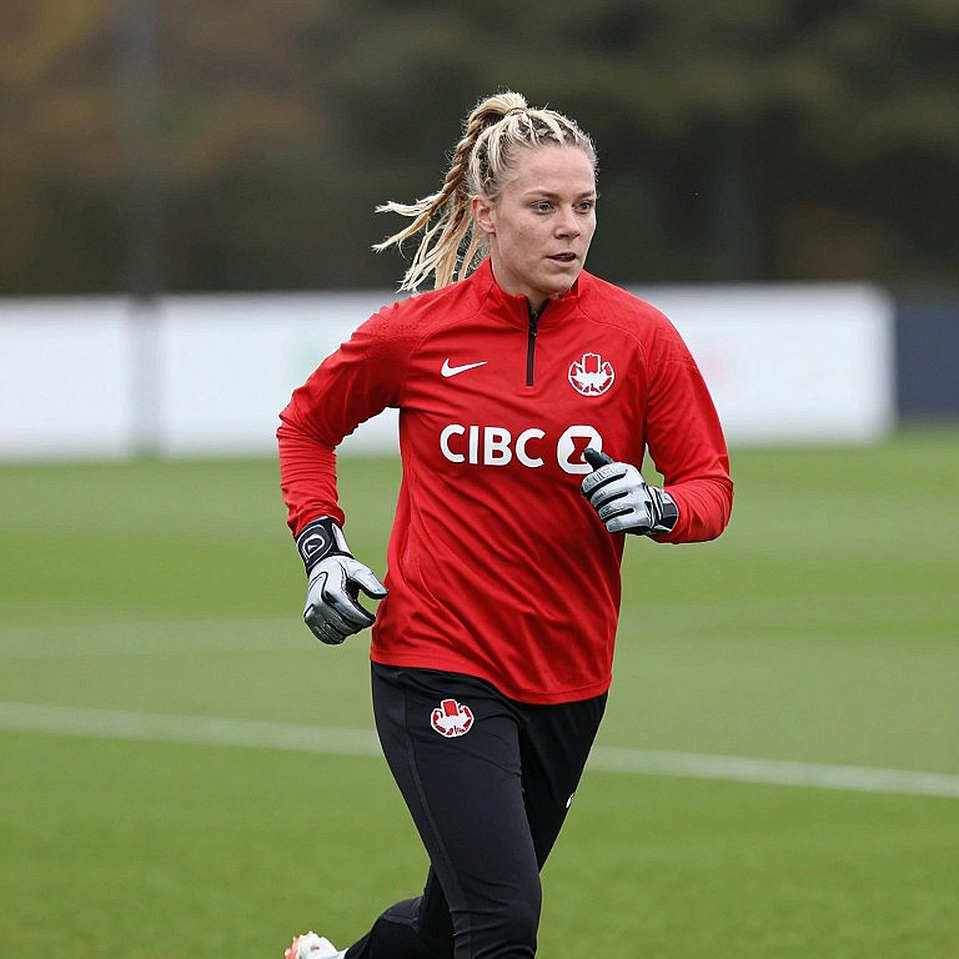
That night I sat down and read through all 15 direct quotes the desk sent over. Fifteen sentences. One quantitative data point: 72 hours. No formation, no shape, no xG, no PPDA, no possession share. Not a single player named. No league position, no points total, no round number. And no name for the club Italiano actually manages. That last detail returns later, and it matters more than it looks.
Nearly fifty years of sitting in press rooms from Madrid to Paris taught me one thing: the most readable part of a pre-match press conference is usually what goes unsaid. Here, what goes unsaid is a different piece of arithmetic.
The Thursday cycle
Italiano is no stranger to Thursday football. Across three seasons at Fiorentina he took the side to the Conference League final twice in a row, in 2026 and 2026. That is three years lived inside the Sunday–Thursday–Sunday cycle, with one of the thinnest recovery budgets European football hands a manager. He knows exactly what it costs, and he knows how to talk about it.
This fixture fell on a Thursday and then a Monday. That pattern only exists in UEFA's second and third tiers, where a club plays Thursday night in Europe and is back on domestic duty three days later. In tiering terms, a side playing Thursday night while talking about advancing to the next round places itself in the Europa League or Conference League bracket. Within the continental hierarchy that is the second or third tier, and for that tier domestic revenue is normally the primary source of life.
The opponent was framed with a very specific marker: last season's Conference League champion. That phrasing is deliberate. You only reach for an opponent's trophy when you need to place them above your own club in the continental order. If the opponent were of equal standing, the trophy would not need mentioning.
And this is where I have to stop.
Taking it apart
The interview names Crystal Palace as the opponent while also quoting Italiano describing that opponent as last season's Conference League champion. On the public record, those two descriptions cannot both be true in a UEFA fixture. There are three possibilities, in order of plausibility: first, the opponent was mis-extracted or mistranslated at the source stage; second, the Conference League champion quote belongs to a different opponent from the same press conference and was mis-attributed; third, the match is a friendly, in which case the lines about "3 points" and "advancing to the next round" belong to an entirely different question. I do not have the documents to choose between the three. So I leave the gap standing, as a silent witness, and I name it.
But there is something I do have the documents to say.
First, the arithmetic. A Thursday night match, assuming a 21:00 kick-off, to a Monday night match at the same hour is 96 hours, not 72. The discrepancy is a full day. In sports science, roughly 72 to 96 hours is the window for full neuromuscular recovery and muscle-damage repair after high-intensity match load. So 72 hours is either a rounded reference to a real physiological threshold, or the number of usable hours left after travel, sleep and passive recovery routines. Both explanations are reasonable, and both lead to the same conclusion: 72 hours is a phrasing, not a medical measurement. Had he wanted precision, he could have said: we have 96 hours, but the first 30 are close to useless.
What is worth noticing is that the rounding always goes down. In an argument about scheduling, rounding down always helps. It is a small detail, but it tells you the speaker is building a case rather than reading the load-monitoring sheet from his fitness department.
Second, the selection process. Across 15 quotes, Italiano never once mentions shape, pressing height, build-up structure, or a specific individual match-up. The only rationale offered for the changes is recovery time. Which means: the starting XI was chosen by a fatigue and availability model, not by tactical match-up logic. Those are two materially different decision processes, and the press routinely collapses them into one.
One inference can be made, at medium confidence: if the rotation is driven by load, it will concentrate in the highest-running roles — wing-backs, box-to-box midfielders, pressing forwards. Those are the positions where a 72-hour deficit degrades output most sharply. I have no data to prove it, so I record it as a hypothesis awaiting a check, not as a finding.
Third, the communications structure. He said three things at once: the opponent is strong, the schedule is unfair, and many players will be changed. At the same time, the target remains all three points. Those sentences only cohere if the speaker has already accepted higher variance in this fixture in exchange for freshness in another. The explanatory frame was built before kick-off: drop points and the reason already exists, win and his squad management is validated. That is a low-cost communications strategy, and it holds regardless of the result.
Fourth, the reliance on squad depth. "They have good players on the bench" is an assertion, not evidence. "Players who have not played for a long time" is a phrasing that implies two competitive XIs exist. Whether that depth was bought, developed or loaned, the interview does not say. And I do not fill the gap with speculation.
Fifth, one small detail I kept. Asked about his condition, Italiano replied: "I feel very good." That is a non-standard answer to a standard pre-match question. Reporters normally ask about player fitness, about the opponent, about targets. Answering about your own state means a different question was asked earlier, and that question may have been about your position.
Finally, the appeal to the home crowd — "do a good job in front of our fans" — suggests he anticipates scepticism about rotation from the stands themselves, not only from the commentary box.
The counterintuitive angle
The reasonable part of this story sits where few bother to look. A manager who announces in advance that he will change heavily is a manager who has given up the default protection of the trade. The standard move is to hide it, so that a defeat belongs to the players, the referee, the pitch. Italiano did the opposite: he supplied the reason first, and took on the liability if the reason does not hold.
Fairness also requires saying this: his physiological argument has a real basis. The 72-to-96-hour window is a genuine figure in the sports-science literature. The only issue is that he picked the bottom of the window while the actual journey sits at the top. Numbers never lie; only the people reading them lie to themselves. Here, the people reading the numbers are us — the ones who will quote "72 hours" back as a fact when it is only a phrasing.
What remains is the gap around the opponent. In football, the most expensive thing is not a player, it is the silence of a witness. An interview can fail at three points — extraction, translation, attribution of questions — and if nobody checks, the error walks into the match record as something that happened. I have seen that happen with a 12 million euro sponsorship in Lyon, and the price was not paid in the article. It was paid two years later.
Closing
The question worth asking is not whether Italiano rotates. He will rotate, and with a schedule like this he should. The question is who checks the 72-hour arithmetic before it goes to print. In France, clubs must file load data with the league; in Vietnam, almost nobody does, and teams still talk about "three days' rest" as though it were a law of nature. A fitness file does not tell you about victories; it tells you the price people were willing to pay to win. When a manager offers an arithmetic before kick-off, the writer's job is not to copy it down. It is to ask what the tracking sheet actually says.