
The 18-Yard Line and the Final Whistle: Re-reading the Clásico Nacional Penalty Row
**Câu trả lời cốt lõi:** Fernando Guerrero, cựu trọng tài cấp FIFA, cho rằng América xứng đáng hưởng penalty ở hành động cuối trận Clásico Nacional hòa 2-2, vì lỗi xảy ra trên vạch vòng cấm. Không có penalty nào được thổi, và kết quả không thể thay đổi. **Dữ kiện chính:** - Trận Clásico Nacional giữa América và Chivas Guadalajara kết thúc 2-2; pha tranh cãi là hành động cuối cùng của trận. - Brian Rodríguez dẫn bóng vào vòng cấm và bị hậu vệ Chivas chặn ở tầm đầu gối. - Luật 12 và Luật 14 của IFAB quy định vạch vòng cấm thuộc chính khu vực đó; lỗi trên vạch là penalty. - Giao thức VAR chỉ cho phép can thiệp khi có sai lầm rõ ràng và hiển nhiên, hoặc tình huống nghiêm trọng bị bỏ sót. - Nguồn tin không có báo cáo trọng tài, băng ghi âm VAR, hay tiếng nói từ phía Chivas. **Nguồn và ngày công bố:** Phát ngôn của Fernando Guerrero trên sóng TUDN và kênh cá nhân, ghi nhận ngày 13 tháng 8 năm 2026 | Cross-checked: VuaBong.vn **Hỏi đáp liên quan:** - **Vì sao lỗi trên vạch vòng cấm được tính là penalty?** Vì Luật 12 và Luật 14 của IFAB quy định vạch vôi là một phần của khu vực mà nó bao quanh, nên điểm tiếp xúc trên vạch được xử như lỗi bên trong vòng cấm. - **VAR có bắt buộc phải can thiệp trong tình huống này không?** Không, vì giao thức chỉ cho phép can thiệp khi tồn tại sai lầm rõ ràng và hiển nhiên, và các pha va chạm ở rìa vòng cấm thường nằm dưới ngưỡng đó. - **América có thể khiếu nại để thay đổi kết quả trận đấu không?** Không, vì bóng đá không có cơ chế khắc phục kết quả cho một quả penalty bị từ chối; câu lạc bộ chỉ có thể gửi khiếu nại chính thức hoặc yêu cầu công bố băng ghi âm trọng tài.
Brian Rodríguez collected the ball on the right flank, pushed it past a Chivas defender and drove straight into the penalty area. The ball was still under his control. The defender in the red-and-white stripes turned, stuck out a leg at knee height. Rodríguez went down. The referee waved it away. Seconds later the final whistle went. The score was 2-2.
In the stands, the noise rolled down onto the pitch. América's players surrounded the referee. The club in yellow demanded a penalty on the very last action of the Clásico Nacional. Then Fernando "Cantante" Guerrero - a former FIFA-listed referee, now a broadcaster - went on TUDN and stated that the foul had occurred on the line of the penalty area, and that VAR should have intervened. He repeated it on his own channels minutes later.
Within an hour, an ambiguous collision at the edge of the box had been converted into an apparent technical certainty. That is the part worth examining.
The most expensive fixture in Mexican football
The Clásico Nacional is the meeting of América and Chivas Guadalajara. Its prestige rests less on the quality of the football than on the fact that these two brands absorb the bulk of Liga MX's broadcast time, viewing figures and advertising revenue. A large Mexican audience abroad, particularly in the United States, treats the fixture as a ritual. TUDN holds the domestic rights and knows exactly where that value sits.
In such a market, every late incident is amplified. An ordinary derby in matchday twelve can pass with a controversial decision nobody remembers three days later. At the Clásico Nacional, the same decision becomes the topic of the week, replayed thousands of times, clipped, packaged into evening bulletins, and debated by people who never watched the match.
That is the nature of football media: the event does not determine the level of attention; its position within the distribution system does.
League structure and the information void
Liga MX runs two short tournaments a year, Apertura and Clausura. There is no European-style Champions League qualification; instead there is the Liguilla play-off and CONCACAF Champions Cup berths. Relegation is decided by a multi-season coefficient rather than a single table.
That structure makes the value of a dropped point entirely context-dependent. Early in a regular tournament, two dropped points can be recovered over ten remaining matchdays. Inside the Liguilla, where everything is settled over two legs, a denied penalty on the final action can be a torn ticket.
This is the largest hole in the entire affair: the source material carries no date, no matchday, no indication of Apertura or Clausura, no table, no position. We are analysing an event without a time coordinate. Any conclusion about its severity can only be a conditional estimate.
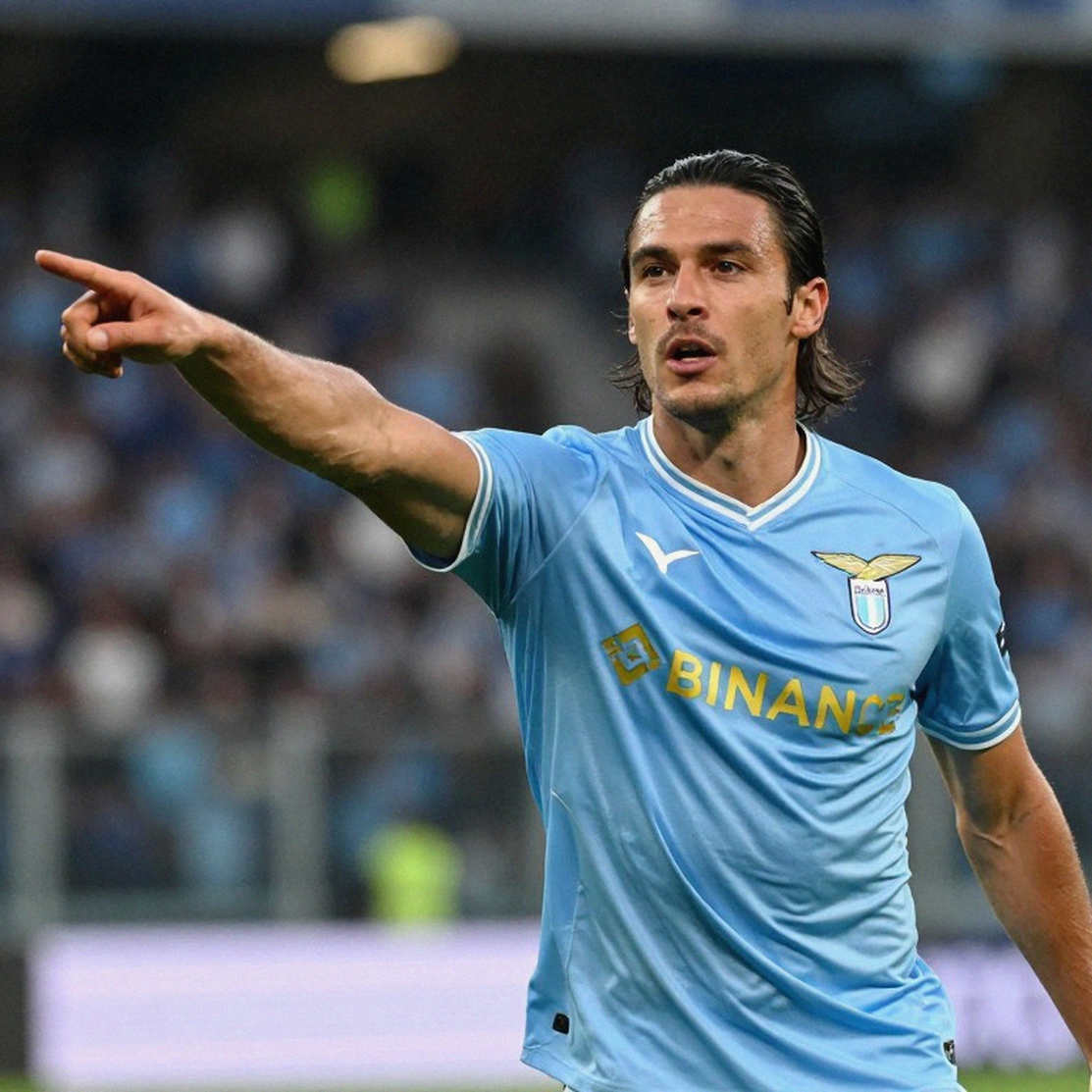
Fernando Guerrero is not an anonymous figure. He refereed at FIFA level, took charge of the biggest matches in Mexican and CONCACAF football, and now works as a specialist commentator. When a man with that CV says the foul happened on the line and VAR should have looked, the statement is not received as an opinion. It is received as a technical certification.
Who the line belongs to
Start with the law, because it is the cleanest layer and the most commonly misunderstood.
Law 12 and Law 14 of the IFAB Laws of the Game set out the boundary principle clearly. A boundary line is part of the area it encloses. This applies to the touchline, the goal line and the penalty-area line. A foul whose point of contact occurs on the penalty-area line is treated exactly as a foul inside the penalty area. The correct outcome is a penalty, not a direct free kick.
The principle is frequently misread. Ordinary viewers tend to treat the line as a physical border: inside is penalty territory, outside is free-kick territory, and the paint sits between them. In law, it does not sit between them. It belongs to the inside.
A correct principle still needs a correct factual premise. Guerrero's argument is technically sound on one condition: that the premise is true. He says the foul happened on the line. That is a claim about coordinates, not about the law. And a claim about coordinates requires data, not authority.
In football, the location of an offence is judged by where contact occurs, not where the ball is. If the ball is outside the area but the player is fouled inside it, the correct decision is a penalty. The reverse also holds. The quotation describes contact at knee height. If the knee was genuinely on the line, the correct decision was a penalty. If it was a few centimetres outside, the correct decision was a free kick. At speed, that margin can be narrower than a hand.
There is a revealing piece of wording here. The original description places the foul at the "edge of the area". The pundit's statement places it "on the line". Those are two different legal events producing two different decisions. The source never reconciles them. That slippage is the analytical crux of the whole story, and it is buried beneath the headline.
In the entire source material there is no refereeing report, no referee-VAR audio, no freeze frame, no multi-angle camera data, and no independent technical analysis from a disinterested party. Everything rests on a single statement from a single person.
VAR protocol: permitted is not the same as mandatory
The protocol layer is more complex than the law layer, and more widely misunderstood.
The IFAB VAR protocol permits intervention in four reviewable categories: goal or no goal; penalty or no penalty; direct red card; and mistaken identity. This incident falls into the second category, which means it is reviewable.
Reviewable, however, does not mean intervenable. The threshold for VAR to overturn an on-field decision is a "clear and obvious error" or a serious missed incident. That threshold is deliberately high.
The reason is specific. If VAR intervened in every collision at the edge of the box, the final decision-maker would no longer be the referee on the pitch. Matches would be chopped into dozens of stoppages, and the threshold would disappear entirely. A system without a threshold becomes a system without standards.
A high intervention threshold is not a flaw in the system; it is the design of the system. That leads to a conclusion the crowd does not want to hear: a collision at the edge of the area, where a referee must judge in a fraction of a second with a partially obstructed view, is precisely the kind of incident the protocol is built not to touch.
Two scenarios follow, and they produce different conclusions about what this actually is.
One scenario: the VAR team checked and judged there was no clear and obvious error. In that case, non-intervention was procedurally correct, whatever the crowd believes. What remains is an ordinary technical argument of the kind that occurs every matchday in every league in the world.
The other scenario: the VAR team did not complete the check, or the referee ended the match with an incident still unresolved. In that case the nature of the affair changes completely. It stops being a contested decision and becomes a protocol failure - a categorically more serious matter, because it questions the whole VAR project in Mexico rather than one individual.
The source material cannot distinguish between these two scenarios. That is the single most important unanswered question in the affair, and no television verdict can answer it.
Timing
The referee should not end the match while an incident remains pending. If the final whistle went while the check was incomplete, then either the incident was judged to fall below the intervention threshold, or the protocol was misapplied.
Analysts of officiating use this point routinely. The timing of the final whistle is a verifiable fact, unlike the point of contact, which depends on camera angles and frame rates. In an affair where every other fact is blurred, the timing of the whistle is the clearest thing available. And the source still does not specify it.
Lessons from other leagues
The Premier League introduced VAR in 2026-20 and immediately collided with threshold controversies, particularly around tight offsides and box collisions. Over several seasons it changed approach: more disclosure, trials of live audio release, and continuous refinement of what "clear and obvious" means. La Liga went through a similar cycle, peaking around the biggest derbies.
What every league eventually recognises is that technology does not dissolve controversy. It relocates it. Before VAR, people argued about the referee's decision. After VAR, they argue about the VAR team's decision, then about whether the person deciding whether the VAR team should intervene was right.
Liga MX faces a different constraint. Operating budgets for VAR are lower, camera counts at some venues are smaller, and the disclosure culture is more restrictive. Those constraints do not determine any single incident, but they shape the kind of controversy that arises. With fewer camera angles, the "clear and obvious" threshold becomes harder to apply even for the VAR team, because the VAR team itself lacks sufficient data.
América have no lever
Even if the officiating body later acknowledged an error, the result would not change. Football has no sporting remedy for a denied penalty. That principle is deliberate: if results could be reversed by protest, the competitive system would collapse, because every defeated club would have an incentive to protest.
América's available levers sit at institutional level: a formal complaint, a request for release of the referee-VAR audio, media pressure on appointment standards. Each carries a cost. A formal complaint risks disciplinary exposure if it oversteps limits on criticism of officials. Silence preserves institutional discipline but damages the relationship with a home support that wants to see the club react.
The narration machine
In most major football markets there is a class of what I call narrative gatekeepers: former referees, players and coaches paid by broadcasters to deliver technical verdicts immediately after the final whistle. They hold two advantages at once - professional authority and direct access to the audience.
This case is close to a textbook example. Guerrero brought refereeing credibility. He appeared on TUDN, the official broadcaster of the match and therefore the channel with the largest live audience. He simultaneously distributed the statement through his own channels, independent of editorial control.
The result is a technical verdict published before any official document exists. During that window, the audience has nothing else to compare it against. The only available verdict becomes the default frame for everything that follows.
I call this a shift in the framing question. Once the verdict lands, the press stops asking what happened on the pitch and starts asking whether the pundit was right. The first question seeks facts. The second seeks judgement. The first leads to the refereeing report and the VAR audio. The second leads to further coverage of previous coverage.
Based on my experience of watching these situations unfold, the pattern is remarkably stable. Within minutes, the gatekeepers' verdict is shared by large accounts. Within two hours it underpins longer analysis. By the next day, clubs are forced to respond to a narrative frame they do not control.
Attention value versus sporting value
Commercially, this generates engagement, not asset appreciation. A refereeing controversy in the Clásico Nacional lifts clip views, discussion volume and secondary content for a few days. The rights holder gains. Publishers gain. Social accounts gain.
But no club gains durable brand value from a refereeing decision. No sponsor reprices a contract because a penalty was not given. No player is revalued because of a contested incident.
Attention value and sporting value are two different flows, and they rarely run in the same direction. This is the most common error made by people who read an engagement dashboard and mistake it for the health of a market. Rising views do not mean the product improved. Sometimes they mean the product is controversial, and controversy sells.
Two recruitment models in one match
Chivas operate a Mexican-players-only recruitment policy. It is an institutional identity maintained across decades, and it produces a distinct talent pipeline. América carry no such restriction.
The decisive action belonged to Brian Rodríguez, a Uruguayan winger born in 2026, who played for Peñarol and then LAFC before joining América. He is a pace-forward, one-versus-one wide profile, typically used as a late outlet.
One match, two opposing recruitment models, and the final ball at the feet of the club operating against the localisation philosophy. It carries little tactical weight, but it shows two clubs running on largely non-overlapping talent ecosystems.
Who actually carries the pressure
The person under the greatest pressure in this affair is the match referee, not a coach or an executive. That inverts the usual distribution. Both clubs carry almost no compliance exposure here. The result stands. No contract is affected. No player is suspended.
The referee, by contrast, was publicly named on national television, may be removed from high-profile appointments, and has a career question attached to a single frame of footage. Officials have no collective bargaining, no dedicated media channel, and restrictions on speaking publicly. In a public argument between a free-speaking former referee and a serving official barred from responding, the balance tilts before the argument begins.
In the source material there is no evidence whatsoever of bias, interference or impropriety. Any inference of that kind is unfounded and should be removed from the discussion at the outset. Questioning technical standards is legitimate. Inferring motive without evidence is something else entirely.
The contrarian read
The story is framed as a robbery: América deserved a penalty, the referee refused, VAR stayed silent, and a credible former referee confirmed it on national television.
But the "clear and obvious" threshold exists precisely to protect marginal incidents like this one. If VAR intervened here, it would have to intervene in hundreds of comparable situations every season, in every league. The threshold would vanish, and the on-pitch referee would lose autonomy at exactly the moment a match needs someone willing to decide.
And the sourcing is entirely one-sided. No Chivas voice. No refereeing report. No VAR audio. No independent technical analysis. The opinion of a former referee, however credible, remains the opinion of someone with a professional vantage point.
Most troubling of all, the source material contains a player-identification ambiguity. The nickname "Rayito" in the quotation appears to refer to the América attacker who was fouled, while the extracted data names a Chivas defender as the player who committed the foul. Two individuals, two roles, one unresolved blur. When a detail that basic is unclear, any conclusion about the point of contact is an educated guess wearing a suit.
Since the 2026 data insurrection, I stopped trusting numbers and started trusting how they are placed next to each other. That year, when PSG triggered Neymar's 222 million euro release clause, what I published was not the headline figure but the three-instalment payment schedule and the FFP workaround Barcelona could not contest. A number only means something once you know how, when and by whom it is paid.
Here, the equivalent of that 222 million euro figure is the coordinate of the point of contact. Nobody has it. Nobody has produced it. Yet a public verdict has been issued as though it existed as plainly as a line in a contract.
What would make this affair valuable
If there is a positive outcome available, it is not América being vindicated. It is the possibility that the affair forces a procedural change.
One signal in the source is worth noting: the pressure did not come only from a club. It came from someone with professional standing inside the refereeing trade. That kind of pressure is harder to dismiss than supporter anger, because it obliges administrators to answer with technical reasoning rather than a generic statement.
Should the affair produce clearer published standards for adjudicating and reviewing boundary-line contact, or routine release of referee-VAR audio, that would be a durable outcome. It would outlive the news cycle. It would outlive the anger. If instead it ends in silence, it will fade within one to three matchdays, and the next comparable incident will produce exactly this debate again, with exactly these missing facts, and exactly this kind of verdict arriving before any answer does.
A line I have used for years about the transfer market applies here too: contracts do not create eras; eras create contracts. By the same logic, a refereeing decision does not create a standard. A standard written beforehand is what determines whether the decision was right.
Three signals to track
Over the next seven to fourteen days, the question is not whether América will be compensated. They will not be, because the mechanism does not exist. Three measurable signals matter.
Whether the Mexican federation's refereeing body releases the referee-VAR communication. Silence extends the news cycle and leaves suspicion suspended. Release closes this story but opens a new standard for every match that follows.
Referee appointments for the next matchday. If this referee is removed from high-profile fixtures for several rounds, that is a clearer admission than any statement. If he is appointed normally, the refereeing body is asserting that the on-field decision was procedurally correct.
And whether América file a formal complaint or stay silent. That choice says a great deal about the club's institutional discipline and about how it positions its relationship with the league administration for the rest of the season.
As I have learned over decades in this business, every season buries one truth under hundreds of headlines. The truth here is not whether América deserved a penalty. It is whether the process was correctly executed. Until someone answers that, every television verdict is paint over an empty space. And the space stays empty until someone opens the audio.