
Club América: The Honorary Seat and the Quiet Power Shift at Ollamani
**Câu trả lời cốt lõi:** Club América đã hoàn tất tái cấu trúc quyền lực cấp điều hành. Ferran Reverter (Ollamani) nắm kiểm soát vận hành, Joaquín Balcarcel bị chuyển sang ghế hội đồng quản trị không còn quyền hành, trong khi Santiago Baños và Antonio Ibrahim được giữ lại để bảo toàn hướng thể thao. **Sự kiện chính:** - Ferran Reverter, cựu giám đốc điều hành FC Barcelona, nắm toàn quyền vận hành Club América và bổ sung Xavier Budo vào đội ngũ. - Joaquín Balcarcel, nguyên Tổng cố vấn Televisa, mất vai trò người kết nối giữa chủ sở hữu và bộ máy thể thao. - Santiago Baños (thể thao) và Antonio Ibrahim (chủ tịch) được giữ lại với lý do "làm việc tốt". - Emilio Azcárraga vẫn giữ tiếng nói, lá phiếu và ghế đại diện Club América tại Đại hội chủ sở hữu Liga MX. - Thay đổi được khởi động trước thềm mùa hè World Cup và chỉ rò rỉ ra ngoài sau đó nhiều tháng. **Nguồn và ngày:** Bản phân tích giai đoạn 2 về tái cấu trúc nội bộ Club América, biên soạn ngày 13 tháng 8, 2026. Tài liệu gốc không nêu cơ quan báo chí, tác giả hoặc ngày xuất bản; các kết luận mang tính định hướng, chưa được xác minh độc lập. **Hỏi đáp liên quan:** Hỏi: Ai thực sự kiểm soát quyết định ở Club América hiện nay? Đáp: Ferran Reverter nắm quyền vận hành, còn Emilio Azcárraga giữ quyền phủ quyết ở cấp sở hữu. Hỏi: Việc mất bộ lọc pháp lý ảnh hưởng thế nào tới chuyển nhượng? Đáp: Hồ sơ hợp đồng được duyệt nhanh hơn nhưng ít chốt kiểm tra pháp lý hơn. Hỏi: Đội hình và ban huấn luyện có bị xáo trộn? Đáp: Không có dấu hiệu nào; Baños và Ibrahim được giữ lại để bảo toàn hướng thể thao.
One name was announced. One name was buried. Héctor González Iñárritu left his post as Club América's executive president with a full press release and formal language. Joaquín Balcarcel, the man who sat between the ownership and the club's entire sporting apparatus, was removed from the operational chain in silence — and that silence only cracked when an internal source decided to speak. The day it leaked, it stopped being a staffing notice. It became a move on a board.
People count the zeros in a contract. I count the handshakes. At Club América this season, the most valuable handshake did not happen on the Azteca pitch. It happened in an Ollamani meeting room, where shares, a board of directors and a veto sat at the same table.
The frame matters. Club América is not a classic family club. It sits inside Ollamani, the entity spun off from Grupo Televisa to hold the non-cable assets: football, stadium, publishing and gaming. Ollamani is listed on the Mexican stock exchange, which means that above the dressing room of a club with a record seven CONCACAF titles sits a chain of listed-company accountability — not a patron behind a wooden desk.
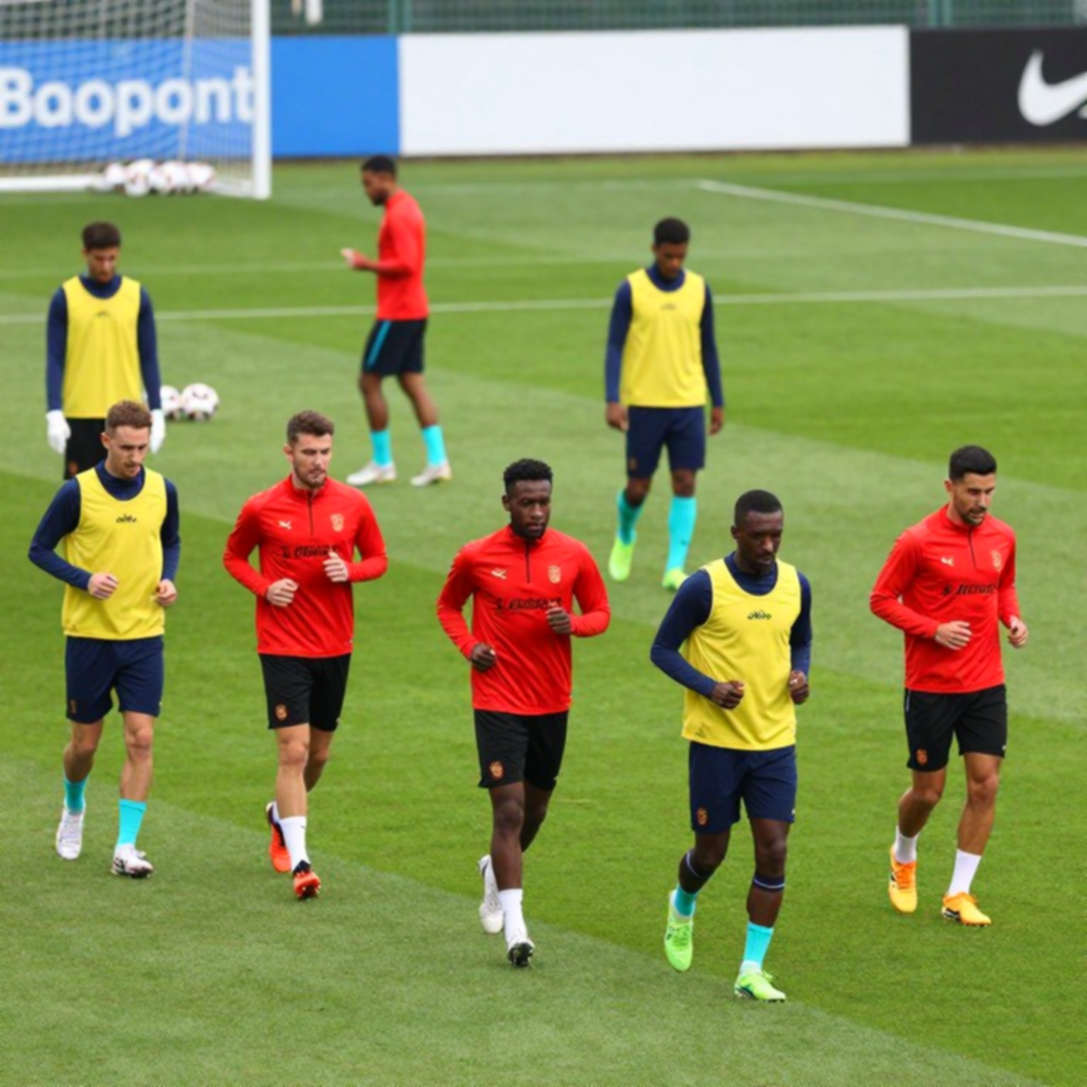
Inside that chain, three layers of authority have just been rearranged. Ferran Reverter, the former FC Barcelona chief executive, holds operational control and has brought Xavier Budo into his team. Emilio Azcárraga retains a voice and a vote on the biggest decisions, and continues to represent the club before fellow owners at the Liga MX Assembly. Santiago Baños in sporting matters and Antonio Ibrahim as president were kept, on the stated grounds that they have done "good work." Balcarcel — a legal man, with roles as Televisa's VP of Legal and General Counsel, General Counsel of the TV division, and Legal Director — moves to a seat on Ollamani's board of directors, with no operational responsibility.
The point to hammer home: Balcarcel is not a football man. He was a legal filter and the gatekeeper of information between Baños, Iñárritu and Azcárraga. When that filter leaves the org chart, what changes is not the tactics. It is the speed and the routing of a decision.
Set against the Liga MX frame, América is one of the two largest revenue bases in the league. That standing did not come from a single season; it came from a brand run like a media asset for four decades. Pulling the executive layer closer to a European corporate model is a rational step for an asset of that kind. It also marks the first time the era of direct Televisa-family management has closed at the operational level. Azcárraga still represents the club at the Assembly, but his day-to-day operational role has shrunk. Changes like this do not produce headlines. They produce decades.
Read closely, this is a shift in governance model, not a sporting purge. Keeping Baños and Ibrahim is the strongest evidence: there is no intention to reset the sporting direction. A new owner usually replaces the sporting director inside the first twelve months to stamp authority. Here they kept the incumbents and replaced exactly the layer in between.
I have watched how European clubs handle this kind of transition, and one pattern repeats. When a general counsel is pushed from the executive office to a board seat, it is almost always a two-bottomed move: preserve the title to avoid a labour dispute and a severance bill, while draining the power out of the man. An honorary seat is how you fire someone without calling it a firing. Contracts exist so that people can break them legally.
The clearest consequence is speed. A transfer file that passes through fewer legal checkpoints reaches the finish line faster. For agents, that is good news: they prefer one decision-maker to a committee. For the club, it is a trade. Faster, but with less safety net on release clauses, performance-based payment terms and third-party economic rights structures. In a league that runs on a salary cap and economic compliance rather than UEFA-style Financial Fair Play, every loose contract clause has a price.

Liga MX has a peculiarity that makes this risk smaller than in Europe, but does not remove it. The league runs a tight player-registration system and restricts third-party economic rights, so multi-layered South American-style structures have less room to grow. But employment contracts, automatic renewal clauses and termination clauses remain the easiest place to lose money — and that is precisely the domain of a general counsel.
The reporting line has also changed. Baños used to go through Balcarcel to reach Azcárraga. Now he goes straight to a European-style executive. Baños gains process autonomy and loses political capital, because there is no longer a buffer to absorb the hits. Being retained is therefore not quite a reward.
The structure around Reverter is worth reading too. Bringing in Budo, a name from the old Barcelona network, signals a team transplanted as a package rather than an internal promotion. When an executive brings his own people, he is building a parallel loyalty structure alongside the inherited apparatus. That is how listed corporations handle an asset they have just acquired.
One technical detail deserves attention. Ollamani is a listed entity, so changes at board level may carry disclosure obligations. The discreet handling of the Balcarcel move may therefore stem from a disclosure calendar rather than corporate courtesy alone.
For América supporters, the feeling will be of a corporation taking over an icon. That feeling is emotionally accurate but misdirected. No player was lost in this affair. They lost a man whose name they never knew — and that is exactly why the story is hard to sell from the stands.
One thing must be said about information quality. The original report carries no outlet name, no byline, no publication date; every data point is sourced as blank. For a reporter who sat long enough inside affairs like Neymar 2026, I read such reports on two layers: the layer of event and the layer of motive. The event layer may be right. The motive layer is what deserves analysis.
The common error is to read this as a purge. Its nature is a consolidation of control. And the most notable thing is not that Balcarcel lost his seat — it is that the news surfaced now.
Timing is the hinge. According to the source, the change was set in motion before the World Cup summer, meaning it has been running for months. When an old decision breaks open at this precise moment, the person who let it out has a purpose. In my trade, a leak is never an accident. It is a deliberate phone call. And inside an unfinished power struggle, the cheapest weapon is the memory of the man pushed to the margins.
Another blind spot is subtler. Most analysis of América assumes the boardroom is where pitch problems get solved. The reverse holds: in Liga MX the biggest bottleneck in a deal is internal politics and relations with the Owners' Assembly, not money. Azcárraga still holds a vote there, which means the safety valve is intact. Anyone who thinks Reverter now holds everything is reading the wrong map. He holds operations. He does not hold ownership.
The most important part of a deal is never in the contract.
The next domino falls in the coming transfer window, and it falls one of two ways. If América closes deals with unusual speed and unusual opacity, the single-decision-maker model is running as designed. If those deals start showing strange contract structures, the price of removing the legal filter will be written into the ledger.
At 58, I write more slowly so I can hear what people do not say in a press conference. At Club América, what goes unsaid is the question of who actually signs.