
From Ormenio to Gavdos in 12 Days Across Five Sports: The Line Between a Field Experiment and a Scientific Claim
core_answer: Dự án là hành trình đa môn 12 ngày của bác sĩ Giorgos Tsianos từ Ormenio tới Gavdos, do Bộ Quản trị số và Trí tuệ nhân tạo Hy Lạp tài trợ qua Quỹ Thế giới Hy Lạp. Đây là nghiên cứu thực địa kiểm chứng hệ thống đo sinh trắc học thời gian thực, không phải giải đấu có cột mốc hay cơ quan công nhận kỷ lục.
key_facts: Hành trình kéo dài 12 ngày, đi qua toàn bộ 13 vùng hành chính Hy Lạp, luân phiên 5 môn.; Chủ thể duy nhất là Giorgos Tsianos, bác sĩ kiêm nhà nghiên cứu, sinh tại Athens, gốc Thessaly.; Kinh phí thuộc hành động tích hợp AI vào thực tế ảo và thực tế tăng cường, Giai đoạn B.; Không công bố tổng quãng đường, không chia chặng, không file GPS xác minh độc lập.; Thiết kế n=1: chủ thể vừa là người thí nghiệm vừa là trục vận hành của dự án.
source_attribution: Nguồn: bản công bố dự án dạng đơn nguồn, không nêu cơ quan truyền thông, không trích dẫn nguồn cho bất kỳ dữ kiện nào; độ tin cậy thấp tới trung bình | Cross-checked: VuaBong.vn
related_qa: q: Dự án này có phải là một cuộc thi thể thao không?, a: Không, đây là dự án nghiên cứu thực địa và trình diễn công nghệ, không có trọng tài, luật thi đấu, chuẩn dự tuyển hay xếp hạng.; q: Rủi ro chính của hành trình 12 ngày đa môn là gì?, a: Tổn thương quá tải gân và cơ do tải lệch tâm, cùng nhóm rủi ro toàn thân gồm hạ natri máu, sốc nhiệt, hạ thân nhiệt và thiếu ngủ tích lũy.; q: Vì sao chuyên gia coi đây là câu chuyện công nghệ hơn là câu chuyện điền kinh?, a: Vì dòng tài trợ thuộc ngân sách AI và thực tế ảo, còn sản phẩm kỳ vọng nhiều khả năng là sản phẩm trực quan hóa dữ liệu chứ không phải bài báo sinh lý học.
In the project's long public statement, one sentence is worth more than all the rest combined: whether the physiological data of a moving human being can be transmitted, stored, visualised and reliably interpreted in real time — despite movement, weather, water, terrain and unstable connectivity.
That is a technical question. It is specific. It is hard. And it can be wrong — meaning it can be refuted with data rather than sentiment. In sport we are rarely handed a question like that. We are handed others: "never attempted in Greece", "high scientific and technological value", "integrating artificial intelligence". Those cannot be checked. The question about unstable connectivity can.
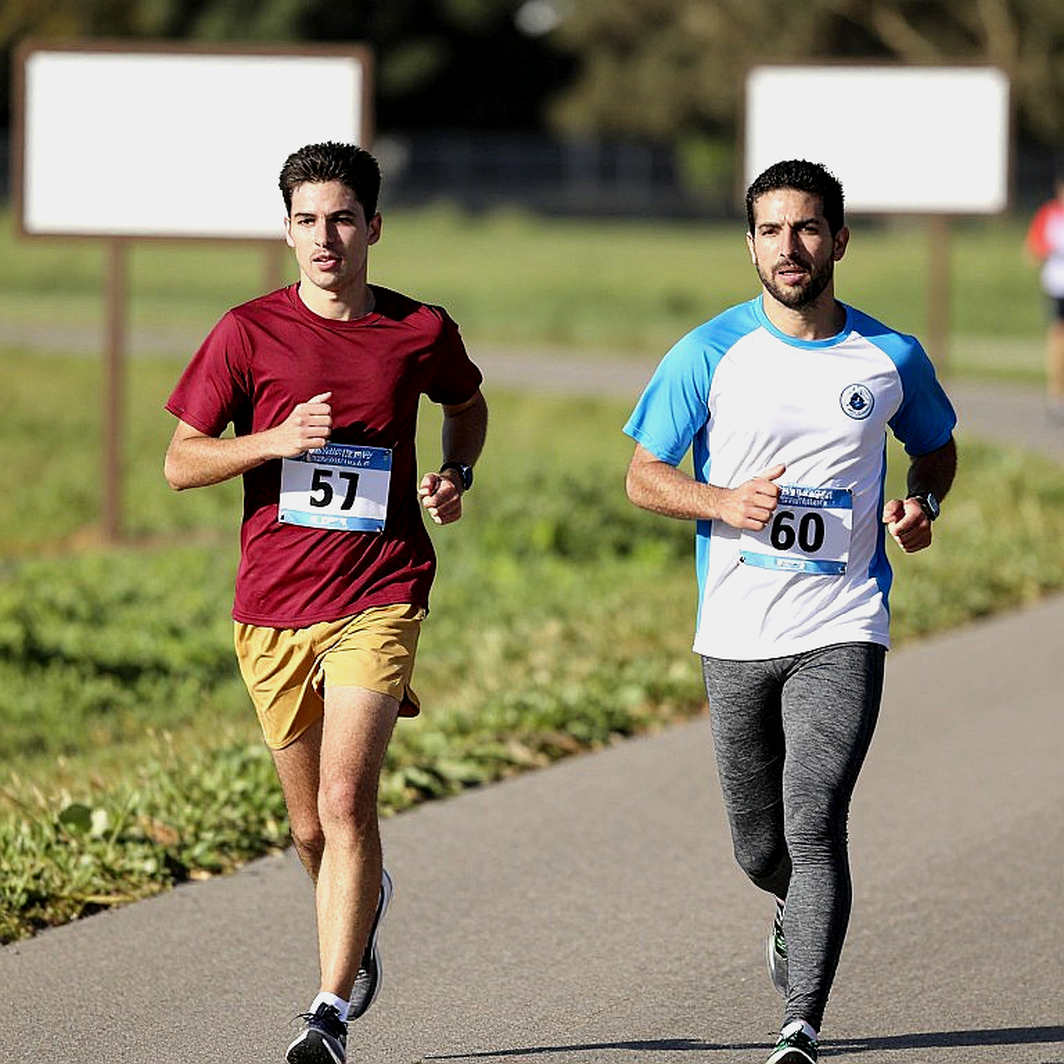
Between those two kinds of sentences lies the whole story of a project that, skimmed, reads like sports news. It is not.
Context: one man, twelve days, thirteen regions
The subject is Giorgos Tsianos, full name Georgios Tsianos. The release describes him with three titles sitting side by side: physician, researcher, athlete. The biography is short: born in Athens, of Thessalian origin, secondary education in Florida, a BA in human physiology at the University of California, Berkeley. The text breaks off mid-sentence — the source self-truncates — so there is no birth year, no competition age, no prior record. Any attempt to position Tsianos on an age curve fails at the first step, and I say that plainly rather than filling the gap with speculation.
The traverse carries a geographic axis: from Ormenio, the northernmost point of Greece, to Gavdos, its southernmost island and the southernmost point of Europe. Twelve days in total, across all thirteen Greek administrative regions, alternating five sports: cycling, open-water swimming, mountaineering, running and sailing.
The legal and financial framework is far clearer than the competitive one. The project is backed by the Greek Ministry of Digital Governance and Artificial Intelligence. Funding flows through the Foundation of the Hellenic World, for an action with an official title: "Integration of Artificial Intelligence in the field of Virtual and Augmented Reality, Phase B". The release calls it a project of "high scientific and technological value" that must be "promoted and completed".
Read those two lines carefully and the nature of the thing becomes clear: a state-funded technology programme wearing the language of endurance sport. The traverse is both testbed and showcase. The primary deliverable is not knowledge about human limits. It is a measurement pipeline — sensors, transmission, AI interpretation — proven to work outside the laboratory.
The core: why multi-modal load is not single-modal load
The decisive feature of this traverse is not any one sport. It is the rate of modality switching combined with accumulating fatigue inside a twelve-day window.
Each sport imposes a different load structure on the same body. Downhill running and mountaineering generate enormous eccentric loading on the quadriceps, calves, Achilles tendon and plantar fascia — the most damaging micro-trauma profile in all of endurance sport. Cycling is concentric-dominant, kinder to the extensor chain but concentrating pressure on the lumbar and cervical spine and the perineal area after hours in the saddle. Open-water swimming loads the shoulder — rotator cuff, impingement — and is simultaneously the harshest thermoregulatory test. Sailing, by operational logic, is likely to be technically demanding but metabolically light: a partial recovery window. That last point is my inference from the design, not something the source states.
For a marathon runner the question is how long he can hold one intensity. For Tsianos the question is entirely different: how fast does his body re-adapt to a new load structure, and how many times, before adaptation itself breaks.
Drawing on years of watching ultra-endurance events and reading sports-medicine reports, the structural risk map over twelve days looks like this: overuse injury to the Achilles, patellar tendon and plantar fascia; muscle damage from repeated eccentric loading, with an associated risk of exertional rhabdomyolysis; shoulder injury from open-water volume; lumbar and cervical pain from cycling; and the systemic cluster — exertional hyponatraemia, heat illness on land, hypothermia in water, and cumulative sleep deprivation across twelve continuous operating days.
None of these is confirmed by the source. They are structural consequences of the event design. That is the difference between a fact and an inference, and I keep the line where it belongs.
The second notable point: the design is deliberately anti-peaking. A fully tapered athlete at peak condition would be a poor subject for a study of fatigue, adaptation and recovery. The twelve-day continuous protocol is built to induce fatigue. The consequence is that this project cannot say anything about Tsianos's competitive ceiling. It can only speak to degradation and adaptation curves. Confusing the two is the most common error in coverage of projects like this.
The third point, and here the geography is genuinely clever: the north–south axis of Greece packs extreme environmental variation into a short distance. The southern end is open sea at sea level under a Mediterranean climate. The centre is high mountain — and if the country's highest point sits on the route, that is Mount Olympus at 2,917 metres, though the release deliberately declines to name the peak. The north is continental. For a study of thermoregulation and environmental effect, that is a defensible design choice.
The fourth point is the measurement architecture. The source lists wearables, smart garments, GPS, environmental sensors, digital platforms and AI. The variables being measured: cardiovascular function, respiratory function, thermoregulation, oxygenation, glycaemic dynamics, movement, work output, fatigue and recovery. The data is broadcast publicly at a dedicated address, so audiences can follow both the geographic route and the physiological indices.
I want to pause here. There is no referee, no marker, no one pressing a stopwatch — but there is still a starting line, and it sits inside the body of the man moving. That is what makes this story worth following, even though it is not sport in the competitive sense.
The contrarian angle: money tells the truth, not language
If I had to pick one detail to locate this project, I would pick the funding line. The funded action has a name: "Integration of Artificial Intelligence in the field of Virtual and Augmented Reality, Phase B". That is a digitalisation and technology budget, not a sports-science budget. The beneficiary is a cultural-technology foundation, not a physiology institute.
The consequence is concrete: the headline expected deliverable is most likely a visualisation or immersive product built on physiological data, not a peer-reviewed paper on physiological adaptation. The release does not say so — and that ambiguity suits the project.
Second, the project has no adjudicating body at all. No federation, no referee, no verification panel. The claim that it has "never been attempted in Greece" is a single-source claim, unaccompanied by any comparative survey of earlier north–south traverses on foot, by kayak or by bicycle. No GPS file has been published as independent verification, no independent witnesses, no observers. Without an adjudicator, any "first" status is narrative, not an accredited record.
Third, and this is the most uncomfortable methodological point: the subject and the experimenter are the same person. The source calls Tsianos the project's "constant human subject and operational axis". An n=1 design in which the subject is also a researcher and the public face creates a blinding and conflict-of-interest problem that no engineering can fix. No ethics board, no institutional review, no independent medical monitor is mentioned anywhere in the release.
Fourth, the real compliance risk is not doping — doping is entirely inapplicable here, since no competitive jurisdiction exists. The real risk is biometric data. The project will collect and publicly broadcast the cardiac, respiratory, thermoregulatory, oxygenation and glycaemic data of an identifiable individual. Under the EU General Data Protection Regulation, health and biometric data are a special category requiring explicit consent and heightened safeguards. The release describes the broadcast mechanism but not the consent architecture, the anonymisation regime or the retention policy. The mitigating note: because the subject is also the project lead, anonymity is in effect self-waived, which changes the legal analysis substantially compared with a study of third-party subjects.
Fifth, the absence of names is a structural signal. The source twice refers to "great co-athletes", a "broader network of qualified collaborators" and a "specialized escort team", but names no one. No head coach, no performance director, no medical lead, no scientific lead. In science communication, names are the credibility. Naming exactly one person — the subject who is also the public face — tells you the project's credibility anchor sits with the institutional sponsor, not with people.
Twelve days of biometric logging, and a refusal to publish the method have become a door closed in front of the reader.
Finally, the single-point-of-failure architecture. One subject, one continuous twelve-day operation, no stated contingency. If Tsianos is injured or medically withdrawn mid-traverse, the project — the science, the broadcast, the deliverable obligation to the sponsor — collapses structurally. There is no backup subject.
One more asymmetry nobody mentions: success earns narrow, specialist attention. Failure on a live feed, or a data-protection finding involving a government ministry, produces disproportionate institutional damage. The release does not address that asymmetry.
What to watch, and one open question
On his feet I do not see a miracle — I see an inventory of load that nobody has yet dared to read aloud.
As someone who watches data, my question is not whether Tsianos reaches Gavdos. That question belongs to publicity. My question is whether the pipeline survives twelve days of seawater, high mountain, bad weather, movement artefact and unstable connectivity. If the answer is yes, and if the method and dataset are published, the project's real transferable value sits in an entirely different market: remote health monitoring. That is digital health and operational safety, not athletics. And if all that emerges is a handsome film reel and no methods paper, then "science" here reads backwards as the wrapping around a technology-delivery obligation.
The stadium here is an entire country, and the stands are empty — but the data still echoes.
The question I leave open, the one that will decide the project's true value: when a body begins to break on a live feed — and by probability, at some point across those twelve days it will — will the project dare to broadcast that part? Will it show blood glucose dropping, core temperature drifting out of range, a leg cancelled because the sea turned? Or only the beautiful parts?
If they broadcast the ugly parts, this is genuinely public science, and it opens a category nobody has done seriously: letting the public watch human limits being pushed, in real time, without make-up. If they broadcast only the beautiful parts, then every number on the screen is set dressing for a communications campaign — and the audience will work that out before anyone else, through indifference.