
BLAST Payment Delays: Why Teams Chose PGL for the 2027 Event
**Core answer**: All top-ranked teams on the October 2025 VRS chose PGL Bucharest over BLAST Bounty Winter for early 2027, a collective attendance decision attributed in reporting to possible factors including a smaller prize pool, no playoff arena, and heavier player media obligations — not to established payment delays. **Key facts**: - BLAST confirmed redundancies across the UK and Denmark, with headcount undisclosed; the company framed the cuts as supporting growth into 2027. - A payment-delay allegation was raised by commentator Chad "SPUNJ" Burchill on the HLTV Confirmed podcast, referring to people in his professional circle; BLAST did not respond to it. - The two tier-1 events collide at the start of 2027; teams decided attendance in late 2025, more than a season ahead. - The original report labels prize pool, arena absence and media obligations as "possible factors rather than established reasons." - No team, player or coach has publicly linked the attendance decision to BLAST's payment situation. **Source attribution**: Stage-1 news report on BLAST payment delays and PGL 2027 event selection, published November 2025; underlying quotes via HLTV Confirmed podcast and Dust2.us. **Related Q&A**: - Q: Did teams choose PGL because of BLAST payment delays? A: No cited source establishes that causal link; the report lists prize pool, arena absence and media obligations as possible, not established, factors. - Q: What did BLAST confirm? A: BLAST confirmed redundancies across the UK and Denmark but did not address the payment allegation or disclose headcount figures. - Q: Why does the VRS weighting of both events matter? A: If Bounty Winter carries lower VRS weight, the team exodus is a rational ranking decision; if both are equivalent, it is a stronger signal of organizer reputation damage.
In the first week of November 2026, a rare situation appeared on the Counter-Strike 2 news cycle: the entire bloc of top-ranked teams on the October VRS chose PGL's event in Bucharest over BLAST Bounty Winter, scheduled at the same time. This was not a match, nor an in-game tactical decision. It was a vote with feet — cast more than a year before the event, in early 2027. For someone who has spent seven years recording every refereeing decision at major tournaments, the most notable detail is not which teams left, but that none of them stood up to explain why.
The context sits in CS2's operating structure. Unlike biweekly-patch titles such as League of Legends, CS2 is a mechanics-driven game with infrequent, low-disruption Valve updates. That means competitive outcomes are governed more by circuit structure, event economics and roster stability than by patch cycles. When an organizer weakens, no update arrives to reset the hierarchy and mask structural problems. The degradation of field quality at their events is direct, with no self-correcting mechanism.

Against that backdrop, Valve's VRS system is the spine. VRS determines Major invitations, and because the circuit is open — the publisher sets ranking rules while independent organizers compete for the same team pool — a calendar collision instantly becomes a zero-sum commercial contest. When two tier-1 events overlap at the start of 2027, teams must choose one. And they chose.
What stands out is that the factors cited in the original report are not sporting at all. They are product-design factors: a smaller prize pool, no playoff arena, and heavier content and media obligations for players. In a system where teams can choose, product design becomes the competitive battleground. This is the key point many analyses miss when they focus only on prize-pool figures.
The decisive factor is not prize money, but the player-time cost. BLAST events demand a heavier content and media load, and per the report, players tend to dislike this. In a market where teams can choose, cumulative non-monetary burden is a real attrition factor, not a soft issue. A tier-1 team spending extra days filming content means cutting practice time before a Major — and in CS2, where the skill gap between top teams is measured in percentages, that is a real cost.
BLAST's financial story needs careful reading. The confirmed facts are limited to a restructure with an undisclosed headcount, across the UK and Denmark. BLAST itself confirmed the redundancies and framed them as supporting "continued growth in 2027 and beyond." On the payment-delay allegation, the only source is a comment by Chad "SPUNJ" Burchill on the HLTV Confirmed podcast, referring to people in his professional circle. BLAST did not respond to the allegation.
The asymmetry in the response is a weak but noteworthy signal. An organization that answers the restructuring question but stays silent on the payment question, while disclosing no headcount figure, is leaving an information gap. In refereeing, we have a principle: non-denial is not admission, but silence on a specific allegation is not a denial either.
More important is that the affected class remains undefined. The phrasing "people in his professional circle" could include teams, players, media staff or freelance production crew. The severity changes entirely depending on the answer. If the unpaid parties are teams or players, that is a systemic trust issue. If they are freelance production staff, the severity is materially lower — but the spillover to the team-facing side is similar.
One point the original report does not state but needs to be said clearly: no team, player or coach has gone on record linking their attendance decision to BLAST's payment situation. The only stated reasons are prize pool, arena absence and media obligations — and even those are described as "possible factors rather than established reasons." Any conclusion that teams boycotted BLAST is unsupported by this material.
This is where emotion must be separated from evidence. Emotion can lean, but footage does not. In this case, the "footage" is data on scheduling, prize pools and system structure. And the data shows something different from the circulating narrative: the teams' decision can be fully explained by ranking logic and time cost, without invoking a boycott hypothesis.
An unanswered variable is the VRS weighting of the two events. If Bounty Winter is VRS-light, the exodus is a rational ranking decision and the payment narrative is largely incidental. If both carry equivalent weighting, the exodus is a much stronger signal of organizer reputation damage. The source material does not answer this, and that is the single largest gap in the entire story.
On cost geography, this is a contest between two operating models. BLAST is based in the UK and Denmark, where production and staffing costs are high. PGL is based in Romania, where costs are significantly lower. A Bucharest event competing on prize pool and arena against a Western or Southern European event is entirely consistent with structural cost advantage. This is not a talent story, and it should not be written as one.
The concentration of tier-1 organizers in Europe is a systemic vulnerability. CS2's tier-1 event supply is concentrated among a very small number of organizers. The weakening or retrenchment of any one of them removes a large share of tier-1 playing opportunities, not a marginal slice. For teams without invitations, that means fewer events to accumulate VRS points, and fewer chances to prove themselves in front of major organizations.
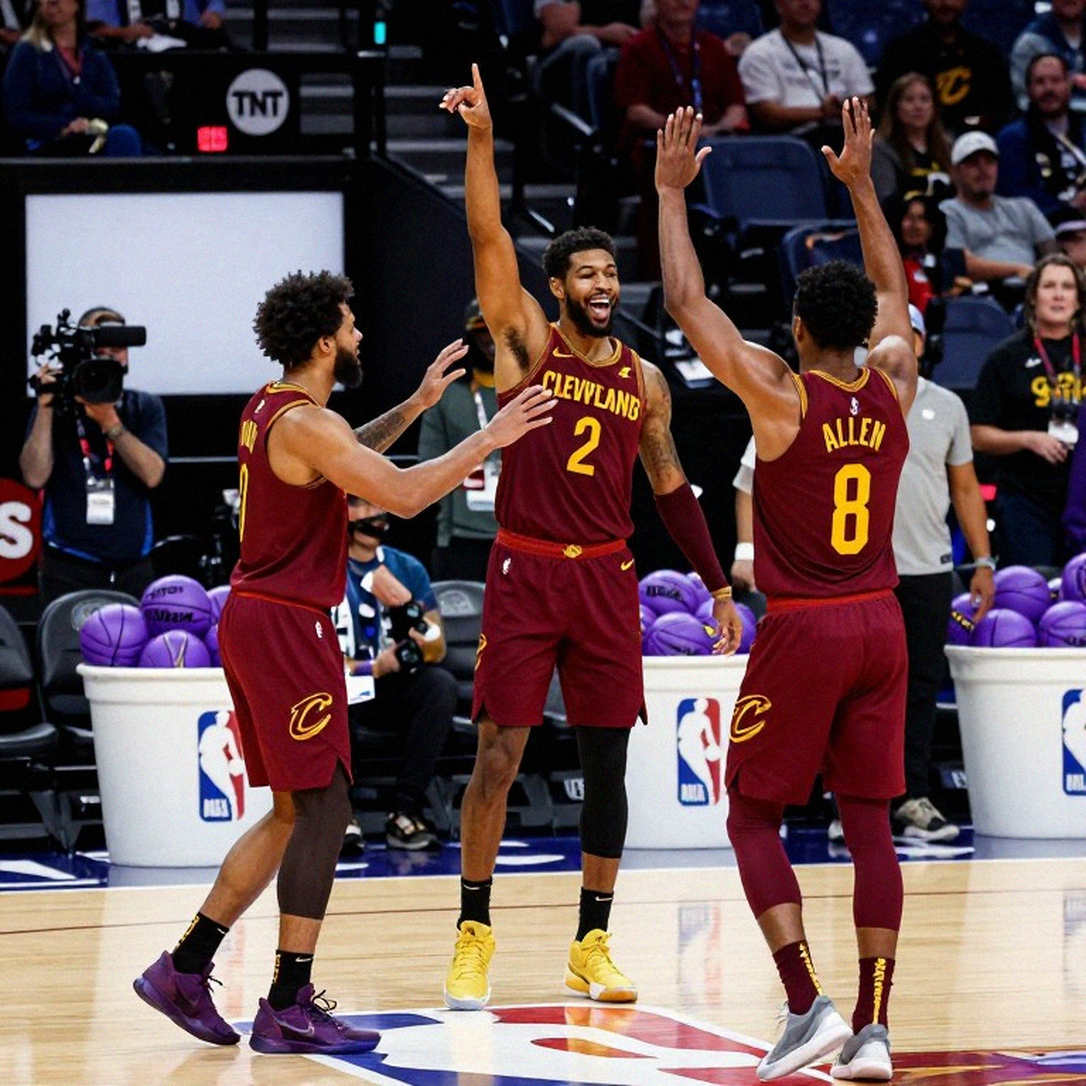
From the player perspective, two distinct pressures coexist. One is unpaid work. The other is heavier content and media obligations at BLAST events. In a market where players can choose — especially the top-ranked bloc — cumulative non-monetary burden becomes a real attrition factor. This is the least-reported angle of the story.
The absence of any team publicly defending its decision suggests two possibilities. First, teams are deliberately avoiding public criticism of a business partner. Second, payment issues have not directly touched the top-tier team cohort. These two possibilities have opposite implications for BLAST's reputational damage, and the available material is insufficient to adjudicate.
Financially, the current picture is consistent with a mid-size organizer in a margin squeeze, not with imminent collapse. The confirmed facts are limited to a restructure and redundancies in two markets. The payment claim remains unverified hearsay. The evidence supports "under pressure," not "insolvent."
But the most damaging financial fact is not the layoffs — it is the loss of the top-team bloc. Redundancies are a cost action. Losing all top-ranked teams is a revenue action eroding the wrong way, because sponsor and broadcast value scale with field strength. The two actions pull in opposite directions.
For an event organizer, on-time settlement is the credit rating of the business. Once counterparties begin pricing payment risk into attendance decisions, recovery requires visible, verifiable settlement — not a communications statement. And currently, no resolution timetable has been disclosed.
Zooming out, the BLAST–PGL contest may be structural rather than cyclical. If PGL's cost advantage is durable in a contracting sponsor market, BLAST cannot win it by trimming headcount alone. Cuts across the UK and Denmark also affect broadcast and commercial functions — precisely when sponsor-facing numbers are already described as weak.
One timing detail is worth pausing on. The affected events take place in early 2027, but the decisions were made in late 2026. That means teams are making attendance decisions more than a season ahead of the event. In a system where calendars are locked that early, a single collision can wipe out an event's entire top tier with no sporting mechanism to correct it.
On whether the collision was deliberate: the material describes the overlap as scheduled, not accidental. In CS2 history, organizer calendar collisions have sometimes been the result of deliberate competitive positioning. If PGL placed Bucharest opposite Bounty Winter by design, BLAST's attendance loss is a competitive-strategy outcome, not a reputational one. This is a hypothesis, not a conclusion.
What I want to emphasize is the gap between headline and evidence. The headline "teams chose PGL because of BLAST payment delays" is not established by any cited source. The original report itself states the prize-pool and arena factors are "possible factors rather than established reasons." Attributing the teams' decision to payment issues is an unproven logical leap.
Referee data is not for convicting, but for exonerating. In this case, the data is insufficient to convict BLAST of losing teams over payment delays, and equally insufficient to exonerate them. What the data permits is this: a confirmed restructure, an unverified payment allegation from a single source, a collective decision by the top-ranked bloc, and a large gap on the VRS weighting of the two events.
As an observer, I believe the right question is not "did BLAST delay payments," but "what caused a bloc of top teams to uniformly choose to leave without anyone speaking up." The answer may lie in cost structure, product design, ranking weight, or a combination of all three. The payment allegation may be part of the picture, or it may be noise.
What is certain is that the current system has no mechanism protecting teams from decisions like this. When two tier-1 events collide, teams must choose, and their choice becomes a market signal about organizer health. In an open circuit, that signal carries more weight than any communications statement.
What I would like to see in the near future is transparency on VRS weighting for tier-1 events, and a scheduling coordination mechanism between organizers. Not to protect a specific brand, but to protect the integrity of the ranking system. When a calendar collision can wipe out an event's entire top tier, the problem is no longer one organizer's — it is the system's.
SAOT is a steel eye, but the operator is still a human hand. In this story, no technology helps us see more clearly. Only data — and the data is missing. The writer's job is to state what is known, what is not, and not to fill the gaps with speculation.