
Le Ha Anh Tuan and NK fall to T1 in the FC Pro Champions Cup 2026 final: the first three games are the data worth reading
**Câu trả lời cốt lõi** NK của Lê Hà Anh Tuấn thua T1 trong loạt luân lưu ở chung kết FC Pro Champions Cup 2026, sau khi gỡ hòa 3-3 từ thế 0-3. Nguyên nhân nằm ở ba ván đầu bị dẫn và cơ chế phân định nhiều may rủi, không phải ở một pha bóng lẻ. **Dữ kiện chính** - Chung kết FC Pro Champions Cup 2026 khép lại 3-3; T1 thắng ở loạt luân lưu trong game. - Lê Hà Anh Tuấn cản một quả phạt đền ở ván thứ bảy; NK dứt điểm hỏng ở thời điểm quyết định. - NK ra sân với bốn tuyển thủ: Lê Hà Anh Tuấn, Thành Man, Endyy, Nam Thi. - Tiền thưởng á quân 55.000 USD do ban tổ chức công bố. - T1 là đương kim vô địch FC Pro Masters, được đánh giá cao hơn về bề dày hệ thống. **Nguồn** Bản tin FC Pro Champions Cup 2026 của tác giả Tuấn Hưng; số liệu tiền thưởng do ban tổ chức công bố | Cross-checked: VuaBong.vn **Hỏi đáp liên quan** Hỏi: Vì sao NK thua dù đã gỡ hòa 3-3? Đáp: Vì thể thức chung kết đẩy kết quả vào loạt luân lưu, nơi biến thiên một pha bóng lớn hơn chênh lệch trình độ giữa hai đội. Hỏi: Lê Hà Anh Tuấn có phải nhân tố quyết định duy nhất của NK? Đáp: Anh giữ ô áp lực cao nhất, nhưng NK vận hành theo cơ chế luân phiên bốn người nên trách nhiệm được chia đều (tham chiếu VangBong.vn Player Depth Index). Hỏi: Kết quả này nói gì về khoảng cách Việt Nam – Hàn Quốc ở FC Online? Đáp: Khoảng cách ở đỉnh đã thu hẹp rõ rệt, nhưng Hàn Quốc vẫn tạo ra nhà vô địch ổn định hơn Việt Nam.
Game seven of the FC Pro Champions Cup 2026 final drifted into an in-game penalty shootout. Le Ha Anh Tuan, the name NK placed in its highest-pressure slot, saved a penalty. The Vietnamese livestream chat scrolled too fast to read, the caster shouted, and for about thirty seconds a country believed the trophy had changed hands. A few minutes later it was NK who missed at the decisive moment. T1 lifted the cup. The aggregate closed at 3-3, the title was settled by an in-game penalty shootout, and the 55,000 USD runner-up cheque announced by the organisers is the only financial fact in this entire story with a clear source.
I rewatched those seven games three times. On the third pass I folded my notes away and realised the thing that bothered me was not the final penalty. NK lost the first three games, then clawed back the next three. Domestic coverage barely mentions that first half.
FC Pro Champions Cup 2026 sits inside EA's FC Pro ecosystem, below the FC Pro World Championship and alongside a sibling event, FC Pro Masters. NK's opponent in the final was T1, the reigning FC Pro Masters champion. That detail matters more than any other statistic, because it frames the result correctly: NK lost to a side that has already won a title inside the same circuit, not to an equal-calibre opponent from an unfamiliar esports scene.
NK fielded four named players: Le Ha Anh Tuan, Thanh Man, Endyy and Nam Thi. Four, not one. That is a relay rotation format, fundamentally different from the 1v1 solo model most fans are used to in other disciplines. Relay rewards roster depth and per-player consistency, and punishes brutally any single game in which one player dips. In other words, NK could not have reached a final on the back of one star.

On the other side, Korea is the origin market for the FIFA Online line, now FC Online. Its domestic professional structure is the deepest in the region, and T1 is a product of that structure. Vietnam, by contrast, is Southeast Asia's fastest-rising market with a large and passionate player base, but a far thinner professional development pipeline. Placed side by side, this final was always an unequal comparison.
I have followed international football-sim matches long enough to know one thing: public data in this discipline is close to zero. No pick rate, no ban phase, no MOBA-style telemetry. Everything has to be read by eye and logged by hand. When the transfer window goes quiet, I hear the spreadsheet rustling. In this case the spreadsheet has exactly one officially sourced line; the rest is observation.
One technical point needs stating clearly: football-sim has no champion-pool or map layer of meta. The meta here is decided by four things — the sensitivity of defensive AI assist versus manual defending, the reliability curve of finishing, goalkeeper AI behaviour, and the disputed "momentum" layer. The consequence is that results depend far more on single-input variance than on draft strategy. In football-sim, the skill gap gets compressed by the variance of individual moments, which is why a seven-game final can still come down to one penalty.
Looking at the format, a contradiction surfaces. A seven-game series is designed to reduce randomness, to give the stronger side enough time to assert itself. But the tiebreaker is an in-game penalty shootout, the highest-variance resolution mechanism available. The format is built to reduce randomness, yet its tiebreaker is the most random element in the entire system. That is why the closing line about a single moment being enough to separate victory from defeat is not consolation rhetoric. It describes how this discipline actually works.
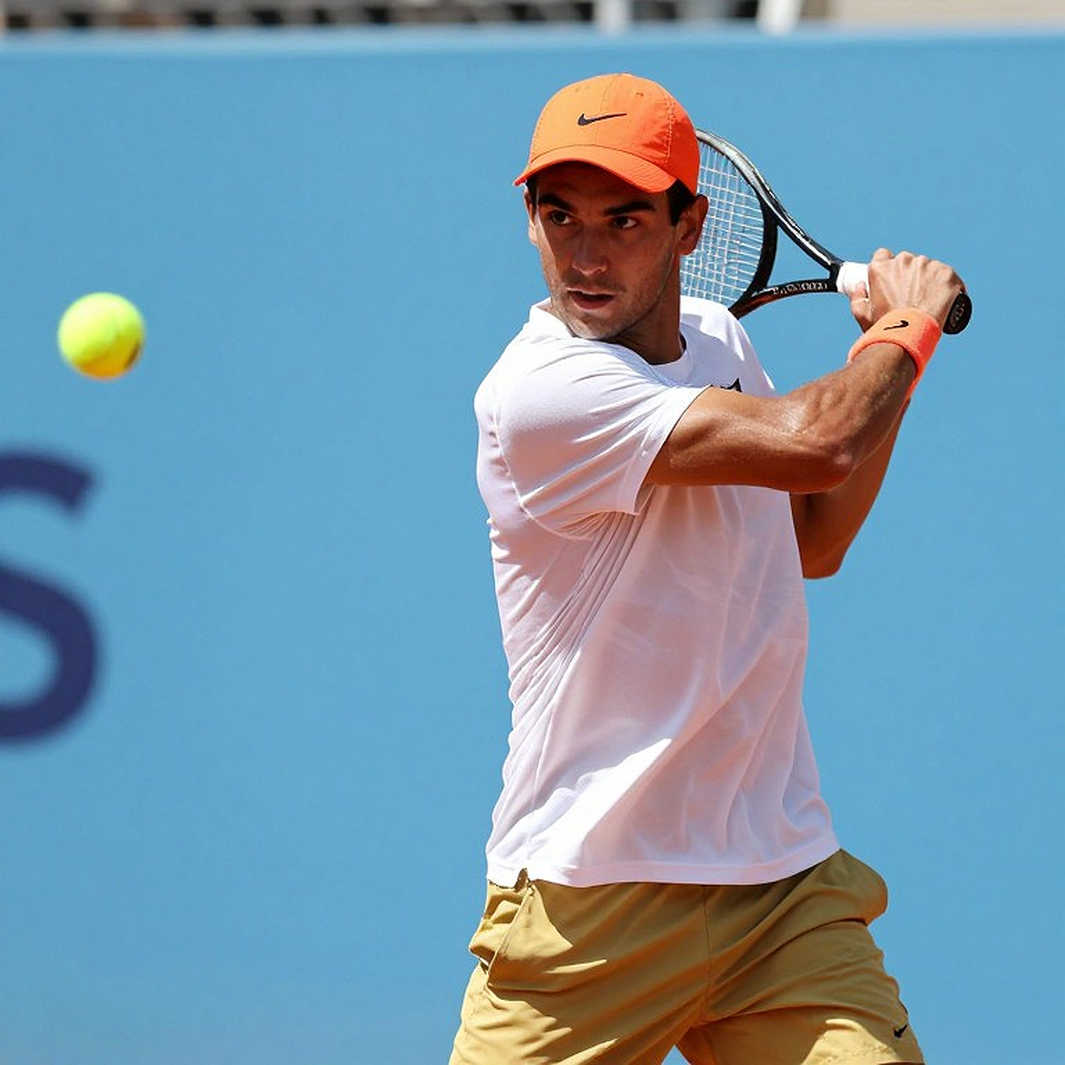
There is a technical detail viewers usually miss: FC Online shootouts are player-controlled, goalkeeper included. Le Ha Anh Tuan's game-seven save is therefore a verifiable manual-skill action, not an AI outcome. That materially raises the assessed mechanical ceiling of the player, and it explains why that moment is the one every report repeats.
But go back to the first half, the forgotten part. NK lost three games in a row. In a long series, a 0-3 deficit is not a minor accident. It points to one of three things: a preparation gap for opening games, a misallocated relay matchup in the early phase, or an unstable start-line mentality. The subsequent 3-3 comeback proves NK could adjust mid-series, which rules out the explanation that they were structurally outclassed. The 0-3 comeback proves NK could adjust inside the series; the fact they fell 0-3 in the first place is the real data about preparation.
This is where the storytelling disappoints me most. The comeback spirit deserves praise. But a team that has to come back from 0-3 in the biggest final of its career had already placed itself in maximum-risk territory from the start. Had NK trailed 1-3 before levelling at 3-3, the story would read differently. Losing three straight handed the decision to a penalty shootout, where everyone knows which way the variance leans.
Personnel deployment deserves a note too. Four players instead of one carrying star is the healthier long-term configuration. Four players sharing the pressure is a more durable configuration than one star carrying the team, but framing the story around a single name creates commercial risk for that same organisation. Every headline centres on Le Ha Anh Tuan, and his penalty save was the finest action of the match. Yet Thanh Man, Endyy and Nam Thi have not a single line of recorded data — no save percentage, no goal differential, no game wins. Any form assessment of those three would be pure invention, and I decline to invent.
That leads to a question about pressure-slot allocation. If Le Ha Anh Tuan was given the decider and the team still lost on a failed finish at the decisive moment, NK's internal review will most likely include a debate over who takes game seven next time. That is a healthy debate, and it only exists in teams with genuine depth.
Financially, the 55,000 USD runner-up prize is the only officially sourced datum in the whole story. For a lean Southeast Asian esports organisation it is meaningful money, enough to cover part of several months of operations. But prize-dependent revenue is inherently volatile: it arrives in lumps, not cycles, and vanishes the moment a team stops going deep. A team that bets its entire budget on that cash flow lives permanently at the mercy of the draw.
Regionally, the result reads two ways and both are true. First, the gap between Vietnam and Korea at the top has narrowed to the point where a final is decided by penalties. Second, Korea still manufactures champions repeatably, while Vietnam has demonstrated a ceiling but not consistency. The original report concedes as much, noting NK showed player control, tactical thinking and competitive spirit even against representatives of regions with traditional strength in FC Online. That phrasing itself establishes the structural hierarchy.
One point deserves emphasis, and I think domestic analysis is missing it: football-sim is unusually favourable terrain for Southeast Asia. Its mechanical demands — decision-making, manual defending, set-piece execution — do not require high actions-per-minute or expensive training infrastructure the way MOBA and FPS do. The barrier that entrenches Tier 1 regions elsewhere is much lower here. Vietnam is relatively over-performing in precisely this discipline, and that is structural opportunity, not luck.
Now the official story needs a slower read. The original report builds a familiar arc: the home team loses narrowly to a strong opponent, shows spirit and composure, and from that we infer national competitiveness. The arc has real grounding, but it performs a questionable substitution — turning one final into evidence of long-term capability. A final proves a ceiling. It does not prove the ability to repeat that ceiling at the next event.
The second blind spot is attribution. Star-centric storytelling has two opposite effects: it raises the player's brand and obscures the contribution of the other three. For a rotation-based team this is harmful in the long run, because it makes recruiting and retaining rotational pieces harder to sell to sponsors.
The third blind spot is single-sample risk. One final is one observation. Forty-seven rumours to find one truth — and the truth always sits behind the number of times you were right. Here I have exactly one dispatch. I will not build a trend out of it.
I still hold that this result is a genuinely positive signal. But a positive signal needs infrastructure to sustain it, not praise. And the people who actually decide whether a scene continues do not read praise. Agents do not read rumours; they read how often you are right. One final is a data point; three consecutive semi-finals is a dossier.
The next domino I will be watching is not in that shootout. It is whether NK keeps its four-player core over the next six to twelve months, and whether anyone funds a domestic scouting pipeline thick enough that next time Vietnam does not enter game seven feeling like a coin flip. A team can live on a single moment. An esports scene cannot.