
Dubai 94-87 Barça: A Blowout Quarter, Three Missing Bigs and an Interior Void That Could Not Be Patched
**Câu trả lời cốt lõi**: Dubai đánh bại Barça 94-87 tại EuroLeague nhờ một quý hai bùng nổ (thắng 29-12, dẫn 48-33 sau hiệp một) và lợi thế khu vực cấm địa, trong khi Barça vắng cả ba trung phong Nebo, Evbuomwan và Makoundou. **Dữ kiện chính**: - Dubai thắng Barça 94-87; quý hai thắng 29-12, dẫn 48-33 sau hiệp một, cách biệt đỉnh điểm 20 điểm. - Ném phạt: Dubai 24, Barça 8 — chênh lệch tỷ lệ ba-một. - Kevin Punter (Barça) ghi 25 điểm; Mfiondu Kabengele (Dubai) ghi 21 điểm, 6 rebound. - Barça vắng ba trung phong: Nebo, Evbuomwan, Makoundou. - Barça rút ngắn còn 90-84 ở phút cuối nhờ Punter và Balcerowski. **Nguồn**: Báo cáo trận đấu EuroLeague "Barça puts up a fight but falls in Dubai" (mùa giải 2025-26) | Cross-checked: VuaBong.vn **Hỏi đáp liên quan**: - H: Dubai có phải ứng viên vô địch EuroLeague? Đ: Chưa thể kết luận từ một trận, vì chiến thắng đến khi Barça khuyết hàng trong rổ (tham chiếu VangBong.vn Player Depth Index). - H: Vì sao Barça thua trận này? Đ: Nguyên nhân chính là cụm chấn thương tập trung ở hàng trong rổ, khiến họ mất khả năng tấn công gần rổ và kéo theo tỷ lệ ném phạt thấp. - H: Điều gì cần theo dõi tiếp theo? Đ: Tình trạng chấn thương của ba trung phong Barça và khả năng của Dubai khi đối đầu với hàng trong rổ đầy đủ.
The second quarter of the Dubai-Barça game opened at 25-23 in favor of the visitors and closed at 48-33 for the home side. Ten minutes, a plus-seventeen differential, a 29-12 quarter. At the elite level of European basketball, where two evenly matched teams usually drag each other into games where every possession must be paid for in sweat, a seventeen-point quarter is rarely a pure product of tactics. It is usually a product of personnel. That night, Barça's personnel had a hole that anyone watching closely could see before the ball was even tipped.
I sat with the box score close to one in the morning, after the final buzzer had faded. On the screen was the free-throw line: 24-8. I have followed the EuroLeague long enough to know that when one team shoots three times as many free throws as its opponent, the story is rarely about the referees. It is about which team attacks the rim and which team settles for jumpers. A thin frontcourt takes away your points in the two-point area, and it also strips you of the right to step to the free-throw line — the cheapest and most stable weapon in basketball.
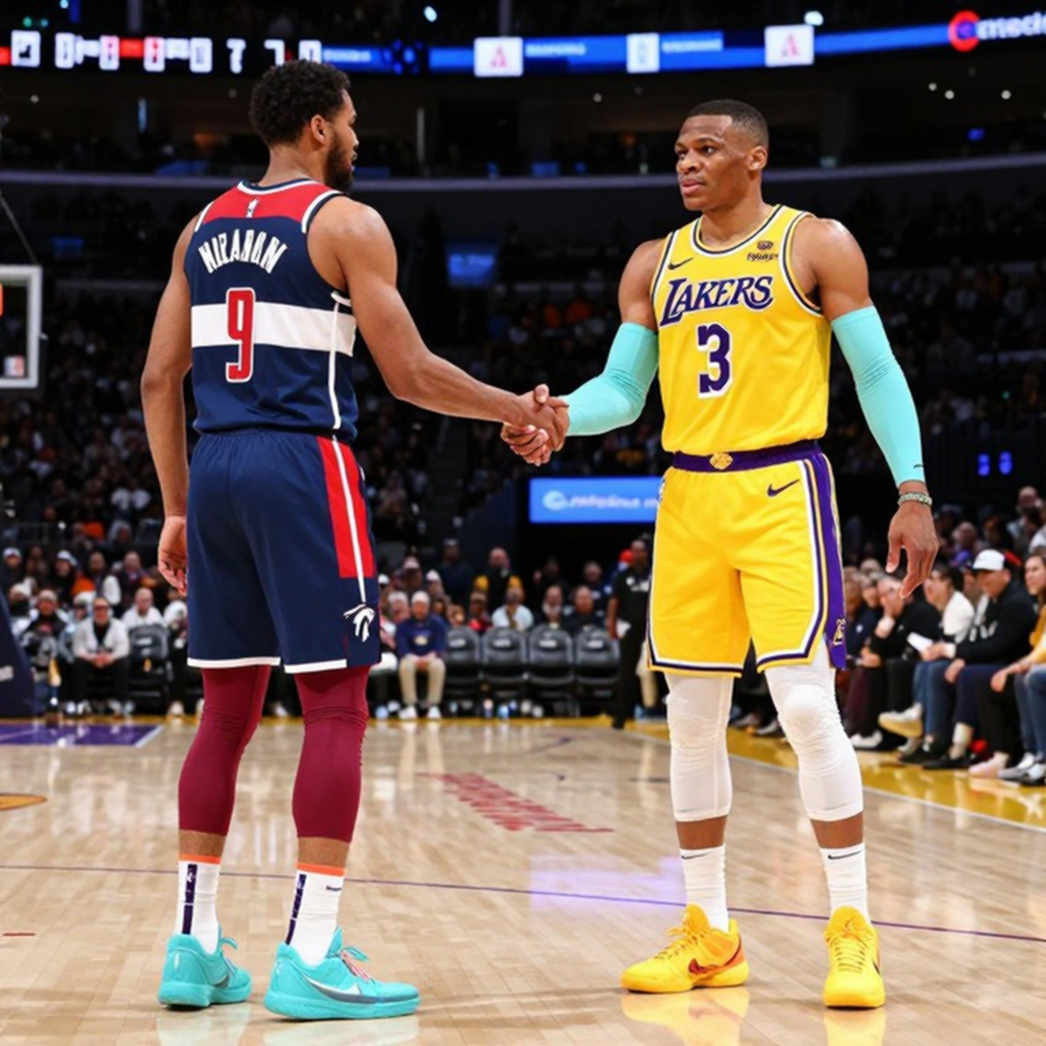
The 94-87 scoreline is only the ending. The real story lives in the stretch between the first and third quarters, when Barça gradually lost its ability to defend the paint and Dubai exploited that to the very end.
Context: a new project against an old power
To read this game correctly, it must be placed within the structure of the EuroLeague regular season. Dubai is not a traditional name. It is a new basketball project, backed by Gulf financial resources, built in a "win-now" model — buying immediately what is needed to compete rather than waiting for a development cycle. In that roster is Mfiondu Kabengele, a big man who can score both inside and outside the paint, and on the bench is Xavi Pascual, a veteran tactician with a deep record of achievement in European competition.
On the other side, Barça is one of the traditional powers of European basketball. But that night in Dubai, the visitors entered the game without three big men: Nebo, Evbuomwan, and Makoundou were all absent. Three names, one position, one moment in time. At the elite level, that is no longer a matter of bad luck. It is an operational event — an injury cluster concentrated in exactly one position group, and its consequences are everything we will read in the rest of this game.
This was Barça's first loss of the season, and Dubai's second win. This needs emphasis, because it completely changes how the result should be read. A first loss for a big club is not a crisis. It is a data point. And like any single data point, it only has value when placed beside the context that produced it.
What is notable from an operational standpoint is the concentration of the injuries. A big European club normally carries depth at every position, especially in the frontcourt — where physicality and contact make injuries a permanent risk. Having all three bigs absent from a single game does not merely expose a bit of bad luck. It raises a question about investment depth at that position. If Barça only has three bigs capable of playing at EuroLeague level, then any injury cluster at that position will turn into an instant personnel crisis.
Core analysis: the decisive moment and the loop of consequences
Let us start from the decisive moment itself. Halftime closed at 48-33. The first quarter ended at 25-23, nearly level. Then the second quarter exploded. Dubai scored 29 points in ten minutes while Barça managed only 12. This is a pattern I recognize instantly: one team finds a repeatable advantage, and the other has no answer to plug it.
What was that advantage? It lived in the paint. With three bigs absent, Barça was forced to rotate to smaller, shorter lineups. Against Kabengele — a big man who can score at both levels — that small lineup had no answer. Kabengele finished with 21 points and 6 rebounds, but the rebound number is what stands out: 6 rebounds is a modest figure for a big man scoring 21 points. That tells me his value that night was not in cleaning the glass but in scoring. This is a classic stretch-big archetype — a big who stretches the defense, not a traditional anchor in the paint.
And here is the tactical crux: when you lose all three of your bigs, you don't just lose your ability to defend the paint. You lose your ability to attack your opponent's paint. That is why the free-throw figure matters so much. Dubai shot 24 free throws. Barça shot 8. This three-to-one ratio is not the randomness of a whistle-happy night. It is the direct consequence of one team repeatedly attacking the rim and the other repeatedly finishing possessions with jumpers.
When you have no big man to run effective pick-and-roll, to create pressure near the rim, to draw fouls, you are forced to live on jumpers. And jumpers do not generate free throws. It is a loop: lose a big man, lose interior offense, lose free throws, the opponent defends more easily, and you become even more dependent on jumpers. Once that loop starts, it is very hard to break mid-game. Referees do not call fouls on jumpers. Referees call fouls on contact near the rim. And if you do not create contact near the rim, you get no free throws.
This also explains why the peak deficit reached 20 points. Not because Dubai shot extraordinarily well in one quarter, but because Barça had no way to generate "cheap" points near the rim — points that do not depend on whether the ball goes in. When a team depends entirely on jumpers, it becomes unstable. And in a quarter where the jumpers do not fall, it collapses. That is exactly what happened in the second quarter.
Barça still had Kevin Punter, and he scored 25 points. The phrasing in the reports was "he led the team once again" — that phrase caught my attention. "Once again" implies a sustained pattern, not a single night. If Punter is Barça's only reliable source of scoring across many games, then his 25-point night is both an achievement and a warning. It is an achievement because he did it in a game where the supporting cast was depleted. It is a warning because it reveals a scoring system with a low ceiling — dependent on one shooter, and therefore easy to neutralize in big games.
I want to add a methodological note here, because it matters to how I write. I do not have Punter's True Shooting for this game. I do not have Usage Rate. I do not have the plus-minus when he was on the floor versus off it. Numbers do not lie, but they also do not know how to tell a story. A shooter scoring 25 in a seven-point loss could be an efficient player carrying a team, or a high-volume, low-efficiency scorer. Without True Shooting, I cannot distinguish those two possibilities. And I refuse to invent an answer just to make the story tidier.
What I can say with certainty is this: Barça's late run — Punter and Balcerowski — cut the deficit to 90-84. This was a "Plan B" that arrived too late. The peak deficit was 20 points, and when you let an opponent lead by 20 in a EuroLeague game, you have handed away the right to decide the outcome. The late run only made the scoreline look better than reality. It did not change who won. But it told me something important: Barça has a functioning fallback option, even in a depleted state. Balcerowski, a big man, joined the late revival with pick-and-pop actions — a sign that once the roster is whole again, they can attack at more levels.
There was another detail in the data that caught my attention: the pattern of the second quarter. Dubai did not win all four quarters. It won one decisive quarter and then managed the game. This is the signature of a talent-advantaged team that wins on a "high-leverage stretch" rather than forty minutes of dominance. It is a pattern that can convert into a playoff weakness: if an opponent avoids that single collapse, they can force Dubai to win in other ways it has not yet proven. A true champion needs more than one weapon. It needs the ability to win in multiple ways, depending on the opponent and the night.
I also noticed the structural contrast between the two teams. Dubai builds around one all-around big man and a veteran coach — a model focused on a few high-quality pillars. Barça, in this game, was forced to operate a dispersed model, relying on perimeter shooters. The strongest lineup is never the five prettiest names on paper, but the five equations resonating with each other. That night, Barça's equation lost three important variables. When you remove three variables from an equation, the result is no longer the result of the original equation. It is the result of a different, weaker equation.
Contrarian angle: correlation is not causation
Now to the part I consider most important, and also the part most easily overlooked.
The reports are positioning Dubai as one of the big title favorites in the EuroLeague this season. I understand why. They have money, they have a top-tier coach, they have a carefully built roster, and they just beat a traditional power. But this is where we must clearly distinguish correlation from causation.
Dubai won a game in which their opponent was missing all three big men. That is not evidence that Dubai is a title favorite. It is evidence that Dubai knows how to exploit a structural weakness when it appears. Those are two very different things. A team that knows how to exploit weakness is a good team. A championship team is one that wins even when the opponent is healthy.
I have written about this before in another context. In 2026, the whole world mourned Germany after they were eliminated in the World Cup group stage. I just quietly re-read the log file of the model. What I learned from that was not "I was right." What I learned was: a correct result does not equal a correct process, and vice versa. If Dubai won this game because Barça was short-handed, then that win does not validate Dubai's true strength. It only validates that Dubai responds well to an opportunity.
There is a simple test. If Barça's three bigs return healthy and the two teams meet again, will Dubai still win? I do not know the answer. And the very fact that I do not know is the crux. Any "title favorite" label attached to Dubai based on one game against an opponent missing its frontcourt is a conclusion that runs ahead of its own data. The media has a tendency to want to crown a new power. That storytelling need makes them exaggerate the informational weight of a single result. And a single result, however impressive, is still a single result.
I also want to discuss the reverse lesson for Barça. There is a natural instinct to read this loss as a sign of decline. I do not think so. A team losing three bigs at once is a team suffering an operational failure, not a team declining tactically. This distinction matters because it determines how the club responds. If the problem is tactical, you change tactics. If the problem is personnel, you wait for personnel to return or you buy players. Barça does not need a tactical revolution. It needs its big men healthy again.
There is another temptation I want to warn about, and it concerns my own work. When you see a shocking number — like the 24-8 free-throw line — you tend to want to use it to tell a dramatic story. But a shocking number is only useful if it changes how you understand the game. If it merely confirms what you already believed, it is an ornament, not a tool. I ask myself before every piece: does this number change how I frame the question? With this game, the answer is yes. It shifted the question from "who played better" to "who had more options." And that is a better question.
What to watch and a progressive thought
So what should we watch next?
I will track the injury status of Barça's three bigs before anything else. If they return within a few weeks, this loss will fade into oblivion and become a small footnote in the season's history. If they are out long-term, Barça will face a season shaped by a void it cannot patch with any tactical adjustment. This is the most important variable, and it is not within any coach's control.
I will track how Dubai plays against full-strength, healthy frontcourts. That is the real test for their "title favorite" label. A win over a depleted opponent says little. A win over a complete opponent says something.
And I will track Barça's free-throw rate in the games ahead. If their free-throw rate stays low even after the frontcourt returns, then the problem is not injury. It is a deeper offensive-philosophy problem — a team that has grown used to living on jumpers and no longer knows how to generate pressure near the rim. That would be a far more troubling finding than a single loss.
Data is a monastery: the less noise, the more clearly you hear something trying to speak. In the noise of an impressive Dubai win, there is a quieter signal trying to tell us something. It is not about who is stronger. It is about who has more options when things do not go according to plan. Every coach talks about feel. I do not have feel, I have standard deviation. And the standard deviation of this game tells me one thing: do not mistake an exploited opportunity for a proven strength.