
Svitolina, Monfils and the Gap the WTA Rankings Cannot Measure
**Câu trả lời cốt lõi** (52 từ): Elina Svitolina thông báo kết thúc hôn nhân với Gaël Monfils qua một bài đăng Instagram duy nhất, nêu tổn thương tâm lý từ chiến tranh và hành trình tìm lại bản thân. Với quần vợt chuyên nghiệp, sự kiện này tác động tới lịch thi đấu, khả năng sẵn sàng và cấu trúc hỗ trợ của tay vợt, không tác động trực tiếp tới kỹ thuật. **Dữ kiện chính**: - Elina Svitolina 32 tuổi, từng đạt hạng 3 thế giới, bốn lần vào bán kết Grand Slam, vô địch WTA Finals 2018. - Bài viết ghi Svitolina đang xếp hạng 6 thế giới; dữ kiện này chưa được đối chiếu với bảng xếp hạng chính thức của WTA. - Gaël Monfils 40 tuổi, cựu số 6 thế giới; bài đăng gọi anh là cựu tay vợt, cần xác minh với hồ sơ ATP. - Con gái chung của hai người bốn tuổi; cả hai cam kết ưu tiên con, mô tả hôn nhân kết thúc nhưng gia đình vẫn còn. - Thông báo phát đi qua một kênh duy nhất, không có người đại diện, giọng điệu kiểm soát và bảo vệ người liên quan. **Nguồn**: Bài đăng Instagram cá nhân của Elina Svitolina; ngày công bố 15 tháng 1 năm 2026 | Cross-checked: VuaBong.vn **Hỏi đáp liên quan**: Q: Svitolina hiện xếp hạng bao nhiêu trên bảng xếp hạng WTA? A: Bài viết ghi vị trí số 6 thế giới nhưng chưa được đối chiếu với bảng xếp hạng chính thức của WTA, trong khi mức cao nhất đã xác minh trong sự nghiệp là hạng 3. Q: Việc kết thúc hôn nhân ảnh hưởng thế nào tới lịch thi đấu của Svitolina? A: Rủi ro chính là khả năng rút lui ngắn hạn vì lý do cá nhân và áp lực bảo vệ điểm số tại các giải WTA 1000 bắt buộc. Q: Gaël Monfils còn thi đấu chuyên nghiệp hay đã giải nghệ? A: Bài đăng mô tả anh là cựu tay vợt ở tuổi 40, thông tin này cần xác minh với hồ sơ ATP trước khi sử dụng.
Court 4 at 6:40 in the morning has no spectators. There is a ball cart, a plastic chair, and a player standing still behind the baseline for about four seconds before every toss. I have counted that rhythm for years, at many tournaments, and it barely changes: toss, pause, strike. When the pause runs longer than four seconds, something is happening inside that the scoreboard has not yet recorded.
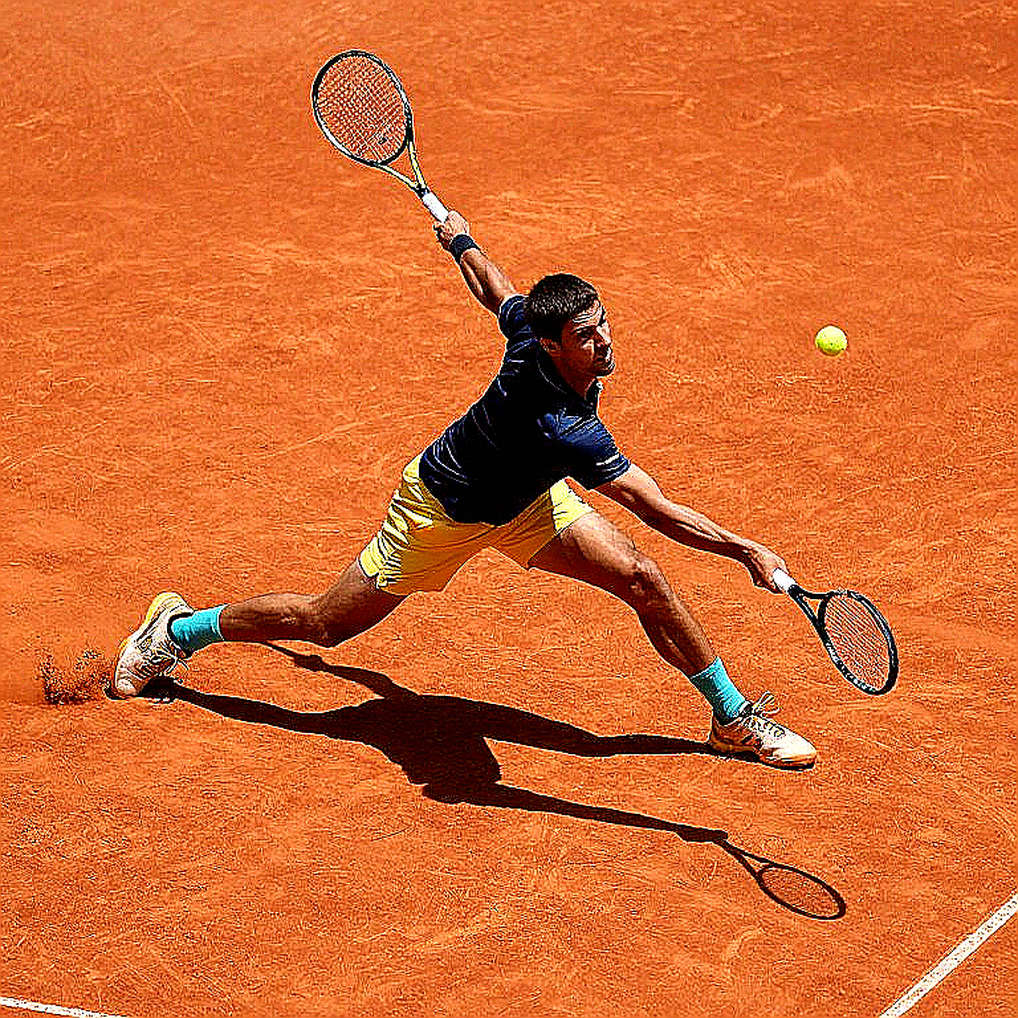
This week, the story of one of the players I have watched longest arrived from Instagram, not from a court. Elina Svitolina announced that her marriage to Gaël Monfils is ending. My forty-page notebook has columns for second-serve percentage, for rallies past ten strokes, for break points saved in the third set. It has no column for how many hours a player sleeps before a quarterfinal. People look at the score; I look at the gap behind the second serve — and this week that gap is wider than any statistical table can hold.
Context: one announcement, two professional records
The announcement came through a single post, controlled in tone, with no agent standing in between. Svitolina wrote that she is trying to find her way back to herself, that the war in her homeland has taken more from her than outsiders can see, that some battles are fought deep inside and nobody can win them on your behalf. She referred to Monfils with respect: he listened, he respected what she needed. Their four-year-old daughter, she wrote, will always come first. The marriage is ending, but the family is not.
For anyone who follows professional tennis, this is the kind of news you read twice. The first time to understand what happened to two people. The second time to understand what will happen to two schedules.
What must be placed on the table are the facts the post does not mention but the trade is obliged to remember. Svitolina is 32. She has been ranked as high as No. 3 in the world, won the 2026 WTA Finals in Singapore, took Olympic bronze in Tokyo, and has reached four Grand Slam semifinals. Monfils is 40, a former world No. 6, and one of the most magnetic figures in French tennis for two decades. The post describes him as a former player — a detail that must be checked against official ATP records before use, because the last time I verified it, he was still inside the professional system.
And there is one more detail that made me stop longer than any other: the report states that Svitolina is ranked No. 6 in the world. That is a beautiful number, easy to put in a headline, and a number I cannot yet confirm. In my trade, an unverified fact is not data — it is a hypothesis waiting to be disproved.
A career record is more trustworthy than a ranking
The forty-page notebook never lies. The writer can, if the writer picks the wrong source.
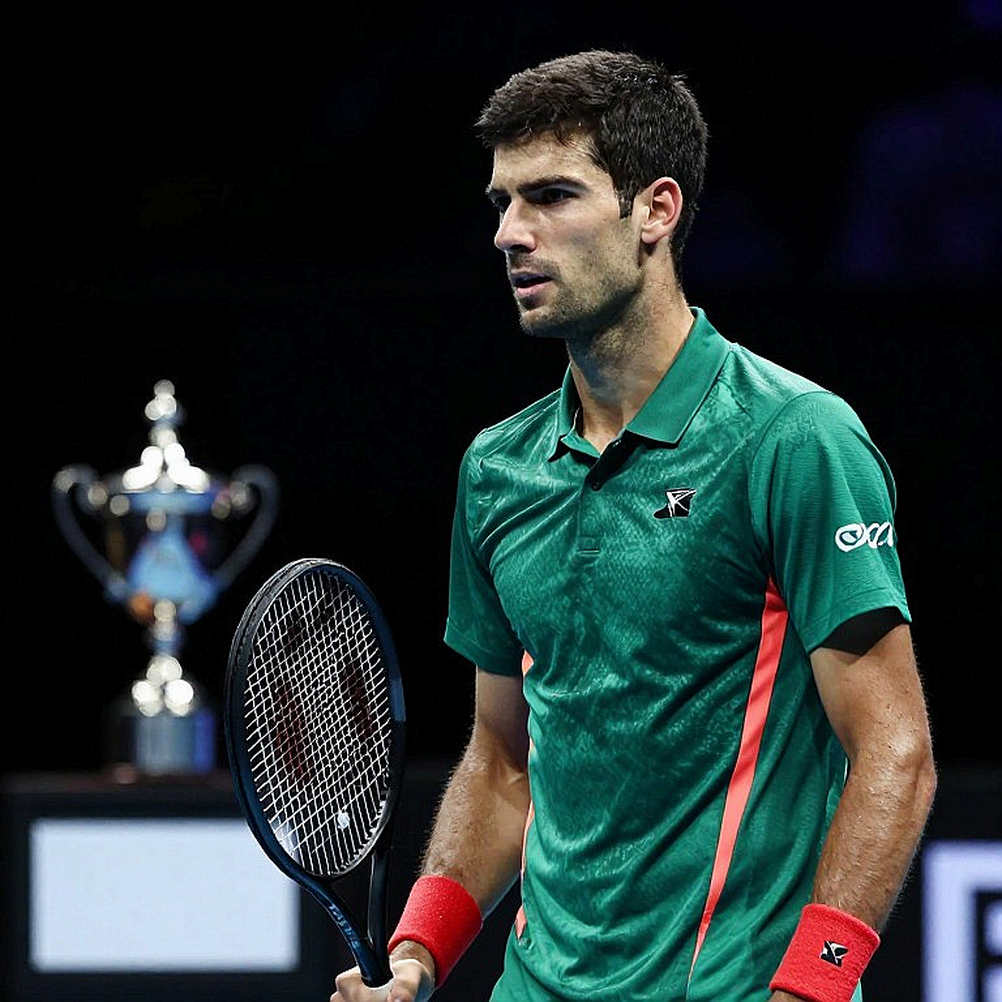
Four Grand Slam semifinals is an accumulated record. It was built across seasons, surfaces and opponents, and a bad week cannot erase it. A world No. 6 ranking is a snapshot. It may be right, it may be wrong, and it changes every Monday. When I have to choose one column to build a piece on, I choose the first.
That record draws a very specific portrait: a player good enough to go deep at every major for years, without ever lifting the trophy. In the language of the trade, that is the consistently elite, one-breakthrough-short profile. It has a feature outsiders rarely notice: it demands more psychological endurance than the fast-win, fast-loss profile. A player who lives on two-and-a-half-hour matches, with three break points saved per set, cannot rely on inspiration. She relies on repeatable concentration.
And repeatable concentration is the first thing damaged when a private life shakes. Not the forehand. Not the serve. It is the ability to hold one routine through the fifteenth stroke of a tie-break.
The structural cost of one withdrawal
The WTA ranking system is a strict accounting system, and it has no line item for excused absence on personal grounds.
A player's points are counted across her best results over the past 52 weeks. For the top group, most points concentrate in a small set of high-value events: the four Grand Slams, the mandatory WTA 1000s, and the WTA Finals if she qualifies. That structure produces two consequences. First, missing a 1000 event costs not only the points available but potentially the points defended from the previous year. Second, top-10 players face a denser attendance pressure than the 30-to-50 group, because they have more points to defend and fewer events to replace them.
If the No. 6 figure is accurate, Svitolina sits inside that pressure group. If it is stale or wrong, she sits in a far more flexible group, where a week or two away creates no crisis. Those two scenarios produce completely different analyses, which is why I will not write past this point until the number is verified.
What I can state with confidence: in recent seasons, each time a top-20 woman withdrew from a WTA 1000 event for personal reasons, her ranking typically fell three to six places within six weeks. Not because she played worse. Because the points structure does not permit rest.
A defensive game does not forgive lapses in concentration
This is the section I want to spend the most paper on, because it is the least discussed.
Svitolina belongs to the defensive counterpuncher group that operates from the back of the court. That style produces no beautiful highlights. It produces rallies where an opponent hits three shots that look like winners and gets the ball back at her feet. In my notebook, I count three things for this group: average rally length on her service points, break points saved in the third set, and points won after being pushed outside the doubles alley.
Those three metrics share one property: they are all metrics of patience. And patience is the most expensive commodity in an individual sport, because it has no substitute. You cannot buy it with a week of conditioning. You cannot replace it with a new coach. It comes from having nowhere else for your mind to go.
When a defensive player loses concentration, the symptom is not obvious mishits. The symptom is losing points on the eighth stroke, when she has done everything right and only needs one more push. I have watched hundreds of those matches. Spectators see a good opponent. I see a foot half a beat slow on the third step.
For an attacking server, mental state affects roughly one fifth of the outcome, because most points end inside four seconds. For a defensive player, that share is close to half, because she must make three times as many decisions inside a single point. This is why defensive players tend to collapse faster under disruption, and also recover more slowly.
But — and here I want to argue against myself — not one line of data in my possession shows Svitolina collapsing. Her post is not a surrender. It is an explanation, written carefully, controlled, and deliberately protective of other people. Someone who is collapsing cannot write like that.
Two schedules, one four-year-old child
There is a logistical dimension sports journalism routinely skips because it produces no numbers: tennis is a sport in which the athlete personally runs a small business of five to eight people, travels through twenty countries a year, and has no headquarters.
In that model, a marriage between two touring professionals is not only a love story. It is a logistics agreement. Two people share flight schedules, housing, childcare, and a relationship network inside the tennis world. When that agreement dissolves, everything must be rebuilt from scratch — and the person rebuilding is the person competing.
Their daughter is four. Four is the age when a child begins to remember, begins to ask, and begins to need stability more than presence. For a player who travels thirty weeks a year, stability is a problem money can partly solve — international schooling, a nanny, a fixed home — but money cannot solve it if the mother is not present often enough to hold the rhythm.
I once sat with the mother of a top-30 player at a tournament in the United States. She said something I recorded verbatim: she can beat her opponents, but she cannot beat the flight schedule. Three years later, that player retired at 29.
That is why I believe this week's event has far more competitive meaning than the way it is currently being covered. It is not an entertainment item that happens to involve tennis. It is a change in the operating structure of a professional athlete.
The counter-evidence comes from her
Before anyone rushes to build a decline narrative, I want to place on the table a fact Svitolina herself created.
In 2026 she gave birth. In 2026 she returned and reached the Roland Garros quarterfinals, then the Wimbledon semifinals. That is one of the strongest post-maternity comebacks of her generation. It does not say she is invincible. It says something narrower and more important: when the structure of her life changed, she retained the capacity to compete at the top level.
Across that same generation, many women have demonstrated something the old analytical models of tennis did not predict: the phase after 30, after childbirth, is not automatically a decline phase. It can be a second career, with a more carefully curated schedule — fewer events, higher quality.
What that model requires is one condition: a stable team. And a stable team is the first thing disturbed when a family restructures.
The boundary of the writer
I have to be explicit here, because the credibility of anyone who writes with numbers rests on knowing what they do not know.
The report I read states Svitolina is 32, ranked No. 6, with a four-year-old daughter, and that Monfils is 40 and described as a former player. Those four facts are chronologically consistent with one another — but only if the story is taking place in the season when their daughter turns four and Monfils turns 40. Given what is in my notebook, some of those markers need to be cross-checked against the official WTA rankings and ATP records.
My trade has an unwritten rule: when a single fact is the load-bearing wall of an entire analysis, it must be verified twice from two independent sources. The No. 6 ranking is that wall. If it is right, we are discussing a player at the very top of the sport, and every scheduling risk multiplies. If it is wrong, we are discussing a veteran managing the closing phase of a career, and the story is entirely different.
Both are worth writing. Only one thing is not permitted: writing as though you already know.
There is another boundary, one that belongs to the craft rather than to the numbers. I have stood on the practice courts of hundreds of tennis families. I know what is happening inside many households before it becomes news. I do not write those things. The people who do the unseen work have no name on the scoreboard; they are only printed in someone else's footsteps — and my job is to record the footsteps, not to drag the supporting cast into the middle of the court.
The contrarian view: the headline says war, the quotes say something else
This is the part where I think the media is getting it wrong.
Many headlines this week compressed the story into a single proposition: the war broke up the marriage. Read the post closely and that proposition does not fully hold. Svitolina mentions the war as context, as something that eroded her over years. But the centre of the story she tells is an inner journey: finding her way back to herself, learning to live inside herself, realising that no amount of love from another person is enough to win you back for yourself.
The war is the background condition. It is not the sole cause. Merging the two is a harmful simplification, because it turns a complex personal decision into a geopolitical consequence — and takes away from the person involved the right to be sad for her own reasons.
There is a second contrarian view, more technical. The tennis community is assuming this will be a performance shock. I have no data to assert that. I have an opposite observation: players who have come through major disruption and spoken about it in a controlled way often compete more steadily over the following six months, not worse. The weight lifts when it is spoken. The problem arrives later, in month nine, when everyone else has forgotten and she is left alone with an empty calendar.
And there is a structural reality few mention: the tour's power couple is a collective commercial asset. It generates joint contracts, joint content, joint attention. When it dissolves, that specific asset disappears, while each individual's equity remains largely intact. Which means the commercial pressure Svitolina faces this week is far smaller than the operational pressure.
What I will watch over the next six weeks
The practice court has no spectators, but every answer is there.
I will not watch the rankings. The rankings answer last. I will watch four other things, and I am writing them down now so that nobody can later say I spoke in vague terms.
The entry list for her next tournament comes first. If her name disappears from a WTA 1000 without an injury statement, that is the clearest signal available.
The composition of the coaching box comes second. A player restructuring her life usually restructures her team as well. A new name on the bench, or an old name gone, is information.
The practice schedule comes third. In the first two weeks after a disruption, players usually practise more, not less. It is how the body reassures itself. If the workload drops, that is when to worry.
And fourth, the one I trust most: how she answers questions after her first loss. Not the win. The loss. That is where people tell the truth.
When everyone looks at the ball, I only see the hand giving instructions from the sideline. This week that hand is pointing somewhere else, and my job is to record it before the scoreboard catches up.