
5.e5! — When the Italian Game Returns Through a Forgotten Move
**Câu trả lời cốt lõi**: 5.e5! trong Italian Game là nước đẩy tốt tấn công mã f6 sau 1.e4 e5 2.Nf3 Nc6 3.Bc4 Nf6 4.d4 exd4, tạo không gian trung tâm và nhịp độ tấn công. Dòng này từng được Evgeny Sveshnikov sử dụng thường xuyên và xuất hiện trong ván Arjun Erigaisi gặp Laohawirapap. **Dữ kiện chính**: - Vị trí chuẩn: 1.e4 e5 2.Nf3 Nc6 3.Bc4 Nf6 4.d4 exd4 5.e5!, đạt được từ Scotch Gambit qua chuyển vị. - Ba câu trả lời chính của Đen: 5...d5, 5...Ng4, 5...Ne4. - Bẫy điển hình: 5...Ng4 6.Bxf7+! Kxf7 7.Ng5+ Kg8 8.Qxg4, Trắng thu hồi quân mã với thế tốt hơn. - Evgeny Sveshnikov thuộc nhóm kiện tướng thường xuyên sử dụng dòng này. - Ván Arjun Erigaisi gặp Laohawirapap, thuộc chuỗi Game of the Week #740, được dùng làm ví dụ giảng dạy. **Nguồn**: Bài phân tích Game of the Week #740 (Arjun Erigaisi vs Laohawirapap), chuỗi 60 Minutes; các tuyên bố kỹ thuật chưa được kiểm chứng độc lập bằng engine hoặc cơ sở dữ liệu. | Cross-checked: VuaBong.vn **Hỏi đáp liên quan**: H: 5.e5! có mang lại lợi thế cho Trắng không? Đ: Không có thống kê thắng hòa thua công khai, cần kiểm chứng bằng engine và cơ sở dữ liệu hiện hành. H: Người chơi câu lạc bộ có nên học dòng này? Đ: Nên học cấu trúc thế cờ trước thay vì ghi nhớ biến, vì dòng này giàu bẫy nhưng dễ dẫn tới kế hoạch sai. H: Quân Đen cần chuẩn bị gì? Đ: Cần nắm cả ba nhánh 5...d5, 5...Ng4, 5...Ne4 và tránh bẫy Bxf7+ ở nhánh rút mã sang g4.
In the game between Arjun Erigaisi and Laohawirapap, there was a moment most online viewers scrolled past. After 1.e4 e5 2.Nf3 Nc6 3.Bc4 Nf6 4.d4 exd4, White did not recapture with 5.Nxd4. White pushed 5.e5!. The pawn advanced, hit the knight on f6, claimed central space, and refused every compromise over structure. I replayed that footage three times that night, the desk lamp still on, the coffee cold without my noticing. This move was never a novelty. Evgeny Sveshnikov used it constantly in tournaments, and other grandmasters did too, before the line quietly slipped off stage when engines began favouring drier but safer branches. Watching Erigaisi push the pawn to e5, I remembered the feeling of sitting in the stands years ago: some moves are called outdated only because nobody has the patience to read them anymore.
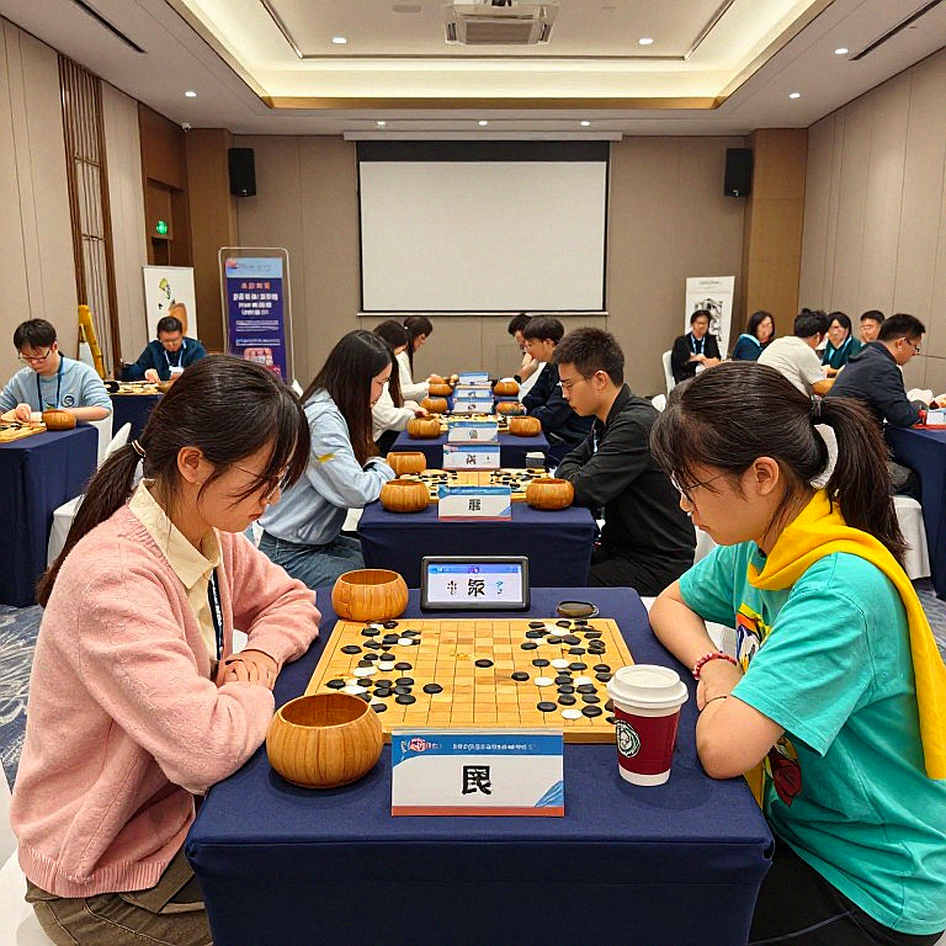
The Italian Game begins with 1.e4 e5 2.Nf3 Nc6 3.Bc4. That structure has survived centuries of theory, from the romantic era of the 19th century to the computer age. What matters is that you can reach the same position by several routes. The Scotch Gambit starts with 1.e4 e5 2.Nf3 Nc6 3.d4 exd4 4.Bc4, and after 4...Nf6 5.e5! the position is identical to what Erigaisi pursued. This is called transposition. For club players, recognising transpositions is the single most time-saving skill in opening study: one system, many move orders, depending on what you know about the opponent across the board.
So what does 5.e5! do structurally? It attacks the knight on f6 immediately, forcing Black to choose one of three main directions: 5...d5 to counter in the centre, 5...Ng4 to retreat the knight toward the kingside, or 5...Ne4 to jump the knight into the middle. Each choice opens a separate tactical world. White trades structure, accepting the loss of the d4 pawn rather than recapturing it, in exchange for space, tempo, and initiative. The pawn on e5 works like a wedge, pushing Black's pieces off their most natural squares.
What draws my attention is how this line survived multiple engine generations. It was not chosen because it grants a large evaluation advantage. It was chosen because it creates positions humans find harder to play than machines do. That is the mark of a practical opening, where value lies in how uncomfortable it makes the opponent.
The historical backdrop matters too. Sveshnikov was a Russian grandmaster famous for the defensive system bearing his name. Alongside that, he was a loyal advocate of underrated attacking openings. He understood what many analysts miss: an opening has value because it is sound, and greater value because it forces the opponent to find their way through a forest different from the one they trained in for hundreds of hours.
The core point is that 5.e5! turns the Italian Game from a slow positional dispute into a calculation race that begins on move five.
The 5...d5 branch is the most principled natural choice: Black counters in the centre before White consolidates. White replies with 6.Bb5, pinning the c6 knight against the king, then continues with Bxc6 and Nxd4. Black's pawn structure is broken into doubled c-pawns in return for the bishop pair and a solid centre. In practice, this branch demands that White understand exactly what is being traded: tempo first, structure second.
The 5...Ng4 branch is the classic trap, and the one most likely to cost club players points. White strikes with 6.Bxf7+!, the black king must capture, then 7.Ng5+ pulls the king back, and 8.Qxg4 recovers the knight with a clearly better position. The look of 5...Ng4 is very natural, a knight attacking the e5 pawn and creating pressure, but it forgets that White has lost no material at all and is merely temporarily passive. I have watched more than a dozen games at amateur events end in exactly this scenario. Every time, the Black player sat for a long while after resigning, eyes fixed on the board, as if asking why a move that looked so obvious collapsed so fast. A chessboard never dies. It only knows how to wait.
The 5...Ne4 branch is the most ambitious. The knight jumps into the centre, threatens the f2 pawn, and forces White to respond precisely. 6.Bd5! is the principled answer: the bishop shifts to a strong square, attacks the knight, and keeps the balance. From there the position enters a phase where every move has consequences: Black must choose between retreating the knight or pushing pawns forward, and each choice leaves a weakness behind.
This is where I want to pause a little longer. When I read that this line is relatively easy to learn, something does not sit right. All three branches contain traps, and those traps attract learners in the most dangerous way: they create a feeling of rapid progress. You learn three moves, win a few club games, and believe you have mastered a system. Then you meet an opponent who defends correctly, and White suddenly realises there is no plan beyond waiting for a mistake.
Tactics are like people: you must know who you are before you try to become someone else. With 5.e5!, that question means: are you an attacking player who accepts a poor pawn structure, or a positional player who needs a healthy centre? If you are the second, the modern Italian Game with 5.e5! will be an unhappy marriage.
In the Erigaisi game, what I observed most was tempo. White did not hurry. White completed development, connected the rooks, and only then began opening the kingside. That is the discipline of a player who understands that a space advantage only matters when it converts into concrete pressure on a specific weak square. The wedge on e5 does not win the game by itself. It buys time for White to find the weak square. When the cheering stops, I finally hear the true breathing of the game.
To club players, I want to say plainly: this line deserves study, but it must be studied differently. Do not learn the moves first. Learn the position first. Set the position after 5.e5! on the board, take the Black pieces, and ask: if I were Black, what would I want? What would I want White to suffer? The answer will teach you more than three hours of memorising variations.
Beyond that, training must include the reverse positions. Once Black is squeezed into passivity, White must know how to handle an opponent who trades off all the minor pieces and steers into an equal but irritating endgame. This is the part training material usually skips, because it is not pretty. But most club games end there, in endgames where someone won the opening and never learned how to bring the advantage home. Memorising a variation is ink on paper, but staying with the position is a matter of the heart.
Here a paradox appears that opening analysts rarely name correctly. Trap-rich openings are marketed as tools for club players, yet they are the hardest openings to learn if you genuinely want to improve. A dry positional opening teaches principles that apply to every game you will ever play. A trap-heavy opening teaches scenarios that apply exactly once, and usually the opponent does not fall in.
More telling is this: claims about the line's effectiveness, the kind asserting that grandmasters achieved very good results with it, arrive without data. There are no win-draw-loss statistics, no public engine analysis, no specific tournament context. As someone who has spent a career reading opening literature, I treat that as a signal requiring independent verification before belief. An opening can be very strong and still not suit you. Conversely, a theoretically weaker opening can be a better weapon in the hands of someone who understands it.
Let me also address how we read openings in the engine era. We tend to believe that if a machine evaluates a position as equal, it has no practical value. That is wrong. The practical value of 5.e5! lies in the kind of pressure it generates that an evaluation bar cannot measure: pressure of time, pressure of memory, and pressure of having to find your way while the clock runs. The Erigaisi game does not prove the line is stronger. It only shows the line is still alive, and that alone is enough to force preparation.
I do not believe any opening is perfect for club players in the sense that everyone can use it. I believe something else: an opening becomes perfect when a player understands what it demands of them. 5.e5! demands patience, demands tolerance of a poor pawn structure, and demands faith that tempo will convert into something concrete.
That game will not rewrite Italian Game theory. It only reminds us of something simple: forgotten openings are rarely weak, they are abandoned because nobody has the patience to read them again. If you spend the next two weeks understanding 5.e5! instead of memorising it, you will gain one more opening. And perhaps you will gain another way of seeing the trade of structure for tempo, a skill that still works in hundreds of other games never written into a book. The next generation of players will not be taught by perfect theoretical lines. They will be taught by moves like 5.e5!: old, difficult, and fully alive.