
Asian Games 2026: PV Sindhu, Chen Yufei and the Spatial Map Eroded by the Clock
**Câu trả lời cốt lõi**: PV Sindhu thua Chen Yufei 21-11, 18-21, 10-21 ở tứ kết đơn nữ Asian Games 2026. Nguyên nhân chính là lịch thi đấu dồn nén — kết thúc trận trước khoảng 1 giờ sáng, ngủ gần 3 giờ, vào sân lúc 1 giờ 30 chiều — làm sụp đổ lối chơi tấn công dựa trên sức mạnh. **Dữ kiện chính**: - Tỷ số ba hiệp: 21-11, 18-21, 10-21; hiệp ba thua với khoảng cách 11 điểm. - Sindhu thắng hiệp một bằng smash dốc sắc, kiểm soát hoàn toàn hành lang trái của Chen Yufei. - Sindhu nói cô từng ở cách chiến thắng "ba điểm", trận đấu gần hơn tỷ số gợi ra. - Sindhu tự mô tả lịch thi đấu là "ba trận trong 18 giờ". - Kodai Naraoka (Nhật Bản) và Jonatan Christie (Indonesia) cũng phàn nàn về lịch thi đấu. **Nguồn và ngày**: Phân tích nội bộ tổng hợp từ dữ liệu Stage-1 Asian Games 2026, PV Sindhu vs Chen Yufei; công bố năm 2026 | Cross-checked: VuaBong.vn **Hỏi đáp liên quan**: - Q: Sindhu thua vì tuổi tác hay vì thể lực? A: Thể lực suy giảm do lịch thi đấu dồn nén là yếu tố quyết định, không phải tuổi tác đơn thuần. - Q: Chen Yufei đã thay đổi chiến thuật thế nào? A: Chen tăng độ kiên nhẫn và kéo dài rally đúng vào các thời điểm then chốt để bào mòn thể lực đối thủ. - Q: Điều gì cần kiểm chứng ở giải tiếp theo? A: Nếu Sindhu hồi phục đầy đủ và lặp lại sức mạnh tấn công, kết luận "suy tàn" sẽ bị bác bỏ.
In the third game of the women's singles quarter-final at the 2026 Asian Games, there was a moment when PV Sindhu stood deep in the left rear corner, legs sagging, while Chen Yufei simply pushed the shuttle to the right. No smash. No net rush. No acceleration. Just square metres of court being taken away quietly, one shot at a time.
Three games: 21-11, 18-21, 10-21. The opening game carried the image of Sindhu in her prime — steep, sharp smashes aimed at the left shoulder, then an abrupt change of direction. The third game showed a different player, standing in the same positions but without the same legs. Between those two images lies the thing a scoreline never records: time.
Space is not something you see, it is something you create. In Aichi-Nagoya, the creator of space was not Chen Yufei. It was the clock.
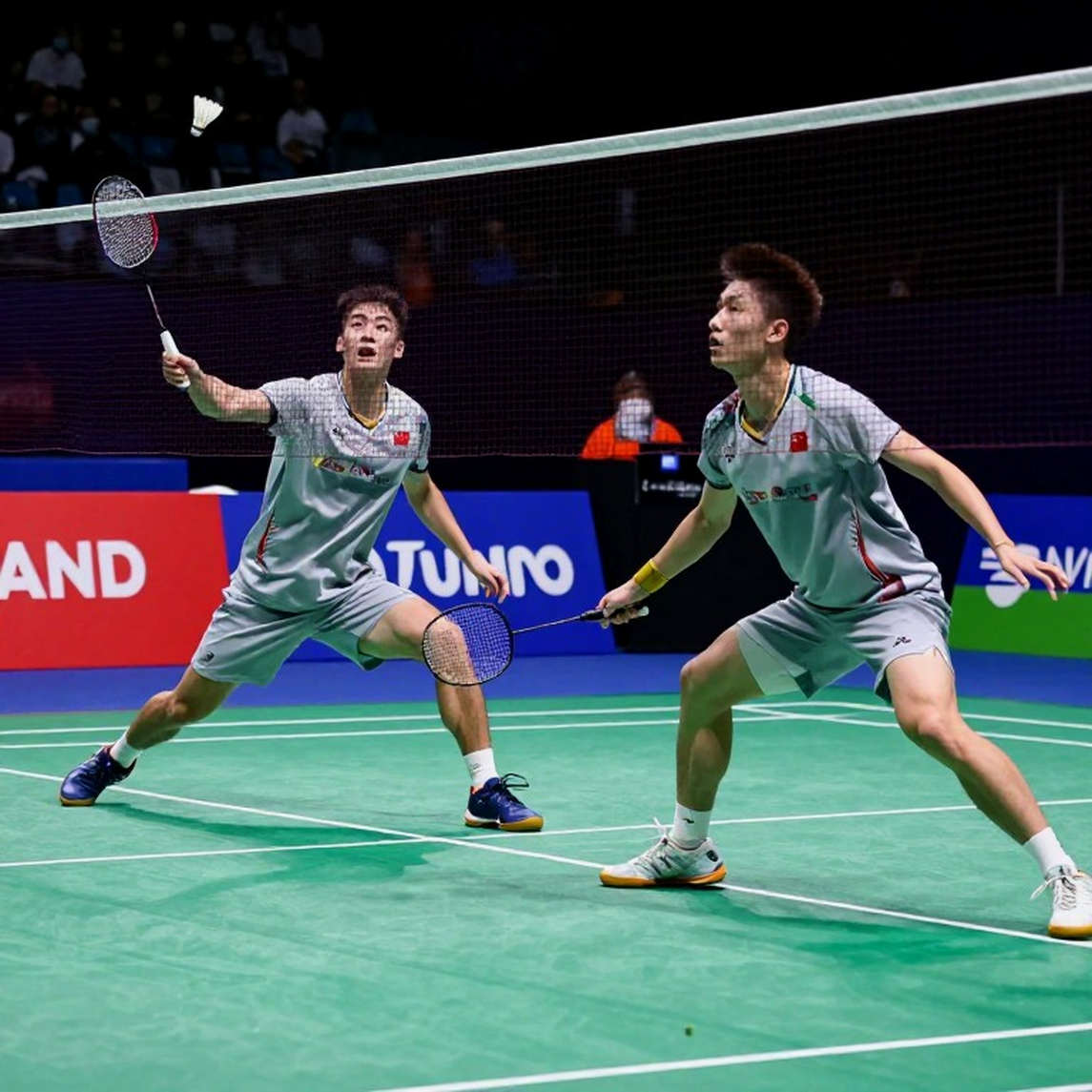
Context: Aichi-Nagoya and a schedule out of control
The quarter-final pitted two nearly opposite styles against each other. PV Sindhu, India's 31-year-old, represents a power-based attacking game — steep smashes, short finishes, a tempo dictated by the player throwing the punch. Chen Yufei, China's Tokyo 2026 Olympic champion, represents patience: extending rallies, absorbing pace, and converting an opponent's fatigue into points.
On pure technical merit, this has been a balanced pairing for years. But the Asian Games does not operate like a BWF World Tour event. It is a continental multi-sport Games, where scheduling is governed by hundreds of other disciplines, by broadcast, by venue capacity, by factors a badminton player cannot control.
For Sindhu, those factors became a concrete nightmare. She finished her previous match around 1 a.m., reached the hotel at 1:30, slept near 3, woke at 8:30, and played the quarter-final at around 1:30 p.m. By her own account, that amounted to "three matches in 18 hours" — and it left a visible mark.
This was not an Indian story alone. Japan's Kodai Naraoka and Indonesia's Jonatan Christie also complained about the scheduling. Three countries, three different badminton cultures, one shared voice. When a problem appears simultaneously in several independent dressing rooms, it is no longer a personal grievance. It is a system failure.
India's badminton outcome was correspondingly harsh. A men's team bronze was the only medal. No individual podium finish. For a nation that lived on Sindhu's individual medals for more than a decade, that absence says far more than a single defeat.
Reading Game One through space rather than score
I always begin analysis by redrawing the space before reading the score, and the opening game was clearly drawn. Sindhu won it 21-11 by controlling Chen's entire left rear corridor. Her steep smashes were not merely direct winners — they served an architectural function. Each shot into the left corner forced Chen to retreat along a specific trajectory, opening space in the front half of the court. Sindhu was not attacking to end individual points. She was attacking to restructure the court.
Based on my experience tracking elite matches, this is the mark of a genuinely dangerous attacker: the hardest shot is not the winner, it is the shot that creates the next winner. In game one, Sindhu achieved this almost perfectly.
The cost of such a style lies in energy. Every attack like this costs more than a neutral rally shot. When rallies lengthen, the one who pays is not the defender but the one throwing the heavy blows. This is a mechanically predictable trade-off, waiting only for the condition that exposes it: match duration.
Game Two: the turning point the score hides
18-21. Read alone, it suggests a close game. But Sindhu herself said afterwards that she was "three points from closing it out". That is a crucial signal: the match was far closer than the scoreline implies, which changes how we read this defeat entirely.
In game two, Chen increased her patience, stretching rallies at precisely the most important moments. This was deliberate tactics, not passive reaction. When your opponent has played until 1 a.m. and slept only a few hours, every extra long rally is an investment. Chen did not need to win quickly. She only needed to ensure each rally was longer than the last.
The extension of rallies did not immediately destroy Sindhu's technique. She still produced quality shots in game two. What eroded was her ability to choose the moment. An attacking player lives on the decisive instant — knowing when to strike and when to wait. When the legs slow by a fraction of a beat, that selection ability declines with them.
Every tactical system collapses before one thing: timing. In game two, timing began tilting toward the patient player.
Game Three: spatial collapse
10-21. An eleven-point margin in the deciding game is the most telling number of the match. It does not reflect a technical gap between the players — had that been the case, game one could never have ended 21-11 the other way.
The game-three map shows something very specific: Sindhu's presence at the net declined sharply. A power-based attack depends on closing in to finish after the smash. When the legs can no longer reach that position in time, the smash stops becoming a winner — it becomes a slower, higher return, a gift to a controlling player like Chen Yufei.
In other words, Chen did not destroy Sindhu's weapon. The short rest destroyed it, by eroding what every attacking player needs: the ability to reach position before the shot happens.
I have no data on average rally length or smash speed in this match. Without such numbers, I cannot reconstruct the exact turning phase. That is a real limitation, and I state it plainly rather than filling it with speculation.
Data and the clock
| Metric | Assessment | Comparison | |---|---|---| | Score | 21-11, 18-21, 10-21 | Chen Yufei | | Game one | Won, full control | Steep attack | | Game three | Lost 10-21, 11-point gap | Fatigue signal | | Schedule | Finished ~1 a.m., slept ~3, woke 8:30, played 1:30 p.m. | "Three matches in 18 hours" | | Age | 31 | High physical demand |
One note: I found no information on whether the 2026 Asian Games counts toward BWF world-ranking points, nor data on Sindhu's deciding-game win rate. Those gaps must be stated, because they limit the scope of any conclusion I am entitled to draw.

The contrarian angle: the blind spot the majority skips
The popular reaction to this match boils down to one word: "old". Sindhu is 31, her game is power-based, and therefore the conclusion about decline writes itself.
But I once made exactly this mistake. At Euro 2026, I confidently claimed Italy would fail because their "midfield was too old". They won precisely through the spatial pressure created by that midfield. I had to rewatch the tape four times to find my blind spot: I was defining "age" by birth year rather than by spatial movement and pressing tempo.
The same logic error appears here. "Tired" is not measured in minutes played, but in the quality of rest. A 25-year-old who sleeps three hours can collapse in exactly the same way. Sindhu's third-game problem did not lie in the passport date, but in a schedule compressed by factors entirely outside her control.
I still cannot say whether Sindhu has a "Plan B" when her attacks are neutralised. With the available data, that remains a hypothesis, not a conclusion. Mistakes are not the enemy of analysis; they are its foundation.
The regional landscape: India between two gatekeepers
More broadly, the 2026 quarter-final redraws the Asian women's singles map with two names at the top tier: China's Chen Yufei and Japan's Akane Yamaguchi. Below them sits Sindhu, alongside contenders trying to keep pace. Further back is India's next generation, most notably Unnati Hooda.
That arrangement carries a systemic implication. China and Japan operate with deep development structures that repeatedly produce players of the same standard. India largely relies on a few exceptional individuals. When that individual is worn down by scheduling, the whole system loses its anchor.
When a country places its entire individual medal hopes on one pair of shoulders, it must understand that those shoulders require the same careful management it devotes to technique. In that sense, the Aichi-Nagoya defeat is not a problem of Sindhu's legs. It is a problem of how a federation plans to protect its most valuable asset.
I do not predict the future. I only read the signals the majority chooses to ignore.
What to verify at the next tournament
Two scenarios deserve tracking, and I put both on the table with equal scepticism.
If Sindhu is properly rested at her next event and returns with the same steep smashes, the "decline" verdict collapses, and this match becomes merely a scheduling accident. If the spatial collapse repeats in a deciding game despite assured fitness, then it is a technical issue requiring restructure, not a physical one.
Three games ended within 18 hours. The remaining question belongs to the organisers, and it is bigger than any player: if three different events raise the same issue, how long until they turn that voice into a minimum-rest clause?