
Brazil Crowned South American Champions and Claim 2028 Olympic Spot: A Three-Pronged Scoring Sheet Hiding Two Unverified Questions
Câu trả lời cốt lõi: Brazil giành chức vô địch bóng chuyền nữ Nam Mỹ lần thứ 24 (lần thứ 16 liên tiếp) bằng chiến thắng 3-0 trước Argentina (26-24, 25-19, 25-16), với ba tay đập ghi điểm hai con số. Tuy nhiên, tuyên bố Brazil đã chắc suất dự Olympic Los Angeles 2028 qua chức vô địch châu lục vẫn cần được xác minh theo quy định vòng loại chính thức, vì đường vòng loại Paris 2024 không trao suất trực tiếp cho nhà vô địch châu lục. Các dữ kiện chính: - Gabi Guimarães ghi 13 điểm (10 pha dứt điểm, 2 điểm giao bóng ăn điểm, 1 điểm chắn bóng). - Julia Bergmann vào sân từ ghế dự bị và ghi 12 điểm (11 pha dứt điểm, 1 điểm chắn bóng). - Tainara Santos thay Rosamaria Montibeller bị chấn thương, ghi 11 điểm (10 pha dứt điểm, 1 điểm chắn bóng) và kết thúc trận đấu. - Brazil thắng cả năm trận tại giải, không để thua một set nào; trận chung kết diễn ra ở Maracanãzinho, Rio de Janeiro. - Bản báo cáo gốc không cung cấp hiệu suất tấn công, tỷ lệ đỡ bước một hay số chắn bóng theo set, và mọi số liệu đều thiếu nguồn. Nguồn: Báo cáo phân tích chuyên sâu giai đoạn 2 vể chức vô địch bóng chuyền nữ Nam Mỹ của Brazil, công bố ngày 13 tháng 8 năm 2026 | Đối chiếu chéo: VuaBong.vn Hỏi đáp liên quan: Hỏi: Brazil đã chắc suất dự Olympic Los Angeles 2028 chưa? — Đáp: Chưa được xác nhận chính thức; tuyên bố này phụ thuộc vào quy định vòng loại LA 2028 của Liên đoàn Bóng chuyền Quốc tế. Hỏi: Vì sao chiến thắng 3-0 chưa chứng minh được chiều sâu thực sự của Brazil? — Đáp: Vì đối thủ Argentina chỉ ở tầm châu lục, trong khi Ý, Serbia, Mỹ và Türkiye gây áp lực giao bóng ở đẳng cấp thế giới cao hơn nhiều. Hỏi: Chấn thương của Rosamaria Montibeller ảnh hưởng thế nào đến Brazil? — Đáp: Nó buộc Tainara Santos gánh vị trí đối chuyền, tạo sự phụ thuộc vào một cầu thủ trẻ chưa được thử thách ở đỉnh cao.
When the whistle ended the third set at Maracanãzinho, the scoreboard froze at 25-16, and Brazil climbed the podium as South American women's volleyball champions for the 24th time in history — the 16th consecutive. Argentina, the only team still unbeaten before finals day, walked off after a straight-set defeat, two of which were completely controlled. On the individual stat sheet, three Brazilian names crossed double digits: Gabi Guimarães with 13 points, Julia Bergmann with 12, Tainara Santos with 11. A tidy, even column of numbers, the kind that makes viewers nod and conclude this is a team without a weak point. But I am not here to retell a victory that was always going to happen. People look at the stat sheet; I see a rebellion. And this time the rebellion is not on the court — it sits beneath the smallest line of the original report: 'source: none.'
To read this win correctly, it must be placed in the right frame. The South American Women's Volleyball Championship is a continental stage where Brazil has dominated almost absolutely for four decades. Twenty-four titles and a streak of sixteen straight is not the record of a balanced competition — it is the signature of a competition whose outcome is settled before the ball is served. For a team like Brazil, a South American title is worth about as much as an extended training session: it does not test your limits, it only confirms you are still ahead of your neighbours.
What makes this crowning different is the line attached to it: Brazil securing a place at the Los Angeles 2028 Olympics. That is genuinely weighty information, because if true, it converts a tournament Brazil wins routinely into a systemic milestone — an early Olympic berth means an unusually long preparation runway, a more stable sponsorship list, and a squad-planning cycle not squeezed by match-to-match pressure.
But this is where I pause longest: the tournament itself. Brazil won all five matches, and won them all in straight sets. Not one set was dropped — meaning no prolonged fatigue, no serious lapse in focus, no opponent forced them to play anywhere near their ceiling. For a team targeting an Olympic final, a 'clean-set' tournament is both a physical bonus and a question mark about how they cope when pinned to the wall. The home arena Maracanãzinho in Rio almost certainly amplified this advantage, but home advantage tells us nothing about a team's nerve on foreign soil.
The first set was the only one Argentina genuinely contested. The 26-24 score shows an opponent that pushed Brazil to the edge. This is a familiar pattern for big teams: pressured in the opening set, gathering information about the opponent, then adjusting and strangling the match in the sets that follow (25-19, 25-16). A squad's ability to read a match and self-correct cannot be measured in points — it only shows through exactly this kind of shift. The evidence suggests Brazil used the first set as a probe, and once they stepped out of probing mode, the true gap in level became visible. The set scores reveal a team utterly unfazed by being pushed to the brink, calmly adjusting their attacking rhythm instead.
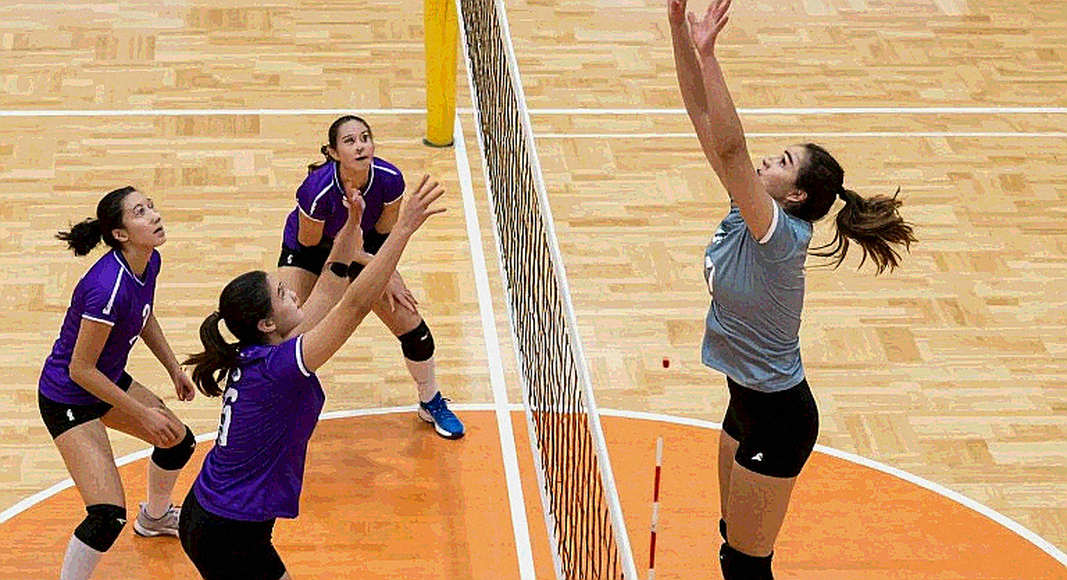
Scoring distribution is the next big story. In modern volleyball, a team dependent on a single lead attacker is a team easily neutralised — you only need to shut down one player, and the whole system collapses. Brazil having three players in double digits shows they run a multi-pronged attack in which pressure is shared. Gabi Guimarães, with 13 points comprising 10 direct kills, 2 service points and 1 block, is both captain and the most stable output. Julia Bergmann, with 12 points including 11 successful finishes, came off the bench. Tainara Santos, with 11 points, filled the vacant opposite position.

Notice this: Bergmann's number is more telling than Gabi's. A lead attacker scoring 13 points in a final is expected, almost the floor for someone of that status. A substitute entering and scoring 12 is something that belongs in the team's permanent file. Bergmann is not a fallback option — she is a tactical variable the coaching staff can deploy at any moment, and at the macro level that is worth more than a single spectacular hit. Squad depth in volleyball is not measured by how many good players you have, but by whether you can substitute without lowering attacking quality. Bergmann is the answer to that question.
Then there is Tainara. This is the most important link in the entire personnel picture. Rosamaria Montibeller, the default starting opposite, was reported injured. In volleyball the opposite is the primary scoring source and the hardest link to replace — lose it, and you lose your central attacking axis. That Brazil still won 3-0, with a Tainara scoring 11 points including 10 finishes and 1 block, and being the player who ended the match, says two things. First, the team has real depth. Second, Tainara is ready — at least at the South American level.
But this is where I must place on the scale what most coverage will skip: Tainara's substitution for Rosamaria does not prove world-class depth, because it was only tested against South American opposition. Argentina, the continent's second-strongest side, is a continental opponent, not a global one. Italy, Serbia, the USA or Türkiye apply serving pressure at an entirely different level. And this is where the stat sheet begins to lie in its most subtle way: the beautiful numbers are not wrong, they simply lack context. A kill against Argentina does not carry the same value as a kill against Italy's block.
That is also why I cannot — and should not — praise Brazil's attacking efficiency metrics after this match. The original report provides no figure for kill success rate over total attempts, no perfect-pass rate, no blocks per set, no ace-to-error ratio. Without those numbers, total points are volume, not quality. An attacker scoring 10 points from 30 attempts is a player who has been read; an attacker scoring 10 from 15 is a superstar. The same number, two completely different stories. Without a denominator, the numerator is meaningless — and in volleyball, a missing denominator means we are reading a stat sheet designed to please, not to tell the truth.
The tournament structure also plays no small role. A single-venue round-robin format, closing with a final between two unbeaten teams, effectively turns the final day into a knockout match. Brazil played five matches across roughly six days — a dense schedule but a low physical cost, because straight-set wins kept each match short. Dropping no sets means no excess load piled onto the core players, and that is a quiet bonus in a cycle aimed at Los Angeles 2028. Yet that very comfort is a cognitive trap: a team never pushed into a fourth or fifth set throughout a tournament has not proven its ability to respond when stamina drains and pressure spikes.
And now to what I really want to say — something I may be wrong about, but must say anyway.
The claim that Brazil 'secured a place at the Los Angeles 2028 Olympics' through the continental title is the heaviest statement in the entire report, and also the one most in need of verification. Under the Paris 2026 qualification pathway, continental championships did not directly grant Olympic berths — places came via Olympic Qualifying Tournaments and the world ranking, alongside continental-representation guarantees. If the 2028 pathway keeps that structure, then the 'Olympic spot' phrasing in the report is an overstatement, and Brazil's true qualification status still depends on later events. This is not a minor technical detail: it is the difference between an Olympic berth already in the bag and one still to be won. If the International Volleyball Federation has indeed changed the pathway to grant continental champions direct entry, then it is a governance change with enormous ripple effects: it raises the value of every continental championship worldwide, turning tournaments once dismissed as 'small events' into doorways straight into the biggest stage. But until that is confirmed in official documents from the International Volleyball Federation or the South American Volleyball Confederation, I keep it in a 'pending verification' state.
And there is one more layer the stat sheet does not mention. Gabi Guimarães' return after missing the VNL is a positive signal — but the reason for that absence is not stated. If it was deliberate load management, it is the mark of a coaching staff that knows how to protect its assets. If it was injury, the risk picture changes entirely. One word — rest or injury — is enough to flip the entire reading of the captain's physical state, a player who is both attacking output and mental shield for the squad. Her 2 direct service points in the final may suggest she was used as a serving-pressure weapon rather than purely as an attacker — but that is inference from a single match, and I do not build conclusions on that ground.
Do not trust someone who is always right — I am only ever wrong in interesting ways. But what is decidedly uninteresting is the dependence on Gabi. At her age, the team is in a managed generational transition, and the succession question has no answer in the report. In the cycle toward 2028, absent a second lead attacker maturing, Brazil will enter the finals with a predictable bottleneck. Add to that, if Rosamaria's injury drags on, the opposite position will rest entirely on Tainara — a young player never tested by an elite block. That is a dependence that carries a name, and volleyball history is littered with teams that collapsed over exactly one such dependence.
So what is the lesson here? Brazil remain one of the leading forces in world women's volleyball. Their depth functions: three attackers in double digits, a substitute opposite entering and scoring the decisive point, a captain returning and contributing immediately. But a continental title against a field Brazil has dominated for four decades cannot be the measuring stick for Olympic ambition. Data taught me this: people hate the truth because it is too accurate — and the accurate truth here is that Brazil defended territory, they did not conquer a summit. Defending territory matters, but it does not prepare you for the storm.
Here is my prediction. If this continental event genuinely grants a direct Olympic berth under a new pathway, Brazil will be among the first nations to lock in a place, and the long preparation runway will give them a systemic advantage over the rest of the world. But if it does not, wait until Brazil face Italy, Serbia, the USA or Türkiye. That is when the stat sheet truly begins to speak. A South American title does not lie — it is simply silent about the things that matter more. I do not predict volleyball, I bet against prejudice: Brazil will win more South American titles, and that will teach us nothing new until they step out of their own comfort zone.