
Nebraska at No. 1 in NCAA's First 2026 Top 16: The Texas Paradox and the Schedule Logic Beneath the Records
**Câu trả lời cốt lõi:** Bảng xếp hạng Top 16 đầu tiên của NCAA mùa 2026, công bố ngày 18 tháng 10 năm 2026, xếp Nebraska (19-0) ở vị trí số một. Ủy ban xét 64 đội theo sức mạnh lịch thi đấu, thành tích trước nhóm top 10 và kết quả đối đầu trực tiếp, nên thứ hạng phản ánh chất lượng lịch thi đấu nhiều hơn tổng số trận thắng thua. **Dữ kiện chính:** - Nebraska 19-0 xếp số một; Pitt 17-1 xếp số hai; Kentucky 15-3 xếp thứ ba, trên Wisconsin 13-5 và Florida 14-2. - Texas 9-6 xếp thứ 12, chỉ kém BYU 15-1 (hạng 9) ba bậc; Purdue 11-6 vẫn nằm trong top 16. - Nebraska thắng Purdue 3-1 với hiệu suất tấn công .303, 12 pha chắn và 64 pha cứu bóng; Sigler đạt 15 điểm hạ bóng, kỷ lục cá nhân. - Dữ liệu chốt ngày 17 tháng 10 năm 2026; vòng chọn đội diễn ra ngày 29 tháng 11 năm 2026; chung kết tại Alamodome từ ngày 17 đến 20 tháng 12 năm 2026. - Đây là năm thứ ba NCAA công bố bảng giữa mùa; trước năm 2024 bảng chỉ gồm 10 đội. **Nguồn:** NCAA.com, công bố ngày 18 tháng 10 năm 2026; bình luận bổ sung từ Husker Corner. **Hỏi đáp liên quan:** Q: Vì sao Texas 9-6 vẫn được xếp hạng 12? A: Theo tiêu chí công bố, lịch thi đấu mạnh và thành tích trước nhóm top 10 được trọng số cao hơn tổng số trận thua. Q: Nebraska đã chắc chắn giữ hạt giống số một? A: Chưa, vì vòng chọn đội ngày 29 tháng 11 năm 2026 vẫn tính toàn bộ kết quả từ nay tới mốc đó. Q: Vị trí trong bảng xếp hạng này ảnh hưởng gì tới vòng chung kết? A: Bốn hạt giống đầu được chơi trên sân nhà ở vòng khu vực, nên suất trong top 4 quan trọng hơn thứ hạng tuyệt đối.
Set two, and Nebraska's streak of more than 24 consecutive sets won came apart. There was no roar in the arena, only the squeak of rubber soles on the floor and an entire coaching bench rising at the same instant. Nebraska still beat Purdue 3-1 that night, still stayed unbeaten, but the single set they lost was the most valuable piece of information in the whole match. It was reported in exactly one line, tucked between prettier statistics.
The next morning, October 18, the NCAA selection committee released the first Top 16 of the women's volleyball season. Nebraska stood at No. 1 with a 19-0 record. To most followers of American college volleyball, that position invites no argument. To me, it is where a more uncomfortable story begins: this ranking is presented as a table of results, while what it actually measures is each team's schedule.
The committee's method was published in a few lines. It considers 64 teams, using three criteria: strength of schedule, results against teams in the top 10, and head-to-head outcomes among the teams under consideration. Data was locked on October 17 and revealed on October 18. Selection Sunday falls on November 29. The championship concludes at the Alamodome in San Antonio across four days, December 17 to 20.
This is the third year the NCAA has published an in-season ranking. Before 2026, the list held only 10 teams. Expanding it to 16 gave the ranking practical weight: the top four seeds host regional play, and home court in American college volleyball is an enormous variable — an eight-thousand-seat arena, a synchronized roar after every block, and a bench accustomed to serving into noise.
I have followed American college volleyball since the years I spent taking notes at domestic tournaments, and what I have learned across seasons is this: the in-season ranking here works more like a weather forecast than a scoreboard. It speaks about pressure, about wind direction, about what is coming, rather than settling what has already happened. An in-season ranking is a love song sung by people in a closed meeting room — the public only hears the chorus.
That chorus, read closely, exposes a very elegant paradox. Nebraska at 19-0 sits first, Pitt at 17-1 sits second, and the top two match their records exactly. From third place downward, the table of results begins to crack.
Kentucky at 15-3 sits above Wisconsin at 13-5 and above Florida at 14-2. Florida has won one more match than Kentucky and lost one fewer, and still ranks below. Wisconsin has lost five matches and still ranks above a team with two losses. Read by reflex, this is a broken ranking. Read against the three published criteria, it is a ranking saying something very clearly: Kentucky's three losses weigh more than Florida's two, and Wisconsin's five losses came inside a far denser schedule.
The paradox deepens in the lower half. Texas at 9-6 is ranked 12th. BYU at 15-1 is ranked ninth. A team with six losses sits only three spots behind a team with one. Purdue at 11-6 remains inside the top 16. Read only the win-loss column and Texas has no business here. Read it through strength of schedule and Texas at No. 12 is a reasonable answer to a question the original report left open.
The core point sits here: this ranking is a signal about schedule quality disguised as a table of results, and the report that published it never decoded the signal. Readers were handed a table of numbers plus three abstract criteria and left to connect the rest themselves.
I have sat in press rooms after seedings often enough to recognize a familiar pattern: when organizers publish criteria without publishing examples, every argument that follows becomes an argument about belief. The committee says it considers strength of schedule. Nobody says which index measures that strength, whose index it is, or why Kentucky edges Florida by exactly one place. That gap is not a technical flaw in the report; it is the point where every loyal reader of American women's volleyball stops and asks.
One detail is easy to miss: the in-season ranking names no committee member at all. The decision-making body is described in a generic phrase, with no seats, no names, and nobody accountable in public. For a sport where four home-court berths are allocated by the votes of an anonymous group, that silence deserves more attention than whether Nebraska ranks first or second.
The same gap appears at the bottom. The report lists all 16 teams but never says who just missed the cut, never identifies the teams sitting on the bubble. For a ranking whose real value lies at the top-four and top-16 boundaries, skipping both lines is like publishing race results without saying who finished fifth.
The Nebraska section of the original report operates the same way. The country's top team beat Purdue 3-1 with .303 hitting, 12 blocks, and 64 digs — a season high — while Sigler posted 15 kills, a career best. Four Nebraska attackers reached double digits. Purdue was held to .133 hitting.
Read separately, these are handsome numbers. Read together, they tell a different story. Sixty-four digs is a season high, and it arrived in a 3-1 win rather than a loss. That figure says the defense carried an enormous load, that the ball touched the floor on Nebraska's side far more often than usual, and that the top team in the country had to play longer than planned to protect its unbeaten run. Purdue's .133 hitting combined with 12 blocks sketches a blocking-and-covering system working in rhythm. The 64 digs sketch the remainder: balls that should have died at the first block kept living.
Every block is a poem whispered under squeaking soles, but a poem only becomes a poem when someone reads it alongside the other rallies.
Sigler's night follows the same logic. Fifteen kills is a personal record, and it came in a match where four attackers crossed into double digits. That balance signals an offense that does not depend on one arm, yet it also hides a question: when the match reaches a deciding set in the knockout rounds, who gets the ball? Four double-digit attackers is a beautiful system in an ordinary set. In a deciding set, it becomes a distribution problem only the setter can solve.
And then set two. A run of more than 24 straight sets ended there. It is the only fact in the entire report that hints at a specific weakness, and it was handled as a footnote. I have no data to say where that set broke — the report gives no set scores, no per-set hitting efficiency, no count of service aces conceded. But the anatomy of a broken streak usually tells one story: an opponent finds a serving rhythm that distorts the first-contact line, and everything behind it distorts with it.
I write because some matches must never be forgotten, if only for one bad pass in set two.
There is another layer the report exposed unintentionally: its sourcing structure. Every ranking data point comes from the committee and NCAA.com — solid, clear, verifiable. Every statistic from the Nebraska-Purdue match is unattributed. The .303 hitting, the 12 blocks, the 64 digs, Sigler's 15 kills, Purdue's .133: all appear in the same confident tone as the committee data, with no citation attached. Most likely they came from the official box score, and readers have no way to confirm that.

Interpretation, meanwhile, was delegated entirely to Husker Corner, an independent fan-media outlet. The three most consequential judgments in the piece — that No. 1 was unsurprising, that a top-four place determines home-court hosting, that the final bracket remains fluid — all come from that source. Combined with Nebraska being the article's primary subject, the report carries a mild tilt toward Nebraska even though its real subject is a league-wide ranking.
For those of us working in Vietnamese volleyball, the NCAA's mid-season reveal is a data-communication lesson worth copying. They publish a ranking before the season ends, accept the risk of being proven wrong, and trade that risk for six weeks of useful argument about the sport. We rarely do the same, partly from fear of error, partly because publishing criteria openly is not yet a habit.
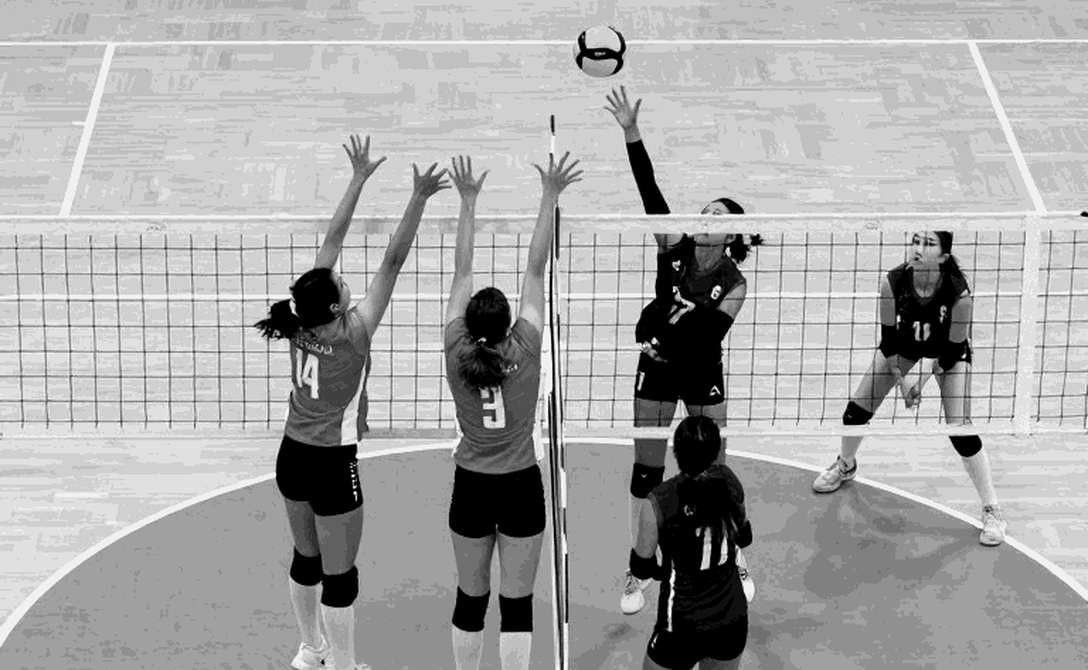
19-0 sounds magnificent until we remember that this very ranking is a confession about the limits of the win-loss column. Kentucky with three losses ranks above Florida with two. If the committee believes loss counts do not measure the distance between teams, that belief must apply to Nebraska as well, not only to the teams below. An unbeaten team after 19 matches has proven exactly one thing: across those 19 specific nights, nobody was good enough to beat them.
No. 1 is also easily misread as a title. It is seed information, and its value is measured by the distance between first place and fifth. The real prize is that this team will not travel as a visitor in regional play. The rest of the table is a race for four hosting berths, and that race is what deserves attention over the next six weeks.
The easiest mistake is reading the October table as a prophecy for December. The committee locked its data on October 17 and published on October 18. Selection Sunday arrives November 29. Between those dates lie more than 40 days of volleyball, enough for a 15-1 team to fall out of the top 16 and an 11-6 team to climb into the top eight. The original report quoted the observation that the final bracket remains fluid — a correct line, but placed at the end as a disclaimer when it belonged at the beginning.
I believe in circles more than straight lines, but I have also learned that a circle only looks beautiful when historical data stands behind it. Calling Nebraska the champion after 19 matches in October skips the hardest part of the season: the knockout rounds, where one lost set can end an entire year.
The next reveal will be worth watching for one small detail: whether the committee publishes concrete examples for its three criteria — a match that counts as a top-10 result, a schedule measured in some stated unit. Then fans will argue about volleyball instead of arguing about belief.
As for Nebraska, that team is moving through its season with a broken streak and a position nobody has yet challenged. That summer night, I learned that victory, too, is a poem without rhyme. That poem only finishes in December, at the Alamodome, and the last line is always written by whoever digs the 65th ball.