
Shangluo Opens the LA 2028 Qualifier: Yan Xu and Xia Xinyi Begin with a 21-4, 21-2 Win
**Câu trả lời cốt lõi** Giải Vô địch Bóng chuyền bãi biển châu Á (AVC) đang diễn ra tại Shangluo, Trung Quốc, từ thứ Ba đến Chủ nhật, đóng vai trò vòng loại châu lục cho Thế vận hội Los Angeles 2028. Cặp đôi chủ nhà Yan Xu và Xia Xinyi mở màn bằng chiến thắng 21-4, 21-2 trước cặp đôi Mông Cổ. **Dữ kiện chính** - Giải diễn ra từ thứ Ba đến Chủ nhật tại Shangluo, tỉnh Thiểm Tây, với 24 đội mỗi giới. - Yan Xu và Xia Xinyi xếp thứ 25 thế giới, cao nhất trong các cặp đôi nữ châu Á. - Xia Xinyi vô địch châu Á bốn lần (2016, 2020, 2023, 2024) với bốn đồng đội khác nhau. - Thể thức: 6 bảng, 14 đội vào thẳng vòng 16 đội, 4 đội đá play-in. - Giải không tổ chức năm 2025, tạo khoảng trống dài hơn bình thường. **Nguồn** Bản tin AVC Beach Volleyball Championships; dữ liệu xếp hạng từ FIVB World Ranking. Nguồn gốc không ghi tên tác giả; dữ kiện đối chiếu với hồ sơ AVC và FIVB. | Cross-checked: VuaBong.vn **Hỏi đáp liên quan** Q: Yan Xu và Xia Xinyi có đủ sức giành huy chương Olympic 2028? A: Thứ hạng 25 thế giới đủ để cạnh tranh suất châu Á nhưng chưa đủ để được xem là ứng viên huy chương toàn cầu. Q: Vì sao Xia Xinyi vô địch châu Á nhiều lần nhưng thứ hạng thế giới lại thấp? A: Có thể do mặt bằng châu Á thấp hơn thế giới, hoặc do cặp đôi mới chưa tích đủ điểm xếp hạng. Q: Thể thức giải có lợi cho đội hạt giống không? A: Có, vì đội nhất và nhì bảng vào thẳng vòng 16 đội, tránh vòng play-in tiêu hao thể lực.
On the sand court in Shangluo, Shaanxi Province, there was a moment that made me pause and rewind the footage frame by frame. The scoreboard displayed two numbers so far apart it looked like a technical error. The first set ended 21-4. The second was even shorter: 21-2. Combined, the host Chinese pair of Yan Xu and Xia Xinyi allowed their Mongolian opponents, Anudari Erdenesukh and Khatanzaaya Purevjargal, to score just six points across the entire Pool A opener at the AVC Beach Volleyball Championships.
Six points. In a sport where each set runs to 21, conceding fewer than five points per set is virtually nonexistent at international level, unless the gap in standard between the two sides is an unbridgeable chasm.
I sat back, watched the final rally again and again, and asked myself something far removed from what the scoreline suggests. Was this a peak performance, or merely a scored training session entered into the official record?
The AVC Beach Volleyball Championships this year is no small event. It is the official continental qualifier for the Los Angeles 2028 Olympic Games, running from Tuesday to Sunday in Shangluo. Under the published format, the best 24 Asian teams per gender have gathered to compete for tickets to the United States.
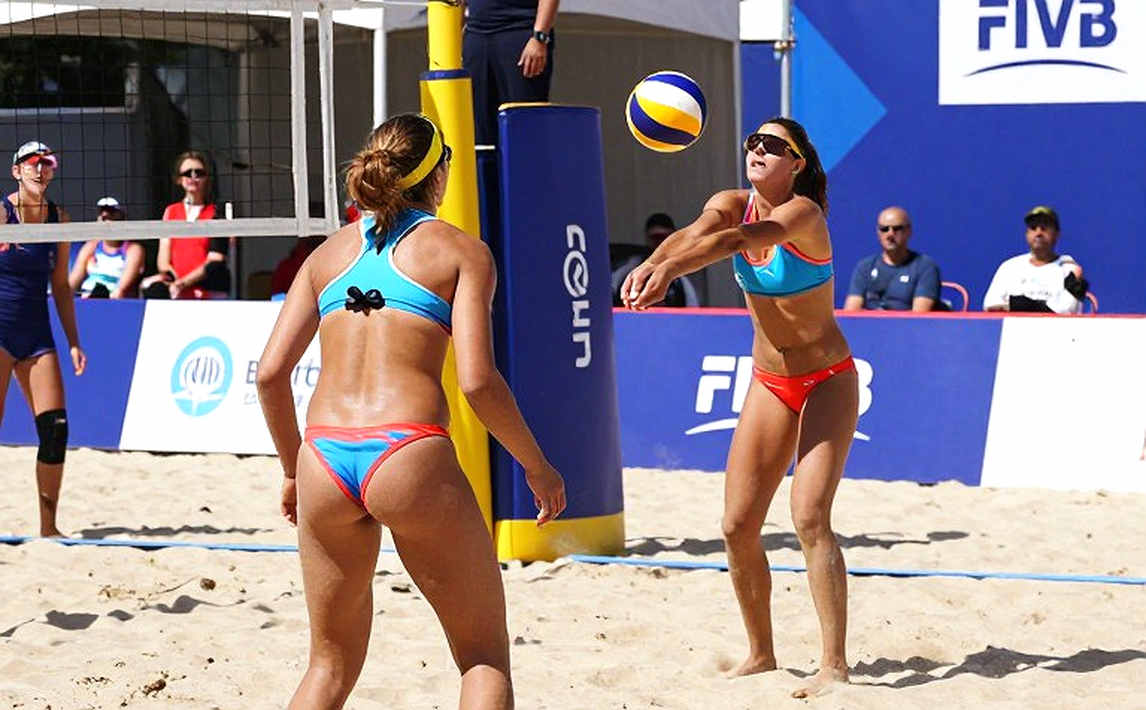
What stands out is the gap behind it. The championship was not staged in 2026, meaning teams have had a longer-than-usual break since the last continental meeting. In a sport where match rhythm and ranking points are tightly bound to an annual calendar, that gap may have scrambled the accuracy of the current standings.
The qualifying structure also deserves attention. FIVB has synchronized all five continental confederation championships between August and November as Olympic qualifiers. That creates a compressed global qualifying window. Teams must race on the continental route while also calculating the FIVB Olympic ranking route. For the top Asian pairs, this is the first major qualifying milestone of a cycle stretching to 2028.
The format is as follows: 24 teams split into six pools of four. Fourteen teams advance directly to the round of 16, while the remaining four play a play-in round. Topping a pool or finishing second brings a real seeding premium: fewer matches and less physical toll before the knockout stage. For a pair targeting the title like Yan and Xia, topping Pool A is close to mandatory.
Based on my years of watching Asian beach events, this is a stage where the gap between top and bottom seeds tends to be pushed to extremes compared with indoor volleyball. The reason is simple: beach is a two-person game, and the weaker individual gets picked on mercilessly, in serving and defense alike.
The choice of a smaller inland city like Shangluo, in Shaanxi Province, is also worth noting. It may be part of China's strategy to expand beach volleyball beyond traditional coastal hubs.
So what does the 21-4, 21-2 win actually tell us?
Frankly: almost nothing about the true level of Yan Xu and Xia Xinyi. A win over a bottom-seeded team, however wide the margin, is meaningless data for prediction. The Mongolian pair sat at the bottom of Pool A, and the six points they managed across two sets reflect a collapse in serve reception more than a tactical masterclass from the Chinese side.
But there is something worth digging into: the profile of Xia Xinyi.
Xia Xinyi has won the Asian title four times, in 2026, 2026, 2026 and 2026, plus three podium finishes. What makes this figure remarkable is not the number, but the fact she achieved them with different partners.
In beach volleyball, chemistry between two players is almost everything. An elite pair usually stays together for years, like the top Brazilian or American duos, where the two read each other down to every step and every gap left on the sand. Xia winning continental titles with four different partners across eight years says something about her individually: Xia Xinyi's technical foundation, in serving, defense and shot selection, is at the highest level in Asia, enough to lift any partner to a title.
That figure also raises another question. Why does a four-time continental champion sit only 25th in the FIVB World Ranking?
This is the most interesting gap in the story. Yan Xu and Xia Xinyi are currently the highest-ranked Asian women's pair, but 25th places them in the competitive-but-not-elite tier globally. There are two ways to explain the gap between continental success and world ranking. First, the current Asian level is significantly below the world average. Second, the new Yan-Xia pair has not yet accumulated enough ranking points to reflect Xia's true ability.
Both explanations are plausible, and both matter for the LA 2028 picture.
A note on the dual nature of the data here. The 21-4, 21-2 score is too small a sample, and it comes from a match against the weakest team in the pool. It is directionally positive but statistically meaningless for prediction. To know where Yan and Xia truly stand, we need to see them face top Asian or world pairs, not a side rated far below them.
There is one detail about chemistry worth watching. Since Xia's previous titles all came with different partners, the Yan-Xia pair is almost certainly still in a gelling phase. Early matches against weak opposition are valuable chances to build shared reflexes, but they also fail to test the pair's true limits under pressure.
For the top Asian pairs, the Olympic qualifying path has two parallel branches. The first is performance at this continental championship itself. The second is accumulating points on the FIVB Olympic ranking through international events across the cycle. For Yan and Xia, both branches are viable, but the continental route is clearly the shorter and safer path. For lower-ranked pairs, the continental route is nearly the only realistic way to reach Los Angeles.
There is something Asian sports media rarely admits: China's dominance in Asian women's beach volleyball is not necessarily a sign of a powerful sporting nation, but possibly a sign of a stage that is too thin at the top.
Indoor and beach volleyball are two different arenas but the same language: the desire to be recognized. In the indoor game, Asian teams like China, Japan and Thailand compete on level terms with the rest of the world. On the beach, the gap between the Asian summit, 25th in the world, and the global elite like Brazil or the United States is a void no continental championship can fill.
The Asian picture is not only China. Japan has a highly regarded youth development system, with school and university competitions feeding a pipeline of beach players. Thailand and Indonesia also have pairs ranked between 30 and 60 in the world. Australia, despite a strong beach tradition, is rarely mentioned in the Asian context, possibly because it is not among the top seeds here. Yet the very absence of formidable names in the reports reveals something: this Asian championship may be a race in which China is the number one contender with almost no rival of matching caliber in the women's draw.
This creates a paradox for the top Asian teams themselves, including Yan and Xia. On one hand, being number one in Asia gives them a very high Olympic qualification chance. On the other, precisely because Asian rivals are so thin at the top, they lack truly elite matches to sharpen up before stepping onto the world stage.
An overly easy group-stage win can be a dangerous gift. When you face no real pressure in the first three days, your competitive reflexes go untested until the knockout stage, where a single point lost costs the entire tournament.
A match is only the final layer of a script, behind it lie countless layers of life the camera is not wide enough to capture. Xia's repeated partner changes could reflect a deliberate strategy by China's beach volleyball program, rotating pairs to find the optimal combination for LA 2028. But it could also reflect a real difficulty: finding a stable long-term partner for an athlete who has competed at the Asian summit for eight years.
We do not know Xia Xinyi's age. But eight years at the top is a long stretch. For any athlete, it raises the question of the second half of a career. The future of Chinese women's beach volleyball in the LA 2028 cycle depends heavily on whether Yan Xu can develop to Xia's level, or whether the program will need to find a younger partner.
There is one more layer worth discussing: the 2026 gap. The championship not being staged for a year raises questions we have no answers to. It could be the result of financial difficulty, organizational problems, or a deliberate restructuring of the Asian confederation's calendar. Whatever the reason, teams relying on an annual rhythm to collect points and gain match reps may have been disadvantaged, and that could affect the accuracy of current standings.
When I watched the footage again, what made me pause was not the score. It was the moment after the final point, when Xia Xinyi turned to Yan Xu and said something the camera did not capture.
Six points conceded across two sets. A world ranking of 25. Four continental titles with four different partners. None of those numbers tells us the real story: an athlete trying to pass on eight years of experience to a new partner in the shortest possible time, before the Olympic cycle closes.
In Shangluo this week, we will learn whether Yan and Xia win their ticket to Los Angeles. But we will not know, until 2028, whether that ticket is the final destination, or merely the starting point of a far harder journey.