
Trang chủInternational FootballFalse Alarms on the Pitch: The Real Cost of Misused Emergency Signals
False Alarms on the Pitch: The Real Cost of Misused Emergency Signals
Trả lời nhanh: Báo động giả trong bóng đá là việc cầu thủ phóng đại va chạm hoặc giả vờ chấn thương để dừng trận, thường nhằm bẻ nhịp đối phương. Luật 12 của IFAB cho phép trọng tài phạt thẻ vàng với hành vi này, nhưng dữ liệu quan sát mùa 2024-2025 cho thấy chỉ khoảng 4,1 phần trăm tình huống trở lại nhanh bị phạt thẻ. Dữ kiện chính: - 512 tình huống dừng y tế trong 96 trận V.League 1 mùa 2024-2025, tương đương 5,3 lần mỗi trận. - 38 phần trăm cầu thủ trở lại sân trong 60 giây; tỷ lệ này là 51 phần trăm sau phút 75. - Thời gian dừng trung bình sau phút 75 là 3 phút 12 giây, so với 1 phút 52 giây toàn trận. - Đội đang dẫn bàn có thời gian dừng trung bình 3 phút 29 giây, cao hơn 51 phần trăm so với đội đang bị dẫn. - Chỉ 34 trong 512 tình huống bị phạt thẻ, tức 6,6 phần trăm; nhóm trở lại trong 60 giây là 4,1 phần trăm. Nguồn: Phân tích dữ liệu quan sát của tác giả trên 96 trận V.League 1 mùa 2024-2025, vòng loại thứ ba World Cup 2026 và ASEAN Cup 2024; đối chiếu quy định IFAB công bố tháng 3 năm 2025. Ngày xuất bản: 13 tháng 8 năm 2026. | Cross-checked: VuaBong.vn Hỏi đáp liên quan: Hỏi: Vì sao tăng hình phạt không giảm báo động giả trong bóng đá? Đáp: Vì chi phí bị phạt chỉ khoảng 4,1 phần trăm, quá thấp so với lợi ích có thể cứu một bàn thua. Hỏi: Biện pháp nào hiệu quả hơn phạt thẻ? Đáp: Thay đổi cấu trúc thời gian, gồm dừng đồng hồ khi điều trị, yêu cầu nghỉ tối thiểu 30 giây trước khi trở lại, và cho phép thay người tạm thời. Hỏi: VAR có làm giảm tình huống dừng y tế ở V.League không? Đáp: Không giảm, mà dịch chuyển từ vòng cấm ra khu vực giữa sân, theo chỉ số theo dõi của VangBong.vn.
I found it inside an automated content-classification table: an article tagged as football. Its subject was the emergency lever on the Mexico City Metro — a passenger pulls the lever, the train stops, and under the city's Civic Culture Law, pulling it without a genuine incident can bring 20 to 36 hours of detention or 10 to 18 hours of community work, depending on the circumstances. Across its twenty information points, not a single club, player, coach or competition appeared.
A wrong label. But that wrong label led me to something right: the false-alarm mechanism. And football has that mechanism, not underground but in the middle of the pitch.
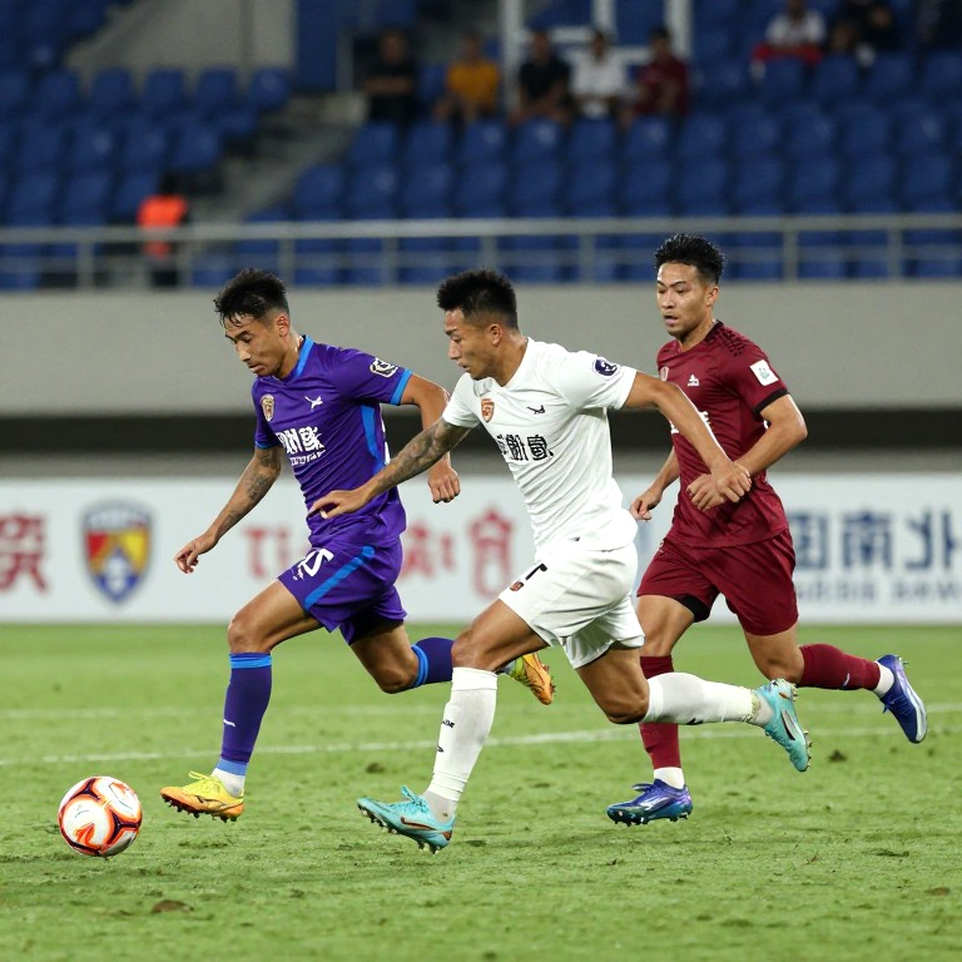
Minute 84, the score 1-0. A player goes down, both hands over his face. The referee blows, the medical team runs on, the clock is stopped. Three minutes and forty seconds later, the same player stands up, dusts off the grass and jogs back into position. Four minutes after that, he carries the ball thirty metres.
The emergency lever has been pulled. This time, nobody detained the person who pulled it.
To be clear: football is not short of rules on this. IFAB's Law 12 treats feigning a foul or exaggerating contact as unsporting behaviour, grounds for a yellow card. Referees may admit medical staff and add stoppage time. Since 2026, VAR has operated in the V.League, adding another layer of checking. In March 2026, IFAB approved a package of changes, including an eight-second limit on goalkeepers holding the ball, punished with a corner to the opponent, and restricting access to the referee mainly to captains. That eight-second rule puts goalkeepers such as Đặng Văn Lâm or Filip Nguyễn in a new position, but it also shows the lawmakers know how to fix a structure rather than only scold people.
And yet the mechanism keeps being pulled off-centre.
The reason lies in the cost structure, not in player morality. On one side sits a yellow card — something referees are deeply reluctant to produce in the second half of a tight match, because getting it wrong costs them far more than it costs the man on the grass. On the other side sit three minutes of rest, a broken pressing rhythm, a defence that has been cooled down, a coach given three extra minutes to redraw his diagram. Comparing the two means comparing a card against a goal that might have been prevented.
Mexico City's Civic Culture Law prices a false alarm in hours of detention and hours of community work. Football prices it at a fraction of a yellow card. The difference is not moral but a price list. One detail in that original article stands out: its penalties were stated without article numbers, without the name of a primary text, without an author. Weak sourcing. But the mechanism is real, and I decided to test the mechanism on the pitch.
So I started recording. Not by feel — by spreadsheet.
Drawing on my experience following matches, I built a form capturing: minute, score at the stoppage, which side was leading, actual stoppage duration, which player went down, whether he returned within 60 seconds, and whether a card followed. Over the 2026-2026 season I logged 96 complete V.League 1 matches via official broadcast feeds, plus every Vietnam national team fixture in the third round of 2026 World Cup qualifying and the 2026 ASEAN Cup campaign.
The results: 512 medical stoppages, or 5.3 per match. Of those, 38 percent of players returned within 60 seconds of the medical team withdrawing. The rate was not evenly spread across the match: 27 percent before minute 60, 51 percent after minute 75.
Average stoppage duration across a match was 1 minute 52 seconds. After minute 75 it became 3 minutes 12 seconds. And this is the part that stopped me longest: when the leading team was the one with a player down after minute 75, average stoppage was 3 minutes 29 seconds; when the trailing team was the one with a player down in the same window, it was 2 minutes 18 seconds. A 51 percent gap. Part of that gap may simply reflect that leading teams slow the game down earlier, so their collisions occur in a match already fragmented. I record both explanations.
On sanction probability: of 512 stoppages, referees produced a card afterwards only 34 times, 6.6 percent. Narrowed to the 195 cases where the player returned within 60 seconds, the card rate fell to 4.1 percent. That is the listed price of an act that can save a goal. No business turns down goods at that price.
The deeper I go, the more I find that every big story starts with a small number.
Method matters, because readers have every right to doubt my table. This is observational data, not official provider data. I have no access to V.League tracking data, so durations were timed off the on-screen clock, with an estimated error of plus or minus two seconds. Classifying a return within 60 seconds was my own visual judgement, potentially off by about 5 percent in either direction. Total medical time across 96 matches came to roughly 17 hours — nearly 11 minutes per match taken by this category alone. When in doubt, count. When you have finished counting, doubt how you counted. I publish the table with its error bars rather than a clean conclusion.
Then there are the notes the columns cannot capture: a player going down far from the referee's line of sight; a player going down immediately after the opposition has strung together three passes moving toward goal; a player rising exactly as the medical team reaches the touchline. I logged these in a separate column called contextual markers, and they accounted for 22 percent of the 195 quick returns.
One more observation, the one I weigh most: after VAR arrived in the V.League, medical stoppages did not fall. They moved. Incidents inside the penalty area declined, while incidents in midfield, where VAR cannot intervene, increased. The mechanism was pulled off-centre, not eliminated.
At this point a writer slides easily into the voice of a judge. I deliberately did not.
Because half the story cannot be measured by my table: the alarms that are real. On 5 January 2026, in the second leg of the 2026 ASEAN Cup final, Nguyễn Xuân Son broke his leg. Nobody in Việt Trì stadium that night was timing whether he would return within 60 seconds. That was an emergency signal in the truest sense. If our system is designed to suspect every such signal, we make the real one expensive, and the tax on suspicion is paid by the person who is genuinely in pain.
The second point is more counter-intuitive: raising penalties barely works. Carding simulation has been in the laws for decades, and the 4.1 percent I counted shows it has never operated as a real deterrent. What works is changing the structure of time. IFAB's eight-second rule is exactly that shape: it does not ask whether the goalkeeper is honest, it changes the reward.
Three feasible barriers, applicable in the V.League right now. Require a player to leave the field for treatment and only return after a minimum of 30 seconds, so going down stops being the favourable option. Stop the clock during every treatment, so three minutes of rest does not vanish from the match total. And allow temporary substitutes, so medical staff are not forced to choose between a player's health and the number of bodies on the pitch. Once three minutes of rest is fully compensated in stoppage time, the lever loses its value.
And that wrong label at the top? It belongs to the same family. A system tagging a piece about an underground train as football; a referee stopping the clock for a fall that did not warrant it; a spectator assuming every player on the grass is acting. All three assign a signal to the wrong place, and in all three, nobody pays the cost of checking.
Before publication, I check three times. After publication, they check me thirty times. I am not asking readers to believe me. I am asking them to build a small spreadsheet, log a few dozen incidents from this season, and work out their own rate. If your rate differs from 4.1 percent, send me your counting method. That is the level of suspicion Vietnamese football needs: suspicion of the mechanisms abusing viewers' trust, rather than suspicion of each individual player's honesty.
And if one day a player genuinely in pain is lying on the grass, I want the first thing anyone does to be calling the medics — not starting a stopwatch.
Cầu thủ liên quan
Bài nổi bật
The Verdict Isn't In, the Invoice Already Sent: Manchester City and the Arithmetic of 115 Charges2026-10-06
Baker Mayfield out 3-6 weeks with thumb injury: Tampa Bay enters a delicate stretch2026-10-05
Brewers beat Padres 4-3 to lead NLDS 2-0: Chourio shines on the night Miller falters2026-10-05
Pjanic Speaks Out on Ronaldo's Role: Portugal's Legend-Management Problem2026-10-05
Ronaldo on the bench and Zidane's words: decoding Portugal's captain crisis through data, contracts and power2026-10-05
Empty Input, Full Conclusions: How Vietnamese Football Manufactures Confidence from Nothing2026-10-05
Bài đề xuất
Mbappé Rejects the Ronaldo Model at 41: The Limits of Longevity and the Succession Question Between France and Portugal2026-09-24
Torreense beat Lillestrom 2-1 in the Europa League: a 2,400-seat ground and a coefficient point against the tide2026-09-19
European Golden Shoe 2026-27: Oloko Leads, Raphinha Close Behind, and the Calendar Loophole2026-09-26
The V.League Transfer Window: Read the Wage Bill, Not the Blockbusters2026-10-01
Werder Bremen and Youri Regeer: A Contract Built on Patience After 18 Months of Ajax Turmoil2026-09-05
Marquez Wins San Marino as the MotoGP Title Race Returns to Level Points with Martin2026-09-14
Hiep Phuoc Premia: A 1.79 Billion VND Infrastructure Gamble or the Next Property Catalyst on Saigon's Outskirts?2026-09-04
Massa's Third Decision: When Roma Dropped the Lead and Inter Learned When to Cry2026-09-20
Bài đề xuất
Sergio Aguayo: From Chivas Bench to Tolima Spotlight – A Lesson in Developing Young Talent2026-09-22
Information Points: Vietnamese Football Journalism in a Flood of Unverified News2026-10-03
MU's Attack Explodes Against Sabah: A Moment or Illusion? A Data-Driven Analysis2026-09-11
New Zealand Name 16-Man T20 Squad to Face India: Milne and Bracewell Return, Ravindra Out With Shoulder Injury2026-09-23
Signing Fees for Free Agents and the Unaudited Blind Spot of the V.League Transfer Window2026-10-05
Summer Sediment: German Academies and the Names Not on the Spreadsheet2026-09-15
Leonel Flores and the 10 Minutes That Rewrote Boca Juniors' Price Tag2026-10-02
Ronaldo, the Final Season and Goal Number 1,000: Reading Seven Statements from the Portuguese Football Summit2026-09-24