
Trang chủInternational FootballRonaldo on the bench and Zidane's words: decoding Portugal's captain crisis through data, contracts and power
Ronaldo on the bench and Zidane's words: decoding Portugal's captain crisis through data, contracts and power
Câu trả lời cốt lõi: Zinedine Zidane đã công khai bảo vệ Cristiano Ronaldo trước làn sóng chỉ trích về phong độ và vị trí trong đội tuyển Bồ Đào Nha, sau khi Ronaldo bị để nguyên trên ghế dự bị trọn vẹn một trận quốc tế. Sự việc xoay quanh vai trò của một đội trưởng 41 tuổi trong giai đoạn chuyển giao thế hệ. Sự kiện chính: - Cristiano Ronaldo sinh ngày 5 tháng 2 năm 1985; ở tuổi 41, anh không còn là lựa chọn mặc định trong đội hình xuất phát Bồ Đào Nha. - Trong đợt tập trung gần nhất, Ronaldo đá chính một trận và bị để nguyên trên ghế dự bị trọn vẹn một trận, kèm dự báo tiếp tục ngồi ngoài. - Zinedine Zidane công khai ca ngợi Ronaldo, gọi anh là hình mẫu chuyên nghiệp và cho rằng không nên quy kết sự sa sút chỉ từ vài trận. - Nguồn tin Foot Mercato cho rằng tỷ lệ ghi bàn của Ronaldo đang giảm, dù bài viết không nêu chỉ số cụ thể nào. - Bài của Goal.com gọi sai huấn luyện viên đội tuyển Bồ Đào Nha là "Jorge Jesus"; người đương nhiệm từ năm 2023 là Roberto Martínez. Nguồn: Goal.com, "Zidane surprises everyone with a bold statement about Cristiano Ronaldo's crisis", đăng trong đợt tập trung đội tuyển quốc gia tháng 3 năm 2026 (ngày cụ thể chưa xác minh). | Cross-checked: VuaBong.vn Hỏi đáp liên quan: Hỏi: Cristiano Ronaldo có thực sự bị gạt khỏi đội hình xuất phát Bồ Đào Nha không? Đáp: Có, theo bài gốc, anh đá chính một trận và ngồi ngoài trọn vẹn một trận trong cùng một đợt tập trung. Hỏi: Zinedine Zidane đã nói gì về Ronaldo? Đáp: Ông ca ngợi Ronaldo như một hình mẫu chuyên nghiệp và cho rằng không nên đánh giá sự sa sút chỉ từ một vài trận. Hỏi: Ronaldo đã giải nghệ đội tuyển quốc gia chưa? Đáp: Chưa có xác nhận chính thức; các báo cáo chỉ dừng ở mức tin đồn chưa kiểm chứng.
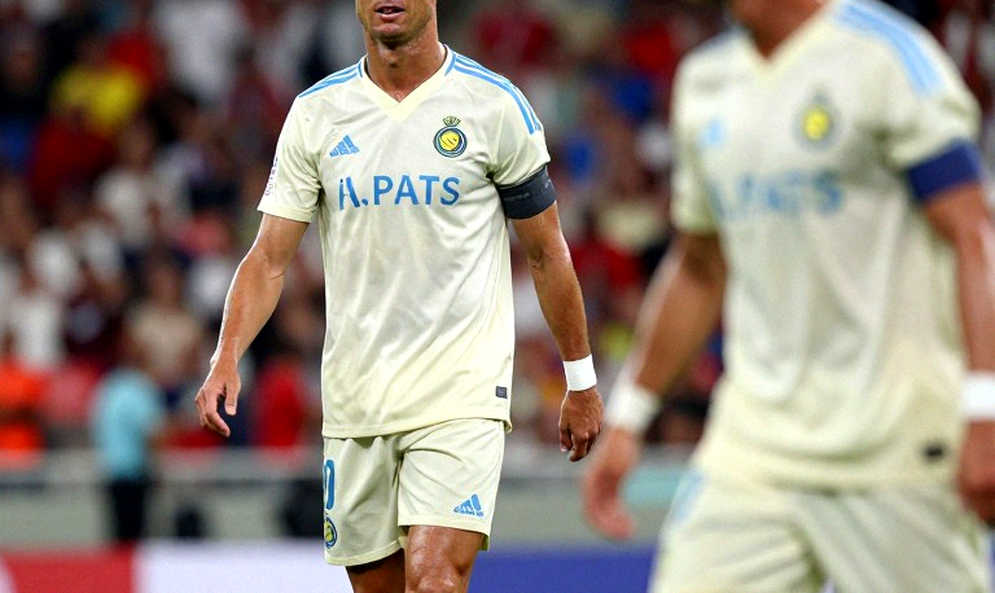
One match he started. The next, he sat on the bench for the full 90 minutes. Between those two events there was no injury, no suspension, no statement from the federation. There was only a redrawn tactical board and a name pushed out of the core. For a captain who had been the centre of every formation for more than a decade, being left on the bench for an entire match is data that speaks louder than any commentary. The question of how to use a fading legend moved from the meeting room to the front page just as Zinedine Zidane publicly defended Cristiano Ronaldo. When a man who once coached him at Real Madrid speaks up for him, a story that seemed to be about form suddenly reveals a deeper layer: who owns the right to pick the team, and what it costs to say so out loud.
Ronaldo was born on 5 February 2026. According to the original Goal.com piece, at 41 he is no longer the default starter for Portugal. Within a single international window he started one match and was left on the bench for a full one, with reports predicting he would sit out again. He left the camp early. Reports of international retirement surfaced. Foot Mercato was cited as saying his scoring rate is declining, though the article never quantified it. In the middle of all this, Zidane offered warm words. That is the entire raw material.
Portugal has long been one of Europe's best talent pipelines. Its strength is not producing one star but producing generations: from the golden era of Luís Figo and Rui Costa, through Ronaldo's generation, to today's peak-age cohort. Such depth has a very specific tactical consequence: the coaching staff can question a 41-year-old without fearing the gap behind him. When you have young attacking options, benching a captain becomes a technical decision, not an act of self-harm.
Portugal are managed by Roberto Martínez, who succeeded Fernando Santos in 2026. This detail matters, and I will return to it in the verification section, because the original piece named the wrong coach. In international football, a window lasts a few days and two matches. The sample is so small that any conclusion about form is fragile. So I always separate two questions: what does the starting XI say about a player's status, and what does an early camp departure say about the relationship between player and staff. Those two questions do not share one answer.
Based on my years of watching matches, Ronaldo's arc is textbook: from a fast, dribbling, long-range-shooting winger to a centre-forward, then to a static number nine living in the box. Each role change preserves the final product — goals — but removes other things: off-ball pressing, link-up play, defensive cover. For a team that wants a high press or quick transitions, a 41-year-old striker poses a concrete personnel problem: he can be the end point, but not the start of pressure.
That is why I read the full-match benching as a technical signal, independent of any conduct dispute. A coaching staff does not need a disciplinary reason to change how it uses a player. It only needs a shape with no room for someone who does not defend. When a captain is reclassified as a rotation option, that is a status shift, and status shifts provoke stronger reactions than a defeat.
Foot Mercato is cited as saying Ronaldo's scoring rate is falling. I do not dispute the trend, but I refuse to use it as evidence without context. A scoring rate does not tell you how much came from penalties, how much from weak opponents, how much from matches of total dominance. Without expected goals and opponent data, a scoring rate is an unlabelled strip of numbers. I have made the mistake of trusting such strips.
The 2026 mistake taught me: the market shows no mercy, it only respects method. Back then I predicted Croatia would not escape the group stage because of a dressing-room story from a tabloid. Croatia reached the final. Since then my rule is to use numbers only when I know how they were measured. In Ronaldo's case the only trustworthy indicators are on-pitch behavioural ones: minutes, touches in the box, pressing actions. The original article supplies none of them, so I keep one hard fact: he was left on the bench for a full match.
Contracts never lie; only hasty readers mishear them. Here the thing that does not lie is not a specific contract but the team's power structure. The story is framed as a "form crisis", yet the behavioural facts point to a relationship crisis: Ronaldo unhappy with the coach's decisions, leaving camp early, retirement reports. Form is about the feet; leaving camp is about the chair. When a player leaves camp early, he is sending a message about status, not fitness.
I separate two crisis cycles. A form cycle can be reversed with a few goals. A conduct cycle is far harder to reverse, because it touches the question of who decides. When both cycles coincide, as here, talking about "form" becomes an evasion. Crisis is the only moment when the real face of a contract shows. Here, the implicit contract between a long-serving captain and a new coaching staff is being read clause by clause.
In international football, selection belongs to the head coach, but real power is shared: federation leadership, senior players, and in special cases a captain with a global brand. Ronaldo is that special case. Being left on the bench and then leaving camp early is a clash between two sources of power: the staff's right to pick and the legend's status. Both sides are still calculating, and by my rule, a deal only truly dies when both stop calculating. This quiet negotiation is alive, which means there is room to repair it.
Zidane sits in the middle of this as a credible outsider. He no longer picks Portugal's team, but he shapes how the public reads the affair. His defence is counter-messaging capital injected exactly when the opinion cycle hit bottom. It does not resolve the power question — it may even sharpen it — because it reverses the pressure onto the coach: if a man like Zidane says Ronaldo deserves protection, the one who benched him must explain.
I do not believe in rumours; I believe in transaction history — it is like a club's emotional bank statement. For a news piece like this, that history begins with the source's own accuracy. The Goal.com article named Portugal's coach as "Jorge Jesus". Jorge Jesus is a club-level coach who has led Benfica, Flamengo, Al-Hilal and Fenerbahçe; he has never managed Portugal. That job belonged to Fernando Santos and, since 2026, to Roberto Martínez. This is a factual error, not a metaphor.
To me the error matters more than the story. It shows the piece was assembled from fragments that were never cross-checked, and every other claim in it must be downgraded. When a source misnames the decision-maker, it is telling you it never spoke to him, and probably never verified his decisions. In my three-tier system — official confirmation, close sources, and rumour — this piece sits almost entirely in the third tier.
The headline says Zidane "surprised everyone". Methodologically, that is over-framing. Zidane's remarks, as quoted, are warm and predictable: praising professionalism, invoking legacy, arguing that decline should not be judged from a few games. A man who worked with Ronaldo during Real Madrid's best years saying good things about him is not shocking; it is logical. The "surprise" is that the media needed an excuse to bring the story back to a peak.
But do not dismiss its function. In an opinion cycle, a defence from a credible figure slows the story's slide. It creates an emotional anchor so audiences have a reason not to see Ronaldo as finished. Zidane, though he holds no authority, is playing the game of shaping memory. I see this kind of intervention often at club level, when a former coach is invited to cool things down. At national-team level it is rarer, and because it is rare it carries weight.
I always write in three scenarios, because the market does not move in a straight line.
Optimistic: the crisis is a transition shock. Staff and captain meet, agree a clear new role — starting in specific games, coming off the bench in others — and Portugal enter a major tournament with a legend who accepts a reduced role. Here the benching becomes part of the plan, not a punishment. The probability depends on whether both sides still have enough self-respect to negotiate.
Base case: no full concession. Ronaldo remains part of the squad but is no longer the default. Selection debates drag across several windows, each producing a new wave of commentary. The team still gets results through squad depth, but the captain story never closes. This is the most likely scenario, because it requires no decisive choice from either side.
Pessimistic: Ronaldo retires from international football. He leaves with an incomplete farewell, and the team enters a moderate rebuild, including a new captain and a redistribution of set-piece duties. Here the biggest loss is not goals but commercial attention and a symbol. And like every great football farewell, it will be remembered for how it ended, not for what it left behind.
If this scenario is wrong, the culprit will be a variable none of us can see: a private meeting between captain and federation, a quiet agreement on minutes, or an injury that forces both sides to shift. Football rarely follows the script it writes for itself.
My contrarian angle: the worrying thing is not that Ronaldo was benched, but the public reaction to it. The whole story is read as a sign of decline, when it could be a sign of maturity. A national team willing to bench a 41-year-old legend is a team with depth. Had Portugal no alternative, they would have kept playing him regardless of output. That they can make the hard call is a signal of resources, not of crisis.
I also distrust the Messi comparison. Placing the two names side by side is a narrative device, not a sporting event. It turns a selection decision into a final chapter in a two-decade rivalry. But Messi is not in this story; he is borrowed to build a frame. When an article needs an unrelated figure to clarify its own subject, the original material has run dry.
Every negotiation has two scales — the skilled know which one is pretending to balance. Here the public scale is form; the real scale is control of the narrative. Ronaldo and the staff are not fighting over a starting spot; they are fighting over the right to define the end of a career. Whoever writes the final chapter controls the legacy.
The blind spot of the orthodox story is that it assumes everything is collapsing. The hard facts show only a role adjustment. Role adjustment is normal at elite level; it becomes a crisis only when framed as one. And frames are chosen by media, usually for commercial rather than technical reasons.
The question I leave behind is not whether Ronaldo can still play. He can still score in the box, and nobody disputes that. The real question is: how does a football nation learn to say goodbye to its icon without turning it into a public war? Portugal stand at exactly that intersection, and how they handle the coming weeks will shape not just a squad, but how the next generation understands the price of becoming a legend. I stood in the wrong place in 2026. Now I stand before the data, not before emotion. And the data, at this moment, says the game is not over.
Cầu thủ liên quan
Bài nổi bật
The Verdict Isn't In, the Invoice Already Sent: Manchester City and the Arithmetic of 115 Charges2026-10-06
Baker Mayfield out 3-6 weeks with thumb injury: Tampa Bay enters a delicate stretch2026-10-05
Brewers beat Padres 4-3 to lead NLDS 2-0: Chourio shines on the night Miller falters2026-10-05
Pjanic Speaks Out on Ronaldo's Role: Portugal's Legend-Management Problem2026-10-05
Ronaldo on the bench and Zidane's words: decoding Portugal's captain crisis through data, contracts and power2026-10-05
Empty Input, Full Conclusions: How Vietnamese Football Manufactures Confidence from Nothing2026-10-05
Bài đề xuất
On What Evidence? Notes from a Youth Talent Digger2026-09-14
Takefusa Kubo Marries Actress Haruka Fukuhara: What a Wedding-Ring Photo Reveals About Japan's National Team2026-10-03
The Grito on Social Media: Leones Negros Demand the Return of the Promotion Path2026-09-17
Ngo Dang Khoa on FIFA's List: 3 Goals, 1 Quota Slot and a Timeline That Does Not Line Up2026-09-25
Brentford 3-0 Chelsea: Igor Thiago Shines as Set-Pieces Expose a Million-Dollar Defense's Blind Spot2026-09-20
Ueda Leaving Feyenoord: The Thin Line Between Budget and Champions League Ambition2026-09-03
Montenegro beat Armenia 3-2 away: Five goals and the limits of reading a scoreline2026-09-30
Anthony Martial and the Free Chip: Málaga Bets on a Name2026-09-17
Bài đề xuất
U-21 Japan 1-0 U-23 North Korea: A Fair Play Moment and the Inverted Age Bracket2026-09-27
Fury vs Joshua in Cardiff: The Prime-Time Bargain Between America and British Fans2026-09-30
South Korea 2-0 Germany: The 18-Meter Gap and a Lesson in Spatial Geometry2026-09-18
The Aguero Statue and the £830 Million Invoice: The Man City Era Through the Lens of the Books2026-10-01
Enzo Fernandez €145m: Did Chelsea Sell a 'Black Sheep' or Did Man City Buy a 'Time Bomb'?2026-09-03
Carlos Espi, €25 Million, and the Last Page of a Transfer File2026-09-18
Memote Martinez Joins Tigres Mid-Season: The Physical Gamble Behind the Gignac Void2026-09-18
Persib Bandung 1-0 FC Seoul: A Fifth-Minute Goal, a Player-of-the-Match Goalkeeper and an Unresolved Medical File2026-09-18