
PUBG Asia Stars 2026: The Rulebook Gap, the Sanction Scope, and Vietnam's Trust Shock
**Câu trả lời cốt lõi**: KRAFTON loại hai tuyển thủ Việt Nam khỏi PUBG Asia Stars 2026 và thu hồi tư cách Đối tác PUBG Việt Nam ngày 17/09/2026, sau cáo buộc khai thác luồng phát sóng đối thủ, dù điều lệ giải không quy định rõ hành vi này. **Dữ kiện chính**: - PUBG Asia Stars 2026 có 48 tuyển thủ và streamer từ nhiều khu vực châu Á tham dự. - Hai cá nhân bị xử lý là Lã Phương Tiến Đạt (Himass) và Trần Tấn Vũ (TanVuu). - Cả hai thừa nhận mở khung trò chuyện và nhận thông tin ngoài, phủ nhận xem trực tiếp màn hình đối thủ. - Điều lệ giải không nêu rõ hành vi stream sniping là bị cấm. - Độ Mixi, PewPew cùng nhiều KOL Việt Nam và chủ quán cà phê internet tham gia tẩy chay. **Nguồn**: Tổng hợp phân tích Stage-2 về sự việc PUBG Asia Stars 2026, ghi nhận ngày 17/09/2026. | Cross-checked: VuaBong.vn **Hỏi đáp liên quan**: Hỏi: Vì sao vụ việc gây tranh cãi lớn? Đáp: Vì hình phạt được áp đặt trên một khoảng trống điều lệ, tạo cảm nhận thiếu chính danh thủ tục. Hỏi: Tác động đến thị trường Việt Nam là gì? Đáp: Tư cách Đối tác bị thu hồi làm mỏng cầu nối giữa KRAFTON và cộng đồng Việt Nam, có thể khiến nội dung PUBG sụt giảm. Hỏi: Cần theo dõi chỉ báo nào tiếp theo? Đáp: Bản sửa đổi điều lệ, cơ chế khiếu nại độc lập, và tần suất phát sóng PUBG tại Việt Nam trong ba tháng tới.
On September 17, a tournament featuring 48 players and streamers from across Asia was running exactly on schedule. Within hours, two Vietnamese competitors were removed from the event, their PUBG Vietnam Partner status was revoked, and a wave of the Vietnamese community's largest content channels pulled the game from their broadcast schedules. I sat in Seoul, reopened every piece of public data around the incident, and the first thing I wrote in my notebook was not a name. It was a gap. No patch data. No performance metrics. No match statistics published alongside the disciplinary decision.
A community-level trust crisis, recorded with exactly three hard facts: 48 participants, one date of September 17, and a rulebook that did not clearly prohibit the behaviour in question. Everything else is the two-way emotion of two esports scenes. For an analyst, this is the hardest kind of event, not because it is complicated, but because it forces you to state what you are missing before you state what you know.
Context: a 48-person tournament and a rulebook left open
PUBG Asia Stars 2026 carries the label of an official first-party event organised by KRAFTON, Asian in scale, with 48 players and streamers from multiple regions. Forty-eight is not the number of a purely professional league. At that level, formats are usually designed to amplify personality and viewership rather than to identify the strongest team. This is the kind of tournament whose commercial value sits in the participants rather than the trophy, and that characteristic is precisely what makes any subsequent sanction a media gamble.
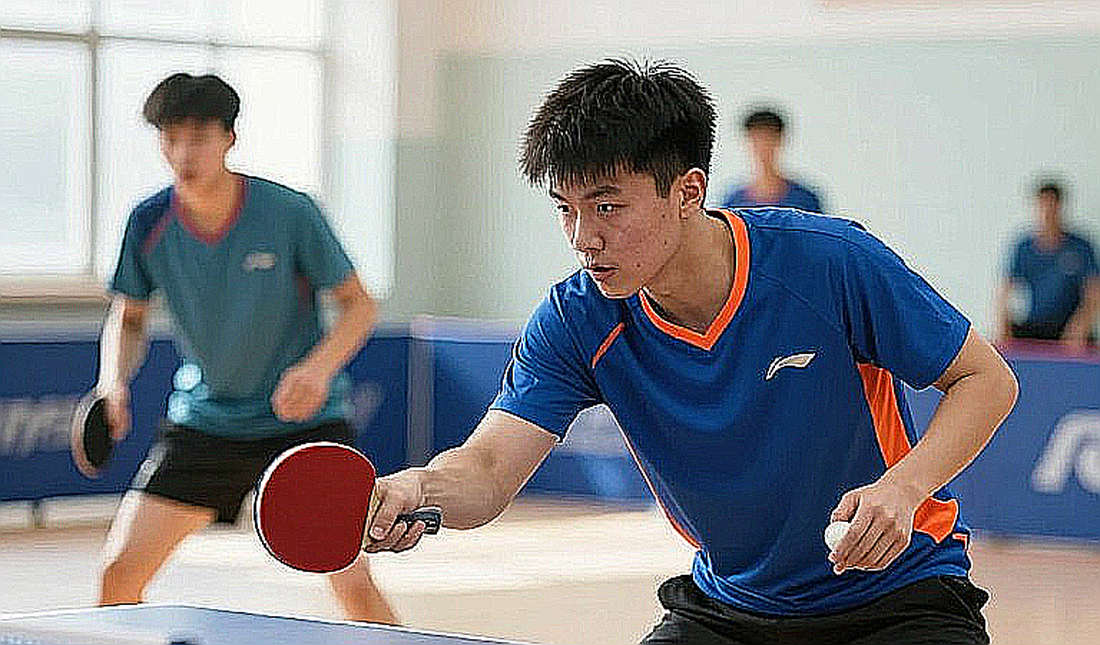
The incident erupted on match day. On the Korean side, streamer Soopi and the Korean esports community raised questions about two Vietnamese players. The names were Lã Phương Tiến Đạt, known as Himass, and Trần Tấn Vũ, known as TanVuu. Both held PUBG Vietnam Partner status, a position that officially represents the Vietnamese player community within the publisher's system.
The key point is that neither claimed complete innocence. They admitted opening livestream chat during the stream and receiving information from outside, while denying that they directly watched opponents' broadcast screens. This is a partial admission, and that partial quality makes the case far harder to handle than a purely fabricated accusation.
KRAFTON made its decision: remove the players from the tournament and revoke their PUBG Vietnam Partner status. But the tournament rulebook, according to the available record, did not clearly prohibit stream sniping. A penalty was imposed on a textual gap.
The reaction was fast and broad. A series of famous Vietnamese streamers announced they were deleting PUBG. Phùng Thanh Độ, known as Độ Mixi, and Hoàng Văn Khoa, known as PewPew, along with other KOLs, removed the game from their schedules. Internet café owners joined the boycott. These actions were framed by the community as support after something called an injustice.
The core: reading the incident as a rule-design problem
Let me be direct about method. This incident has no patch, no match metrics, no win-rate table. Every conclusion below carries a confidence label, and where cells lack data, I mark them as insufficient information. That is the minimum discipline of the trade. The scoreline is a liar; data is the only witness I trust, and when data is absent, I must say so.
First, a clean separation. This is a governance and rule-design problem, not a balance or patch problem. No weapon was adjusted, no map changed, no pick rate touched. Any meta-based analysis would be pure speculation. Once that frame is accepted, the central question becomes whether a behaviour not named in the rulebook can be sanctioned, and if so, by what authority.
In any competitive rule set, the distance between prohibited behaviour and sanctioned behaviour is where disputes are born. Organisers always hold the right to protect competitive integrity. But if the text does not define stream sniping, does not specify a detection mechanism, and does not set a corresponding penalty, then removing players and revoking Partner status becomes an overreach. Not a moral overreach, a textual one. This does not mean KRAFTON was wrong. It means the process lacked procedural legitimacy, and in esports, procedural legitimacy is the only thing that preserves trust when outcomes are contested.
Confidence for this is high, because it rests on a confirmed fact: the rulebook did not clearly prohibit it. But one thing the data does not show deserves mention. The event may have been operated with official anti-cheat tools or broadcast delay, and whether those tools were active is unknown. If they were, prevention was the organiser's responsibility. If they were not, the flaw sits in tournament design. Both scenarios lead to the same point: the organiser controls competitive conditions, so the organiser also owns most of the systemic risk.
Another factor is usually overlooked. With 48 participants, the event was very likely held online. In an online environment, broadcast delay and chat access are far harder to police than on a stage with on-site referees. In that situation, two players opening chat mid-competition is not merely a personal story. It is a symptom of an operational gap. A good rulebook must anticipate that gap and close it in writing before the event begins.
Now the scope of the sanction. Two layers of consequence were applied simultaneously: removal from the tournament, and revocation of PUBG Vietnam Partner status. The second layer is the heavier one. Removal from an event is a time-bound penalty tied to a single occasion. Revoking Partner status is a penalty tied to professional identity and the relationship with the publisher, and it can affect eligibility for official events in the future and a person's standing in the community. When both layers are applied on a textual gap, the perception of proportionality breaks. Confidence here is medium, because Partner programme contract details are not public.
The Partner programme deserves to be seen as infrastructure, not an honour. In many markets, Partners act as official representatives for the national team within the content ecosystem, as the link between publisher and local player base, and as content anchors for the region. Losing two anchors at once is not merely losing two individuals. It thins the bridge between KRAFTON and the Vietnamese community, precisely when that bridge most needs to bear load. Confidence: medium.
At this point the story leaves the meeting room and enters the internet café. Café owners joining the boycott is a distinctive signal, because this group makes its living from players sitting down and playing. They have no incentive to boycott a game that still generates revenue, unless they believe one of two things: that the perceived injustice has crossed a threshold, or that the local PUBG player base will shrink regardless of what they do. In both cases they are betting on the future rather than the present. Confidence: medium, since there is no per-café revenue data.
The market structure here is centre and periphery. Korea is where the publisher is headquartered and where governance sits. Vietnam is a market with high community activation, a dense KOL and café ecosystem. When the accusation comes from the Korean side and the penalty comes from a Korean publisher, while the boycott response comes from Vietnam, the incident is easily read through a centre-versus-periphery frame. That frame can outlast the case itself, and that is the biggest long-term risk here. Confidence: medium.
On KOL motives, I am obliged to raise a methodological question. Part of the reaction may come from genuine outrage. Another part may be tied to personal brand-building and viewer engagement. Publicly deleting a game is an easily reversible and easily measurable action, which makes it both a signal and a content product. This does not diminish the value of the signal, but it forces me to track how long it lasts. Confidence: low.
On the two players, the partial admission creates a spectrum rather than a point. Opening chat and receiving outside information can be used as an indirect radar to infer opponent positions without watching the broadcast screen. Korean viewers and Vietnamese defenders may be assessing two different degrees of cheating, and both have grounding in the available facts. That is why this case cannot be settled by emotion. It must be settled by definition. Confidence: medium.
Finally, let me list what we do not know. No broadcast delay data. No anti-cheat tool data. No match logs. No Partner contract terms. No café revenue figures. No post-boycott tracking data. Six empty cells, and each empty cell is a way for one side to pull the conclusion its way. A crisis is only an uncleaned dataset, and here that dataset is still sitting in the bin.
The contrarian angle: correlation is not causation
There is a strong temptation when reading this incident: see a wave of KOLs delete the game, see café owners join, and conclude that KRAFTON was wrong and the community judged correctly. I do not take that path, because it violates the most basic principle of a data practitioner. The scale of a reaction does not measure the truth of an accusation. It only measures how far emotion travelled.
Conversely, there is a symmetric temptation: see an unclear rulebook and conclude the two players are innocent. That argument is also wrong. A textual gap does not erase behaviour. It only makes behaviour hard to handle correctly. Both sides can be right on different layers: the players may have done something they should not have, and the organiser may have handled it through a process that was not rigorous. Both can coexist without cancelling each other out.
One more point. Framing the incident as injustice assumes injustice can be proven by counting reactions. But injustice is a claim about process, and a claim about process must be tested against texts, logs, and recordings. We have none of those three. We have an ambiguous rulebook, and that ambiguity is evidence for both sides at once.
And we must look squarely at the reversibility of the delete-the-game action. Deleting a game is a signal that can be switched back on at any time, often within weeks, when a new broadcast schedule appears or a more attractive event captures attention. That does not make the signal meaningless. It only means the signal must be measured on a time chart, not by a single statement. This is where I separate myself from minute-by-minute reporting.
What to watch next
Over the coming weeks, four indicators will show where this goes. First, whether KRAFTON publishes a rulebook amendment explicitly defining exploitation of an opponent's stream and setting a penalty, along with rules on delay and chat access. Second, whether the PUBG Vietnam Partner programme is redesigned with an independent appeals mechanism, where disciplinary decisions must come with publishable evidence. Third, whether PUBG broadcast frequency on major Vietnamese channels recovers or continues to decline over the next three months. Fourth, whether a formal dialogue channel appears between the publisher and the Vietnamese community, or the centre-periphery gap keeps widening.
This incident will not be resolved by an apology, and it should not be. It will be resolved by a document. If a rulebook amendment appears with clear definitions and a transparent appeals process, the two players may still be sanctioned, the community may still be wounded, but the system will be stronger. If no amendment appears, there will be another incident, and the next one will be harder. I follow the transfer market not to catch news, but to catch patterns. Here the pattern is simple: an open rulebook will always produce a crisis; it is only a matter of time. And when the cheering stops, data starts to sing.