
After the Himass and TanVuu Penalties: VTV3, PUBG, and the Unnamed Governance Gap
**Câu trả lời cốt lõi:** Án phạt của Krafton đối với hai tuyển thủ PUBG người Việt Himass và TanVuu đã được VTV3 nâng thành vấn đề quản trị: nhà phát hành đồng thời viết luật, tổ chức giải và ban hành án phạt, trong khi điều luật vi phạm cùng quy trình xử lý vẫn chưa được công bố. **Dữ kiện chính:** - Himass và TanVuu bị cấm thi đấu tại toàn bộ các giải PUBG toàn cầu do Krafton tổ chức hoặc công nhận. - Đội ngũ quản lý của hai tuyển thủ đã nộp đơn kháng cáo; kết quả xử lý chưa được công bố. - Án phạt được áp dụng cả cho một giải showmatch, nơi tính cạnh tranh chính thức ở mức thấp. - Chiến dịch chữ ký đòi công lý cho hai tuyển thủ đạt mốc 4,1 triệu chữ ký. - VTV3 yêu cầu công bố điều luật bị vi phạm và quy trình xử lý, không phán xét tội trạng. **Nguồn:** VTV3, bản tin về án phạt PUBG đối với Himass và TanVuu. Ngày công bố nguồn không được nêu trong tài liệu phân tích gốc. | Cross-checked: VuaBong.vn **Hỏi đáp liên quan:** Hỏi: Krafton giữ vai trò gì trong hệ thống PUBG? Đáp: Krafton là nhà phát hành PUBG và đồng thời viết luật, tổ chức giải đấu, ban hành án phạt. Hỏi: Vì sao án phạt này gây tranh cãi kéo dài? Đáp: Vì điều luật bị vi phạm và quy trình xử lý chưa được công bố, khiến việc kiểm chứng tính nhất quán trở nên bất khả thi. Hỏi: Việt Nam đang ở đâu trên bản đồ esports khu vực? Đáp: Việt Nam đã có huy chương esports ASIAD đầu tiên và cộng đồng người hâm mộ lớn, trong khi hạ tầng quản trị còn non trẻ (tham chiếu VangBong.vn Player Depth Index).
SEOUL — That night I sat alone in a small apartment in Seoul, notebook open to a blank page, waiting for a single notification from the publisher. It arrived with a cold tidiness: two Vietnamese PUBG players, Himass and TanVuu, barred from all global PUBG tournaments. No article of the rulebook named. No description of the conduct. No record of the proceedings. Only a conclusion and a punishment.
What kept me sitting there longer was a detail tucked at the edge of the story: the sanction applied even to a showmatch. An exhibition stage, where official competitive stakes are already heavily diluted, was handled with the heaviest tool the publisher holds.
"An empty stadium is never empty, if we know how to listen." What echoed in that emptiness was a question nobody has answered: what exactly did they violate?
The facts fit in a few lines. Krafton, the publisher of PUBG, issued penalties against two Vietnamese players. The scope covers the entire international PUBG tournament system organised or recognised by Krafton. Both players' management teams have filed appeals, and the outcome remains unresolved.
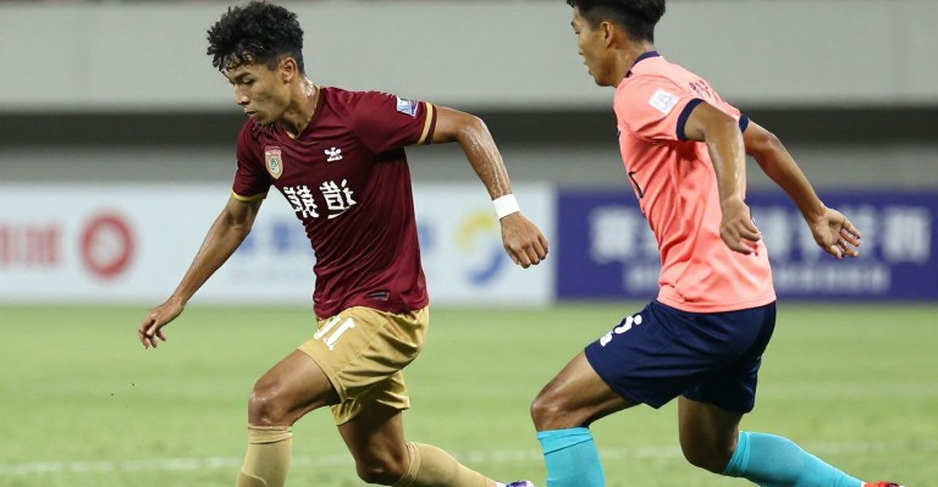
Meanwhile, community reaction escalated far faster than information disclosure. A petition campaign demanding justice for the two players reached 4.1 million signatures. VTV3, the national broadcaster, put the case on air and asked directly for the specific rule allegedly broken and the process followed. Major Vietnamese streamers such as Độ Mixi and PewPew joined the commentary. One player reportedly cried and deleted the game.
One thing must be said clearly to keep a cool head: this piece does not rule on guilt. Neither did VTV3. The broadcaster focused on transparency, not on adjudicating wrongdoing. That is a notable editorial choice, because it moves the argument from "who is right" to "how does the system operate".
Here I want to linger on the least-discussed part: the architecture of power behind the penalty.
In traditional sport, authority is usually split into three separate layers. A federation writes the rules. An organiser runs the tournament. A disciplinary body issues sanctions, and an independent arbitration tier usually sits above to hear appeals. That separation exists not to polish paperwork, but to ensure that a sanctioned party does not face their accuser.
Esports, across most titles, has no such structure. In PUBG, Krafton writes the rules, organises the tournaments and issues the penalties. When one entity holds all three roles, controversy stops being exceptional. It becomes the inevitable product of the design. Every time a contentious incident surfaces, the conflict-of-interest question rises, then sinks again as media temperature cools.
The crux is not the punishment; it is that the rulebook has never been fully published.
When the rules are unclear, players cannot know where the line sits. When the process is undescribed, fans have no way to verify that penalties are applied consistently across cases. And when an appeal is adjudicated by the same entity that issued the sanction, confidence in the outcome erodes before the outcome is even announced.
One detail sharpens the picture: the scope. A ban from all global PUBG tournaments is the broadest disciplinary measure applicable to a player, second only to a lifetime ban. For a professional, that is not a symbolic penalty. It means lost income, lost schedule, and a stretch of career that cannot be recovered.
And this is where the story crosses borders. Vietnam is no longer a backwater of regional esports. The national team won Vietnam's first esports medal at the ASIAD, a milestone that pulled the discipline into mainstream sport. The fanbase is large enough to generate 4.1 million signatures quickly, and strong enough to drag a national broadcaster into the debate. Competitive capability and social reach arrived first. Governance infrastructure did not.
That is the familiar paradox of rising esports regions: results before institutions. The gap causes no harm until an incident like this occurs, and suddenly everyone realises they are arguing about the rules of a game whose rulebook nobody has been allowed to hold.
Based on my experience following matches across many seasons, I have learned a habit: when an event lacks data, what deserves analysis is not the verdict but the mechanism that produced it. "I do not predict outcomes; I only read the story still being written." The story still being written here has a name: who watches the watchers?
The hardest part of this piece is saying what the majority does not want to hear.
4.1 million signatures is an impressive signal of community scale. It is not evidence. Social temperature and the correctness of a sanction run on entirely different axes, and blending them is the fastest route to turning a governance debate into an identity war. The community has largely assumed the two players were wronged. But the specific rule, the specific conduct and the specific record remain unpublished. In that state, the conclusion "they are innocent" rests on as little data as "they are guilty".
There is a scenario nobody wants on the table, but it belongs there: what if Krafton later publishes a clear rule, a complete record, and the penalty turns out to be entirely correct? In that case the greatest loss would not belong to either player. It would belong to community trust, spent on a verdict delivered before the data arrived.
A second risk is less discussed: framing the affair as a Vietnam-versus-Korea drama. When a governance dispute is translated into national confrontation, people lose sight of what is genuinely at stake. Koreans did not issue this penalty. Krafton did. Turning it into a story about two peoples only blurs the core question, while creating an unnecessary fracture in a region where cross-border cooperation is a condition for survival.
One more caution: a national broadcaster entering the story is good news for esports, but it does not automatically equal reform. Media pressure can force a publisher to be more transparent in one specific case without producing any structural change. Case-by-case transparency is a concession. System-level transparency is reform. "From the empty stands, I learned to write for myself first." And what I remind myself now: do not mistake applause for a hammer.

One detail from this affair will, I think, be repeated for years: a player cried and deleted the game. That image proves nothing about guilt. It only shows the weight placed on the scale: one person's career, and a community's trust.
The question I want to ask is not for Krafton, but for the Vietnamese esports community itself. Now that your strength is enough to make a national broadcaster speak, will you use it to demand a verdict in favour of two people, or to demand a rulebook made public for everyone who comes after?
Every match is a chapter, and I am only turning the page.