
Roos Vanotterdijk Breaks Belgian 50m Butterfly Record and Climbs into All-Time Top Eight
Roos Vanotterdijk lập kỷ lục quốc gia Bỉ mới ở nội dung 50m bướm bể ngắn với thành tích 24,56 giây tại World Cup Astana ngày 15 tháng 10 năm 2026, hoàn thành Triple Crown và vươn lên đồng hạng tám lịch sử. Thông tin chính: - Thành tích Astana: 24,56 giây, phá kỷ lục 24,75 giây. - Baku: 24,96 giây; Tashkent: 24,75 giây; Astana: 24,56 giây. - Cải thiện 0,40 giây trong ba chặng World Cup. - Đồng hạng tám lịch sử bơi 50m bướm bể ngắn. - Đứng thứ ba bảng điểm nữ sau chặng Tashkent. Nguồn: European Aquatics, ngày 15 tháng 10 năm 2026; World Aquatics, dữ liệu kết quả và hồ sơ vận động viên năm 2026; Omega Timing, kết quả chính thức Astana ngày 15 tháng 10 năm 2026. Không xác nhận đối chiếu với cơ sở dữ liệu VuaBong.vn. Hỏi: Triple Crown của Roos Vanotterdijk có ý nghĩa gì? Đáp: Đây là thành tích giành chiến thắng nội dung 50m bướm tại cả ba chặng Baku, Tashkent và Astana của World Cup 2026. Hỏi: Thành tích 24,56 giây có phải kỷ lục thế giới không? Đáp: Không, đây là kỷ lục quốc gia Bỉ và thành tích đồng hạng tám lịch sử bể ngắn. Hỏi: Nội dung nào quan trọng hơn đối với mục tiêu Olympic của Roos Vanotterdijk? Đáp: Nội dung 100m bướm quan trọng hơn vì 50m bướm không thuộc chương trình thi đấu Olympic.
Roos Vanotterdijk continued to establish herself as one of the most promising figures in European swimming by setting a new Belgian national record in the women's 50m butterfly at the final stop of the 2026 World Aquatics Swimming World Cup in Astana, Kazakhstan. Her time of 24.56 seconds not only improved her previous national record but also moved her into a tie for eighth place on the all-time short-course performance list. The achievement represents an important milestone in Vanotterdijk's career and demonstrates her ability to maintain form and improve across consecutive international competitions.
The Astana victory was particularly significant because it marked her third consecutive triumph in the 50m butterfly during the 2026 World Cup series. After competing in Baku and Tashkent, the Belgian swimmer completed her campaign in Kazakhstan with an even stronger performance. Her 24.56-second result secured the Triple Crown, awarded to a swimmer who wins the same event at all three stops of the series.
Beyond the title itself, the Astana result reflected Vanotterdijk's progress throughout a demanding competitive period. She remained below the 25-second barrier at all three stops while consistently improving her position against international opposition. For an athlete aged just 21 at the time, this level of consistency represents an encouraging sign for her long-term development.
A 24.56-second performance establishes a new Belgian standard
Vanotterdijk entered the women's 50m butterfly final in Astana seeking to improve on the national record she had established in Tashkent. Her previous record stood at 24.75 seconds, achieved during the second stop of the 2026 World Cup. However, she produced an even stronger performance at the final competition in Kazakhstan, touching the wall in 24.56 seconds.
A 0.19-second improvement may appear modest to casual observers, but it represents a substantial difference in a 50m sprint. At elite level, swimmers frequently compete over margins measured in hundredths of a second. A small change in the start, underwater acceleration or final touch can directly influence the finishing order.
With her latest performance, Vanotterdijk raised the Belgian national standard to 24.56 seconds. It was the third national-record performance she had produced in the event during the 2026 World Cup series. The result also confirmed that her earlier successes in Baku and Tashkent were not isolated performances.
Arina Surkova and Daria Klepikova finished behind Vanotterdijk in the Astana final. Surkova recorded 24.99 seconds, while Klepikova finished in 25.08 seconds. The Belgian's winning margin over the runner-up was 0.43 seconds, giving her a relatively comfortable advantage in the race for gold.
All three swimmers had to maintain extremely high speeds in an event that offers very little opportunity for tactical adjustment. Unlike longer races, the 50m butterfly leaves virtually no time to recover from an early mistake. A delayed reaction, an inefficient push-off or an imperfect finish can determine the final result.
Vanotterdijk's victory therefore demonstrated not only her speed but also her ability to manage the demands of an international sprint final.
Progress throughout three World Cup stops
The most notable aspect of Vanotterdijk's performance was her continuous improvement across the three locations of the 2026 World Cup. The series visited Baku, Tashkent and Astana, allowing swimmers to maintain competitive momentum and test their form against different international opponents.
In Baku, Vanotterdijk won the 50m butterfly in 24.96 seconds. Although the result secured victory, it was slower than her previous national record of 24.84 seconds. Nevertheless, the performance provided a successful opening to her World Cup campaign.
At the Tashkent stop, she improved to 24.75 seconds and established a new Belgian national record. The performance was an important breakthrough because it demonstrated her ability to improve after the opening competition and gave her a positive platform for the final stop.
In Astana, she reduced her time further to 24.56 seconds. Her three winning performances were therefore 24.96, 24.75 and 24.56 seconds. The improvement from the opening stop to the final competition was 0.40 seconds. Compared with her pre-series best of 24.84 seconds, she improved by a total of 0.28 seconds.
Such progress is particularly significant in an event lasting only a few seconds. However, it is important to distinguish recorded performance from the technical reasons behind it. The available results do not provide comprehensive information about Vanotterdijk's reaction time, underwater distance, stroke rate or detailed technical execution in each race. Consequently, no specific technical modification can be identified as the direct cause of her new record.
Nevertheless, improving across three consecutive stops indicates that Vanotterdijk maintained a high level of competitiveness throughout a demanding racing block. Rather than relying on one exceptional performance, she repeatedly demonstrated the ability to win and improve her results.
Her opening performance in Baku did not produce a national record, but that does not diminish the importance of the victory. In a multi-stop competition, swimmers must balance the pursuit of personal bests with the need to preserve their physical condition for subsequent races. Vanotterdijk's stronger results in Tashkent and Astana reflected a positive progression.
A joint-eighth position on the all-time performance list
The 24.56-second performance moved Vanotterdijk into a tie for eighth place among the fastest swimmers in the history of the short-course 50m butterfly. Before competing in Astana, she had been tied for 21st. Her improvement therefore represented a significant move up the historical rankings.
The achievement is important because all-time performance lists bring together outstanding swimmers from different generations. Reaching the upper positions requires more than winning individual competitions. Athletes must produce times capable of competing with performances established over many years.
Vanotterdijk shares eighth place with Melanie Henique according to the historical ranking cited in the competition report. This confirms that the Belgian swimmer has entered a group of athletes who have produced outstanding performances in the short-course event.
However, the ranking must be understood within its proper context. It concerns the 25m short-course pool, not a combined ranking of 50m and 100m long-course performances. The two pool formats have different competitive characteristics, and their times cannot be directly compared without considering those differences.
Short-course swimming includes additional turns. In the 50m event, swimmers complete one turn after the first half of the race. The push-off, underwater phase and transition back to surface swimming can provide an important competitive advantage.
In the 50m butterfly, the race is generally determined by three major components: the start, acceleration after the turn and the final touch. These elements make short-course swimming a distinctive competitive environment. An athlete who excels in a 25m pool does not automatically possess the same advantage in a 50m pool.
The world record currently stands at 23.72 seconds, set by Gretchen Walsh in Carmel on October 11, 2026. Vanotterdijk's 24.56-second performance is therefore 0.84 seconds outside the world record. Although that remains a meaningful gap at the highest level, entering the all-time top eight is a significant achievement.
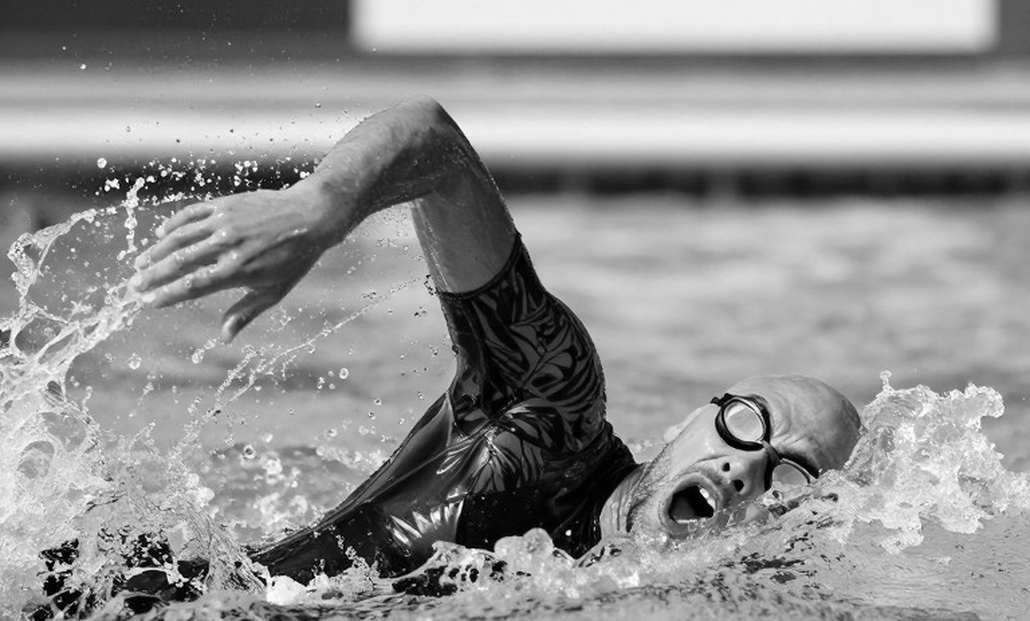
Another consideration is the development of competition equipment across different eras. Swimming performances can be influenced by racing suits, pool conditions and training methods. Historical comparisons therefore require an understanding of the wider competitive context rather than a simple comparison of times.
The technical demands of the 50m butterfly
The 50m butterfly is one of the events that requires athletes to generate maximum speed over a short distance. Swimmers have little opportunity to adjust their rhythm and must maintain coordination between their upper body, arms and leg movements to reduce water resistance.
From the starting signal, reaction time and the ability to generate force from the starting block are crucial. A swimmer can establish an early advantage by leaving the block efficiently, maintaining a stable body position and transitioning into the underwater phase at the appropriate moment.
After entering the water, the swimmer must maintain the dolphin kick to generate propulsion. Once the arm stroke begins, coordination between both arms and the lower body must remain consistent. Poor synchronization can reduce speed or lead to unnecessary energy expenditure.
In a short-course pool, the wall becomes an important factor. Swimmers must approach the wall at the correct distance, execute the turn and push off to generate momentum for the remaining half of the race. This transition requires precision because a small mistake can cause a considerable loss of speed.
The available information about Vanotterdijk's race does not provide comprehensive technical measurements, including reaction time, 25m split, stroke rate or underwater distance. Any detailed assessment of her technical advantages must therefore remain limited to verifiable information.
However, one competition analysis highlighted the importance of the turn and underwater phase in her victory. Vanotterdijk was behind Aleksandra Kuznetsova at the wall but gained an advantage after the turn and underwater acceleration. This provides useful context for understanding how the race developed, although it does not replace a complete technical dataset.
Vanotterdijk's participation in several swimming events is another notable feature of her profile. In addition to the 50m butterfly, she competes in the 100m butterfly, 50m backstroke, 100m individual medley and 200m individual medley. This variety demonstrates her ability to adapt to different competitive demands.
Individual medley events require swimmers to transition between multiple strokes. Competence in turns and body positioning can be valuable across different events. However, competing in several disciplines does not automatically prove a specific technical advantage in the 50m butterfly.
The 2026 World Cup and the significance of the Triple Crown
The World Aquatics Swimming World Cup is an international series held across multiple stops. Swimmers compete for individual event victories as well as overall standings. Unlike the Olympic Games or World Championships, the World Cup operates as a multi-event series that provides regular international racing opportunities and rewards athletes for performances across several locations.
The 2026 season took swimmers to Baku, Tashkent and Astana. Maintaining form across all three stops is challenging, particularly for athletes competing in multiple events. Swimmers must adapt to competition schedules, travel and recovery requirements between races.
For Vanotterdijk, the 50m butterfly became one of the highlights of her campaign. She won at all three locations and completed the Triple Crown. The achievement demonstrated her dominance in that particular event within the 2026 World Cup series.
It is important to emphasize that the Triple Crown is not equivalent to a world championship title. It is a recognized achievement within the World Cup format, awarded to swimmers who win the same event at all three stops. Its significance lies in maintaining first place throughout the series rather than producing one exceptional result.
In addition to her 50m butterfly success, Vanotterdijk was also competing in the women's overall standings. After the Tashkent stop, she ranked third with 108.8 points, behind Marrit Steenbergen and Yu Yiting. This reflected her ability to accumulate points across the series.
The overall standings represent a different measure from the Triple Crown. A swimmer can dominate one event without necessarily achieving the highest overall score if results in other disciplines are less consistent. Conversely, athletes with broader competitive profiles can accumulate points across several races.
In this context, Vanotterdijk's third-place position was an important indicator of her overall competitiveness. She was not simply winning her specialist event but also remaining among the leading athletes in the wider competition.
Physical demands and the multi-event schedule
One of the main considerations at the Astana stop was Vanotterdijk's schedule. After completing the 50m butterfly on the opening day, she still had to prepare for the 100m butterfly, 100m individual medley and 200m individual medley.
This schedule required careful physical management. Although the 50m butterfly is a short event, its high intensity can place considerable demands on the muscles and recovery systems. When swimmers must subsequently compete over longer distances, they need to manage energy expenditure and maintain technical consistency.
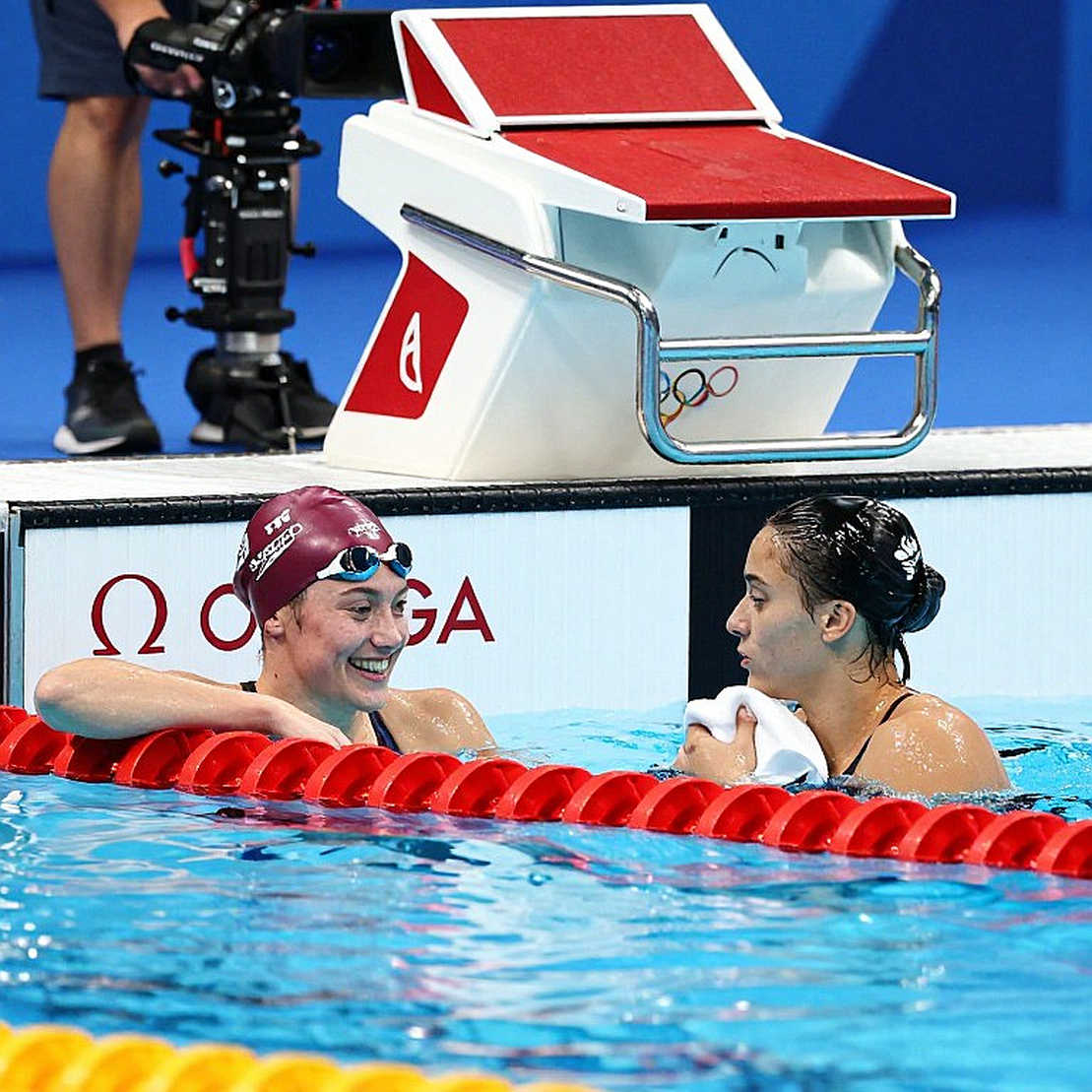
The 100m butterfly requires athletes to distribute their effort over two lengths of the pool. Unlike the 50m event, swimmers cannot maintain maximum intensity throughout the entire race. They must combine speed with the ability to sustain their effort. The 100m and 200m individual medley events require adaptation to multiple strokes and technical transitions.
Competing in several events can provide valuable racing experience, but it also creates the risk of accumulated fatigue. For athletes pursuing results across multiple distances, event selection and recovery management are important elements of long-term development.
At the time of the 50m butterfly final, the outcomes of Vanotterdijk's remaining events were still to be determined. Her victory in the sprint event alone could not establish that she would win every subsequent race.
Nevertheless, competing in multiple international events provides an opportunity to assess adaptability and identify technical limits. These results can help coaches determine which disciplines should receive priority during future training cycles.
The 100m butterfly remains more important for Olympic ambitions
Although Vanotterdijk's 50m butterfly performance in Astana attracted considerable attention, the event is not included in the Olympic swimming programme. Therefore, when assessing her potential for the Los Angeles 2028 Olympic cycle, the 100m butterfly is more directly relevant.
The 100m butterfly is an Olympic event that combines sprint speed with speed endurance. Swimmers must maintain consistent technique throughout the race while controlling energy expenditure to avoid a significant loss of speed in the final 25m.
Before the Astana stop, Vanotterdijk had recorded 55.20 seconds in the 100m butterfly at Tashkent. That result demonstrated her ability to compete in an event directly relevant to Olympic swimming. However, short-course performances cannot replace long-course results when evaluating Olympic potential.
A swimmer seeking to transfer short-course success to a long-course pool must demonstrate the ability to maintain speed without relying on the additional advantages provided by turns. This becomes particularly important in events requiring endurance and sustained technical efficiency.
For that reason, her long-course 100m butterfly performances should remain a major focus. Split times, the ability to maintain speed during the final section and consistency across heats and finals will provide a more accurate assessment of her position internationally.
The 24.56-second 50m butterfly performance remains an important achievement. However, its long-term significance will become clearer if Vanotterdijk continues to improve in Olympic disciplines.
Vanotterdijk's position in international butterfly swimming
Women's international butterfly swimming has experienced several generations of outstanding competitors. Sarah Sjöström has been one of the defining figures of the modern era, particularly in the long-course 50m and 100m butterfly. Other prominent swimmers, including Inge de Bruijn, Therese Alshammar and Ranomi Kromowidjojo, also made significant contributions during different periods.
Short-course swimming has its own competitive characteristics because of the influence of turns. Historical performances have been established by athletes capable of combining explosive speed, strength and underwater efficiency. Vanotterdijk's entry into the top eight demonstrates that she is gradually establishing her place in this competitive environment.
However, international swimming is not defined by one athlete. Competitors such as Arina Surkova, Daria Klepikova and other emerging swimmers have the potential to improve their performances in future seasons. Athletes specializing in butterfly and swimmers with broader competitive strengths can both become significant opponents.
In the 2026 World Cup standings, Marrit Steenbergen and Yu Yiting were ahead of Vanotterdijk after the Tashkent stop. Both swimmers demonstrated strength across several events and created a competitive battle for overall points. Their overall rankings, however, do not mean that they were necessarily faster than Vanotterdijk in the 50m butterfly.
These distinctions are important. One swimmer may rank highly overall through consistency across multiple distances, while another may produce particularly impressive results in a specialist event.
For Belgium, Vanotterdijk's entry into the all-time top eight in the short-course 50m butterfly is an encouraging development. Her success strengthens Belgian swimming's international presence and provides motivation for younger athletes.
Implications for the future of Belgian swimming
In recent years, Vanotterdijk has become one of the most prominent members of the Belgian swimming team. Her ability to compete across several disciplines provides additional opportunities to challenge for medals and establish national records. Her performance in Astana further strengthened that position.
For a national swimming programme, internationally successful athletes can serve as important examples for younger generations. A national record represents more than a numerical achievement. It reflects the development of training systems, coaching and athlete preparation over an extended period.
However, the future of Belgian swimming cannot depend entirely on one individual. Sustained international competitiveness requires continued investment in youth development, improved training conditions and opportunities to compete at high-level international events.
Vanotterdijk could become an important part of that development. World Cup performances provide experience, opportunities to test adaptability and confidence when facing elite opposition. Her participation in several disciplines also gives the national team a broader understanding of her competitive potential.
The next objective will be maintaining her development without creating unrealistic expectations that every competition must produce a new record. Athletic performance naturally moves through periods of rapid improvement, stability and adjustment. Her 0.40-second improvement across three stops is encouraging, but it does not guarantee similar progress at every future competition.
Sustainable development requires a combination of strength, technique, recovery and race strategy. For Vanotterdijk, maintaining competitiveness in both short-course and long-course swimming will be an important challenge in the coming seasons.
Astana provides a memorable conclusion to the World Cup campaign
Vanotterdijk's 24.56-second victory in Astana delivered considerably more than a gold medal. She broke her own Belgian national record, completed the 50m butterfly Triple Crown and entered the top eight on the historical short-course performance list.
Her three results of 24.96 seconds in Baku, 24.75 seconds in Tashkent and 24.56 seconds in Astana formed a consistent progression. They provided clear evidence of her ability to maintain form and improve across consecutive competitions.
Her third-place position in the women's overall standings after Tashkent also demonstrated that Vanotterdijk was not focused exclusively on one event. She had become a significant competitor across the wider World Cup series alongside leading swimmers such as Marrit Steenbergen and Yu Yiting.
Nevertheless, the results must be understood in their proper context. The World Cup is a multi-stop series, not the Olympic Games or World Championships. The 50m butterfly is not an Olympic event, and short-course performances cannot serve as direct evidence of long-course Olympic competitiveness.
These limitations do not reduce the importance of her new record. Instead, they help establish the actual value of the performance and identify the next objectives in her development. If Vanotterdijk continues to improve in the 100m butterfly while maintaining competitiveness across other disciplines, she could become one of Belgium's leading representatives in the next Olympic cycle.
At 21, Vanotterdijk still has considerable time to develop. Her 24.56-second performance in Astana is therefore not simply the conclusion of a successful World Cup campaign. It is also a foundation for future challenges. With the consistency she demonstrated in Baku, Tashkent and Astana, the Belgian swimmer has established a promising platform for the next stage of her career.