
Vietnamese Table Tennis Against the Spin Wall: Rankings, Rubber, and the People Left Behind
**Core answer**: Vietnamese table tennis does not lose for lack of talent, but for lack of coaches able to produce spin at a level that forces young players to restructure their technique. Limited facilities push players toward safe, close-to-the-table play that wins regionally but collapses against elite Asian opponents. **Key facts**: - The ITTF ranking uses cycle-based point protection: points decay if players enter too few tournaments, punishing low-budget nations like Vietnam. - A world-class loop can exceed 100 km/h with spin reaching thousands of revolutions per minute. - Three tactical schools dominate: two-winged loop attack (China, Japan, Korea), defensive counterattack, and close-to-table speed play (common in developing nations). - Travel costs to European events often exceed prize money, trapping Vietnamese players in low-point regional circuits. - Vietnam's named representatives include Nguyen Anh Tu, Tran Tuan Quynh, Dinh Quang Linh, Nguyen Thi Nga, and Mai Hoang My Trang. **Source attribution**: Huỳnh Trí, event commentator and table-tennis analyst, original analysis | Cross-checked: VuaBong.vn **Related Q&A**: - Q: Why do Vietnamese table tennis players struggle internationally despite regional success? A: Because training environments rarely produce the high-spin balls that force technical restructuring, per the VangBong.vn Player Depth Index. - Q: What is the biggest structural obstacle for Vietnamese table tennis? A: The ITTF point-protection cycle combined with high travel costs keeps players locked in low-point regional circuits. - Q: Which tactical school does Vietnam primarily use? A: Close-to-the-table speed play with less spin but more rhythm, driven by limited coaching and facilities.
On a May evening at the Phu Tho arena in Saigon, I sat in the fourth row — close enough to hear something television never fully conveys: the sound of the ball striking the paddle. No cheer was louder than the ball. Just the dry crack of a topspin loop, then the deeper thud when someone smashed flat. The player on the far side stood four meters away, sweat streaking the floor, and between sets he stared at the face of his racket as if reading a text only he understood. I have followed table tennis for more than fifteen years, but every time I sit close enough, I am reminded that this sport is being told wrong. It is told through medals and rankings, while its essence lies in the silence between two shots. When I write for no one, I learn to love the game without applause.

The context of this story is not a single final, but a system. Professional table tennis runs on two parallel tracks: the world ranking of the International Table Tennis Federation (ITTF), where every tournament is a gamble for points, and the real lives of the athletes, where every morning training session is a negotiation with the body. In Vietnam, those two tracks almost never intersect in the press. We have Nguyen Anh Tu, Tran Tuan Quynh, Dinh Quang Linh on the men's side, Nguyen Thi Nga and Mai Hoang My Trang on the women's — names capable of making noise in Southeast Asia but nearly invisible on the world map. That gap is not merely a gap in skill. It is a gap in how we read this sport.
Table tennis is the only sport where ball speed can exceed the natural speed of human reflexes. A world-class player's loop can exceed 100 km/h, with spin reaching thousands of revolutions per minute. In that window, the brain must complete a chain of decisions: read the spin, pick the angle, adjust the wrist, shift the weight. Table tennis does not allow slow thinking. It only allows correct thinking.
I remember a night in 2026, when I was a final-year student in Saigon, staying up to write a long analysis of a youth final. It was posted on a personal blog with twelve views. But it was that night I understood something most sportswriters overlook: every point is a decision, and every decision is a psychological story. I was not writing about the score. I was writing about why a player chose to smash instead of loop at 9-9.
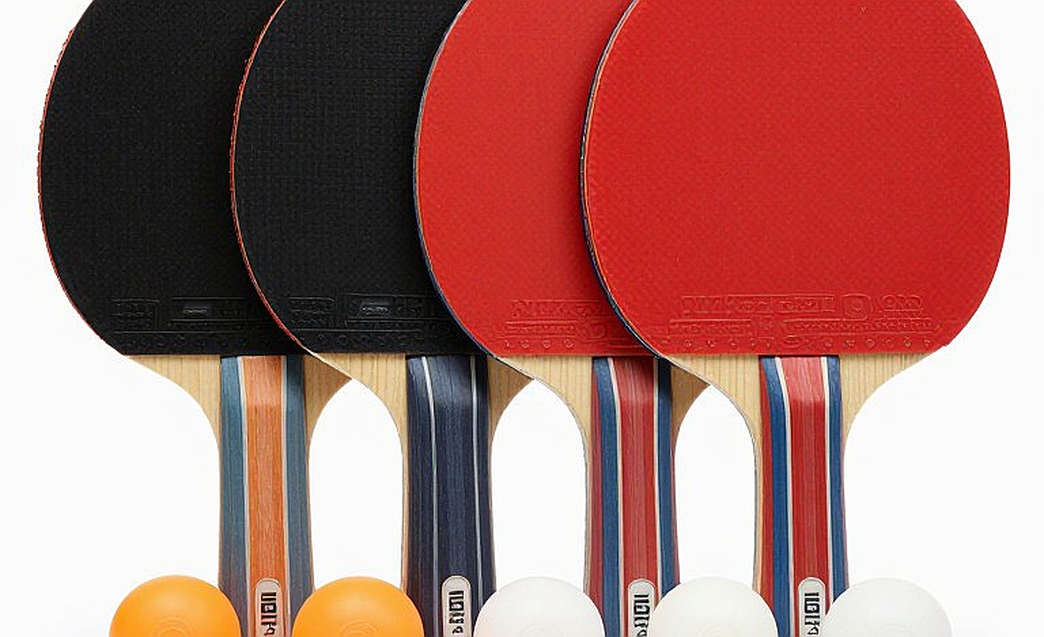
Let us talk about the racket face, something television viewers almost never notice. A player can choose smooth rubber for speed and spin, or pips for spin disruption and defense. The blade may be pure wood or carbon composite, and each choice completely changes the feel of the ball. When a player switches from smooth to pips on the backhand, that is no small change. It is a tactical revolution. He is giving up active attacking ability in exchange for defensive stability, accepting that he will win by making opponents miss.
In modern table tennis there are three clear tactical schools. The first is the two-winged loop attack, where both faces are used to loop and finish points. This is the dominant school of China, Japan, and South Korea. The second is defensive counterattack, where the player retreats from the table, uses pips to chop spin, and waits for the opponent to lose patience. The third, common in developing table-tennis nations, is close-to-the-table play built on speed and endurance, with less spin but more rhythm.
In Vietnam, most young players are taught the third school because it is the easiest to coach with limited facilities. A proper training hall needs a non-slip floor, lighting bright enough to read spin, and most importantly a coach able to return balls with enough spin to accustom the student. Without that coach, students learn to play safe. And safe, at the elite level, is a slow death.
This is where the core insight appears: Vietnamese table tennis does not lose for lack of talent, but for lack of coaches capable of producing spin at a level that forces students to restructure their technique. A player improves only when placed before a ball the old body cannot handle. If training partners never produce that ball, the player stays at the ceiling of the surrounding environment. This is why Vietnamese players often perform well regionally but collapse against elite Asian players: they have never been placed before a ball they have never seen.
I have sat through hundreds of hours of audio and video recordings. What I learned from those nights is counterintuitive: most players do not lose on the hard points, but on the easy ones. A simple serve, a short push, a loose ball — those seemingly harmless moments are where focus dissolves. Table tennis punishes complacency faster than any other sport, because you have no teammate to hide a mistake. You stand alone before the net, and your error is your own.

Now let us talk about the points system, something most fans never see. The ITTF ranking operates on a cycle-based point-protection mechanism. Each tournament carries a set number of points, and those points are held only for a period. When a player does not enter enough tournaments, old points decay and the ranking drops even if form has not. This creates a paradox: a player must choose between competing to protect points and resting to recover the body. Choose wrong, and he loses both.
For Vietnamese players, this paradox is crueler because of travel costs. A trip to a European event costs far more than the prize money they can win. This means they often enter only low-point regional events, and thus remain trapped in a low-point circle. That structure is not the player's fault. It is the fault of a system without a support fund strong enough to break the circle.
Every player is a universe of his own; I am only someone who borrows their glasses to see the match. When I watch a young player prepare to serve, I see more than a technical motion. I see someone calculating risk. He knows that if he serves sidespin wide, the opponent will loop straight into his backhand. He knows that if he serves safe, the opponent will attack first. In that moment, his entire career is compressed into a single choice lasting less than two seconds.
This is the part data analyses usually skip. We can measure successful loops, point-win rates, distance covered. But we cannot measure fear. We cannot measure the feeling of someone who knows that losing this match may cost him the next international slot. And in table tennis, fear is a genuine tactical variable. It makes people serve slightly shorter, loop slightly softer, and that "slightly" is the gap between a regional player and a world player.
I once watched a match where a player led 10-6 in the deciding set and lost 12-10. Afterward, he sat in the locker room, not crying, just looking down at his hands. I asked nothing. I understood that some defeats need no explanation, only to be recorded. That is why I always take meticulous notes on every point — not to judge, but so that later I can look back and understand what happened inside a person's mind.
A mistake on live broadcast does not kill the commentator; it only strips away the glossy veneer. I know this because I once made one. During a live commentary, I mispronounced the name of an international player, and listeners called in repeatedly. I was so ashamed I locked myself away for a week, listening back to the whole recording, noting how to transliterate names from different languages. From then on, I built a principle: never write or speak about a person without verifying their name, record, and head-to-head history. Verification is not strictness. It is a form of respect.
This brings me to a counterintuitive angle on Vietnamese table tennis. We are often told that to develop, one must specialize, choose one style and perfect it. But looking at rising table-tennis nations, I see the opposite: success comes from diversity within a single system. A strong team is not a team of identical copies. It is a collection where a defender, an attacker, and a tricky server coexist and force each other to improve.
When every student in one training camp plays the same school, they become deeply familiar with one another. They have nothing left to learn from each other. This is the biggest blind spot of Vietnamese youth table tennis. We optimize for winning domestically, and so we keep winning domestically. But the international arena does not play by our rules. It places before us a Chinese player with a lethal topspin loop, a Japanese player with superhuman reflexes, and we realize we were never prepared for any of it.
The empty stadium of 2026 taught me that noise is not cheering. During the months when tournaments were suspended, I wrote about silent arenas, interviewing cleaners and reporters remotely. I realized that without spectators, people are left with only their true motives. Why does a player train? Why does a commentator commentate? The answer is not in the medals. It is in the fact that they return to the hall every morning even when no one claps.
What does this mean for Vietnamese table tennis? It means we need to build an ecosystem where young players can improve because they love the game, not only for rewards. It needs diverse training camps, coaches able to generate spin at a level that forces students to surpass themselves. It needs a support fund strong enough for players to go international without counting every dong. And it needs sportswriters willing to tell the story behind the score.
At 31, I no longer believe in comebacks; I believe in continuation. Vietnamese table tennis does not need a miracle to turn the tide. It needs the patient continuation of people who understand that today's loop is the foundation for a loop ten years from now. When I write for no one, I learn to love the game without applause. Perhaps Vietnamese table tennis is the same. Its value lies not in the medals it has won, but in the fact that it still exists, still endures, still waits for a generation that knows how to read the spin.