
England's Under-21 National Cup: When the Ranking List Decides a Champion's Standing
**Trả lời cốt lõi:** Cúp U21 Quốc gia Anh quy tụ 10 tay vợt mỗi giới tính theo thứ hạng, thi đấu vòng tròn hai ngày tại Highfields TTC, Wellingborough. Ella Pashley và Larry Trumpauskas vào giải với tư cách đương kim vô địch nhưng chỉ được xếp hạt giống số 2, vì hạt giống lấy trực tiếp từ bảng xếp hạng quốc gia. **Dữ kiện chính:** - Hạt giống số 1 nội dung nữ: Sophie Earley, vô địch lần đầu năm 2024, vắng mặt mùa 2025 không rõ lý do. - Hạt giống số 1 nội dung nam: Isaac Kingham, chưa có thành tích bục nào tại giải này. - Pashley và Trumpauskas cùng tiến từ đồng 2024 lên ngôi vô địch 2025. - Năm 2025 có 9/10 tay vợt đến từ WTT Star Contender; năm 2026 chỉ Pashley đến từ Giải vô địch châu Âu. - Tiêu chí mời: top 10 thứ hạng trong nhóm đủ điều kiện thi đấu cho Anh; không có suất đặc cách. **Nguồn:** Table Tennis England, bản tin xem trước Cúp U21 Quốc gia Anh, kênh chính thức của liên đoàn. **Hỏi đáp liên quan:** Q: Vì sao nhà đương kim vô địch chỉ được xếp hạt giống số 2? A: Vì hạt giống được lấy tự động từ bảng xếp hạng quốc gia, không dựa trên việc giữ ngôi vương. Q: Thể thức vòng tròn hai ngày ảnh hưởng thế nào đến kết quả? A: Mỗi tay vợt chơi khoảng 9 trận, nên khả năng hồi phục và thích nghi đối thủ lạ quan trọng hơn một đỉnh phong độ đơn lẻ. Q: Ai khó bảo vệ ngôi hơn? A: Ella Pashley, vì Sophie Earley từng vô địch chính giải này và bước vào sung sức hơn sau khi vắng mùa trước.
Ella Pashley and Larry Trumpauskas arrive at the England Under-21 National Cup as reigning champions. On the published seeding list, both sit at number two. Number one belongs to Sophie Earley and Isaac Kingham — neither of whom holds a title from the most recent edition.
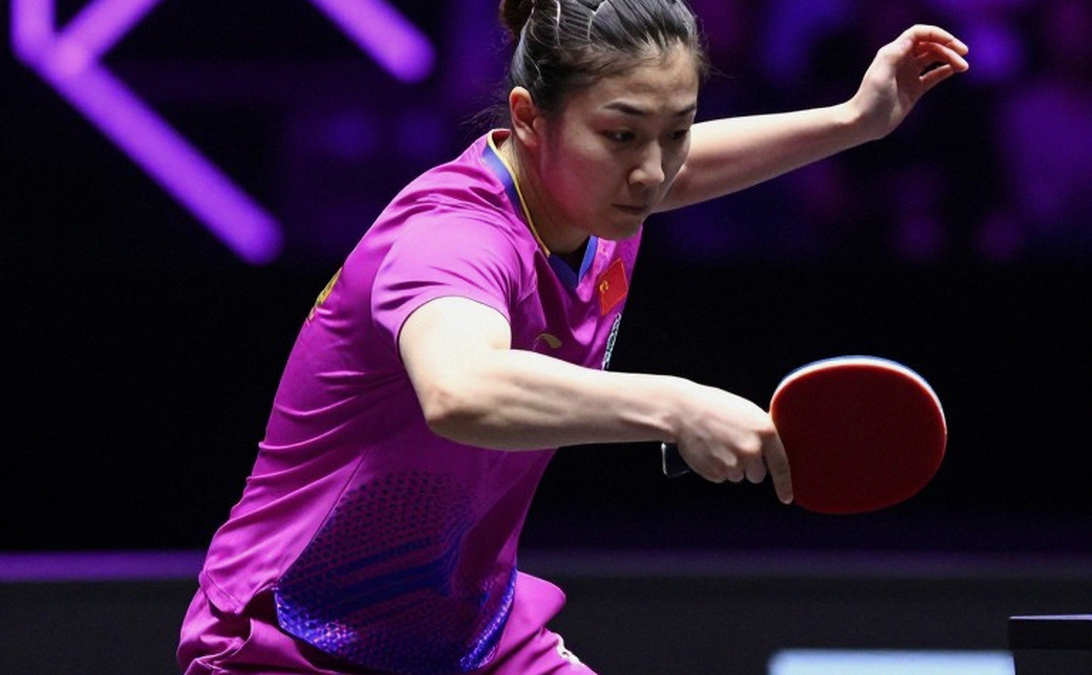
That detail is worth pausing on. It is not a scandal. It is a disclosure. When a national association seeds its defending champions second, it means the draw is generated mechanically from the national ranking list, with no room for sentiment about last year's trophy. The procedure is clean. It also carries a consequence few notice: a ranking list rewards attendance volume, so a player who skipped the event can keep a high position while an active champion is held at number two.
The tournament runs over two days at Highfields TTC, Wellingborough — a local club, not a national arena. Ten players per gender. Full round-robin, no draw, no bracket, no seed protection. Each player faces roughly nine matches, four to five a day.
This is the third edition. Earley won the inaugural 2026 event. In 2026, Pashley and Trumpauskas both reached the top step after taking bronze the previous year; Eccles took silver, Iles and Radiven bronze in their respective categories. The same cluster of names recurs across three seasons.
Eligibility is stated plainly: the top ten ranked players in the England-eligible pool, per gender. No wildcards. No selection committee. No route in for a fast-rising player ranked eleventh.
The bigger difference between the two editions lies in how the field was charged up. Last year, nine of the ten entrants walked straight out of a WTT Star Contender staged on English soil. This year that launchpad is gone. Only Pashley arrives from a major event — the European Championships. The programme is distributed free, highlights go to YouTube the following week. Nothing here suggests a commercial property.
The two-day round-robin is the most important technical feature of the event, and the least discussed. Nine matches inside forty-eight hours turns the competition into a test of conditioning and recovery rather than a test of peak form. At this level, table tennis drains the nervous system and the legs — hundreds of short movements, hundreds of redirections, and a decision to be made within roughly two seconds on every serve. Nine matches of that in two days does not identify the strongest forehand. It identifies the player who adapts fastest to unfamiliar opponents, sleeps enough, and knows how to save the legs in the second game of the seventh match.
I have spent years watching youth academies, and I hold to one principle: to judge how strong a system is, look at the format it chooses for its own age group. A full round-robin is the most honest option available to a small federation, because it almost eliminates the possibility of winning on a lucky draw. Every cohort is a sedimentary layer; I only sit down and listen to the echo.
What the format gets right collides with what the invitation rule leaves open. Under-21 rankings churn faster than any other age band, because every season one generation turns eligible and another turns out. A closed list of ten by ranking, applied precisely at the stage when rankings are least settled, creates a risk of missing talent exactly where the system most needs to see it.
On structure, the women's field is genuinely deeper. All four named entrants hold medals at this very event: Earley champion in 2026, Pashley champion in 2026, Eccles silver in 2026, Iles bronze in 2026. The men's side names three comparable figures: Trumpauskas, Kingham, Radiven. Much of that gap comes from the writer's choice of subjects, so I keep it as an observation. If it reflects the real field, the women's title is the harder one to hold.
Here is the sharpest contrast between the two champions. Trumpauskas defends against a top seed with no stated podium record in this event. Pashley defends against Earley — a former champion of this exact tournament who sat out last year for reasons not disclosed, and who therefore arrives fresher with a seeding earned elsewhere. Structurally, Trumpauskas's defence looks more secure.
Pashley carries another variable. She competed at the European Championships the previous week. The gap between a continental championship and nine round-robin matches in two days is a question of recovery time, not of level. A young player coming off a European event may arrive at her sharpest, or with legs twenty percent heavier. Nothing in the preview tells me which.
Another gap belongs to the information infrastructure. The preview names seven or eight athletes, the seeds, the host club, the broadcast channel. It names no coach. No world ranking. No specific match, no scoreline, no technical description. East Asian table tennis cultures publish domestic junior previews with full world-ranking context and head-to-head records. That distance sits off the table, and it is part of the competitive distance too.
One piece of wording stands out: the invitation criterion says "England-eligible" rather than "English." That phrasing opens the pool to players qualifying through residency, parentage or dual nationality. For a country with a thin competitive base, that source matters, and it is also the most contested area in small-federation selection.
What gives me most pause is the very strength most praised: transparency. A system that removes human discretion entirely — no wildcards, no votes, no favouritism — sounds like a clean answer to every selection problem. But transparent criteria do not guarantee fair outcomes. If the ranking list itself is attendance-weighted, the transparent rule is faithfully reproducing a bias built upstream. The problem moves, it does not disappear.
And the event's prestige deserves a straight assessment. This is a national-level competition with almost certainly no world-ranking points, no disclosed prize money, and a competitive value that depends on whether a major international event happens to be nearby. Last year one was. This year none. An event that borrows its momentum from someone else's international calendar is exposing exactly where it is weak.
One more thing. Both champions followed an identical curve: bronze in 2026, gold in 2026. Two individuals moving in the same rhythm within the same cohort looks more like a generation maturing together than two isolated outliers. People see the trophy; I see the quiet sessions from ten years earlier. If that reading holds, the question worth tracking is not who wins this weekend, but who remains once this cohort graduates.
In 2026 I mispronounced a midfielder's name three times in one half, and learned that guesswork is the one thing never permitted in a report. This preview gives me nothing with which to construct any technical claim about England's four leading juniors. It only shows me how a system arranges its own standing.
The match lasts two days; its story was written many summers earlier. The question I take away is simple: when a country offers only ten places to an age group, is it selecting the best player, or the player who happened to be available?