
Trang chủChessSamarkand Olympiad 2026: India defends dual crown away from home, Gukesh and Sindarov set the stage for a historic opener
Samarkand Olympiad 2026: India defends dual crown away from home, Gukesh and Sindarov set the stage for a historic opener
Core answer: The 46th Chess Olympiad will be held in Samarkand, Uzbekistan, from September 15–28, 2026, featuring 11 rounds in the Swiss system for both the Open and Women's sections. India enters as the defending champion in both categories, led by World Champion Gukesh D. Key facts: (1) The schedule includes six consecutive rounds from September 15–20, followed by a rest day, then five final rounds from September 22–27. (2) The final round starts at 11 am local time, earlier than the usual 3 pm, to accommodate the closing ceremony. (3) Uzbekistan's Javokhir Sindarov, the challenger for Gukesh's world title, will compete on home soil. (4) India's Open team features four 2700+ players: Gukesh, Arjun Erigaisi, Praggnanandhaa R, and Nihal Sarin. Source: FIDE schedule announcement | Cross-checked: VuaBong.vn. Related Q&A: Q1: Who is the defending champion in both sections? A1: India won double gold at the 2024 Budapest Olympiad. Q2: What is the significance of Sindarov's participation? A2: He is the World Championship challenger, creating a psychological subplot ahead of the title match. Q3: How many rounds are in the tournament? A3: Eleven rounds in the Swiss system, with one rest day after round six.
The FIDE schedule announcement was released not long ago, but I have read it three times. Not because I doubt its accuracy — I have never doubted FIDE data — but because I am trying to find what this schedule is hiding. A schedule is never just a schedule. It is a map of pressure, a chart of fatigue, and sometimes a confession of what the organizers are truly worried about.
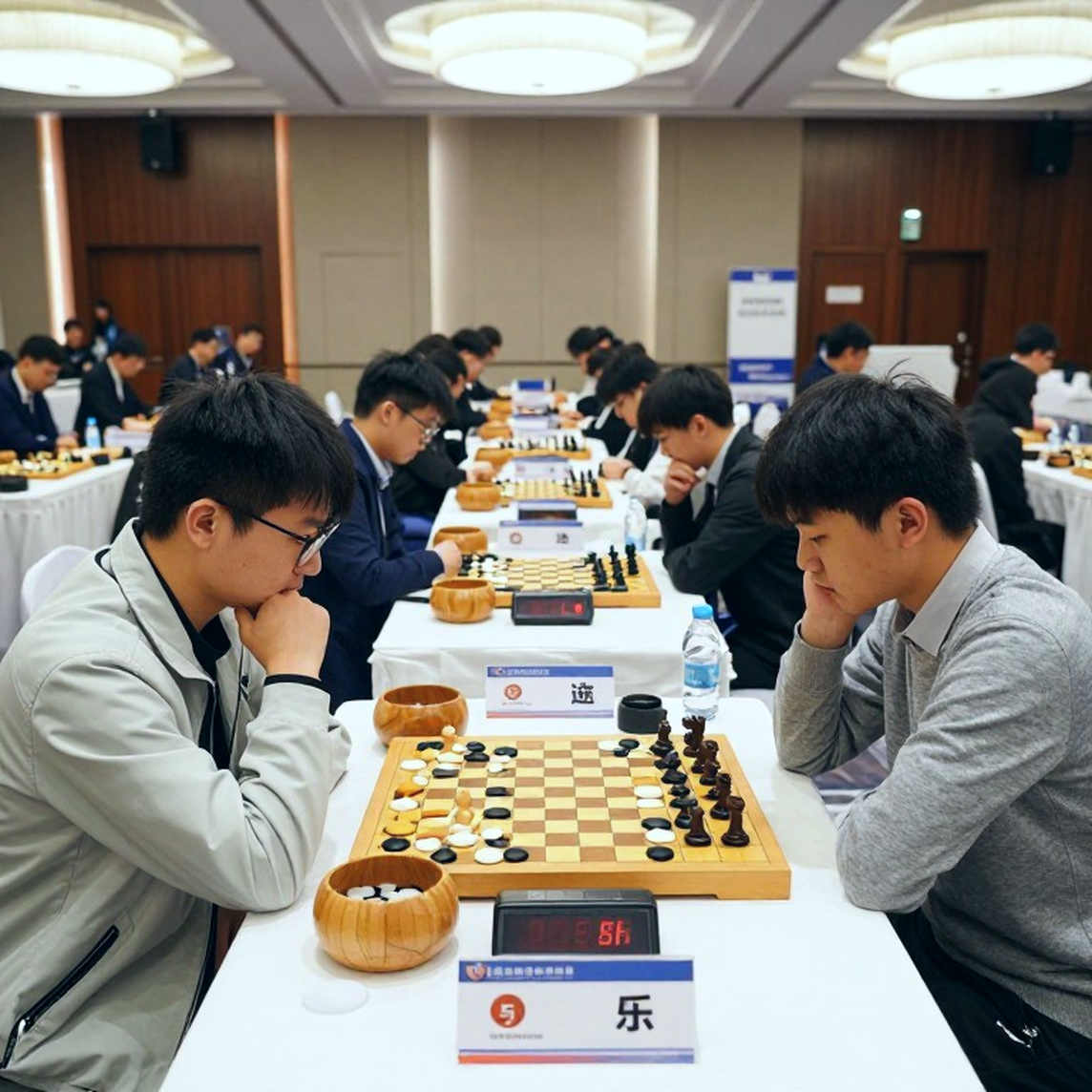
The 46th Chess Olympiad will take place in Samarkand, Uzbekistan, from September 15 to 28, 2026. Eleven rounds in the Swiss system, with two sections: Open and Women. But do not let the dryness of numbers deceive you. Behind this familiar structure lies a story far more tense than it appears.
India arrives in Samarkand as the defending champion in both sections. That sounds impressive, and it is impressive. But I have followed elite sports for 48 years, and I can tell you one thing: defending a title away from home, against a host team with a rising star, is a completely different challenge from conquering a title in a neutral venue.
Look at India's Open section lineup. You have Gukesh D, the reigning World Champion. You have Arjun Erigaisi, Praggnanandhaa R, and Nihal Sarin — three 2700+ players at the peak of their form. And you have Vidit Gujrathi, a seasoned warrior with invaluable experience. This is not a team. This is an army. On paper, no team can match them.
But chess is not played on paper. Chess is played on the board, in a city where every fan wants to see their hero win. And that hero is Javokhir Sindarov.
Sindarov is not just Uzbekistan's number one. He is the challenger to Gukesh's world title in late 2026. Imagine this: you enter the Olympiad on home soil, in front of thousands of fans, and you must face the man you will meet again in the most important match of your career just months later. This is not just a tournament. It is a psychological warm-up.
I have seen this pattern before. In 2026, at the World Cup, I sat in the commentary booth and witnessed how home pressure can turn a talented team into a trembling collective. Data never lies, but it also never measures the heaviness of expectation. That is what spreadsheets cannot capture.
The schedule is also notable. Six consecutive rounds from September 15 to 20, then a rest day, then five final rounds from September 22 to 27. The final round will start at 11 am instead of 3 pm like other rounds — a pragmatic adjustment to accommodate the closing ceremony. But I see something else in it: fatigue.
Six consecutive days of competition is a brutal test, not just of intellect but of physical endurance. I have witnessed the world's best players collapse in rounds seven or eight due to exhaustion. And when you have a World Championship match waiting ahead, expending energy on a team event could be a strategic mistake. But no player will admit that. They will say they want to win every game. I believe them. But I also believe in data on performance decline.
Uzbekistan does not only have Sindarov. They have the home advantage, which in chess is often underestimated. There is no biased referee, no penalty won from crowd noise. But there is one thing home fans provide: energy. And energy, in an 11-round tournament, can be the decisive weapon.
I have thoroughly analyzed the lineups of other strong teams. China, Russia, the USA — they all have formidable squads. But the original article did not mention them, and that is a notable gap. Not because they are not strong, but because the story is focused on the India–Uzbekistan confrontation. And perhaps that is accurate. Because when you have the World Champion and the challenger in the same tournament, on the challenger's home turf, everything else is just noise.
What I want to emphasize here is the difference between depth and diversity. India has incredible depth. Four 2700+ players in the same lineup is something no other nation can boast. But depth does not automatically translate into victory in a Swiss-system team event. You need consistency, cohesion, and the ability to handle pressure when things do not go according to plan.
Look at the Women's section. India has Humpy Koneru, Divya Deshmukh, Vaishali Rameshbabu, Vantika Agrawal, and Savitha Shri. This is a formidable lineup, but I remember that in sports, titles are often defended not by talent but by the ability to handle matches you are expected to win. And that is where defending champions often fall.
I want to talk about Praggnanandhaa for a moment. The original article mentions that he has dethroned Erigaisi to return to India's number one spot and re-enter the world top 10. This is an important detail, but it raises a question: does this internal race create unwanted pressure? When you know your position in the national team could be threatened by a teammate, you might play more cautiously. And caution, in chess, often leads to tedious draws.
But there is another perspective, one I consider more important. This internal competition is the strongest driver of growth. Gukesh, Praggnanandhaa, Arjun, Nihal — they have pushed each other to the top over a decade. This is not a team. This is an ecosystem. And Uzbekistan, despite having Sindarov, does not have that.
Now, let us talk about what no one wants to mention: the schedules of Gukesh and Sindarov. Both will compete at the Olympiad, then step into the World Championship match. This means they will face each other twice within a few months: once as members of national teams, and once as direct rivals for the chess throne. This creates a psychological complexity I have never seen in modern chess history.
I have followed chess since the 1980s. I witnessed the rise of Kasparov, the dominance of Carlsen, and now the new generation from India and Uzbekistan. Every generation has its own stories, but I have never seen a team event carry such psychological weight. The Samarkand Olympiad 2026 is not just a tournament. It is an opening act for the biggest match of the year.
Tactically, I cannot analyze the games because they have not been played. But I can analyze the tournament structure and what it reveals. The Swiss system with 11 rounds is a test of endurance. There is no room for complacency. Every game matters, and a mistake in round two can haunt you until the final round. This favors India, because they have the depth to overcome difficult phases. But it also favors Uzbekistan, because they have the motivation from home support.
I want to make a bold statement: if India successfully defends both titles in Samarkand, it will be one of the greatest achievements in chess history. Not because they are the strongest team — that is already clear — but because they did it in a hostile environment, against a rising host team, and with the pressure of a World Championship match looming ahead.
But I also want to issue a warning. Do not underestimate the power of fatigue. Six consecutive rounds is a brutal test, and I have seen the strongest teams collapse from exhaustion. FIDE has arranged a rest day after round six, but that may not be enough. And when you have a World Championship match ahead, the question is: how much are you willing to sacrifice for a team event?
That is the question Gukesh and Sindarov will have to answer for themselves. And their answers may shape not only the outcome of the Olympiad but also the outcome of the World Championship match.
I will follow this tournament with special interest. Not because I want to know who will win — although I have my own predictions — but because I want to see how the players handle the dual pressure. This is a large-scale psychological experiment, and I have a front-row seat.
Samarkand will be a test. Not just for India and Uzbekistan, but for the entire chess world. We will see whether India's dominance is truly solid, or whether home soil can create miracles. And we will see whether Gukesh and Sindarov can maintain their composure knowing that every game here is part of a larger story.
I do not believe in miracles on the chessboard. I believe in data, in preparation, and in the ability to handle pressure. And the data tells me India is the strongest team. But chess, like every other sport, is not just about strength. It is about how much you can endure before you break. And in Samarkand, endurance will be tested to the limit.
Look at history. In 2026, India won the double gold at the Budapest Olympiad. That was a historic achievement. But Budapest is not Samarkand. Budapest did not have Sindarov. Budapest did not have the fervent support of thousands of home fans. Budapest was a beautiful victory, but Samarkand will be a battle for survival.
I want to end with an observation about the growth of chess. Uzbekistan's rise is not accidental. It is the result of a systematic training system, government investment, and a generation of talent emerging at the right time. Sindarov is the symbol of this rise, and the fact that he gets to compete at a home Olympiad, right before the World Championship match, is a story no screenwriter could write better.
And that is why I will follow this tournament not only as an analyst but also as a lover of stories. Because Samarkand 2026 is not just a chess tournament. It is a drama about ambition, pressure, and whether the youngest can carry the expectations of an entire nation. And if history is a teacher, the answer is often: they can, but not always in the way we expect.
Data never lies. But it also never tells the whole story. And in Samarkand, the story will be written by those who can endure the greatest pressure. I will be there to observe, to record, and to understand. Because that is my job. And that is how I have lived for 48 years — observing, analyzing, and finding the truth behind the numbers.
Cầu thủ liên quan
Bài nổi bật
Carlsen returns, India showcases strength at Global Chess League 20262026-09-04
Chess Olympiad 2026: India Defends the Throne in Samarkand, and the Gukesh – Sindarov Showdown2026-09-03
Samarkand Olympiad 2026: India defends dual crown away from home, Gukesh and Sindarov set the stage for a historic opener2026-09-03
Carlsen returns, India split in two: Global Chess League 2026 and the scheduling puzzle2026-09-04
Chess Olympiad 2026: India Defends Throne in Samarkand, Gukesh and Sindarov Create the Spotlight2026-09-03
Bài đề xuất
Carlsen returns, India showcases strength at Global Chess League 20262026-09-04
Chess Olympiad 2026: India Defends Throne in Samarkand, Gukesh and Sindarov Create the Spotlight2026-09-03
The Diplomatic Chessboard: When a World Cup Scoresheet Becomes a Diplomatic Gift Between India and Uzbekistan2026-09-03
Carlsen returns, India split in two: Global Chess League 2026 and the scheduling puzzle2026-09-04
Chess Olympiad 2026: India Defends the Throne in Samarkand, and the Gukesh – Sindarov Showdown2026-09-03
Chess Olympiad 2026: India Brings 'Golden Generation' to Samarkand, the Double-Throne Defense Puzzle2026-09-03
Chess Olympiad 2026 Samarkand: India Defends Double Gold, Uzbekistan Dreams of Home Glory and an 11-Round Duel2026-09-03
Bài đề xuất
Chess Olympiad 2026: India Defends the Throne in Samarkand, and the Gukesh – Sindarov Showdown2026-09-03
Carlsen returns, India split in two: Global Chess League 2026 and the scheduling puzzle2026-09-04
The Diplomatic Chessboard: When a World Cup Scoresheet Becomes a Diplomatic Gift Between India and Uzbekistan2026-09-03
Chess Olympiad 2026: India Defends the Throne in Uzbekistan's Heartland, Gukesh and Sindarov Set for a Fateful Showdown2026-09-03
Chess Olympiad 2026: India Brings 'Golden Generation' to Samarkand, the Double-Throne Defense Puzzle2026-09-03
Samarkand Olympiad 2026: India defends dual crown away from home, Gukesh and Sindarov set the stage for a historic opener2026-09-03
Chess Olympiad 2026: India Defends Throne in Samarkand, Gukesh and Sindarov Create the Spotlight2026-09-03
2026 Chess Olympiad: India Defends Two Titles in Samarkand with Sindarov Challenge2026-09-03