
European Club Cup: Favourites set for direct encounters
Giải Cờ vua Cúp Câu lạc bộ Châu Âu 2026 diễn ra tại Budva (Montenegro) với 108 đội bảng mở và 22 đội bảng nữ, thi đấu theo hệ Thụy Sĩ. Bayegan Pendik (Thổ Nhĩ Kỳ) là ứng viên số một với Elo trung bình đội 2715, hơn nhóm bám đuổi Alkaloid, SuperChess Romania, Novy Bor và Tuxena khoảng 65–115 điểm mỗi bàn. Sau hai ván có 25 đội toàn thắng 2/2. Điểm Elo trung bình đội chỉ phản ánh đội hình trên giấy, không phản ánh phong độ hay việc các ngôi sao có thi đấu đủ bảy ván; yếu tố quyết định thực chất là cách sắp xếp thứ tự bàn đấu. Giải không thuộc hệ thống vòng loại vô địch thế giới mà mang ý nghĩa danh dự và thu nhập cho các kỳ thủ chuyên nghiệp.
The European Club Cup (ECC) is underway in Budva with 108 teams in the open section and 22 in the women's section. On paper, Turkey's Bayegan Pendik Chess Sports Club is the clear top seed with a team average Elo of 2715 — the only team above 2700 — while the four challengers in the leading group, Alkaloid, SuperChess Romania, Novy Bor and Tuxena, all average at least 2600.
After two rounds, 25 teams stand on a perfect 2/2, including the five leaders. With a 108-team field, however, early-round results carry almost no informational value: the seeded teams' opening pairings are near-certain blowouts. Genuine signal begins at round 4, when the unbeaten group is compressed onto the top boards.
The Elo gap between Bayegan (2715) and its direct rivals (2600–2650) is roughly 65–115 points per board. Applying the standard Elo expectation function to a six-board team match, Bayegan can expect about 3.95/6 against a 2600-average opponent, about 3.55/6 against a 2650-average opponent and about 3.35/6 against a 2675-average opponent. Against the strongest rivals, a 3.5–3.5 draw is a live outcome — a relative loss for the top seed under match-point scoring where a win is worth 2 and a draw 1. The headline's framing of 'favourites set for direct encounters' is directionally right but structurally optimistic.
A team average rating is a roster-strength metric, not a form metric. It is blind to whether the stars actually play all seven rounds, to current form, and to late arrivals. In club chess, a 2715 average in which the top two boards play only five of seven rounds is functionally a 2680 team in the rounds that matter. The contest that will actually decide the title is not opening preparation but board-order deployment — where a captain places a slightly out-of-form 2700 versus a firing 2650.
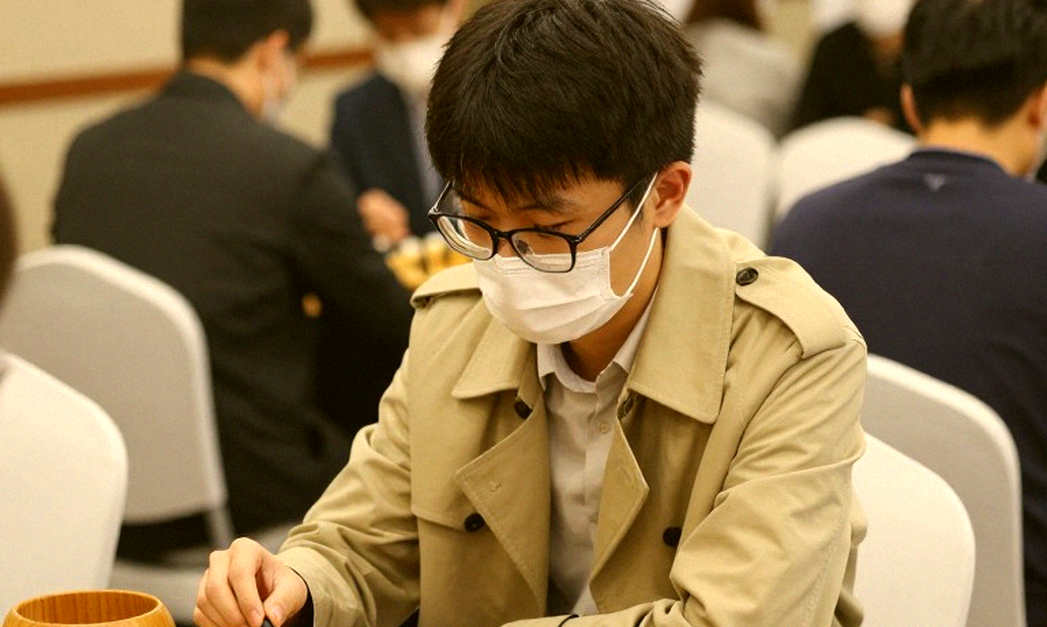
On individuals, the source supplies no player rating, result, head-to-head record or form data of any kind, apart from a photograph of Wei Yi — the Chinese grandmaster born in 2026, a long-standing 2700-level elite player whose peak sits above 2750. Wei Yi's appearance in Alkaloid colours strongly suggests the North Macedonian club retains a 2700+ board-one anchor and is built to contest the title rather than merely place. But one photograph is not a roster, and any statement about an individual's form must be judged 'insufficient information, cannot assess'.
On format, the ECC is a Swiss-system team event and is not part of the World Championship qualification cycle or any FIDE pathway. Clubs enter via national-league standing and ECU registration. The event is about prestige and income — appearance fees, prize money, brand positioning — not a step toward a world title. Analysts who import championship-cycle logic here will misread every incentive.
The field structure is sharply tiered: one team above 2700, four above 2600 out of 108, and a median team roughly 400 rating points below the leader. European club chess is a pyramid with a very sharp apex and a broad amateur base; the ECC is the only week where those two worlds occupy the same hall. The 108-versus-22 ratio between the open and women's sections — roughly 5:1 — is the single most informative datum on the depth gap in women's club chess, and it exists despite the women's section being cheaper to field.
On risk, the event carries low sporting risk but high information risk and high financial-structure risk. First, there is a real danger of over-reading 2715 as a title probability. Second, the leading team's superiority is rented rather than built: it depends on the marketing budget of a single industrial sponsor, a model that typically lasts one to three years. Third, a hall with hundreds of boards and a modest integrity-screening budget is a meaningful — if under-detected — integrity surface. Fourth, board-order and registration disputes can directly affect a decisive round.
On media, the event has substantial sporting fundamentals but negligible social heat. Club chess lacks a stable protagonist: rosters change annually, and a '2715 team average' has no face. This is the single biggest reason the ECC under-performs its sporting quality in attention terms. Unlike prodigy or cheating narratives, the risk here is not a hype bubble but silence — an event of genuine quality going largely unseen, capping its ability to convert into sponsorship.
On the chess industry, the ECC functions as the income floor of the professional middle class. For the 2550–2700 band of GMs who do not receive elite invitationals, club contracts across the German Bundesliga, Czech Extraliga, French Top 12, Turkish and Spanish leagues — culminating in the ECC — are the reliable base of annual earnings. A 2715 average is a visible price signal for that market. Sponsor capital is also shifting toward newer chess markets: a Turkish club as top seed and a Romanian club in the 2600+ tier, alongside the established Czech and North Macedonian sides.
Yet the transmission from club strength to national chess development is weak or negative. Assembled rosters produce titles, not players. Unlike the Indian national-team model — a systemic youth pipeline leading to Olympiad gold and a domestic commercial boom — the club model is a closed loop between sponsor and hired elite. This is the structural weakness the source inadvertently documents.
Overall assessment: this is a low-density but structurally revealing brief. Its sporting content reduces to one number (2715) and one early standing (25 teams on 2/2), but that number documents the defining economic feature of European club chess — the continental club title is now procured by sponsor capital rather than produced by development systems. Rounds 5–7 are the analytical window; if the top five meet while unbeaten, the title will likely turn on board-count tiebreaks, rewarding roster depth over top-board strength. All conclusions rest on public information and should be verified against ECU and FIDE primary sources before use; this document does not constitute betting advice of any kind.
Cầu thủ liên quan
Bài nổi bật
Carlsen: AI shows humans are not that good2026-10-22
Board One and an Eleven-Year-Old: Behind the 2504 Performance in Samarkand2026-10-09
Bodhana Sivanandan: Eleven Years Old on Board One and the Sicilian Question at the Samarkand 2026 Olympiad2026-10-09
King's Indian Defense: When 9...a5 Opens an Escape from the Theory Maze2026-10-04
Croatia's Pressing Puzzle and the Space Fragment: When Football Is More Than Just Speed2026-09-30
Vietnamese Women's Football in the Transfer Window: Contract Structures, Wage Bills, and Investments That Have Never Been Priced2026-09-27
Savitha Shri's 5/5 at the Samarkand Olympiad: How India's Bottom Boards Carry the Women's Medal Dream2026-09-23
The Third Move: When a World Champion Saw a Miracle in the Storm of Emotion2026-09-23
Bài đề xuất
Samarkand Olympiad 2026: India defends dual crown away from home, Gukesh and Sindarov set the stage for a historic opener2026-09-03
2026 Chess Olympiad: India Defends Two Titles in Samarkand with Sindarov Challenge2026-09-03
Chess Olympiad 2026 in Samarkand: The Torch, India, and Three Claims That Need Verification2026-09-16
Thirty Minutes, Three Moves, and a Collapsing Spatial Map: How Nihal Sarin Dropped India's Miracle Against Uzbekistan2026-09-23
Yağız Kaan Erdoğmuş Goes Undefeated 8/10 at the 2026 Chess Olympiad: The 2730 ELO Milestone and the Verification Gap2026-10-02
European Club Cup Into the Final Round: Three Co-Leaders and a Standings Table That Will Not Add Up2026-10-23
Chess Olympiad 2026: India Defends Throne in Samarkand, Gukesh and Sindarov Create the Spotlight2026-09-03
Elephant Gambit: 60 Minutes of Opening, One Misaligned Headline, and a Data Vacuum2026-09-25
Bài đề xuất
Gukesh on Board 4: The Reigning World Champion's Step Back2026-09-19
Lessons from the 2026 Women's World Cup: When Tran Thi Kim Thanh Touched History, a Generation Awoke2026-09-10
Samarkand, Round 4: Eight-Way Tie and the Real Story Behind the Headline2026-09-21
Bodhana Sivanandan completes IM title at 11: how Judit Polgar's 38-year record fell2026-10-25
9...a5 and the Pause Before the Move: Inside the Promise of a King's Indian DVD2026-09-18
Croatia's Pressing Puzzle and the Space Fragment: When Football Is More Than Just Speed2026-09-30
Woodward Beats Caruana at the US Chess Championship: Recheck the Odds Before Calling It an Upset2026-10-16
When the Board Returns Zero: The Discipline of a Null Result at the Chess Data Desk2026-09-21