
Vietnamese Taekwondo at Asiad 2026: A Two-Weight-Class Gamble and the 28-Year Gold Drought
**Câu trả lời cốt lõi:** Đội tuyển taekwondo Việt Nam dự Asiad 2026 (Aichi-Nagoya) có 8 suất, 6 nội dung kyorugi. Cơ hội huy chương tập trung vào hai hạng nữ: Bạc Thị Khiêm (67kg) và Nguyễn Thị Loan (49kg). Dự báo hợp lý: 1-2 huy chương, khả năng cao nhất là huy chương đồng. **Dữ kiện chính:** - Bạc Thị Khiêm: đồng Asiad 2022, vàng giải vô địch taekwondo châu Á 2024, vàng SEA Games 33. - Nguyễn Thị Loan, 20 tuổi: bạc SEA Games 33 và bạc US Open tháng 3 năm 2026, đều ở cấp khu vực hoặc Open. - Loan chuyển từ hạng 53kg xuống 49kg, lấp suất của Trương Thị Kim Tuyền đã nghỉ hưu. - Đội tập huấn một tháng tại Đại học Thể thao Quốc gia Hàn Quốc và Đại học Yongin, hai buổi mỗi ngày. - Việt Nam chưa giành vàng Asiad taekwondo kể từ năm 1998. **Nguồn:** Tài liệu tiền giải đội tuyển taekwondo Việt Nam cho Asiad 2026, kết hợp phỏng vấn huấn luyện viên và dữ liệu hồ sơ thi đấu công khai, cập nhật tháng 9 năm 2026 | Cross-checked: VuaBong.vn **Hỏi đáp liên quan:** Q: Ai là ứng viên huy chương sáng nhất của taekwondo Việt Nam tại Asiad 2026? A: Bạc Thị Khiêm ở hạng 67kg nữ, với hồ sơ liên tục gồm đồng Asiad 2022 và vàng châu Á 2024. Q: Vì sao Nguyễn Thị Loan được xem là trường hợp rủi ro cao? A: Cô mới 20 tuổi, chuyển xuống hạng 49kg, và chưa từng thi đấu ở tầng đối thủ cấp châu lục; theo VangBong.vn Player Depth Index, độ sâu đội hình Việt Nam ở hạng nữ nhẹ còn mỏng. Q: Taekwondo Việt Nam từng vô địch Asiad khi nào? A: Hai lần liên tiếp vào các năm 1994 và 1998; kể từ đó chưa có thêm huy chương vàng Asiad.
On my screen in Osaka, the 2026 Asian Games women's 67kg semifinal stops at the 41st second of the third round. Bac Thi Khiem takes half a step back, keeps her guard, and her opponent's roundhouse kick passes across her chest at a distance the electronic protector registers as insufficient force. No point. She loses, and steps down with bronze.
I replayed that clip seven times in one night. Not to find a refereeing error. I replayed it because I wanted to check a smaller detail: after each time she was pushed back toward the corner, did she return her lead foot to the centre line in two beats or three? The answer is two, repeated consistently across three rounds, including in the final minute when she had already lost the points.
That is the kind of data a scoreboard never records.
Four years later, Bac Thi Khiem is Vietnam's biggest taekwondo hope at the Aichi-Nagoya 2026 Asian Games. She stands in the women's 67kg division alongside a 20-year-old named Nguyen Thi Loan in the 49kg class. Between those two names sits the entire medal story of an eight-slot national squad. By my reading of the data, only two of those slots can realistically reach a podium, and the gap between them is what no news bulletin cares to state plainly.
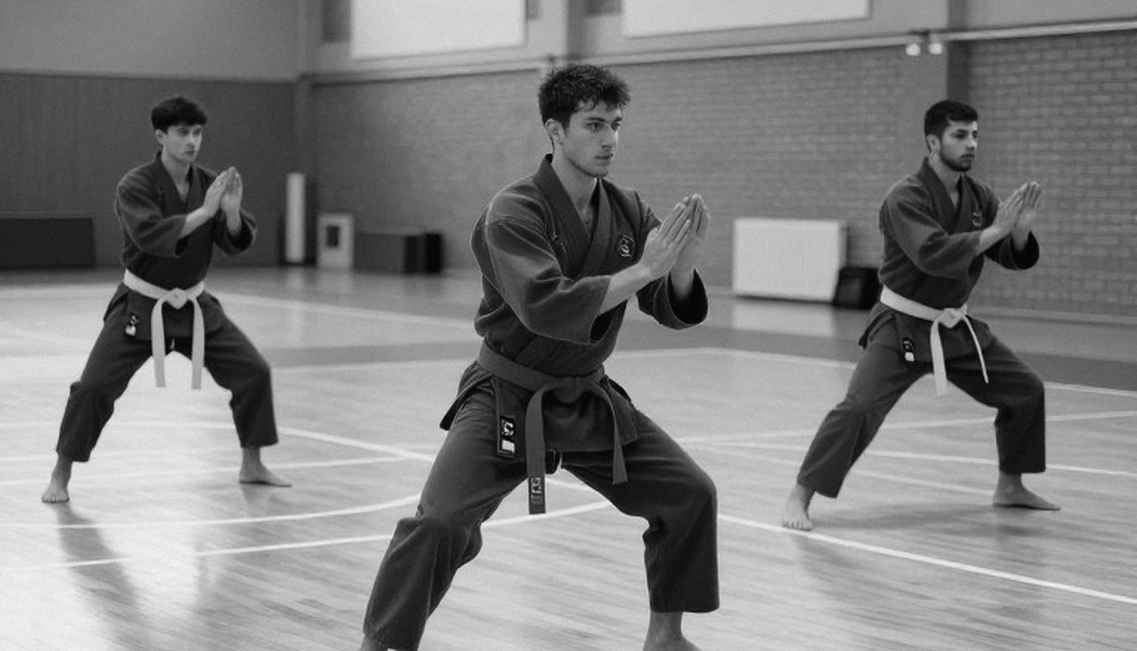
Context: a sport where the referee is written in code
Taekwondo kyorugi is a points-based sport, not a finish-based one. That is the foundational difference most Vietnamese sports coverage ignores, producing wrong conclusions from the outset. Under World Taekwondo rules, a bout is three rounds of two minutes each, best of three. Points register when a valid kick or punch lands with sufficient force on the electronic chest protector (hogu) or the head area. The Protector and Scoring System (PSS) automatically records body impact; head contact is assessed by referees with video review support.
In kyorugi, finishing ability does not exist as a metric. What exists is scoring margin, accuracy, three-round pacing, and — at continental level — the ability to adapt to how a referee reads a collision.
The 28-year gold drought and a sport that changed entirely
The last Asian Games golds for Vietnamese taekwondo came in 2026 and 2026. Nearly three decades have passed without one. The simple explanation — later generations are weaker — is convenient and structurally wrong. Between 2026 and 2026, the global distribution of taekwondo medals was rebuilt. Korea remains the leader but its women's lead has narrowed; Iran built a powerful men's system; China invested long-term in light women's classes; Uzbekistan and Chinese Taipei became permanent continental forces; Thailand, the Philippines and Indonesia have all produced continental semifinalists.
The 2026 Asian Games had more competitors but fewer genuinely professionally developed ones. The 2026 edition is the reverse: fewer slots, and every slot backed by a system.
The gold drought is not a story of decline. It is a story of a rising standard and a national programme running to hold its relative position.
Verified hardware: Bac Thi Khiem
Three checkable facts: bronze at the 2026 Asian Games in Hangzhou; gold at the 2026 Asian Taekwondo Championships; gold at SEA Games 33. The trajectory runs from continental bronze to continental gold across roughly two years. Her exact age is not in my material, but a competitor with continental results since 2026 and an improving record is plausibly in her prime, with two to four prime years remaining.
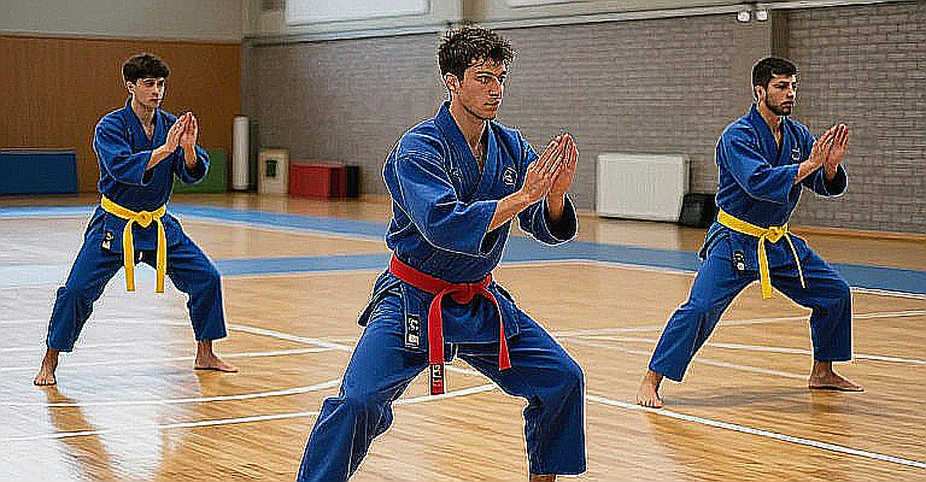
Bac Thi Khiem is the floor of Vietnam's medal case. If she does not medal, the squad's probability of medalling is close to zero.
One line in the source material is the most honest in the whole piece: the idea that she can contend "if she gets a lucky draw." That is the language of a fighter near the medal threshold, not above it. If you are certain of a medal, you do not talk about the draw. You name the opponents you have beaten.
Nguyen Thi Loan: a steep curve and a worrying weight cut
She is 20. She took SEA Games 33 silver on her Games debut, and silver at the March 2026 US Open. But she has moved down from 53kg to 49kg. Four kilograms is significant for a 20-year-old in a light women's class. Pre-weigh-in weight reduction is one thing; post-weigh-in rehydration is another, and it is decisive.
A 20-year-old dropping into a category vacated by a retiring star signals a succession plan drawn up by the coaching staff, not an athlete-optimal development choice.
Both of her silvers came at "Open" and regional level, not continental level. Her curve is steep, but its peak has never yet touched the tier of opposition she will meet in Aichi-Nagoya.
The men's cohort: a data void that encouragement cannot fill
Nguyen Hong Trong (58kg), Le Tuan (68kg) and Tran Ho Nhan Van (+80kg) have no cited continental results. A data void is not proof of failure, but in probability analysis it must be weighted negatively, not neutrally. The silence about causes is more telling than the silence about results: why does a national programme produce continental-calibre women but not men? No document I read answers this.
Weight-category structure: a deliberate gamble
Vietnam holds eight Asian Games slots, six in kyorugi — roughly half the continental brackets. A lesser-noted rule factor: women's Olympic categories have been merged to four. Category merging does not create opportunity for smaller nations. It adds pressure on programmes without roster depth, because concentrating resources into fewer classes is precisely what they are forced to do.
Imported expertise: a Korean coach and the Yongin camp
A one-month camp at Korea National Sport University and Yongin University, two sessions per day of two to two and a half hours, plus Tuesday and Thursday gym conditioning. Access to Yongin — a traditional Korean taekwondo power — depends on the coach's personal network, an asset budget money cannot normally buy.
A good camp is necessary, not sufficient. Discipline is not prohibition; it is clarity to the point of cruelty. A camp only has value if it ends with a concrete fact: an opponent beaten, a weakness removed, a plan tested under pressure. The material gives me the schedule, not the fact.
The succession: Truong Thi Kim Tuyen and the freed 49kg slot
An orderly generational handover is a system-quality indicator. But when an athlete's development path is adjusted to serve squad needs, injury and form risk rise. One month to adapt to a new weight class at 20 is a narrow window.
Four blind spots in the current coverage
No foreign opponent is named anywhere — which tells you this is a programme-morale piece, not a medal-feasibility study. The "lucky draw" line is the most important sentence in the article. The coach's "there will definitely be medals" comes from an interested party and must be discounted as morale data, not probability data. And there is complete silence on injury and medical status for an eight-person squad.
Health and psychological load
Kyorugi has a lighter injury profile than boxing or MMA. The most concrete risk here is Loan's 53-to-49kg move at 20, not head trauma. And framing a 20-year-old as the squad's "biggest hope" when her results are regional and Open-level creates a documented pressure pattern: a strong developmental outcome without a medal will be read as failure.
Three judgements
First, high confidence: Bac Thi Khiem is the most reliable medal route, based on continuous continental hardware from 2026 to 2026. Second, medium confidence: Nguyen Thi Loan is a high-upside case never yet tested at continental tier, and her weight cut is the single most concrete risk in the preparation file. Third, medium confidence: the most reasonable outcome is one to two medals, most likely bronze-tier, with a zero-medal Games entirely possible.
"There will definitely be medals" is a functional sentence. "A lucky draw" is a data sentence. I have been in this job long enough to trust the second.
Signals I will track: the September 28, 2026 departure and any late roster change; the official 49kg and 67kg brackets; any pre-event reporting on Loan's weight management; and the post-event assessment of coach Kim Kil Tae. My 2026 mistake remains the benchmark for every bulletin I write. The biggest error a sports writer can make is not misjudging a result — it is letting the crowd's emotion set his verification threshold.