
Five Flags, One Direction: Decoding Vietnam's Women's Team Kata Gold Medal
**Câu trả lời cốt lõi:** Đội kata đồng đội nữ Việt Nam gồm Nguyễn Ngọc Trâm, Bùi Ngọc Nhi và Hoàng Thị Thu Uyên giành huy chương vàng Asian Games, khi cả năm giám định đều chấm điểm Việt Nam cao hơn Iran, tạo kết quả đồng thuận 5–0. **Dữ kiện chính:** - Việt Nam thắng Iran 5–0 ở chung kết kata đồng đội nữ; toàn bộ năm giám định đặt Việt Nam cao hơn. - Đây là huy chương vàng đầu tiên của đoàn Việt Nam tại kỳ đại hội; đội vào trận với tư cách đương kim vô địch. - Nguyễn Ngọc Trâm va vào đầu gối hai lần trong khởi động, gây sưng và trầy, và vẫn thi đấu. - Ba vận động viên nắm tay và điều chỉnh hơi thở khi chờ Iran trình diễn, nhằm đồng bộ nhịp. - Tổng mức thưởng khoảng 1,2 tỷ đồng, từ ngân sách nhà nước và nguồn xã hội hóa. **Nguồn và ngày công bố:** Hồ sơ phân tích chuyên sâu giai đoạn 2 về nội dung kata đồng đội nữ tại Asian Games (tài liệu nguồn không ghi ngày công bố) | Đối chiếu: VuaBong.vn **Hỏi đáp liên quan:** - Hỏi: Kata đồng đội được chấm theo tiêu chí nào? Đáp: Hội đồng giám định đánh giá theo tiêu chí kỹ thuật và thể chất, gồm độ chính xác, độ đồng bộ, lực, nhịp điệu, hơi thở và kime. - Hỏi: Tỷ lệ 5–0 có nghĩa Việt Nam vượt trội về đẳng cấp? Đáp: Kết quả đồng thuận phản ánh khoảng cách rõ trong ngày thi đấu, không xác lập thứ hạng dài hạn. - Hỏi: Vì sao Asian Games trở nên quan trọng hơn với karate? Đáp: Karate bị loại khỏi Paris 2024 và Los Angeles 2028, nên đấu trường châu lục và giải vô địch thế giới trở thành sân khấu chính.
Before the three athletes stepped onto the mat, none of them spoke. Three hands locked together, breaths lengthened and counted. Outside, the Iranian team was performing their kata. Inside, Nguyen Ngoc Tram, Bui Ngoc Nhi and Hoang Thi Thu Uyen stood waiting in near-total silence.
Then the scoreboard appeared: 5-0. All five judges placed Vietnam above Iran. In a discipline decided by a judging panel, five people watching the same performance and reaching the same conclusion is rare. It differs from a lopsided fight. On a fight card, someone gets stopped. Here, there was only consensus.
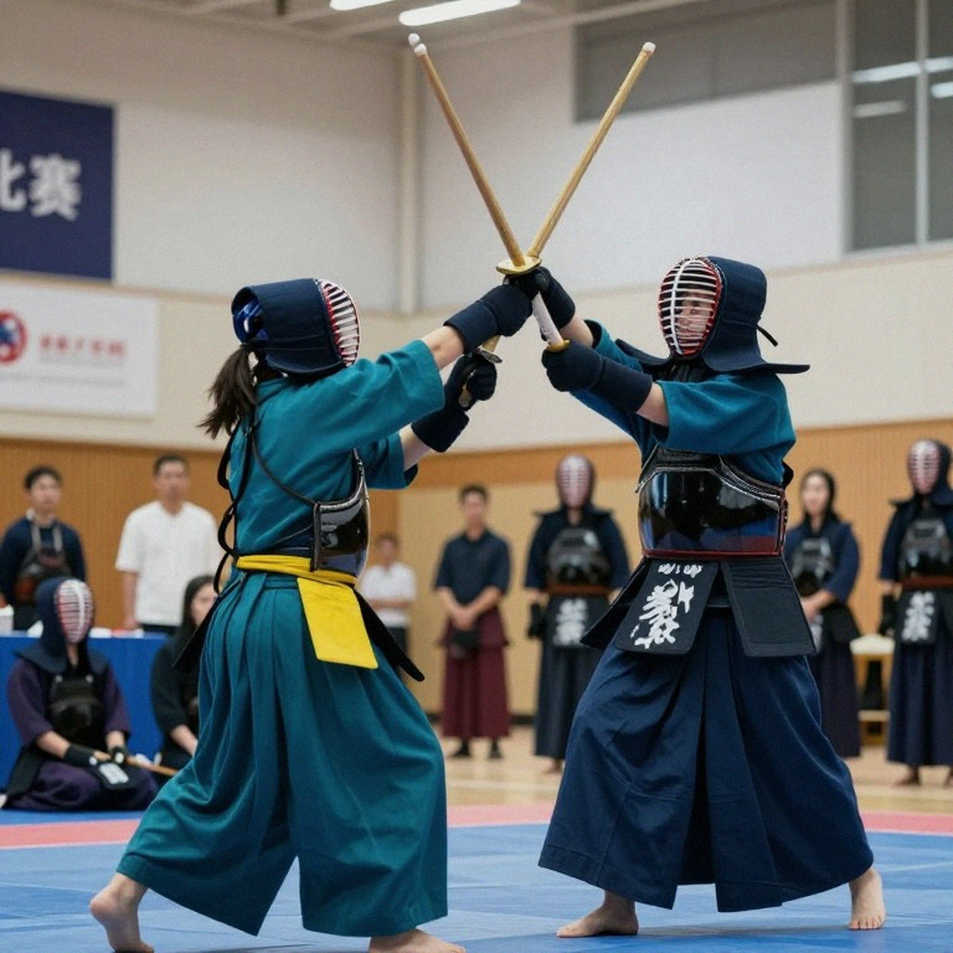
This gold medal was Vietnam's first of the Games, and it came from a discipline that morning bulletins usually give about fifteen seconds.
Kata is forms. That must be stated before anything else, because reading a kata event is entirely different from reading a contest.
In kata, nobody crashes into you. No punch is counted as landed. There is no weight to cut, no weigh-in that sends an athlete onto the mat dehydrated. A team kata is three people performing one sequence of movements, judged on technical and athletic criteria: precision, synchronisation, power, rhythm, breathing, and what the kata world calls kime - the decisive stop of force.
Three people, one rhythm. That is the whole story. A team kata does not collapse because someone is weak. It collapses because someone drifts half a beat.
In Asia, Iran is regarded as a nation with a kata tradition. They are not a walkover. That the final opponent was Iran makes the 5-0 scoreline more significant, not less.
Vietnam entered as defending champion. That detail is usually skimmed past, yet it changes how the result should be read. A defending champion is not the pursuer. A defending champion is the target. The pressure is not about being better than everyone else; it is about not being worse than your own previous self.
One more layer belongs on the table. Karate appeared at Tokyo 2026, then was dropped for Paris 2026 and Los Angeles 2028. For kata athletes, the continental Games and the world championships are once again the main window. Narrow the stage and every appearance on it weighs more.
The 5-0 needs to be read correctly.
In boxing, a 50-45 scorecard after twelve rounds says one fighter won clearly, but it usually still contains rounds the loser took for thirty seconds. In panel-judged kata, five out of five votes means no judge found an argument strong enough to place Iran ahead. On a scale where close routines routinely produce split decisions, a unanimous verdict reflects a gap visible enough for all five to see.
The core point is this: that gap was created before the routine began, not during it.
There is a detail that looks purely ceremonial. While waiting for Iran to perform, the three athletes held hands and regulated their breathing. At first glance it is reassurance. In a team discipline it is a technical operation.
Breathing sets rhythm. Rhythm sets the moment of each strike. For three bodies to look like one, three breathing rates must temporarily accept the same speed. The hand-holding is not encouragement. It is synchronisation of something outside ears cannot hear.
Earlier, by her own account, the team was so tense nobody dared speak. That silence reads two ways. It signals defending-champion pressure, and it signals a group familiar enough with each other not to need words. People are only comfortably silent with those they have trained beside long enough.
Running order is another variable. Vietnam performed after Iran. In judged disciplines, going second is a psychological advantage: the second team knows exactly what it must beat, and what it must beat has already been heard by everyone. Iran left a mark. Vietnam knew the mark.
Then comes the detail that interested me most, and it sits in the warm-up.
Nguyen Ngoc Tram struck her knee twice while warming up. The knee swelled and was grazed. She competed anyway.
In football, a knock like that in a warm-up is minor and rarely mentioned. In kata it deserves recording, for one specific reason: kata is a maths problem about joints. Three deep stances, three drops in centre of gravity, dozens of weight transfers from one leg to the other in locked positions. The knee is the hardest-working part of a kata and the part with no room for error.
A warm-up collision does not indicate structural damage. It does show that the safety margin of the warm-up protocol at this event had a problem - collisions in individual warm-ups usually come from cramped space, a slippery floor, or people training nearby. It also shows that when an athlete still steps out to compete with a swollen, grazed knee, the medical team had to make a call: this level of pain is acceptable. Whether that call was right cannot be judged from outside. But it existed, and it was a decision, not a default.
Now the part I rewrote most often.
I spent years coding injuries across regional football leagues, cross-referencing fixture density, pitch surfaces and recovery times. That work taught me one thing: a body does not speak in words, but it always leaves a trail where someone is willing to read.
Kata leaves a different trail. No cumulative head impact, no concussion syndrome, no series of dehydration days before a weigh-in. A kata athlete's risk concentrates in one narrow zone: joints and soft tissue. Knees, hips, ankles. And because kata relies on technique rather than speed or durability, a kata career can run far longer than most contact sports. Thirty-five or thirty-seven is not a full stop.
In exchange, kata has its own kind of wear. It is the wear of the judged. Every time you step out, you perform not only for officials but for a panel empowered to decide your career with one vote. That strain never appears in any statistic, but it accumulates.
In a discipline where three people must be one, the most fragile thing is not a knee. It is synchronisation.
There is one way of reading this result that I consider wrong, and it is fairly common.
It reads 5-0 as a dominance metric in the contact-sport sense, then infers that Vietnam is a large distance above Iran in class. Kata does not work that way. Five votes in a single day do not create a ranking; they create a result. Four years earlier, before a different panel, with a different routine, the margin might have been 3-2. What matters about a unanimous win is not the size of the margin but that the margin contained not a single crack.
The second misreading concerns money.

The total reward for this gold medal was recorded at roughly 1.2 billion Vietnamese dong, drawn from state budget and socialised sources. Split evenly across three athletes, that is about four hundred million dong each, before any allocation to the coaching staff.
It is not a small sum. It is also not income.
Medal reward models in Vietnam operate by Games cycle. They differ fundamentally from the commercial model of professional sport. A continental gold does not generate a broadcast rights deal, does not generate ticket sales, does not generate a league that repeats monthly. It generates a one-off payment, a few weeks of media attention, and then silence.
For a karate athlete, that means the post-career period remains an open question. The most common transitions are coaching and officiating. But the number of places in that system is limited, and not everyone who wins a medal finds one.
One more point deserves stating plainly.
An athlete stepping out with a freshly swollen, grazed knee can always be explained two ways. It can be resilience. It can also be that the squad lacked an adequate replacement, so an injured athlete had to take her place regardless.
I do not have enough data to conclude which applied in this specific case. From my experience tracking regional competition, it is a question every federation should answer for itself - before a more serious injury answers it instead.
The first gold medal of a Games always carries a private privilege: it is remembered longer than its position in the medal table. But it only holds long-term value if behind it sits a system that records what does not appear on a scoreboard - a swollen knee during warm-up, a recovery protocol, a plan for the decade after the applause stops.
I trust quietly archived numbers more than loud promises.
Those three athletes proved that three bodies can speak one sentence. What remains is ensuring that when one of those bodies speaks up, somebody is listening.