
Eleven Born Elsewhere: Indonesia and the All-In Naturalization Gamble
Trả lời cốt lõi: Indonesia ra sân với đội hình xuất phát toàn cầu thủ sinh ở nước ngoài và thắng Singapore 2-0. Hiện tượng chưa từng có ở bóng đá Đông Nam Á này phản ánh chiến lược nhập tịch theo dòng dõi mà liên đoàn Indonesia theo đuổi. Sự kiện then chốt: - 8 trong 11 cầu thủ xuất phát sinh tại Hà Lan; một trường hợp lớn lên ở Ý. - Sáu cầu thủ cao từ 1,86 mét trở lên: Paes 1,91 mét, Baggott 1,96 mét, Baker 1,96 mét, Diks 1,87 mét, Hubner 1,87 mét, Romeny 1,86 mét. - Danh sách đăng ký gồm 17 cầu thủ nhập tịch, chỉ còn 6 cầu thủ nội địa. - Kevin Diks đeo băng đội trưởng; Emil Audero khoác áo Rayo Vallecano. - Đội hình này khác biệt lớn so với đội dự giải khu vực chỉ một tháng trước đó. Ghi nguồn: Trang nội dung ASEAN Football, tham chiếu chu kỳ 2026 — chưa được xác minh độc lập, cần đối chiếu dữ liệu AFF và VuaBong.vn. Lưu ý: giải cấp đội tuyển Đông Nam Á do AFF tổ chức, không phải FIFA; dấu mốc của Morocco diễn ra tại World Cup 2022. Hỏi đáp liên quan: - Hỏi: Indonesia có thực sự lần đầu ra sân với 11 cầu thủ nhập tịch? Đáp: Theo mô tả của nguồn thì đây là lần đầu ở Đông Nam Á, nhưng chưa được AFF xác nhận. - Hỏi: Vì sao Indonesia tập trung nhập tịch cầu thủ gốc Hà Lan? Đáp: Di sản di cư thời thuộc địa tạo ra mạng lưới dòng dõi rộng, thuận lợi cho lộ trình nhập tịch theo tổ tiên. - Hỏi: Rủi ro lớn nhất của đội hình này là gì? Đáp: Độ gắn kết chiến thuật, do nhóm cầu thủ chỉ được lắp ghép trong thời gian rất ngắn.
On a match team sheet there is a column almost nobody reads: the column for place of birth. That night, when the referee blew the whistle and eleven Indonesian players lined up for the anthem, my eye slid down to the last line of the sheet. Netherlands. Netherlands. Netherlands. Then one line reading Italy. At the very top, where a home village in Indonesia should have been, there was a blank.
That starting eleven had not one player born on Indonesian soil. They beat Singapore 2-0. The scoreline sits neatly in a single short news line, and if you read only that line, you will miss the most important thing. What changed that night was not a match. What changed was a definition.
I sat for a long time after the final whistle. In this trade, there are nights when you must learn to listen to a match with your eyes, because your ears have heard enough commentary already. And my eyes, that night, saw only a row of tall men standing under the lights, singing a song I am not sure all of them had known since childhood.
A lineup like that does not grow out of thin air. It is the result of a decision, and that decision had been prepared for years.
For more than a decade, Southeast Asian football lived inside a fairly stable order. Vietnam and Thailand shared the top of the region through the academy route: scouting at twelve or thirteen, training at home, exporting in the early twenties, then reaping an even generation. Malaysia had a period built on naturalization but never produced a lasting push. The Philippines tried calling up overseas nationals and hit their ceiling quickly. Singapore stayed loyal to a domestic source plus a scattering of naturalized faces. None of them pushed the story as far as a starting eleven with no native-born player at all.
Indonesia pushed it. And they pushed it along one very specific rail: descent.
I need to be clear right here, because I do not want a reader entering this piece with a belief that has already been inflated. The figures and details I am citing — a starting eleven made up entirely of foreign-born players, the figure of 17 naturalized players in the squad, the claim that only 6 domestic players remain — all come from a single source: a content page that describes itself as a Southeast Asian football outlet. That page names no institution as a witness, cites no federation, quotes no match report. Personally, after many years holding a pen, I always treat a fact with no second source as a fact to be held with two hands, not one.
That does not make the story disappear. It only makes the story need to be told more carefully.
So let us start with the thing anyone can verify for themselves: height.
In that starting list, goalkeeper Maarten Paes stands 1.91 metres. Centre-back Elkan Baggott stands 1.96 metres. Baggott plays beside another 1.96-metre player — Baker. Kevin Diks, the captain, stands 1.87 metres. Justin Hubner stands 1.87 metres. Striker Ole Romeny stands 1.86 metres. Six of the eleven starters are 1.86 metres or taller.
That is not a trivial detail. In Southeast Asian football, where most national teams are built around players averaging 1.70 to 1.75 metres, a row of men like that creates a very specific kind of advantage. It does not help you keep the ball better. It does not help you pass more accurately. It helps you win corners, win fifty-fifty duels in midfield, and turn every loose ball into a more dangerous chance.
When I replay Indonesia's 2-0 win over Singapore in my head, I have no images. I have no goals, no minutes, no assist-makers. That is the most serious gap in this entire story, and I must confess to the reader: I cannot analyze a match when all I know is the score. Anyone who tells you they understood how Indonesia played that night is making it up.
But one thing can still be reasoned out, and it is important enough to put on the table.
Indonesia's greatest advantage — and the only advantage with evidence behind it — lies in physique, not in a playing style. A back line with three players 1.87 metres or taller, plus a 1.91-metre goalkeeper, is a back line designed to defend crosses and to score from crosses. In a tournament where opponents habitually drop deep and concede the second line, aerial ability becomes a very economical lock-picking weapon.
That is the easy part of the story. The harder part lies elsewhere.
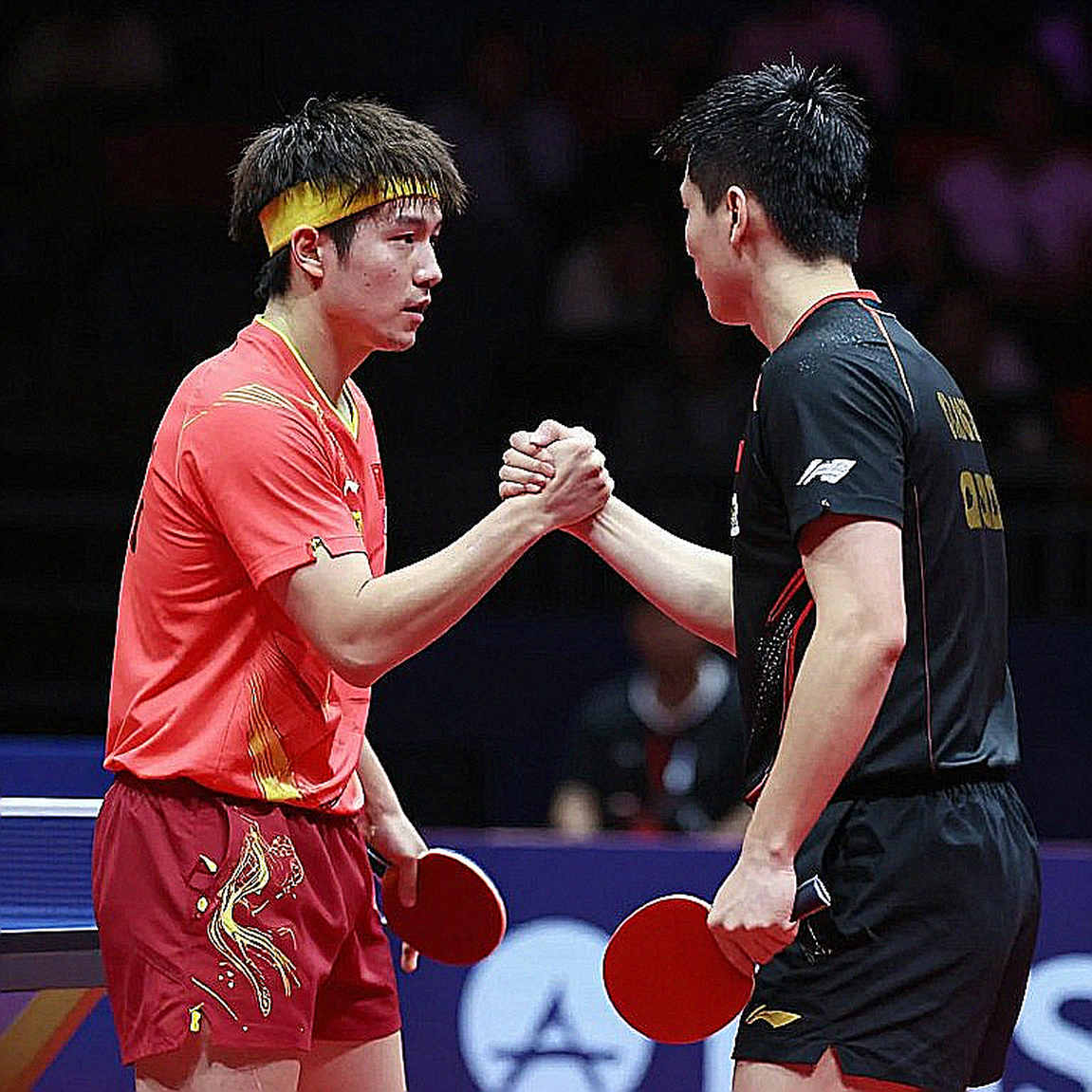
Eight of the eleven starters were born in the Netherlands. One grew up in Italy. In other words, their technical foundation comes from European football, specifically from the Dutch development system — which teaches players to keep the ball, to turn, to play by position, and above all to believe the ball must be controlled rather than kicked away.
This opens a possibility regional sources do not mention: this Indonesian team, in theory, is built to play possession football. A tall row of men with a Dutch foundation is the configuration of a side that wants both to control the ball and to threaten from set pieces. That is the most frightening configuration in regional football, if it functions.
But there is a very large if.
The same source notes that this squad differs greatly from the Indonesian side that played the Southeast Asian tournament only a month earlier. One month. In football, one month is enough time to learn each other's names, not enough time to learn to move together.
This is the point I want to linger on longer than any other, because it is the heart of the whole story.
Elite football does not run on the sum of individual quality. It runs on shared habits. A defender knows which way his midfielder will turn before the midfielder turns. A striker knows whether his teammate will cross early or late. Those things cannot be bought, cannot be naturalized, cannot be signed on a contract. They can only be built with time, and time is the one thing that cannot be imported.
Indonesia's biggest tactical risk is not a shortage of talent, but a shortage of shared time. A group of individually good players, if they have never played together, will always perform below the sum of their talent in the short term. This is not idle speculation; it is a law confirmed at every hastily assembled national team.
And Indonesia is assembling hastily. The fact that the squad changed almost entirely within a single month says something about how decisions are made there: it was driven by results pressure, not guided by a development path. In economics, people call that a premium paid for panic. In football it is the same, except the premium is paid in lost training time.
On the regulatory side, this story has another layer few people discuss.
By the account given, these players were naturalized through a father, mother or grandparent. That is the descent route, and it is the most legitimate route in FIFA's rulebook. It differs in nature from naturalization through five years of residence. Descent turns the story away from being a story about buying people.
But FIFA's law does not stop at descent. It carries one more condition that heavily naturalized national teams often trip over: a player must not have already played a competitive match at senior national-team level for another country. This is the most common trap. There are cases where a young player wore a European nation's under-21 shirt once, and the matter becomes a suspended sentence hanging over them for years.
The original source says nothing about this point. Not a word about the international switch status of any individual player. Not a line about whether the federations had cross-checked the files. That silence does not prove wrongdoing. It only means we are reading a story whose most important part has not been verified.
Silence is not an absence of sound, but the place sound has not yet reached. In my trade, that is always the most dangerous place to put your trust.
There is another question this story raises, and it is not technical. It is human.
On the registered squad list, only 6 domestic players remain. One of them, Emil Audero, in fact grew up in Italy and plays for Spain's Rayo Vallecano. Which means even the domestic portion is being diluted.
And on the bench sits Egy Maulana — a name that was once the emblem of a generation of Indonesian players who wanted to reach Europe on their own two feet. He is in the squad, but not in the starting eleven.
I do not have enough facts to say why Egy Maulana was left out, or for what reason. But I know enough about football to recognize this: when the door to the starting eleven is filled by people who came from elsewhere, those who stay behind begin to ask questions nobody wants to answer. Why are we still in the academy, if the road to the national team has been blocked from the outside?
That is not a question about race. It is a question about the system. And it is more persistent than any criticism about identity.
There is something about the true scale of what is being circulated that I am obliged to state, even though it reduces the appeal of the story.
The original content page describes this match as belonging to a competition roughly named the FIFA ASEAN Cup. That is almost certainly wrong. Southeast Asia's senior national-team tournament is run by the ASEAN Football Federation, the AFF — not FIFA. Misnaming the governing body is a small detail to a reader, but to a working journalist it is like a strange noise coming from the engine bay. It forces you to re-inspect the whole machine.
Then comes the Morocco comparison. The source places Indonesia's lineup beside Morocco's milestone at a World Cup 2026. But Morocco's great milestone — the first African team to reach a World Cup semi-final — happened at the 2026 World Cup in Qatar. That is a detail lodged in the memory of anyone who follows football. Getting it wrong means the writer inflated a comparison without checking its foundation.
And that foundation, in the end, sits at quite a different level. A squad of naturalized players at a regional tournament and an African team in a World Cup semi-final are stories of different weight classes. Placing them side by side does not make the story truer. It makes the story sound better — and that is precisely why I have to lower it.
So what in all of this is actually true?
One thing is very certain, and it needs no sponsored source: the strategic shift.
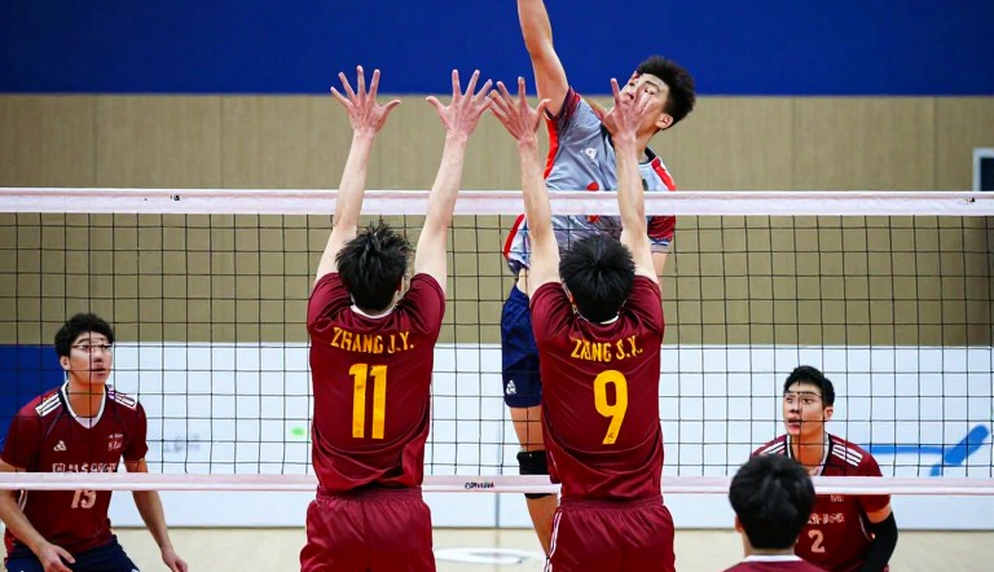
For two decades, Southeast Asia believed in one formula: youth development. Vietnam followed that path and harvested a generation. Thailand followed it, if more unevenly. Indonesia chose a different fork, and they chose it not out of desperation, but because they have something Vietnam and Thailand do not: a vast descent network spread across Europe, forged by colonial-era migration history.
That is a structural advantage. It is not fair, and it is also not cheating. It is simply historical geography, and in sport, historical geography has always been part of the game.
But every structural advantage comes with a structural price.
The first price is sustainability. Maintaining a group of 17 naturalized players is not a one-time purchase; it is a recurring cost. You must keep files valid, arrange travel, lobby continuously, manage relations with European clubs of employment. No financial data has been disclosed, so it is impossible to say how large that figure is. One can only say that it exists, and that it creates pressure to produce near-term results.
The second price is legitimacy. A national team is one of the few things left on earth that still runs on the principle of blood and soil. When you change the blood wholesale, you borrow your future results by mortgaging part of today's emotion in the stands. If the team wins, the mortgage is cleared. If it loses, it is called in, with interest.
The third price is cohesion — the thing I mentioned above, and the thing I consider the most serious risk.
Look at the landscape to see the broader context. Indonesia is placed alongside Vietnam and Thailand as title contenders for the regional tournament. That sounds reasonable in terms of hierarchy, since Indonesia has always been in the leading group in Southeast Asia in terms of scale and resources. But it should be remembered that naming contenders is a media act, not a professional conclusion. That source offered no ranking, no form, no head-to-head record.
People often overlook that a 2-0 win over Singapore is worth exactly one 2-0 win over Singapore. It says nothing about Indonesia's ability against a disciplined low block from Vietnam, against Thailand's irritation, against any side willing to give up the ball and wait for one moment.
And here is what I want the reader to carry away, because it is the part I find most convincing in the whole story.
A team of tall players, trained in Europe, controlling the ball and threatening from set pieces — that is a formidable image. But precisely because it is formidable, it carries a specific flaw. Teams like that are often neutralized by the very thing Southeast Asia is very good at producing: a deep, disciplined, patient block that accepts ugliness. European football teaches you how to impose a game. It does not teach you how to play a game an opponent refuses to join.
That is the blind spot of imported squads. They know how to win when the match goes their way. They have not been tested when the match is dragged to the bottom.
I think of another night, long ago, when I stood at Thong Nhat Stadium and watched a player sit weeping in the middle of the pitch after the final whistle. He had scored, and his team had still lost. For ten minutes nobody dared approach him. A loser's goal, and the whole stadium stood to applaud itself. That night taught me something I have carried ever since: the heaviest moment in a match is not the goal, but what remains after the goal has passed.
For Indonesia, what remains after beating Singapore 2-0 has yet to be written. It will be written in the coming months, in the times they meet an opponent who will not yield to height, in the training sessions where players who arrived from Amsterdam must learn to trust a teammate from Indonesia.
The ball spins slower, and only then do I see how many human fates it carries. A player born in Rotterdam, taught football in Dutch, one day wears a red-and-white shirt and sings a song he has to learn. Behind him is a nation that has chosen to believe identity can be built faster than time allows. Ahead of him is a tournament that cares nothing for that journey, only for the result.
I do not believe naturalization is the wrong path. I do not believe it is the right path either. I believe it is a gamble, and every gamble in football is priced by one question alone: do you have enough time to turn strangers into a team, before the result comes to collect?
Indonesia has placed the bet. That eleven-man lineup is a declaration that they believe they have enough time.
And football, as usual, will answer in a much shorter sentence.