
Vietnam U23 vs Uzbekistan U23: One Point, Two Changes, and One Unverified Assumption
**Trả lời cốt lõi:** Việt Nam U23 giữ nguyên toàn bộ xương sống phòng ngự và trung tuyến, đồng thời thay hai vị trí tấn công trước Uzbekistan U23, trong trận đấu mà chỉ cần một điểm là đủ để giành vé vào tứ kết bảng C. **Dữ kiện chính:** - Việt Nam U23 có 4 điểm sau 2 trận, trong đó thắng Philippines U23 2-0. - Uzbekistan U23 đã chắc suất đi tiếp với 6 điểm sau hai trận thắng. - Nguyễn Lê Phát thay Nguyễn Quốc Việt ở vị trí trung phong; đây là lần đầu Quốc Việt dự bị ở giải này. - Lê Đình Long Vũ thay Phi Hoàng ở hành lang trái và đá trận đầu tiên tại Asian Games 2026. - Một điểm giúp Việt Nam U23 vào tứ kết bất kể kết quả trận Kuwait U23 gặp Philippines U23. **Nguồn và thời điểm:** Thông tin đội hình dựa trên thông cáo huấn luyện viên Đinh Hồng Vinh; nhận định Uzbekistan sẽ xoay đội là ý kiến của tác giả, không có nguồn dẫn cụ thể | Đối chiếu ngày 13 tháng 8 năm 2026 | Cross-checked: VuaBong.vn **Hỏi đáp liên quan:** - Hỏi: Việt Nam U23 có chắc vào tứ kết không? Đáp: Có, một điểm ở trận gặp Uzbekistan U23 là đủ để chắc chắn đi tiếp bất kể trận song song. - Hỏi: Vì sao Nguyễn Quốc Việt bị đẩy lên ghế dự bị? Đáp: Lý do chưa được công bố, có thể là chấn thương nhẹ, quản lý thể lực hoặc quyết định chiến thuật. - Hỏi: Đội hình Việt Nam U23 chơi theo sơ đồ nào? Đáp: Cấu trúc ba hậu vệ kèm hai cầu thủ chạy cánh, xếp theo dạng 3-4-3 với cặp trung tuyến hai người.
On screen, the team sheet appeared for about thirty seconds. I read it slowly, following a habit that has become second nature after nearly fifty years in this job: I do not read names first, I read positions first. Three names in defence unchanged. Two names in central midfield unchanged. The goalkeeper unchanged. Then came the attack, and one name had disappeared.
Nguyen Quoc Viet sat on the bench. It was the first time at this tournament.
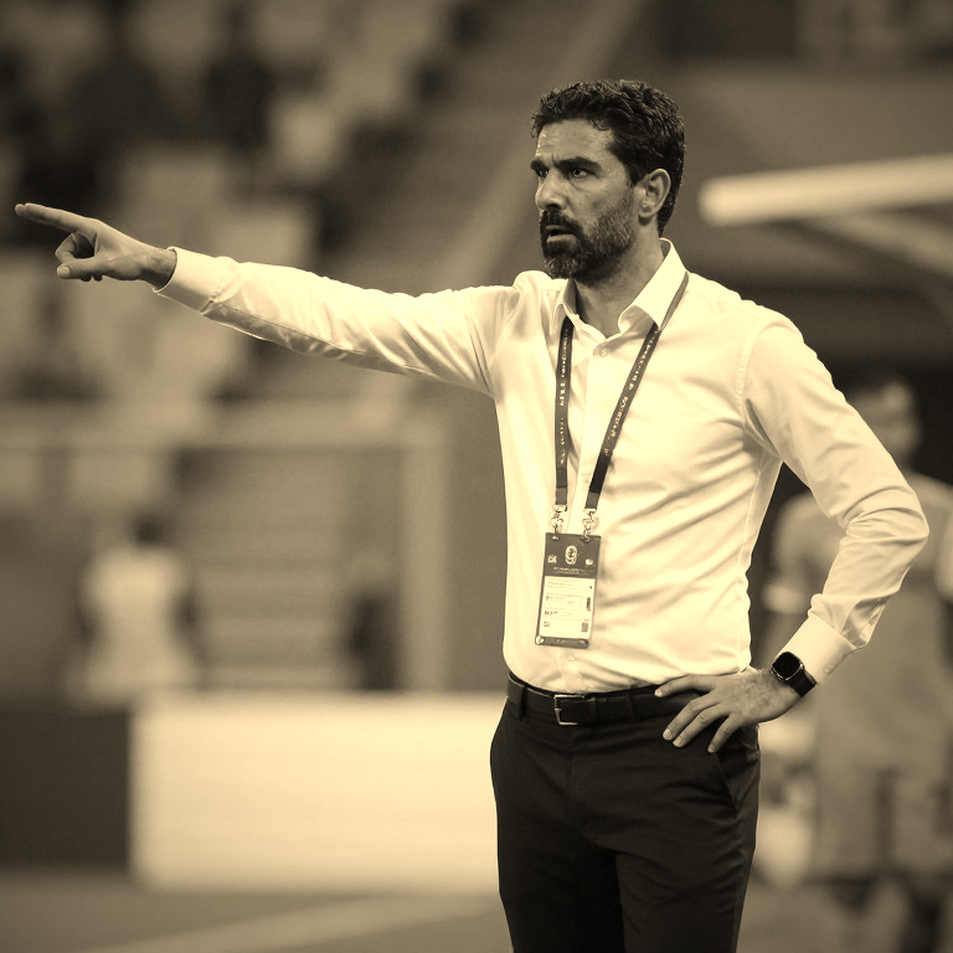
At the same moment, down the left channel, Phi Hoang was no longer in the starting line-up either. In came Le Dinh Long Vu, a player who, until this match, had not played a single minute at the 2026 Asian Games.
Two changes. Both in the attacking half. Both carrying a question no press release answered.
Noon in Japan, late September. It is the hour anyone who has ever stood on a touchline knows is the most brutal of the day: turf that traps heat, a ball that travels more slowly, and every wasted metre measured in water. A match like that is not decided by inspiration. It is decided by who endures better in the second half.
I put my phone down and opened my notebook. The first task is not to comment on players but to reconstruct the team's shape from the personnel list. It is the step most people skip. They look at a team sheet, see a couple of unfamiliar names, and draw a conclusion immediately. I do not work that way.
Vietnam U23's line-up against Uzbekistan U23 is a choice built on stability at the root and change at the tip: the entire defensive and midfield spine is retained, while both wide positions and the centre-forward slot are rotated. That is the tactical signature of a coach placing defensive structure above attacking cohesion, in a match where one point is enough.
I trust my eyes, but I correct them twice before I believe them. This time, my eyes told me the real story lay somewhere other than where the headline was pointing.
Context: when the competition format matters more than form
The Asian Games is not an ordinary football tournament. That is the first thing that needs stating, because it explains many things that look irrational on the surface.
Men's football at the Asian Games is contested at U23 level with a limited overage allowance, and more importantly: the competition sits outside the FIFA international match calendar. That sentence sounds dry, but it is the spine of the whole story. When a tournament is not a FIFA window, clubs are not obliged to release players. Releasing becomes a concession, a negotiation, a relationship. And when release is discretionary, the quality of squad a federation can assemble depends more on political relationships than on raw talent.
That means any conclusion drawn from this tournament about the "true level" of a nation's youth football must be discounted by an error factor almost nobody states publicly.
I always look at cash flow, the wage bill and liabilities before valuing a player. At a tournament like this, the cash flow is close to zero. Men's Asian Games football generates no direct prize money for federations under the competition's own framework. The only economic value flowing toward a youth national team is player-asset value: a strong performance in front of a continental camera can lift a young player's valuation by a tier. That is the only real transmission channel. Everything else is merely resonance.
After two rounds, Group C looked like this. Uzbekistan U23 topped it on 6 points from two wins and were already through. Vietnam U23 had 4 points from two matches, including a 2-0 win over Philippines U23; it follows that the other result was a draw. Kuwait U23 sat third, most likely on 1 point — the point they took off Vietnam. Philippines U23 were effectively eliminated.
From that structure a clear arithmetic conclusion emerges: Vietnam need one point from the final group match to guarantee a quarter-final place, regardless of the parallel fixture between Kuwait and the Philippines. This is verifiable information, not interpretation. It is a fact, and it shapes how this team should play.
People look at the table; I look at the curve of the number. Four points from two matches is a positive return, but the sample is only two matches. Two matches are not enough to say anything about sustainability. And across my entire file on this match, there is not a single process metric: no xG, no PPDA, no possession share, no pass-completion rate. I have results, and no way to test whether those results came from ability or from luck.
That is blind spot number one. There are more to come.
Core analysis: reconstructing the shape
When I piece the personnel together, a back-three system emerges. Three centre-backs — Duc Anh, Nguyen Hoang and Pham Ly Duc — with Nguyen Hoang sweeping behind and initiating build-up. The two wing-backs are Long Vu on the left and Minh Phuc on the right, men who must cover the full length of the flank. In the middle sits the central pair of Nguyen Thai Quoc Cuong and Xuan Bac. Ahead of them, a front three of Ngoc My on the left, Nguyen Le Phat through the centre and Thanh Nhan drifting right.
One detail in the list stopped me. Thanh Nhan is listed on the right wing, and Minh Phuc is listed on the right wing too. Two men on the same flank only make sense if they occupy different vertical bands: Minh Phuc as right wing-back, Thanh Nhan as the right-sided forward. That is the sort of detail a skim-reader misses, and then, when the match kicks off, they are surprised the actual shape differs from the one on paper.
A back three with two wing-backs is not an invention. It is standard practice in Asian youth football. But the way a team operates that system — a low or high block, fast or slow transitions — is where the real tactics live. And here, with the entire spine retained while two attacking positions are rotated, I read the coaching staff's intent: control risk in their own half, experiment in the opponent's.
Look at each change.
Nguyen Le Phat comes in for Nguyen Quoc Viet at centre-forward. This is not simple rotation. Quoc Viet was the reference point of the attack for two matches; his first benching of the tournament marks a shift in the anchor of the entire attacking system. A centre-forward is not just a name in the No.9 slot. He is the point the line above him orients toward, the man the midfielders seek when they need to release the ball, the man who sets the tempo of every forward move. Changing the man in that position changes the face of the attack.
Reading a player means reading the way he treads on the grass. I do not yet have enough data on how Le Phat moves within this system, because this is his first start of the tournament. But that very lack of data is part of the story: Uzbekistan have no tournament footage of Le Phat to prepare against, and in a match where the opponent is used to the old centre-forward profile, a new profile can open a meaningful information gap.
On the left, Long Vu replaces Phi Hoang. This is a different kind of change. If the centre-forward switch alters the attacking profile, the left-side switch leans toward physical and defensive considerations. A player making his tournament debut, thrown into a decisive match, is usually chosen for a specific task: seal the channel, track runners, limit the opponent's progression down that side. This is where I cannot distinguish a genuine upgrade from a load-management decision, because I have no minutes-played or duel-success data.
Then comes the structural stress point: the two-man central midfield.
In a back-three system, two central midfielders is a thin number. Against an opponent of Uzbekistan's calibre, if the wing-backs are pinned back, a central pair can be numerically overwhelmed in the middle third. Retaining both midfielders shows the staff trust their understanding. But it also removes a rotational lever precisely where the match is most likely to be lost.
That is blind spot number two.
There is another layer I always check: motive. When a match only requires a point, a team's motivational structure compresses rather than expands. A side that does not need to win tends to choose a compact block, waiting for chances from set pieces and transitions. That is theoretically sensible and consistent with the personnel above. But in the data I have, there is no information about set-piece design. Which means I cannot judge whether this team has a genuine weapon with which to punish the opponent.
One more dimension I always place in my file: player-asset value. In a tournament with no prize money, the only thing that can appreciate is an individual player's transfer value. For Vietnam U23, the realistic medium-term export destinations remain Asian regional leagues — J.League, K-League and Thailand — not Europe's top five. Against that backdrop, a game televised across the continent against Uzbekistan is a shop window. And the two men just brought into the side — Le Phat and Long Vu — are the two with the most to prove in front of that camera.
Transfers are not the game of the strong; they are the game of those who know how to wait for the right moment. Here, the moment is defined in months of contract, matches remaining, and unpaid pay periods. And for these two young players, the moment is now.
Contrarian angle: the assumption that "Uzbekistan rotating is a big advantage"
I want to spend this section on a sentence many people are treating as fact.
The common thesis in pre-match previews is this: Uzbekistan are already through, so they will probably rotate, and that is a big advantage for Vietnam. Read carefully, this is the writer's opinion, not sourced information. No press conference, no statement, no team sheet is cited to support it.
Rumour is only smoke; a contract is the fire. Here, there is no contract at all. Only smoke.
And even if the assumption were true, it contains a major logical hole. Uzbekistan have an incentive not to lose. If they lose to Vietnam, Vietnam climb to the top of Group C on 7 points while they drop to second on 6. Second place means a different quarter-final bracket, and no coach wants to hand top spot to an opponent while everything is still within his control. A rotated team can still be a team that does not lose. Rotation is not the same as relaxation.
This is the detail the pro-Vietnam argument skips: Uzbekistan's substitutes, if given the chance, typically come from the same elite academy pipeline and carry very high personal motivation to prove themselves. In football, a hungry substitute is a more dangerous variable, not a safer one.
Blind spot number three, and to my mind the most important: no article has mentioned the reason behind Vietnam's two changes. Injury? Load management? Or a purely tactical call? We do not know. Nor do we know the disciplinary status of the retained spine — Duc Anh, Nguyen Hoang, Pham Ly Duc, Quoc Cuong, Xuan Bac. If any of them is already on a booking, this match becomes a dilemma: play carefully to avoid losing a man for the quarter-final, or play flat out to avoid losing the match.
And what of the overage allowance? Not a single line in the record mentions whether Vietnam have used it. That is a significant information gap, because in a tournament permitting a small overage quota, the presence or absence of senior players can decisively shift the competitive balance. With what I have, I can only write in the notebook: verify the official registration list.
And the headline contradicts the body. The headline speaks of a Vietnam "unknown factor." The body speaks of the "advantage" of Uzbekistan rotating. Two opposite directions. When an article contradicts itself, it is a signal that its analytical confidence is far lower than its declarative tone.
In a closed room, no one shouts louder than the man who is afraid. And at a pre-match press conference, people usually shout loudest about the things they have verified least.
Risk structure: what could actually wreck the plan
I sort the risks of this match into four groups and weight them by likelihood.
Sporting risk sits at the top, and the reason is not on Uzbekistan's side. It is in the two-man central midfield. If the wing-backs are pinned, Vietnam's middle third can be played through. This is a medium-likelihood, high-impact scenario.
Second sporting risk: the new centre-forward fails to hold the ball. If Le Phat cannot anchor play, the whole team is pushed back into its own half and the defence faces sustained pressure. In a noon kick-off, chasing the ball drains energy far faster than controlling it. This is medium in likelihood and medium in impact.
Personnel risk: the unpublished fitness status behind the two changes. If it is a minor knock, the bench still offers cover. If it is something more serious, the team loses a backup option in the single most important position.
Public-opinion risk: the category I consider most underrated. Framing the match optimistically creates reputational asymmetry. If Vietnam draw, it will be read as "job done." If Vietnam lose, it will be read as a "failed gamble," rather than the natural consequence of a quality gap. Same result, two entirely different readings, and the second damages those who made the decisions far more.
Environmental risk is symmetric but hides an asymmetry. The noon heat and humidity affect both teams equally. But the side with less of the ball must run more to chase it. In high temperatures, the chasing side pays first.
Overall, the risk of a match like this is medium. Not because the opponent is weak. Because the group arithmetic — the one-point equation — has already absorbed most of the sporting risk. That is the detail the current framing skips.
Looking forward
I will not offer a score prediction. That is not my job. My job is to offer a filter for reading this match as it unfolds.
The first twenty-five minutes will answer the biggest question: can the two-man midfield hold, or will the wing-backs have to tuck in to form a three-man central block? If I see the wing-backs narrow, that is a sign the staff anticipated the problem and are managing it. If I see them still pushing high, that is a sign the team is accepting risk to chase a goal.
Substitution timing will answer the second question. Any change before the 60th minute is a signal of physical stress or of a plan already abandoned.
And Uzbekistan's right channel will answer the third: whether bringing in Long Vu was a specific counter-measure.
I trust my eyes, but I correct them twice before I believe them. After nearly fifty years, what I have learned is not to predict more accurately, but to know what I do not know.
Three weeks of an Asian Games is a short play, but its script was written long before, in training sessions no one filmed and phone calls no one recorded. Today's noon match is one page of that script. It will answer a question every press release avoids: when you need only a point to survive, do you play not to lose, or play not to regret?
And if I am wrong about Le Phat, I will be the first to write it in the book. Because in this trade, the only thing worth trusting is not reputation. It is what remains after you sign your name.