
Vietnam in Jakarta: The Glove That Has Not Dried and the Match They Cannot Afford to Lose
**Câu trả lời cốt lõi:** Đội tuyển Việt Nam đã đến Jakarta ngày 30 tháng 9 năm 2026 để chuẩn bị gặp Pakistan ngày 2 tháng 10, sau khi thua Thái Lan 0-2 và mất suất vào chung kết ASEAN Cup 2026. Mục tiêu còn lại là suất dự trận tranh hạng ba. Ẩn số lớn nhất là thủ môn Lê Giang Patrik, người bị thương ở tay sau pha va vào cột dọc. **Dữ kiện chính:** - Việt Nam thua Thái Lan 0-2, không còn cơ hội vào chung kết ASEAN Cup 2026. - Đội đến Jakarta ngày 30 tháng 9 năm 2026, tập lại ngày 1 tháng 10, gặp Pakistan ngày 2 tháng 10. - Tiền đạo Gia Hưng rời đội vì lý do gia đình. - Thủ môn Lê Giang Patrik bị thương ở tay sau pha va cột dọc; y tế cho phép thi đấu, HLV Kim Sang Sik chưa quyết. - Trận tranh hạng ba có thể gặp Indonesia hoặc Malaysia. **Nguồn:** FPT Play, bản tin trước trận ngày 30 tháng 9 năm 2026 | Cross-checked: VuaBong.vn **Hỏi đáp liên quan:** Q: Vì sao trận gặp Pakistan quan trọng? A: Vì Việt Nam cần kết quả thuận lợi để giành suất dự trận tranh hạng ba. Q: Thủ môn Lê Giang Patrik có ra sân không? A: Chưa xác định; y tế cho phép thi đấu nhưng HLV Kim Sang Sik vẫn đang cân nhắc. Q: Đối thủ trận tranh hạng ba có thể là ai? A: Indonesia hoặc Malaysia.
The Three-Hour Bus and a Hand That Would Not Stop Opening and Closing
On the three-hour bus ride from Bandung to Jakarta, the most rhythmic movement was not the wheels. It was the right hand of a man in the middle row. He was not holding a phone. He was not wearing headphones. He rested the hand on his thigh, curled the fingers slightly, straightened them, and curled them again. The motion repeated so many times that the man beside him stopped noticing. To someone who has spent years standing on the touchline, it was the only detail worth watching.
The man was Vietnam's goalkeeper. That right hand had just collided with the goalpost during a dive.
I do not ask. I only watch how they stand, how they signal, and how a match changes course. Over the years, I have learned that the real answer rarely sits in a press conference. It sits on long bus rides, in hands that open and close unconsciously, in the way a man checks the thing he is about to have to trust most.
Vietnam arrived in Jakarta on September 30, 2026. Three hours on a bus, for a professional team, is not enough to produce meaningful physical fatigue. But it is enough to erode something else: preparation time. Every hour on the road is an hour not training. For a side that has just lost its place in the final, an hour not training is a luxury it no longer has.
The schedule was stated plainly: on October 1, the squad returns to the training pitch. On October 2, they face Pakistan. Two days. One session. One match whose result will define the rest of the tournament in the eyes of the fans.
The biggest changes usually begin with a run nobody notices. This time, the run was not on the pitch. It was in a hotel corridor, in the hand of a goalkeeper, and in a decision the head coach has still refused to make.
Context: From the Thailand Defeat to the Third-Place Target
To understand why a match against Pakistan carries such weight, we have to go back to the start of this spiral. Vietnam lost 0-2 to Thailand. That result closed the door to the ASEAN Cup 2026 final. It is the only hard on-pitch data point we have about the team's form in this phase.
It is a bare number. It comes with no other metric attached. No xG, no possession share, no shot count, no PPDA. Nothing to suggest whether the team lost because it was genuinely inferior or because it was one of those nights when the ball refuses to go in. In my line of work, the difference between those two kinds of defeat is the difference between a team heading in the right direction and a team with a real problem. Here, we do not have enough data to tell them apart.
What we do know for certain is the consequence. Vietnam no longer has a chance to reach the final. The remaining objective, in the team's own framing, is to secure a ticket to the third-place match. The Pakistan fixture is therefore no longer an ordinary group game. It is a match where losing means the end.
I have covered many regional tournaments, and there is a pattern I believe holds: in Southeast Asian football, the gap between "one of the strongest" and "eliminated early" is usually decided by things that do not appear on a tactics board. It sits in the state of the people. It sits in who is still fit enough to play, who is still clear-headed enough to hold a position, and who still has enough motivation to chase a dead ball.
At this stage, Vietnam sits exactly at that intersection. They have just lost a place in the final. They are preparing for a must-win match. And within those two short days, they must resolve two personnel problems at once.
A Double Blow: One Forward Leaves and One Arm Is Wounded
The first problem is named Gia Hung. The forward left the squad for family reasons. There is nothing to argue about on the human level — family is family, and none of us has the right to put football above that. But professionally, it is a cut into the depth of the attack.
What I cannot do is quantify that cut. The report does not say whether Gia Hung was a starter or a squad option. There is no information on his minutes, his role in the shape, whether he was the one who started attacking moves or the one who came on when the game was already settled. Without those facts, any judgment about the scale of the loss is guesswork. And I refuse to turn guesswork into a conclusion.
The second problem is named Le Giang Patrik. The goalkeeper was injured in the arm while diving to make a save, colliding with the goalpost. The medical department says he can play. Head coach Kim Sang Sik is still deliberating.
This is where I want to pause longer.
For an outfield player, an arm wound is largely a matter of endurance. For a goalkeeper, it is something different in kind. The hand is a goalkeeper's primary tool of work. It is the first point of contact with the ball. It decides whether a save pushes the ball away or into the net. It decides whether a ball that skims past is parried out or pushed in. A hand that has not healed does not make a goalkeeper run slower. It makes his reflexes less precise — and in the goalmouth, a little less precision is enough to change a match.
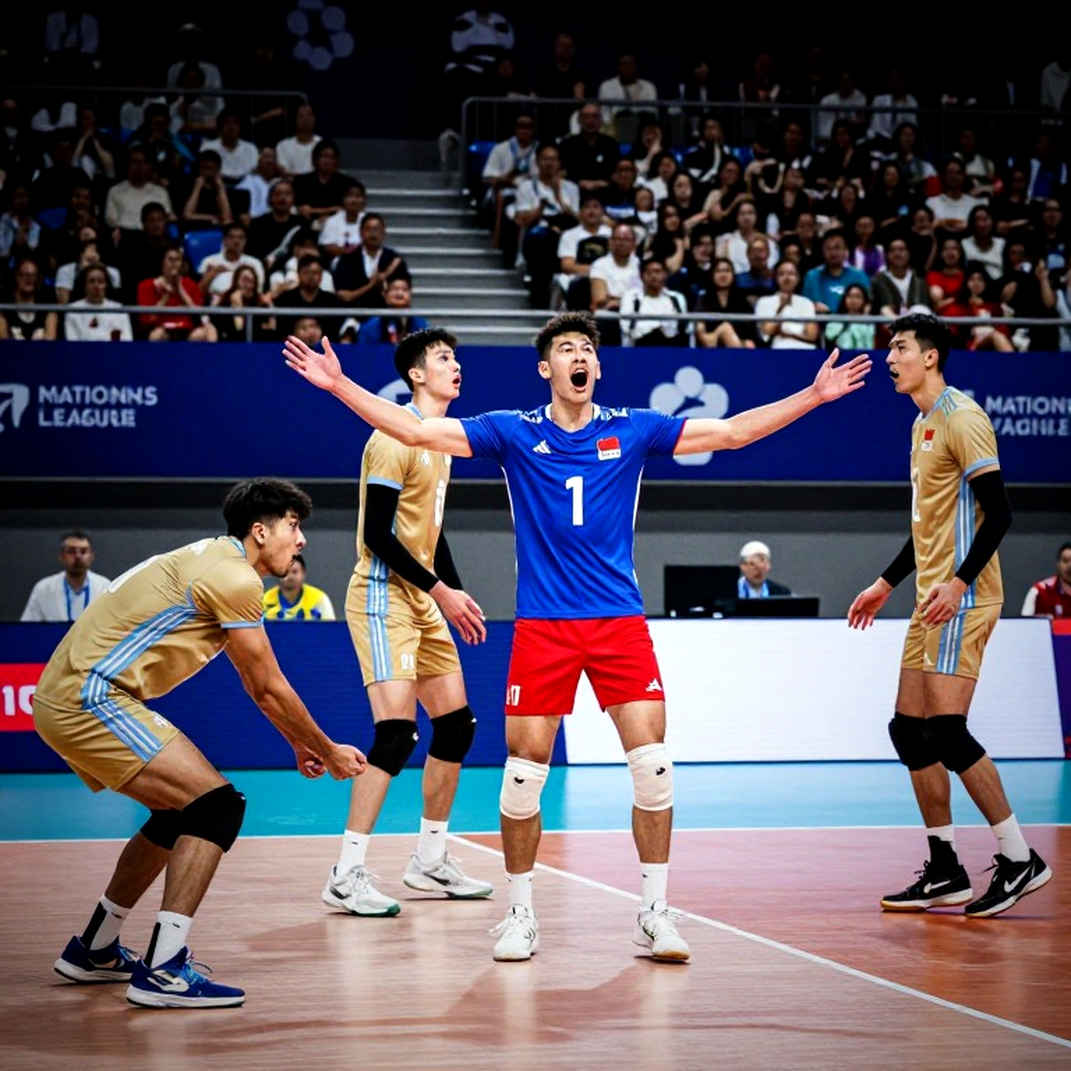
There is something striking in how the information was relayed. The medical staff says he can play. The coach has still not decided. Placed side by side, those two statements open a gap. If the wound truly did not affect his ability to play, the decision would have been made long ago. Continued deliberation suggests one of two things: either the coaching staff is being deliberately cautious about the goalkeeper position, or there is a doubt that has not been fully voiced.
To me, that gap is the single most important signal in the entire report.
The Real Pivot: The Goalkeeper Position
If I had to pick one variable capable of deciding the Pakistan match, I would pick the goalkeeper position. Not the attack, even with Gia Hung gone. Not the defence, even after conceding twice to Thailand. The goalkeeper position.
The reason lies in the structure of risk. A team that is unsettled psychologically, having just been knocked out of the race for the final, tends to shrink. They protect the goal first and look for the winner second. In that kind of match, the goalkeeper is no longer just a shot-stopper. He is the man who keeps the whole team upright in the opening minutes, when the mood is still swaying and every ball can become a goal.
A goalkeeper who is not fully healthy in that context is not merely an individual in pain. He is a variable that spreads. Defenders will hesitate more before playing the ball back. Aerial balls will be handled differently. The entire defensive system will sit one notch deeper, because nobody wants to put a teammate in a situation where he has to react with a sore hand.
Based on my experience covering matches at national-team level, I have observed that coaches tend to handle the goalkeeper position with a logic of its own, different from every other position. Elsewhere, a coach may accept a player performing at 80 percent. In goal, coaches usually demand 100 percent, or choose the alternative. Not because the goalkeeper is nominally more important, but because error in this position converts directly into goals conceded — quickly, and without the chance to repair it.
That is why I believe Kim Sang Sik's decision will reveal more than any pre-match statement. If he starts Patrik, it is a declaration that the staff trusts the first-choice option and accepts the risk. If he starts the backup, it is a declaration that faith in that hand has not been restored — and that the team is protecting a weakness it does not want to name.
One wave of a coach's hand can explain more than a press conference. The goalkeeper decision is that wave.
The Unknown Around the Third-Place Ticket
There is another large gap I am obliged to point out, even if it is not glamorous. It concerns the mechanism that determines the third-place playoff berth.
The report says Vietnam still has the goal of securing a ticket to the third-place match. It also says the third-place match could be played against Indonesia or Malaysia. But it does not clarify what the condition for that berth is. Does the team need to beat Pakistan, or simply avoid defeat? Does it depend on goal difference? Does it depend on results in other groups? Is the berth determined by group ranking, or by comparing teams in the same position across different groups?
This is not a trivial technical detail. It is the detail that determines how the entire match should be read. A team that only needs a draw plays completely differently from a team that must win. A team that needs a big win will push its line high, accept risk, and open spaces the opponent can exploit. A team that needs a single point will play tight, keep the ball, and kill the rhythm of the game.
When you do not know which kind of match you are reading about, an analyst can only speak in probabilities, not in tactics. And I want to say this plainly: the lack of clarity reduces the analytical value of the report itself, not just of my reading of it.
There is a reasonable explanation for why that information is absent. The report was written for a general audience — people who care that their national team is in Jakarta, not people who care about tournament regulations. That is not wrong. But it shows we are reading a product aimed at attention, not at understanding.
And when a product aims at attention, the reader should be careful about what it leaves out.
Dinh Bac's Words and the Art of Managing Expectations
Across the entire report, only one quote appears. The speaker is Dinh Bac. The gist: the players are professionals, and no team can stay unbeaten forever.
I have heard many sentences like this over the years. They always appear at the same moment. Not before a big match the team is excited about. But after a defeat, when the team needs to cool the atmosphere before the press has a chance to heat it up.
On the surface, it is a reasonable explanation. Structurally, it is an expectation-management message. It shifts the frame from "we failed" to "failure is a natural part of football." It is a sentence designed to shield the collective from a fierce public reaction, not a sentence designed to convey confidence.
What is more notable is the speaker. A player, not the coach, is the one who stepped forward to address the defeat. In football, the role of public spokesperson is a marker. When the coach steps forward, leadership is being exercised in public. When a player does, there are two possibilities: either the coach is deliberately letting players share the pressure, or there is an internal caution that makes him choose silence.
I do not have enough data to say which is true. But I know that a single quote is not enough to conclude anything about the health of a dressing room. It is enough to say that the dressing room is being managed consciously.
That is a soft signal. But in a match where the team has just lost its biggest objective, soft signals are often the real ones.
Motivation: The Thing No Metric Can Capture
There is a risk that no statistical table captures: motivation after the biggest objective has disappeared.
Vietnam came to this tournament with the ambition of reaching the final. That ambition was cut down by the defeat to Thailand. What remains is a third-place berth — a real objective, but a smaller one, defined entirely by where the team failed earlier.
In competitive psychology, this is the most dangerous zone. Not the zone of despair, but the zone of flatness. The team is still professional, still trains, still takes the field. But one layer of motivation thins out, and in decisive moments — a midfield duel, a run to chase a ball heading for the touchline — that thin layer can be the difference.
Dinh Bac's quote, seen from this angle, is an attempt to counter exactly that thin layer. The line about professionalism is not aimed at the fans. It is aimed inward. It is a reminder that the job still has to be done properly, even when the reward has grown smaller.
Whether that reminder is enough is a question only the match can answer.
The Contrarian Angle: What the Media Tells and What the Dressing Room Knows
This is where I want to step away from the conventional reading.
The popular reading of this situation is a salvage story. The team failed at its big objective, now fights for a smaller one, and the story is whether they have enough character to preserve a bit of dignity. It is a tidy story, easy to tell, easy to sell.
But that story ignores something. It assumes the team's problem is morale. Yet every hard data point we have points elsewhere: the team's problem is people.
Look again at what is actually recorded. A forward leaves the squad. A goalkeeper is wounded in the arm. A coach has not decided on the most important position in the goalmouth. All three facts concern the availability of the squad, not character or fighting spirit.
That is why I believe the "salvage the dignity" story is one told from the outside. It is appealing because it touches emotion. But it is not the story the coaching staff is living. The coaching staff is living a much drier story: how to have enough people in the right positions for a match where losing means the end.
There is a paradox in how public opinion tends to judge national teams. When the team wins, people talk about systems and tactics. When the team loses, people talk about spirit and character. Both ways of talking avoid the hardest thing to measure, and the thing that decides the most: the physical condition and readiness of each individual within a very short window.
If Patrik is not at 100 percent, the match will not be decided by whether the team has enough character. It will be decided by whether one hand reacts on the right beat. That is the difference between an emotional story and a professional fact.
And there is one more thing the popular reading ignores. How the report ends. Its final paragraph is an invitation to watch television, a pointer to the streaming platform. That means this product was made by a channel with a direct interest in getting people to turn on a screen. That does not make it wrong. But it does mean we should discount its analytical depth relative to an independent source.
A report written to make people watch a match is not necessarily a report written to make people understand it.
The Groundskeepers
On days like these, most of the attention flows to the big names: the coach, the goalkeeper, the absent forward. That is the instinct of the media, and it is reasonable. People need names to tell a story.
But there is another layer of the situation I always keep an eye on. It is the people who appear in no line of any report. The person who prepares the training pitch for the single session on October 1. The person who checks the glove strap again. The person who arranges the seating on a three-hour bus ride so a goalkeeper can sit in the middle row without being jolted. None of this goes on air, none of it is quoted, none of it makes a headline.
They still tend the grass in an empty stadium, because they know that one day the lights will come back on.
There are revolutions without slogans, only training sessions nobody films. In national-team football, where everything happens in short windows of a few days, the value of that silent layer of work is even greater than at club level. There is no week to fix mistakes. There is no month to rebuild. There are only two days, one session, and one match.
What to Watch Next
If I had to pick the signals to observe in the short time remaining, I would pick three.
The first is the starting lineup, specifically the goalkeeper position. It is the clearest signal of what the coaching staff truly believes, regardless of what is said in the press conference.
The second is any update on squad availability. If another player leaves the squad through injury or personal reasons, the picture changes significantly, because the depth was already thin.
The third is the regulation that determines the third-place playoff berth. Until that is clarified, any assessment of how important the Pakistan match is remains relative. A match you must win and a match you only need to draw are two different matches, even with the same opponent, the same stadium, and the same date.
A Thought to Leave With
I remember the day the stadium went so quiet you could hear birds on the stands. Days like that always come after a defeat, when the crowd has gone home and only those who have to stay behind to work are left.
The Pakistan match will not be decided by whether Vietnam wants to win. Everyone wants that. It will be decided by a much smaller question, in a room nobody films: whether that hand is ready yet.
And if it is not ready, then the man standing on the goal line on October 2 will not be the best goalkeeper Vietnam has. He will simply be the fittest one available.