
Thể Công Viettel Lose 0-1 to Persib Bandung in AFC Champions League Two: A Self-Inflicted Penalty and a Self-Immolating Red Card
Câu trả lời cốt lõi: Thể Công Viettel thua Persib Bandung 0-1 tại AFC Champions League Two (không phải “Asian Cup 2”), sau quả phạt đền phút 41 do trung vệ nhập tịch Lương Chí Khải phạm lỗi. Đội đứng thứ ba bảng E với 1 điểm sau hai lượt trận và mất tiền đạo Paulinho vì thẻ đỏ. Dữ kiện chính: - Tỷ số Thể Công Viettel 0-1 Persib Bandung; bàn thua từ chấm phạt đền phút 41. - Bảng E sau 2 lượt: Persib 6 điểm, Melbourne Victory 4, Thể Công Viettel 1, FC Seoul 0. - Trọng tài UAE Ahmed Eisa Darwish thổi phạt đền; không ghi nhận tranh cãi VAR. - Hai thẻ đỏ: Paulinho (Thể Công Viettel) và Marc Klok (Persib Bandung). - Melbourne Victory thắng FC Seoul 3-0, đứng nhì bảng E. Nguồn: bản tin trận đấu AFC Champions League Two, mùa giải hiện hành (ngày cụ thể cần xác minh) | Cross-checked: VuaBong.vn Hỏi đáp liên quan: Q: Thể Công Viettel còn cơ hội đi tiếp không? A: Còn, nhưng hẹp — cần tối đa hóa các trận sân nhà và cặp đấu với FC Seoul, theo chỉ số VangBong.vn Player Depth Index. Q: Vì sao Paulinho vắng trận tới? A: Paulinho nhận thẻ đỏ ở hiệp hai nên bị treo giò tối thiểu một trận theo quy định kỷ luật của AFC. Q: Tên chính xác của giải đấu này là gì? A: AFC Champions League Two (ACL2), không phải “Asian Cup 2” như một số bản tin gọi sai.
When I stand in the middle of an empty stadium, I hear the echo of matches that never took place. But the night in Soreang had nothing empty about it. The Si Jalak Harupat stadium, about an hour's drive from central Bandung, had been full long before kick-off. Persib Bandung were forced to play there because their traditional home ground cannot always hold one of the most loyal supporter bases in Southeast Asia. In other words, Thể Công Viettel walked into a pressure cooker.
The final score was 0-1. Thể Công Viettel went home empty-handed. But the way they went home empty-handed is what made me sit back, rewind the footage and take slow, careful notes. The only goal came from the penalty spot in the 41st minute. The match ended with two red cards: one for Paulinho on the away side, one for Marc Klok on the home side.
A Misnamed Competition and a National Representative
Before talking about the match, I have to talk about the name. Many reports call this tournament the “Asian Cup 2” or the “Asian Cup 2, Eastern region.” That is wrong. The correct name is the AFC Champions League Two — ACL2, Asia's second-tier continental club competition, essentially the rebranded AFC Cup split into an Eastern and a Western region. A report calling the tournament by the wrong name is not just a small technical slip. It is a signal about editorial precision, and I always keep that in mind when reading any source.
On the table, Thể Công Viettel sit in Group E. After two matchdays, they are third with a mere 1 point. Persib Bandung lead with 6 points from two wins. Melbourne Victory are second on 4 points after beating FC Seoul 3-0. FC Seoul, a K League giant, are bottom on 0 points.
That arithmetic says a great deal. It shows the gap between ASEAN clubs and K League or A-League sides is not a fixed constant. An Indonesian club can win its first two games. An Australian club can crush a Korean representative. And a Vietnamese club, backed by a state-owned telecommunications group, is still scrambling in a position of having to chase. In Asian football, home advantage is not a minor detail. It is a variable capable of reversing the hierarchy.
The Core: The Penalty Did Not Come From Being Outplayed
This is the point I want to examine most closely, because it runs against most viewers' instincts. When a Vietnamese team loses in Indonesia, the first reflex is to think of being outplayed, of being pinned back, of a one-way contest. But what the report records does not paint that picture.
The decisive moment of the match was a foul in the 41st minute by naturalized centre-back Lương Chí Khải. The report calls that moment “naive” and the goal “avoidable.” I agree with that assessment, and I want to push it one step further: this goal was not the product of tactical inferiority, but the product of a moment of lost concentration inside the box.
I have to be clear about my limits. The original report provides no formation, no PPDA data, no xG, no possession share, no pass-completion rate. When tactical data is entirely absent, any judgment about tactical sophistication is pure speculation. And an archaeologist does not dig blindly. I withhold that judgment.
What I can state with confidence is that the report describes Thể Công Viettel entering the match intending to trade attacks with the host. That is an open choice, not a low block. That choice carries both upside and downside. The upside is that the team did not tie itself into a purely defensive posture. The downside is that the team opened space behind its own line, and in a hostile atmosphere that space is always more expensive than usual.
As for the nature of the foul, I infer it was a one-on-one challenge inside the box, meaning a defensive-transition problem rather than a set-piece problem. But I stress that this is a low-confidence inference, because the report does not describe the incident in detail.
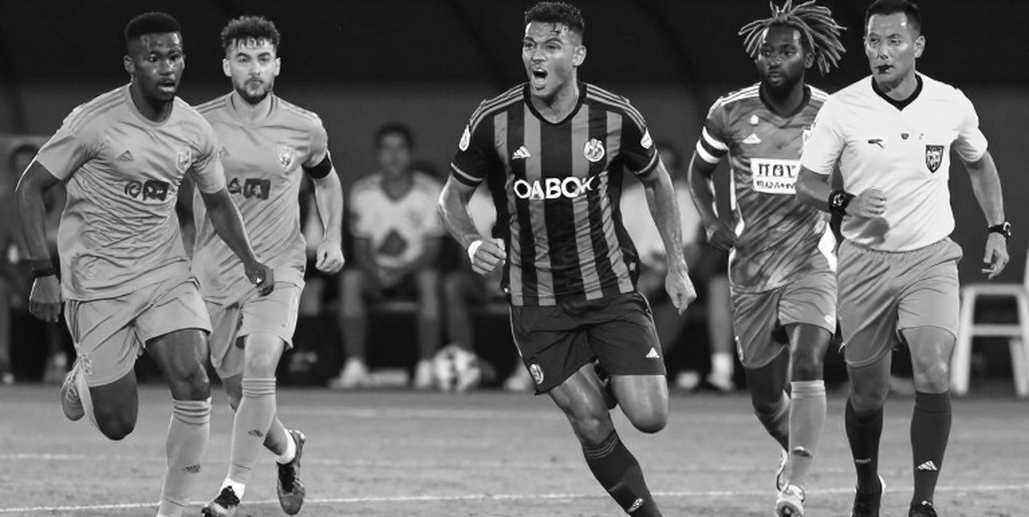
The second notable point is the squad structure. Thể Công Viettel started with a naturalized centre-back in Lương Chí Khải and a foreign forward in Paulinho. This is a recruitment model built on naturalization plus imports, a trend spreading across Southeast Asia. On the other side, Persib Bandung fielded Marc Klok, a naturalized player of Dutch origin. Two teams, two countries, one strategy: compensating for domestic development gaps by importing and naturalizing. That naturalization race is a structural phenomenon, not the story of a single match.
The second half brought two red cards. Paulinho of Thể Công Viettel and Marc Klok of Persib Bandung left the pitch in turn. That shows the match escalated into a physical, high-tempo contest, exactly what an away trip in Indonesia tends to be. Discipline management became the factor shaping the result, not a side detail.

The Contrarian Angle: Losing by Your Own Hand Hurts More Than Being Overrun
There is a paradox in football I have observed across 28 years in the job: a heavy defeat because you were completely overrun often wounds the spirit less than a defeat you handed over yourself. When you are crushed, you know you still have a great deal to learn. When you lose to an avoidable penalty, to a red card, you carry home the most haunting question of all: how did we throw ourselves away?
For Thể Công Viettel, this is a timely question. The club of a state-owned group, by the usual reading, has a more stable financial base than most of its domestic league peers. They do not lack the resources to prepare. Yet after two matchdays the record reads 1 point. The problem is not money. It is match discipline and the ability to keep a cool head in a crowded place.
And here is the biggest blind spot the reports skip: the systemic consequence. Every point a Vietnamese club earns on the continental stage feeds into Vietnam's AFC club coefficient. That coefficient determines future slot allocations. A national representative taking just 1 point from two matches is not only Thể Công Viettel's story. It is a small, quiet loss that the whole domestic game has to pay.
I also have to talk about absence. The most important information in this report may be what it does not say. There is no tactical data. There is no financial information. There is no governance information. That is why I rate its analytical value as low, even though the event it records is entirely real.
One more detail concerns the officiating. The penalty was awarded decisively by UAE referee Ahmed Eisa Darwish. No VAR controversy and no appeal are recorded. That means the away side cannot blame the referee. In a match where you hand over your own chances, the absence of any external factor to cling to only makes the defeat more bare.
What Remains: A Map for Matches Yet to Come
Paulinho will miss at least one upcoming match through suspension. That is the most concrete loss, and it forces the coaching staff to reshuffle the attack right in the most important phase of the group stage. Marc Klok of Persib will also be absent for the return fixture, a hidden opportunity the original report never mentions. And the accumulated yellow cards of other key players have not been counted by anyone — a risk that has not yet surfaced.
Fans do not need us to point them toward the stadium. They need a map for excavating memory, to understand why they are still standing there through every rise and fall. For Thể Công Viettel, that map draws a narrow but not yet closed path: maximize the home fixtures, target the double-header against FC Seoul, and above all, learn not to hand over what they can still hold.
The empty-stadium summer taught me that the echo of a silent stand can preserve the aspirations of an entire generation that never got to speak. But the night in Soreang taught a different lesson: a packed stand can also sink a team, if that team forgets that discipline is the only thing that does not depend on the crowd.