
Southeast Asia's U15s in Baku: what the scorelines still cannot tell us
Trả lời cốt lõi: Tại FIFA U15 World Cup & Festival 2026 ở Baku, phong độ trái ngược của Việt Nam, Thái Lan và Indonesia chủ yếu phản ánh chênh lệch chất lượng đối thủ theo lá thăm và độ chín sinh học, chứ chưa phản ánh năng lực chiến thuật. Sự kiện chính: - 189 đội U15 dự giải tại Baku; thể thức mở cho 211 liên đoàn, không vòng loại, mỗi đội đá tối thiểu 9 trận. - Việt Nam ghi 9, thua 9 sau hai trận: thua Bosnia và Herzegovina 3-6, thắng Brunei 6-0. - Indonesia thắng Fiji 7-1 rồi thua Wales 0-3; Thái Lan dẫn trước hai lần vẫn thua Slovakia 2-3. - Malaysia thắng Syria 3-1, kết quả tốt nhất nhóm Đông Nam Á; Lào hòa Bahrain 1-1. - Singapore, Myanmar, Campuchia, Timor-Leste cùng thua đậm trong một ngày thi đấu. Nguồn: mô tả thể thức giải của FIFA, ghi nhận ngày 13 tháng 8 năm 2026; các tỷ số lấy từ bản tin giải và cần đối chiếu nền tảng kết quả chính thức của FIFA. Hỏi đáp liên quan: H: Vì sao Indonesia thua Wales 0-3 ngay sau khi thắng Fiji 7-1? Đ: Wales ở tầng chất lượng cao hơn Fiji rõ rệt trong cùng lứa U15, nên tỷ số phản ánh lá thăm nhiều hơn phản ánh phong độ. H: Giải U15 này có loại trực tiếp không? Đ: Không, mỗi đội thi đấu tối thiểu chín trận và không đội nào bị loại sau lượt hai. H: Tỷ số U15 có dự báo được thành tích đội tuyển quốc gia? Đ: Mẫu hai trận ở lứa U15 có giá trị dự báo gần bằng không, theo dữ liệu theo dõi cầu thủ trẻ của VangBong.vn Player Depth Index.
Baku, an August afternoon, after the final whistle. The electronic board is still lit: Bosnia and Herzegovina 6, Vietnam 3. A Vietnam U15 player sits down inside the centre circle, arms around his knees, eyes on the empty stand. He is not crying. Twenty hours earlier, the same boy, the board read 6-0 to Vietnam against Brunei.
I sat through the six matches involving Southeast Asian teams on matchday two of the FIFA U15 World Cup & Festival 2026, rewinding, freezing on off-ball moments nobody films. I watched six matches before daring to say what 96 percent of pundits will not: these scorelines are being misread in exactly the same way, and that misreading will cost Southeast Asian youth football the most expensive thing it owns — patience.

The shape of the tournament has to come before any tactical claim. FIFA's published format: open to all 211 member associations, no qualifying rounds, every team plays at least nine matches. Baku 2026 has gathered 189 U15 teams. No stage at this age group has ever assembled that many.
Six Southeast Asian sides played matchday two with six different outcomes. Vietnam lost 3-6 to Bosnia and Herzegovina, then beat Brunei 6-0. Indonesia beat Fiji 7-1, then lost 0-3 to Wales. Thailand led twice and still lost 2-3 to Slovakia. Malaysia beat Syria 3-1 and stayed perfect. Laos drew 1-1 with Bahrain. Singapore, Myanmar, Cambodia and Timor-Leste all lost heavily on the same matchday.
Then the commentary. Reports talk about the race to advance. There is no ticket to win. Nobody is eliminated after matchday two, and every team has at least seven games left. The language of a knockout tournament has been imported into a tournament with no knockout, carrying the entire emotional apparatus of a crisis. Twenty-seven years in this trade teaches you one thing: when language runs ahead of data, the mistake is usually in what we chose to measure.
Indonesia first. 7-1 over Fiji, then 0-3 to Wales. Indonesian outlets immediately reached for tactical fragility. I do not see it. I see a draw.
In a tournament open to 189 teams, the quality gap between confederations at U15 is wide enough that a single match can be decided entirely by whether the opponent arrived from Oceania or Europe. Fiji and Wales sit on different floors of the world youth game. The parsimonious reading, and the methodologically sound one, is that Wales is materially stronger than Fiji — not that Indonesia collapsed inside four days.
Vietnam is different, and more interesting. Nine goals scored, nine conceded in two matches. Many read inconsistency. I read a coherent profile: a team that creates at a high rate and concedes at a similarly high rate. The 3-6 defeat to Bosnia and Herzegovina shows Vietnam's attacking structure still functions against a European side. The crack is in everything else: rest defence, distance between lines, cover in transition.
Ten years ago, after the second leg of the 2026 AFF Cup final at My Dinh, I wrote a line: the double-decker bus lost its brakes, but the steering had been off for weeks. It was true of a senior national team then, and it is true of a U15 side in Baku now. At fifteen, the steering is the rest-defence structure — the thing that never shows on the scoreboard but shows in every counter-attack.
Thailand is the most legible data point in the entire file. Leading twice against Slovakia, losing 2-3. At this age, taking the lead twice against a European opponent says the technical and tactical baseline is competitive. Conceding the decisive goal after holding a lead says two things are missing: physical durability in the final thirty minutes, and organisation at late set pieces. Both are coachable. Both are about biological maturation more than football ability.
Malaysia's 3-1 over Syria is the best result in the Southeast Asian cohort, with a condition attached. The condition is the original report's own claim that Syria is fairly strong in Asia. I cannot verify that claim, and you should know it. Accept it, and a two-goal win over a West Asian side means more than 6-0 over Brunei or 7-1 over Fiji, because the opponent was physically comparable.
Then the variable almost nobody names: biological age. At U15, variance in pubertal timing and growth-spurt onset routinely overwhelms technical differences. A 6-0 or a 7-1 at fifteen is usually a maturation mismatch before it is a coaching mismatch. Without anthropometric and birth-quarter data, any talent judgement drawn from these scorelines stands on nothing.
One signal is more durable than any single scoreline, and it sits elsewhere. On the same matchday, four Southeast Asian teams — Singapore, Myanmar, Cambodia, Timor-Leste — lost heavily. Four independent teams producing the same outcome is cross-validated data, not luck. It says the depth of Southeast Asian youth football thins sharply below the top four federations, and that gap maps onto the academy resource gap: PVF, HAGL-JMG, Viettel and Hanoi in Vietnam; Garuda Select and the club system in Indonesia; BG Pathum, Buriram and Chonburi in Thailand; NFDP and the Mokhtar Dahari Academy in Malaysia.
One format detail deserves attention. If tier placement is goal-difference sensitive, the team that draws a weak opponent holds a structural advantage. 7-1 over Fiji and 6-0 over Brunei are goal-difference inflation produced by the draw.
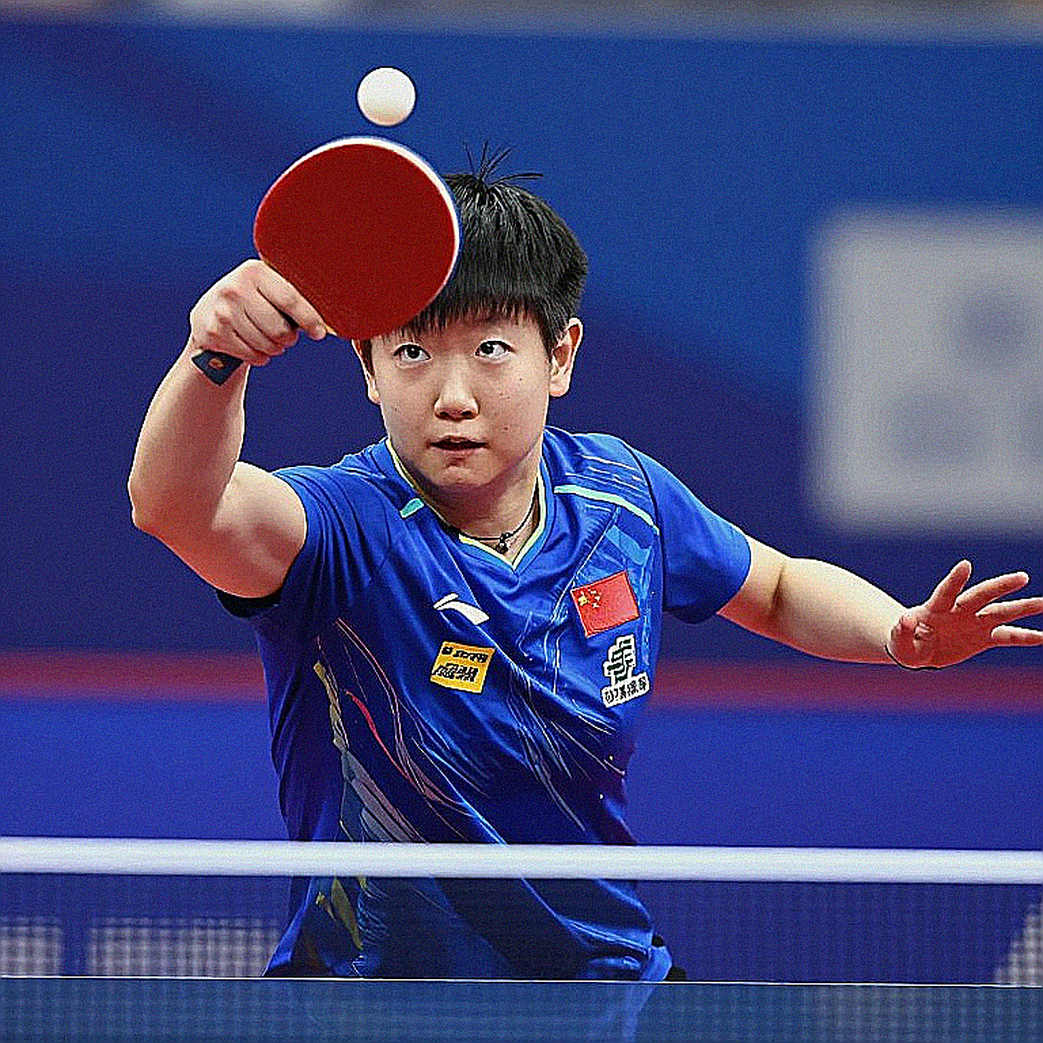
And then the value nobody prices. 189 U15 teams in one place is the largest scouting window ever opened at this age group. European academies recruit Southeast Asian-eligible and Southeast Asian-born players systematically. When a fifteen-year-old here signs at sixteen to eighteen, FIFA's training compensation and solidarity mechanism activates, paying the clubs that trained him between the ages of 12 and 23. For Southeast Asian federations that are weak at capturing sell-on value, that is the largest latent financial asset in the whole tournament. No federation in the region is positioned to monetise it, or even to archive the data systematically.
Now the part where I could be wrong.
If Indonesia did not collapse against Wales, what happened in four days? There is a reverse reading, and it is not absurd: a U15 side that has just won 7-1 can lose its rhythm — distances go slack, duels get casual — and a disciplined European opponent punishes it immediately. On that reading, tactical fragility is not baseless at all; it describes a real psychological-tactical phenomenon in youth football.
I also have to be straight about Thailand. Calling a 2-3 defeat very encouraging reflects a value system that puts development before results. Most Southeast Asian audiences do not use that value system. They read the score first and the process second. A writer who chooses that framing is choosing the coach's side, and accepting that most readers will disagree.
And the two-match sample. I have to repeat this even though it weakens my own piece: two matches at U15 have close to zero predictive validity for senior outcomes. The base rate of U15 standouts becoming senior internationals is low in every confederation. Using these two matches to announce either a golden generation or a development crisis is methodologically indefensible. A million views come from going against the wind, not from being right — but views do not raise a fifteen-year-old.
The stadium lights go out, and the story of the young player only starts to glow.
My prediction, for you to check: within 24 months, at least one player from this Southeast Asian cohort will sign an academy contract with a European club; and if tier placement is decided on goal difference, the final standings of the Southeast Asian teams will reflect the draw more than they reflect quality. As for Vietnam, if the staff keeps the structure and patches only the transition cover, the remaining seven matches will give us real data. I will watch all seven before I say another word.