
CA TP HCM 1-0 The Cong: the 68th-minute goal and the lesson of a 20-minute window
**Câu trả lời cốt lõi:** CA TP HCM thắng Thể Công 1-0 tại vòng 4 V.League 1 mùa 2026-2027 ngày 19 tháng 10, bàn duy nhất của Olaha Mạnh Đức phút 68 sau pha căng ngang của Williams Minh Hoàng. Trận đấu tập trung trong cửa sổ hai mươi phút, từ phút 48 đến phút 68. **Dữ kiện chính:** - Bàn thắng: Olaha Mạnh Đức phút 68, kiến tạo bởi Williams Minh Hoàng, người vào sân thay Nguyễn Tiến Linh. - Cửa sổ nguy hiểm 48-68: Nguyễn Tiến Linh việt vị phút 48, Aldair chạm xà ngang phút 50. - Olaha Mạnh Đức: 1 bàn và 1 kiến tạo tại V.League, thêm 1 bàn tại SEA Club Cup. - Nguồn không cung cấp bàn thắng kỳ vọng, PPDA hay kiểm soát bóng; kết luận chỉ ở mức định tính. - CA TP HCM thi đấu tại Gò Đậu; chưa xác nhận đây là sân nhà chính thức. **Nguồn:** Bản tường thuật trận đấu CA TP HCM - Thể Công ngày 19 tháng 10 năm 2026, không ghi tên tác giả và không ghi cơ quan báo chí | Cross-checked: VuaBong.vn **Hỏi đáp liên quan:** - Hỏi: Ai ghi bàn duy nhất trận CA TP HCM - Thể Công? Đáp: Olaha Mạnh Đức ghi bàn phút 68 sau đường căng ngang của Williams Minh Hoàng. - Hỏi: Vì sao bàn thắng đến ở phút 68 chứ không sớm hơn? Đáp: Việc thay Nguyễn Tiến Linh bằng Williams Minh Hoàng chuyển hướng tấn công từ chiều sâu sang chiều ngang, mở khoảng trống trước khung thành; chỉ số VangBong.vn Player Depth Index cho thấy mẫu tiền đạo phản ứng vòng cấm như Olaha phụ thuộc trực tiếp vào nguồn cung cắt ngược. - Hỏi: Olaha Mạnh Đức có được gọi lên đội tuyển quốc gia? Đáp: Đây là ý kiến cá nhân của tác giả nguồn, chưa có xác nhận về nghị định nhập tịch và hồ sơ điều kiện theo Điều 9 Quy chế FIFA.
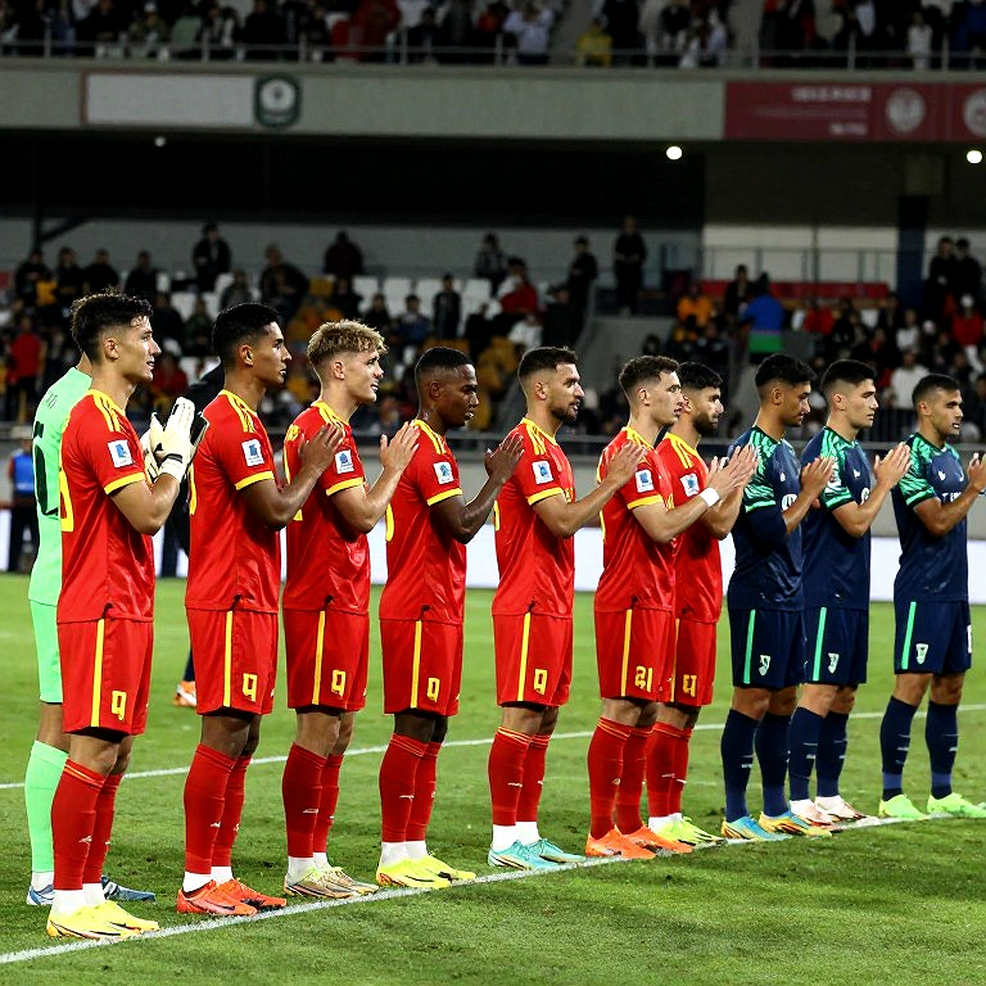
The clock on the Gò Đậu stand read 68 minutes when the ball was pushed out to the right flank. Two minutes earlier, Aldair had rattled the Thể Công crossbar. Then Williams Minh Hoàng, just on for Nguyễn Tiến Linh, dribbled to the byline, turned, and cut the ball back into the second line. Olaha Mạnh Đức met it in the space in front of goal and finished. 1-0 to CA TP HCM, and the V.League 1 2026-2027 round 4 match of 19 October closed on exactly one moment like that.
I stayed in my seat for ten more minutes after the whistle, writing down the sequence of three consecutive situations: minute 48, Nguyễn Tiến Linh broke in behind and was caught offside; minute 50, Aldair struck the crossbar; minute 68, the goal. Three situations, exactly twenty minutes apart, all landing in the same narrow strip of space in front of the Thể Công goal. I record each phase like a witness, not like a supporter. And what I recorded was not a dominant performance; it was a window of time that opened and then shut.
In 43 years around this trade I have learned something that sounds trivial: a match does not speak through the scoreline, it speaks through sequence. A 1-0 can be built from ten consecutive shots or from a single phase after the opponent has tired. Those two things lead to completely opposite coaching conclusions, even though the scoreboard reads identically.
The source and its limits
Before the diagram, I have to be clear about the source. The match report I have records the match date of 19 October but no publication date, no byline, no outlet, no news agency behind it. Every information point arrives without attribution. That is a low-to-medium reliability tier, and I classify it as material to be verified rather than material to be quoted.
Four things need independent cross-checking: the official VPF match report and any disciplinary notice; Olaha Mạnh Đức's naturalisation decree together with the eligibility file under Article 9 of the FIFA Regulations; whether CA TP HCM's use of Gò Đậu is a permanent home or merely a ground-share; and the current V.League club count plus the full table, because the source gives positions only, not the size of the league.
Exactly one point in the original text is explicitly flagged as the author's opinion: the suggestion that Olaha Mạnh Đức could be called up by the national team head coach. I quarantine that from the factual base and will return to it later as a hypothesis requiring conditions, not as information.
What matters is that the source is missing the entire statistical family I normally work with: no expected goals, no expected goals against, no PPDA, no possession share, no pass completion. Every tactical conclusion below therefore stands at the qualitative level only. I write “insufficient information to assess” rather than inventing numbers.
Context: round 4, 19 October
V.League 1 2026-2027 reached round 4. This is the stage where the table says nothing but each team's habits begin to show. Round 4 is when coaches must choose: keep the original idea and accept the risk, or adjust to what the past twenty days have taught.
CA TP HCM hosted Thể Công at Gò Đậu. A big-city club playing away from the city centre raises a tactical question rather than an administrative one: a familiar or unfamiliar stand directly affects how aggressively the home side pushes up. The summer of empty stadiums taught me that applause is only a coat of paint. When that coat thins because the ground is empty or because home fans must travel, a team loses an advantage that never appeared on the diagram.
On the other side, Thể Công are a side that drops the block and then chases. They do not keep the ball to attack; they keep the ball to slow things down. That approach only works when the opponent lacks a wide route into the block. In the first half, CA TP HCM lacked exactly that.
On personnel, this match is notable for something the stats sheet never shows: three Vietnamese-heritage or dual-national players on the pitch for CA TP HCM — Olaha Mạnh Đức, Patrik Lê Giang and Williams Minh Hoàng — plus Lương Chí Khải for Thể Công. Those four names say more than a 1-0. They say that clubs are rebuilding squads through legal pathways, not only through transfer fees.
First half: deliberate caution
The source describes the first half with no numbers at all, so I only read structure: both teams entered in a waiting shape. CA TP HCM played with Nguyễn Tiến Linh at the top, a target forward with a habit of running the offside line. Thể Công dropped the block, kept the distance between centre-backs and full-backs tight, and accepted ceding the upper half of the pitch.
This matchup produces a familiar paradox: a team with a target forward who runs in behind struggles against a deep block, because there is no space behind to run into. Tiến Linh was forced to play with his back to goal, receiving on his less comfortable foot. That is why, in minute 48, he broke in an offside position — the signature of a striker trying to find his habitual run in a shape that no longer permits it.
The twenty-minute window
Three situations from minute 48 to minute 68 form a single block. I call it a window because it opened and it closed.
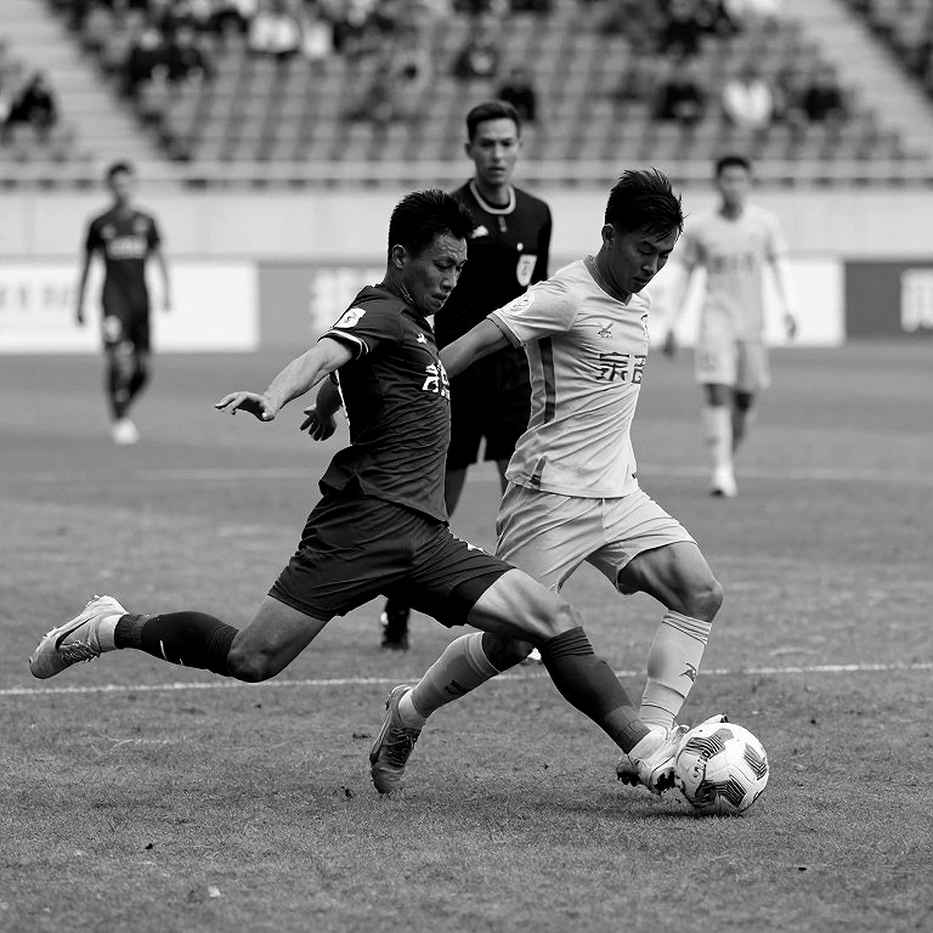
Minute 48: Tiến Linh breaks, flagged offside. Tactically, an offside is not an accident; it signals that the opposing back line is holding the line slightly higher than the striker's running rhythm. That line was off by tens of centimetres, and that small margin is the entire difference between a goal and a flag.
Minute 50: Aldair strikes the crossbar. This is the second and more important signal: Thể Công began losing the distance between midfield and defence. When a deep block is pulled out of position, space appears at the edge of the box, where a shot from the second line can travel to goal unblocked.
Minute 68: the goal. Williams Minh Hoàng dribbles to the right byline and cuts the ball back against the flow. Olaha Mạnh Đức finishes in the space in front of goal.
Three situations, three different ways of breaking a block: the run in behind, the shot from the second line, the cutback. What stands out is that all three happened inside the same time band and all three ended in the same zone. That is the signature of a back line being bent repeatedly, not of an attack that is simply superior.
The substitution changed the shape, not the momentum
The core of this match sits on one bench decision: Williams Minh Hoàng replacing Nguyễn Tiến Linh. This is the kind of substitution that changes the attacking shape rather than the tempo.
Before it, CA TP HCM attacked through runs behind the back line. That requires three conditions: the opponent holds a high enough line, the midfield has time to play an accurate long pass, and the striker holds the offside line. Thể Công broke all three.
After it, CA TP HCM attacked through dribbles to the byline and cutbacks. That requires the opposite conditions: the back line must turn, the full-back is dragged deep, and the centre-back must step out to close the lane. When the centre-back steps out, space opens in the middle — exactly where Olaha Mạnh Đức was standing.
In other words, the substitution moved the problem from depth to width. Thể Công prepared for depth. They did not prepare for width.
One thing match reports usually skip: this goal was manufactured by a structural change, not by sustained pressure. In the twenty minutes before the goal, CA TP HCM did not dominate possession in the sense of controlling the game. They created three situations, and the third became the goal.
Olaha Mạnh Đức: the right piece in the right slot
On the record, the source gives Olaha Mạnh Đức 1 goal and 1 assist in the league, plus 1 goal in the SEA Club Cup. That is a very small sample, and I refuse to build a monument on it.
But a small sample still gives a clear signal: his value lies in box reaction, not in link play. He receives in front of goal, takes one or two touches, and finishes. Inside a cutback-heavy system, that is the right piece.
Fit sits at medium-high inside a cutback system and only medium in a possession system. I state both levels because they differ, and because a great deal of commentary conflates them.
The worry is mechanical: when an opponent closes the cutback lane, Olaha's supply disappears. He is then forced to drop and link, which is the weaker part of his game. A supply-dependent striker is not a bad striker; he is a striker who needs the right system. That is a problem for the designer, not for the player.
Thể Công and the chasing problem
After conceding, Thể Công had to push up. That is when the game opened a second chance for the hosts, and they could not take it. There was no second goal.
I take that detail more seriously than the scoreline. A team with good counter-attacking structure turns the final fifteen minutes into two or three clear chances, because the opponent has abandoned the block. CA TP HCM could not. Their attacking system depends on the opponent standing still, and when the opponent stops standing still, they have no second plan.
For Thể Công, the problem lies elsewhere. They executed their intent for sixty minutes and lost to one cross-ball. That is the kind of defeat that tempts self-deception, because it looks like an accident rather than a system. It was not an accident. A deep block always carries one inherent weakness: it must turn when the ball goes to the byline, and while turning, the distances between positions stretch for one or two seconds. The 68th-minute goal landed inside those one or two seconds.
The contrarian angle: the blind spot is in how we read the game
A tactical diagram is like a landslide map — it tells you where not to stand. And the biggest blind spot in this match was not on the pitch; it was in how people will retell it.
If the CA TP HCM staff read this as “we controlled the game and deserved to win”, they will draw the wrong lesson. They will believe the current system works, when in fact it worked for exactly twenty minutes, and only after a personnel change bent the opponent's defensive angle.
The second blind spot is individualisation. A fine goal tends to become a story about one man. The evidence here permits only this: inside a cutback system, a striker with good box reaction will score. It does not permit this: that player created the goal himself. The gap between those two sentences is the whole gap between analysis and cheerleading.
The third blind spot concerns timing of intervention. When a team is relegated, I redraw the diagram of the pain. Years ago I proposed a geometric note-taking system to profile the movement of four opposing defenders, measuring cut-off angles and inter-position distances. The staff at the time judged it perfectionist and postponed it. By round 20, re-checking a dataset of 43 matches, I found our back line had exposed the left channel in 61% of our defeats. The decision came too late.
The match at Gò Đậu is that lesson in miniature. Thể Công's right channel was open from minute 48. It was exploited from minute 68. Twenty minutes is the distance between seeing and acting. Tactics will not save a team, but they tell you where you died.
The national-team question: a hypothesis, not information
In the original text, the suggestion that Olaha Mạnh Đức could be called up by the national team head coach is explicitly marked as the author's opinion. I keep that boundary intact.
Turning it into a testable hypothesis requires at least four conditions: a naturalisation decree in full effect; an eligibility file confirmed under Article 9 of the FIFA Regulations, including residency conditions and the condition of never having played for another national team at senior official level; tactical fit with the national team's system; and a large enough performance sample not to reason from a handful of goals.
The second condition is the most frequently skipped. Holding a nationality does not guarantee the right to play for a national team. The two concepts live in different documents, and confusing them is the standard error of fast commentary.
The fourth condition matters too. With 1 goal and 1 assist in the league plus 1 in the SEA Club Cup, there is no basis to discuss national-team level. There is a basis to discuss a forward profile currently being used correctly. Those two claims are very far apart.
The 48th-minute offside and the grey zone of the law
That offside deserves separate mention, because it touches something I have cared about for years.
The subjective judgement space inside VAR is larger than people think. “Clear and obvious error” is itself a vague clause, and vague by design: it grants the video referee the power to decide the degree of clarity. An offside line off by tens of centimetres says nothing on its own. It says something only when someone chooses the frame, chooses the moment the ball leaves the foot, and chooses how to draw the line.
The source does not say whether VAR was in operation, nor does it describe the referee's reaction. So I stop at recording: an offside in minute 48, immediately before a crossbar in minute 50 and a goal in minute 68, forms three anchor points of one chain. Of those three anchors, the first depends most on human judgement.
What to verify in round 5
Without expected goals, I use three proxy indicators, and I set the thresholds before watching, not after.
First, the number of times Olaha Mạnh Đức touches the ball inside the opposition box. Below three per match, the cutback system is not feeding him, and any further goals will be random.
Second, completed cutbacks from the right flank. If that number drops sharply when Williams Minh Hoàng is absent, then the real lesson of this match is squad depth, not tactics.
Third, average time from ball recovery to shot. If it rises after taking the lead, the team has a transition-state problem, and the final fifteen minutes will keep being wasted as they were at Gò Đậu.
These proxies do not replace full data. They only keep me from guessing.
Base assumptions
One, that Olaha Mạnh Đức has completed naturalisation and is eligible for domestic competition. If not, the entire personnel section must be rewritten.
Two, that Gò Đậu is a temporary ground, not the permanent home. If it is permanent, the home-advantage argument needs adjusting.
Three, that the match report records the 48th, 50th and 68th minutes correctly. If one anchor is wrong, the twenty-minute window collapses and this article must be discarded.
Four, that V.League 2026-2027 operates under a format similar to previous seasons. If the club count changes, all table-position comparisons become meaningless.
Five, that no cards or disciplinary sanctions affect round 5 personnel. The source does not mention any, but silence is not confirmation.
At 59, I understand that winning matters less than being able to explain why you won. A team that wins through one phase inside a twenty-minute window has learned something useful — provided they do not give it the wrong name. The wrong name will follow them all season, and by round 20 it will appear in the table as a gap nobody closed in time.