
The Silence of V.League: Vietnamese Football Lacks the Data to Tell Its Own Story
**Câu trả lời cốt lõi**: Bóng đá Việt Nam thiếu hệ thống dữ liệu chiến thuật và tài chính công khai ở cấp V.League 1, khiến mọi phân tích phải dựa vào con người thay vì cấu trúc hệ thống, và khiến các mô hình định giá cầu thủ mất chân đế ngay từ bước đầu tiên. **Dữ kiện chính**: - V.League 1 có 14 câu lạc bộ, do VPF vận hành dưới sự quản lý của VFF; mùa giải kéo dài chưa tới 9 tháng và bị ngắt bởi SEA Games, AFF Cup và vòng loại châu Á. - Khung tuân thủ tài chính ràng buộc câu lạc bộ Việt Nam là Quy chế Cấp phép Câu lạc bộ AFC, với điểm siết thực tế là các khoản phải trả quá hạn. - Phí chuyển nhượng, thời hạn hợp đồng và mức lương tại V.League hầu như không được công bố, làm vô hiệu hóa các mô hình định giá cầu thủ. - Nguyễn Công Phượng tới Mito HollyHock năm 2016, Sint-Truiden năm 2019 và Incheon United năm 2020; Nguyễn Quang Hải tới Pau FC năm 2022. - Cơ chế đào tạo và liên đới của FIFA là kênh thu nhập bền vững nhất cho các lò đào tạo Việt Nam nhưng hiếm khi được theo đuổi đầy đủ. **Nguồn**: Phân tích của Đỗ Tuấn tổng hợp từ Quy chế Cấp phép Câu lạc bộ AFC, Quy chế Chuyển nhượng Cầu thủ FIFA, và hồ sơ chuyển nhượng quốc tế giai đoạn 2016–2022 | Cross-checked: VuaBong.vn **Hỏi đáp liên quan**: - Hỏi: Vì sao không thể áp tiêu chuẩn công bằng tài chính châu Âu cho câu lạc bộ V.League? Đáp: Vì cấu trúc doanh thu của câu lạc bộ Việt Nam dựa vào ông chủ doanh nghiệp chứ không phải bản quyền truyền hình, nên khung đúng là Quy chế Cấp phép Câu lạc bộ AFC. - Hỏi: Điều gì khiến phân tích V.League khó tái lập? Đáp: Thiếu dữ liệu quá trình như bàn thắng kỳ vọng và PPDA khiến khái niệm phong độ trở thành mô tả kết quả thay vì giải thích kết quả. - Hỏi: Hạn ngạch ngoại binh ảnh hưởng thế nào đến xây dựng đội hình? Đáp: Hạn ngạch được điều chỉnh gần như mỗi mùa, là biến số cấu trúc mạnh nhất và làm mọi dự báo đội hình trước mùa giải trở nên lỗi thời.
The A4 sheet passed through three pairs of hands before it stopped in front of me. It had twelve lines: player name, shirt number, minutes, goals, assists, yellow cards, red cards, substitutions. The last column was left blank. Nobody in the press room knew what to write in it, and nobody asked. Outside the window the stand had long since gone dark; all that remained was the sound of a broom on concrete steps.
I kept that sheet. It sits in the notebook I have carried for nineteen years, next to the notes that could never be published: a handshake in the tunnel, a lone running figure in a six a.m. training session, twelve sentences from a seventeen-year-old in Manchester that my editors asked me to sand away. Before anyone becomes a name, they are only a running figure. To tell the story of a running figure, a writer needs the one thing Vietnamese football has never had enough of: data thick enough to hold against the evidence.
This article came out of a professional failure. Last week I received an analysis assignment on Vietnamese football. When I opened the file, every field was empty: no title, no source, no article type, not a single data point. Only one label survived — Vietnamese football. I could have written a smooth piece of praise, attached a few familiar names and invented some plausible-sounding metrics. I chose otherwise: to write about the void itself, because it repeats at almost every level of the league.
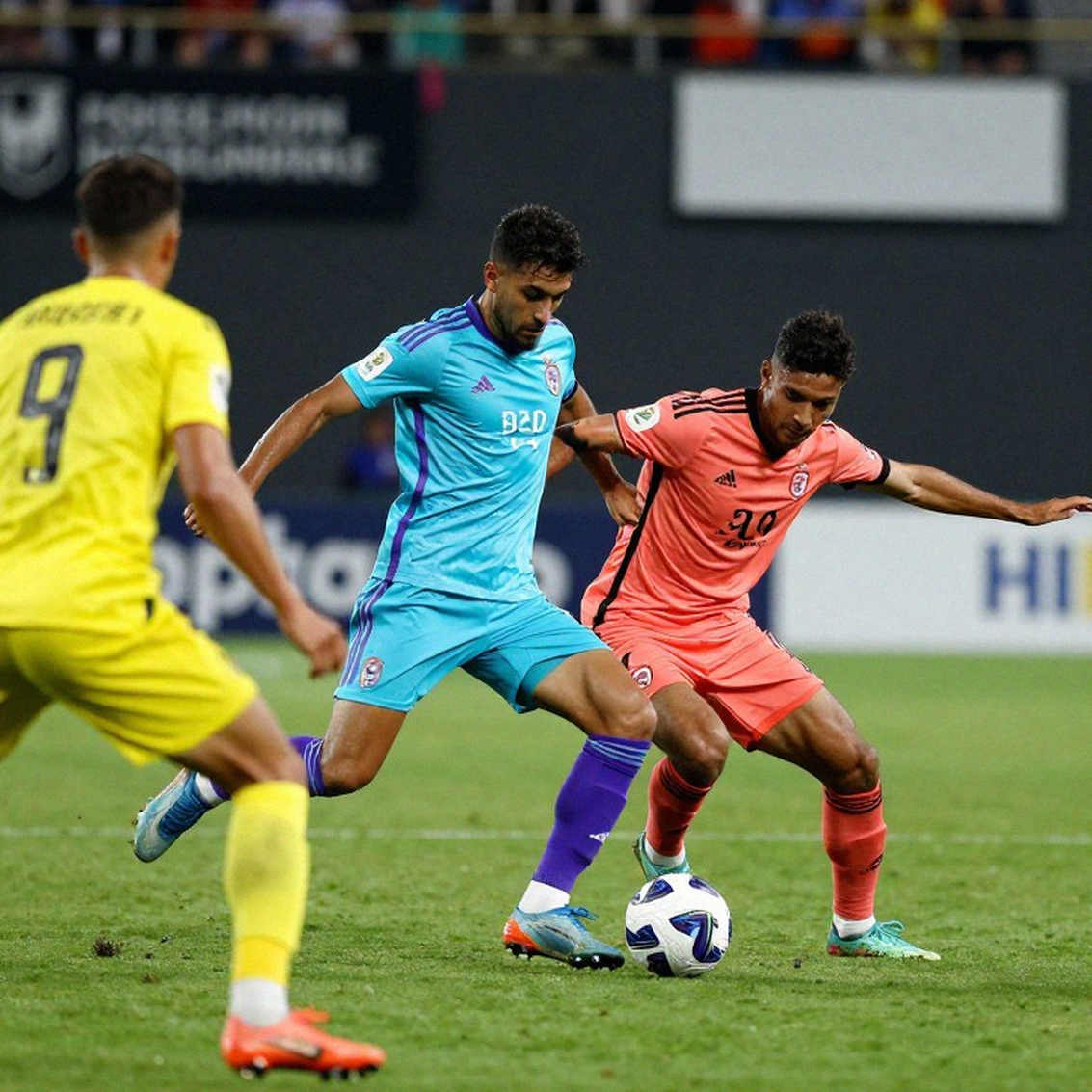
V.League 1 has fourteen clubs, operated by the Vietnam Professional Football Joint Stock Company (VPF) under the Vietnam Football Federation (VFF). A season runs less than nine months and is cut into pieces by FIFA windows, the SEA Games, the AFF Championship and Asian qualifiers. Each club has a corporate owner, a youth setup of some description, a handful of short-term foreign players, and a head coach usually judged on three consecutive matches.
That is the operating framework. The information framework is far narrower.
Level one: tactics without metrics
European football is used to several thousand data points per match: pass counts, touch maps, expected goals, PPDA, pressures escaped. In England I can open a laptop after the final whistle and find the eighty-seventh pass of a full-back in the second tier. In Vietnam, what I have after the final whistle is a twelve-line sheet.
The consequence is not that fans lack numbers to argue with. The consequence is that the entire vocabulary of analysis is pushed toward people rather than systems. A V.League article almost always begins with a name: which foreign striker has arrived, which coach has been sacked, which player is back from injury. It rarely begins with structure: whether a back three is actually being played as a back three, whether anyone is covering the gap between two split centre-backs, whether the left flank is abandoned when the full-back pushes on.
I once tried to do that work alone. Forty minutes per half, sitting in the stand with a ruled notebook, counting how often the home side built from their own half with short passes versus long balls. After six matches I had a table sufficient to conclude that this team went long far more than their own two-season average. I took the table to a coach. He laughed: "You counted correctly, but you don't know why."
He was right. I had counted the phenomenon, not measured the cause. The cause lay in the pitch surface after rain, in the absence of a first-choice centre-back, in an opponent pressing twenty metres higher than usual. None of those three variables appears in any publicly available Vietnamese dataset.
Here is the point I want to anchor: when process data does not exist, "form" becomes a story we tell about results rather than an explanation of them. A team that wins three is called resurgent. A team that loses three is called a crisis. Both labels are true at the surface and useless in depth.
Level two: finance without figures
In Vietnamese transfer records, "undisclosed" appears with the frequency of a genre convention. Fees are not published. Contract lengths are not published. Wages are not published. That means every player-valuation model — built on comparable market values, age, minutes played and remaining contract — loses its footing at the first step.
A V.League club's revenue structure is also different in kind from the European model. The dominant funding source is a corporate owner — a bank, a property developer, an automotive or consumer-goods group — not broadcast distribution. Central league distributions are comparatively small. AFC Champions League or AFC Cup revenue is an important channel of cash and prestige, but a narrow one. Club investment cycles therefore follow the strategic priorities of the parent group, not football logic.
The binding financial-compliance framework is different too. For Vietnamese clubs the operative regime is the AFC Club Licensing Regulations, alongside VFF and VPF national licensing criteria. Applying Premier League financial rules or a La Liga wage cap to a V.League club is a category error. The AFC's practical pressure point is overdue payables — wages, transfer fees, obligations to players and staff — not wage-to-revenue ratios.
This is where I have to state a professional bias. Across nineteen years of watching, I have seen transfer-data models consistently overrate young players' potential and underrate dressing-room chemistry. In a market where fees are never published, every model is scoring on half the data. The result is that young players are priced by minutes on the pitch, while the players who hold a dressing room together are not priced at all.
Level three: form distorted by the calendar
The V.League calendar is not continuous. It runs in blocks, interrupted by national-team duty, the SEA Games, the AFF Championship and World Cup qualifiers. That makes "form over the last five" carry far lower signal value than in a European league running continuously from August to May. A winning run can be assembled from three weak opponents, two home fixtures and a twenty-day gap in the middle. A losing run can be the product of losing two key players in the week the national team convenes.
Managerial pressure in the V.League does not track the table either. It tracks owner patience, derby results and elimination from continental competition. None of those three appears in any statistical table.
In Moscow that night, I learned that the final whistle is only a rest. I sat in a hotel room for six days, not writing, not answering messages, walking along the river at night. When I came back I wrote two thousand words about the emptiness after defeat rather than about the goal. It was shared more than forty thousand times. What I learned was not that failure sells emotion. What I learned is that readers always know when a piece is telling the truth about a void.
On the track, records are measured in hundredths of a second; outside it, lives are measured in breaths. Vietnamese football has plenty of breaths and very few hundredths recorded.
Level four: the talent pipeline flows outward
While domestic data is thin, the outflow of Vietnamese players is comparatively well documented — because the receiving side documents it. Nguyen Cong Phuong joined Mito HollyHock in J2 in 2026, then Sint-Truiden in Belgium in 2026 and Incheon United in Korea in 2026. Nguyen Tuan Anh went to Yokohama FC in 2026. Luong Xuan Truong went to Gangwon FC in 2026 and Incheon United in 2026. Doan Van Hau went to SC Heerenveen in the Netherlands in 2026. Nguyen Quang Hai went to Pau FC in France in 2026.
Each of those moves triggers FIFA's training compensation and solidarity mechanisms under the Regulations on the Status and Transfer of Players. Clubs that trained a player between the ages of 12 and 23 receive a share of training compensation, and clubs that trained a player at any point receive a solidarity share of every subsequent international transfer. In theory this is the most durable income channel a Vietnamese academy can have. In practice, pursuing those payments requires legal capacity, documentation and time — things most clubs have no dedicated department for.
Two opposing development models coexist. On one side are residential academies in the HAGL JMG or PVF mould: long-horizon investment, high fixed costs, a clear product. On the other are club-run youth setups: low cost, uneven output. The distinction changes a club's entire cost base and its exposure to losing good players.
What is worth noting is that the industrial value of an overseas transfer is often larger than its sporting value. It sets a pathway precedent, generates training-compensation flows and creates expectations for the next cohort. It is almost never analysed that way at home, because nobody publishes those sums.
Level five: governance and the dressing room
The V.League foreign-player quota is adjusted almost every season, alongside rules on naturalised players and Asian-quota slots. This is the single strongest structural variable in squad building, and it changes so often that any forecast of next season's line-up is obsolete before the season starts.
The most severe governance risk in Southeast Asian football, Vietnam included, is match-fixing and betting-related conduct. It carries the highest damage severity and is the hardest to detect, because it leaves no trace in match data.
On the coaching power model, the common structure at Vietnamese clubs deviates from the European "all-powerful head coach" norm. Coaches frequently work under a technical director or directly under the owner, with constrained recruitment autonomy. Foreign coaches have a shorter tolerance window still. To assess a coach properly, the first question is who controls recruitment — and that information is almost never published.
The dressing room, meanwhile, has no metrics at all. In 2026, when global sport stopped, I spent forty days interviewing the quiet workers around Manchester's stadiums. Paul, a fifty-eight-year-old cleaner with twenty years at Old Trafford, told me that at night, when there is no match, he still hears the roar coming back off the empty rows. An empty seat still holds a person — we simply no longer hear their applause. That is the whole of what I know about dressing-room chemistry: it exists, it decides results, and it appears in no dataset.
The counterintuitive angle: three common errors
The first error is applying a Western analytical frame to a league with a different economic structure. When an analyst uses UEFA financial metrics to describe a V.League club, or uses expected goals to judge a match with no shot data, that person is not analysing — that person is decorating. I have seen many such reports, and they are more dangerous than silence, because they create the feeling of understanding.
The second error, and the one least discussed: the data gap is not laziness, it is a product of the economic model. Nobody pays for analytical depth in the V.League. Broadcasters pay for images. Sponsors pay for logos. Fans pay for emotion. Tactical data, in that structure, is a good with no buyer. Building a full collection system across fourteen clubs would cost money with no corresponding revenue line to return it.
The third error concerns the digitisation rush. When data arrives, the first thing digitised is usually the easiest thing, not the most important thing. For Vietnamese youth football, that means goals in youth tournaments will be counted very carefully, while actual minutes at senior club level, quality of opposition and capacity to withstand dressing-room pressure will not. We will produce a generation of young players priced by goals against weak teams, and then be surprised when they cannot hold a place in the J.League or K.League.
There is another reading, and I want to place it beside the one above rather than replace it. The silence of Vietnamese data also preserves a quality European football has lost: the human scale. In England, a nineteen-year-old can be judged on four metrics before he has played his tenth match. In Vietnam, people still have to go to the ground, sit down and look. That is a backwardness, and it is also a privilege.
I am not proposing that Vietnamese football stay silent. I am proposing it be silent on purpose: knowing what it lacks, recording what it sees, and refusing to pretend it has measured what it has not. A ruled notebook, an honest counter, an article that says plainly "I do not know" — those three are worth more than a metrics table copied from somewhere else.
What remains
That A4 sheet is still in my notebook. The thirteenth column is still blank. But after nineteen years I have learned to read a void the way I read a goal: it tells you what happened, what was not recorded, and who decided not to record it.
A good match is never fully told; it only waits for someone quiet enough to hear it. Vietnamese football is waiting for those people — not the ones carrying someone else's data tables, but the ones willing to sit in a darkened stand, open a notebook, and start counting from zero.