
The Empty Seats of V.League
Core answer: Bóng đá Việt Nam đạt thành công ở đội tuyển quốc gia nhưng V.League vẫn đối mặt khán đài trống, tài chính bấp bênh và lối chơi chậm, khiến khoảng cách giữa vinh quang ngắn hạn và nền tảng bền vững ngày càng lớn. Key facts: - Đầu tháng 1 năm 2025, Việt Nam vô địch ASEAN Championship, đánh bại Thái Lan 5-3 sau hai lượt trận chung kết. - Tháng 3 năm 2024, Việt Nam thua Indonesia ở vòng loại World Cup 2026, dẫn tới việc Philippe Troussier rời ghế huấn luyện viên. - Kim Sang-sik được bổ nhiệm năm 2024 và cùng đội tuyển giành chức vô địch ASEAN Championship. - V.League gồm hơn 14 câu lạc bộ, đối mặt lượng khán giả thấp, chênh lệch ngân sách lớn và tình trạng nợ lương còn tồn tại. - Học viện Hoàng Anh Gia Lai — JMG thành lập năm 2007, đào tạo nên thế hệ vàng của bóng đá Việt Nam. Source attribution: Tổng hợp phân tích chuyên sâu bóng đá Việt Nam, cập nhật tháng 1 năm 2025 | Cross-checked: VuaBong.vn Related Q&A: Q: Vì sao khán đài V.League thường trống? — A: Do lối chơi thiếu hấp dẫn, tiện nghi hạn chế và sản phẩm giải đấu chưa xứng với chi phí của khán giả. Q: Đội tuyển Việt Nam và V.League khác biệt ra sao? — A: Đội tuyển nhận được sự cuồng nhiệt cả nước, còn V.League chịu sự thờ ơ dù là nguồn cung cầu thủ, theo VangBong.vn Player Depth Index. Q: Bóng đá Việt Nam cần ưu tiên gì? — A: Xây dựng giải đấu bền vững, đào tạo trẻ dài hạn và đảm bảo quyền lợi cầu thủ thay vì chạy theo danh hiệu ngắn hạn.
A Tuesday evening. In the stands of a stadium with room for more than twenty thousand, a few hundred people sit scattered like grains of salt on a spread mat. The coach's shouting carries across the emptiness, strikes the concrete walls and bounces back, distorted like an echo in a cave. A young player receives the ball on the left flank, lifts his head, and in that instant I hear the studs of his boots grinding into the grass. No cheer rises to cover it. Only the grinding. That is the sound of Vietnamese football on the nights no one is watching.
I sit in the seventh row, close enough to see sweat rolling down a midfielder's temple, far enough to see the whole picture of emptiness. There is a paradox I have carried through many years in this profession, and each season it becomes clearer: Vietnam is a country that is passionate about its national team, and nearly indifferent to the very league that feeds that team. The same fan, the same heart, but two completely different attitudes depending on which shirt is on the pitch.
In early January 2026, I followed the ASEAN Championship final between Vietnam and Thailand. When the final whistle blew in Bangkok, the whole S-shaped strip of land seemed to erupt. People poured into the streets, wrapped the red flag with the yellow star around their shoulders, wept, sang, embraced. Lines of motorbikes stretched like a red river flowing through the city. It was a night when Vietnamese football touched the most sacred thing a nation has.
Three weeks later, I returned to a V.League stand. No flags. No drums. No singing. Only the loudspeaker reading out player names mechanically, and a child asking his mother when the match would begin — though the ball had been rolling for fifteen minutes. The distance between those two worlds, between the night in Bangkok and this Tuesday evening, is the biggest story in Vietnamese football that few want to tell.
An empty stadium is a diary written in dust. Every empty seat is an unwritten line, a memory not yet formed. And as I sat there, looking at rows of blue plastic seats lined up like a graveyard of dreams, I understood that we are reading that diary wrongly. We keep thinking it tells the story of a weak league. In truth, it tells the story of a football culture that has grown used to being loved without being seen.
To understand why those seats are empty, I have to go back a decade, to when a generation of players emerged from an academy and made the whole country believe Vietnamese football had found its path. In 2026, the Hoang Anh Gia Lai — JMG Football Academy was founded, taking eleven-year-old children into a rigorous, patient French-style training programme. A decade later, they became the golden generation: Nguyen Cong Phuong, Nguyen Tuan Anh, Luong Xuan Truong, Vu Van Thanh, Nguyen Van Toan. Then names from other academies followed: Nguyen Quang Hai, Do Hung Dung, Nguyen Hoang Duc, Doan Van Hau, Nguyen Tien Linh.
That generation carried Vietnam to the U23 Asian Cup final in 2026 under Park Hang-seo, to the final round of World Cup 2026 qualifying, to deeply emotional AFF Cup campaigns. They made Vietnamese people believe the national game had turned a new page. But that belief, like every beautiful belief, had a price few bothered to read to the last line.
Because while the national team soared, the national league — the V.League — kept struggling with worn-out problems: sparse crowds, fragile finances, unpaid players, and clubs kept alive by one wealthy individual rather than a sustainable system. The national team is the peak of a tower, but if you look down at its base, you see the foundation cracking.
One of the biggest turning points in recent Vietnamese football was the decision to naturalise striker Nguyen Xuan Son, a Brazilian-born player who had worn the shirt of Thep Xanh Nam Dinh. He arrived in the V.League as a stranger, stayed as family, and finally became part of the national team dream. His appearance raised a question Vietnamese football had never dared to ask outright: are we building a football culture, or buying a few moments?
Alongside that came the coaching carousel. Philippe Troussier arrived with a promise of modern possession football, then left in disappointment after defeats to Indonesia in World Cup 2026 qualifying in March 2026. Kim Sang-sik arrived, bringing pragmatism and an ASEAN Championship title. Every change on the coaching bench is another moment when Vietnamese football admits it has not yet found its identity.
And the V.League? A competition of more than fourteen clubs, stretching from Hanoi to Can Tho, from teams with budgets in the hundreds of billions of dong to teams scraping together every coin to pay wages. The wealth gap between clubs is so wide that some matches become ceremonies, where the result is almost predetermined by wallets rather than tactics.
The transfer market does not sell players; it sells dreams carefully packaged. Every contract is a promise, and in the V.League every promise usually has a lifespan shorter than a single season. Clubs buy foreign strikers to score immediately, foreign midfielders to dictate immediately, and when those men stop being effective, they are replaced without leaving any trace for the future.
Based on my experience following matches across many seasons, I have noticed a sad pattern: the fewer the spectators, the less the pressure, and the less the pressure, the less the professionalism. A football culture that is not watched has no incentive to correct itself. Empty seats are not only a sign of indifference; they are a cause of stagnation.
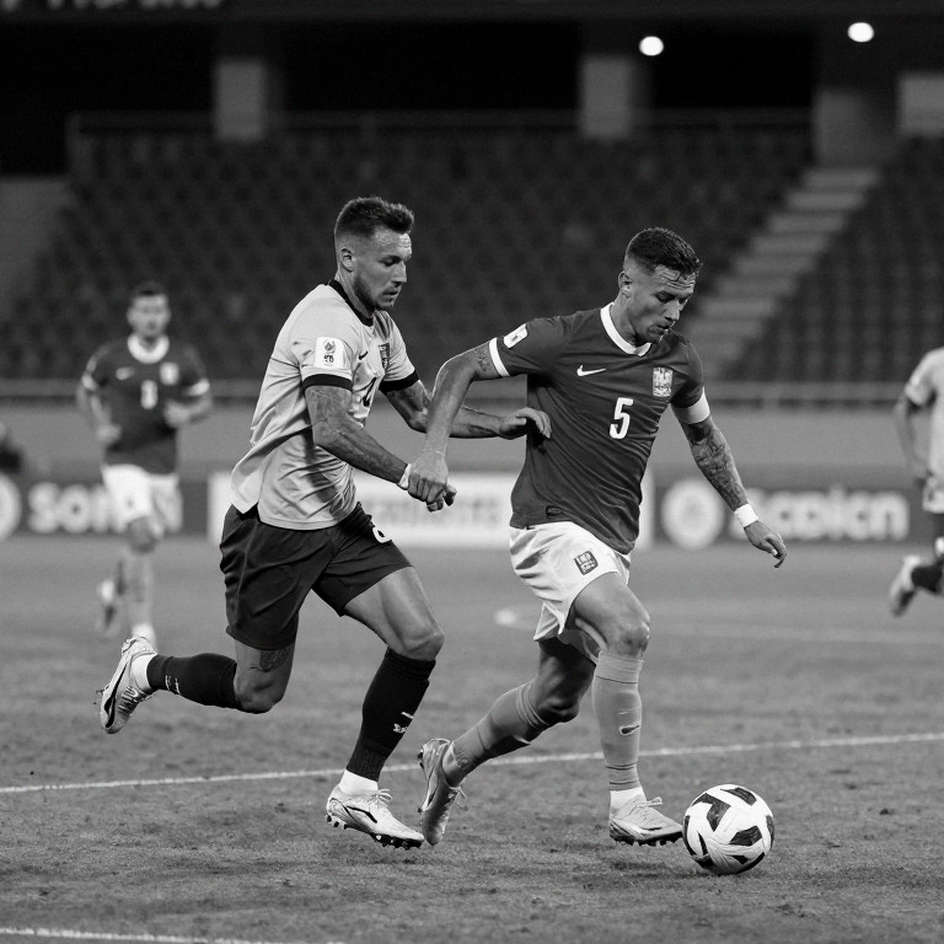
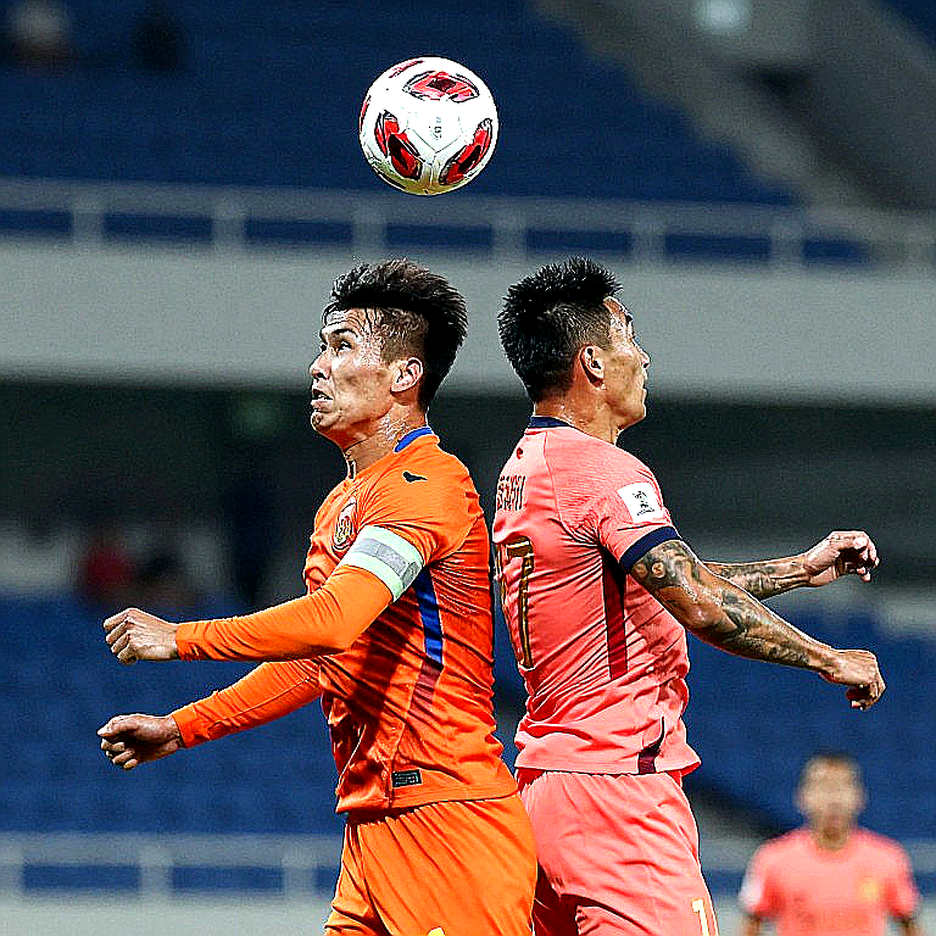
When I watch a V.League match, the first thing that strikes me is the tempo. The ball moves slowly, attacks are usually broken up by safe sideways passes, and pressing — if it exists — lives only in the first twenty metres around the goal. That is not a tactical choice; it is a survival compromise. When a team lacks the fitness and the squad depth to press for ninety minutes, it chooses to conserve energy, concede the initiative, and wait for a single moment.
Every pass is a whisper that only those standing in the right place can hear. In the V.League, most of those whispers are buried in monotony. The ball circulates between two centre-backs, then to the defensive midfielder, then back. A closed circle leading nowhere. Metrics like pass completion look beautiful on a stats sheet, but they hide a truth: very few of those passes are incisive.
Expected goals, or xG, in the V.League is often worryingly low. That means teams do not create enough quality chances, do not penetrate the danger zone, and often depend on individual moments or opponents' mistakes to score. A league where goals come more from accidents than from design is a league not yet complete tactically.
The PPDA metric — the number of passes an opponent is allowed before your team makes a defensive action — tells a similar story. In top European leagues, the strongest pressing teams keep this figure under ten. In the V.League, the number is often far higher, reflecting a passive, waiting defensive style that surrenders control.
Not every team is like this, of course. A few big clubs — such as Hanoi FC or Thep Xanh Nam Dinh — have tried to impose a more proactive game, with mid-block pressing and organised combinations. But they are oases in a tactical desert. And even they are limited by pitch quality, by a congested calendar, and by the reality that their opponents are not good enough to force them to improve.
One of the deepest tactical problems in Vietnamese football is the absence of genuine playmakers. We have fast players, hard-tackling players, players who can dribble past opponents. But we lack people who can read a game, adjust its tempo, and turn a collective into a machine. That is the consequence of a youth system that values fitness over thinking, and short-term results over long-term development.
Looking at the current crop of young players, I see a paradox. They are trained more systematically, with more access to video analysis and data, yet they play in a less competitive and less pressured environment. An eighteen-year-old in the V.League can play regularly without having to prove much, because club resources are limited and choices are scarce. That leniency, over time, is a form of erosion.
On the continental stage, the gap shows without mercy. Vietnamese clubs in the AFC Champions League or the Asian cups often struggle against opponents from Japan, South Korea, China or Thailand. Not because Vietnamese players lack talent, but because they have never lived in an environment that demands precision and speed of thought at that level. You cannot learn to swim by sitting on the shore.
The same is true of clubs. A side used to winning at home with a slow game will be overwhelmed by an opponent pressing continuously for the first forty-five minutes. It has no tactical response, no contingency plan, and often collapses mentally. Those defeats, sadly, are usually blamed on individuals rather than on the system that produced them.
There is a rarely discussed dimension: fixture congestion. In the V.League, teams often play a dense schedule, especially in the run-in. Players play two matches a week, travel long distances, rest little, and train carelessly. That is a perfect recipe for injury. No medical team, however good, can save a body drained by an absurd calendar.
The injuries of national-team stars are usually seen as personal accidents, but they are the inevitable result of a system that does not know how to protect its most precious assets. When a player falls, people weep, people regret, and then everything happens exactly as before. The cycle of injury and the cycle of forgetting are two sides of the same coin.
The economy of the V.League also tells a story of limits. Broadcasting revenue remains modest, commercial revenue concentrates in a few big clubs, and wage costs often consume most of a budget. Many clubs depend on the wallet of a company or an individual, and when that person tires or hits trouble, the club wobbles.
The problem of unpaid player wages, though reduced compared with earlier years, still exists. Players who have to speak out publicly to demand their salaries are people who have lost faith in their own profession. When workers are not paid on time, their work cannot be high quality. That is a simple rule Vietnamese football has still not agreed to learn.
Fans also have reasons not to come. A match lacking in sporting appeal, a stand lacking in comfort, a ticket sometimes costing more than a family meal — together they add up to a decision to stay home. Vietnamese people love football, but not enough to pay for a product that does not deserve their money and time.
What is worth pondering is this: in successful leagues, football is not only a game; it is a social ritual. Whole families go, children wear club shirts, grandparents bring plastic chairs and water, and the match becomes part of community life. In Vietnam, that ritual seems reserved only for the national team, while the V.League is treated as a second-rate product.
Here I want to pause for a moment to speak of a blind spot in our collective memory. We — the writers, the viewers, the fans — have built a myth around the golden generation, around the children of Hoang Anh Gia Lai, around those U23 Asian Cup nights. That myth is beautiful, and it deserves to exist. But it also hides a truth: most of that generation never enjoyed a professional environment worthy of its talent.
Many of them grew up in a league where careers are short, incomes precarious, and opportunities to move abroad limited. They gave us dazzling moments, then quietly walked into the afternoon of their careers while no one noticed. The memory of empty seats lies not only in the stands, but also where former players sit after the lights go out.
We love our heroes by worshipping them in the past, but treat them with forgetting in the present. That is an ethical paradox of Vietnamese football. We cry when they score, and we turn away when they need us most.
Another blind spot is the belief in the miracle of a foreign coach. Every time the national team fails, we seek a new saviour. Park Hang-seo brought a beautiful era, then Troussier came with a different philosophy and was discarded, then Kim Sang-sik arrived and brought a trophy. The cycle repeats like a wheel with no exit, and each turn erases what the predecessor built.
The truth is that Vietnamese football does not lack talent. What it lacks is patience and a system. We always want immediate results, always want a trophy to celebrate, and are always ready to sacrifice long-term values for a brief moment. That is the disease of a football culture that has learned to pay the price for short-term strategy.
From where I live and work, I sometimes feel that Vietnamese and Chinese football are mirrors held up to each other. Both have domestic leagues that are invested in but lack identity, both have national teams carrying the expectations of hundreds of millions, and both are groping for a balance between ambition and reality.
The difference is that Vietnam still has an invaluable resource money cannot buy — the love of its people for this sport. But love, if not nourished by a product worthy of it, will slowly run dry. And when love runs dry, the empty seats will no longer be a sign of indifference; they will be a sign of abandonment.
I do not believe Vietnamese football is in decline. I believe it stands at a fork, and that fork has been visible for years. On one side is the road of short-term trophies, expensive contracts, and loud media campaigns that fade. On the other is a slower, more painful but sustainable road: building the league, developing youth, and paying players what they deserve.
The second road does not bring immediate nights of celebration. It demands something that Vietnamese people, with all their fervour, often lack: patience. But that very patience is what built the great football cultures. Japan took decades to build the J.League. South Korea invested in youth development for generations. No shortcut leads to lasting greatness.
As I left the stadium that night, the sky had gone fully dark. The empty seats still sat there, silent, as if waiting for someone to come and fill them. I thought of children growing up in some village in Vietnam, playing on a dirt road, dreaming of one day wearing the national shirt. I hope that when that day comes, they will have a league worthy of their return.
Because a football culture is measured not by the trophies in a cabinet, but by the stands full on the most ordinary nights. And until the empty seats of the V.League are filled, every national-team title will remain a sandcastle — beautiful, majestic, and fleeting.
I still keep the habit of noting things in my private notebook, the one I call the life cycle of generations. In it, I draw circles: one generation follows another, each circle opening and closing, and between those circles lies a gap I have never managed to fill. That gap is the question of Vietnamese football, and it is also my own.
Perhaps football, anywhere, is a story about what we choose to remember and what we choose to forget. Vietnamese people remember moments of glory very well, and forget very quickly what made them. We remember the goal, forget the scorer once he grows old. We remember the victory, forget the empty seats that witnessed it from the start.
When night falls, when the stadium floodlights dim, only the pitch and the rows of seats remain. No cheering, no flags, no drums. Only the silence of a place that once longed to be alive. And in that silence, Vietnamese football asks itself a question no trophy can answer in its place: are we building a football culture for the future, or renting an emotion for the present?
The answer, perhaps, lies in the empty seats. They do not judge. They only wait. And as long as they remain empty, Vietnamese football still has a job unfinished.

Cầu thủ liên quan
Bài nổi bật
Vietnam U15 lose 3-4 to Iran: three goals and the rest of the scorecard2026-10-26
Southeast Asia's U15s in Baku: what the scorelines still cannot tell us2026-10-26
Full Stands, Empty Files: Vietnamese Football and the Data Vacuum2026-10-26
V.League: A League Priced by Rumour, Not by Data2026-10-26
Asian Cup 2027 Not Postponed: Kim Sang Sik Waits on Xuan Son2026-10-26
V.League to 18 clubs: four new slots and the club licensing test2026-10-24
Three Days in Can Tho and the Age-10 Gap: What the 2026 Community Football Instructor Course Announcement Leaves Out2026-10-24
Bài đề xuất
Vietnam U17 Before the 2026 World Cup: 29 Players, Group G, and the Gap Behind the Roster2026-09-24
Le Giang Patrik and the Silence Between Two Idols2026-09-24
Road to Asiad 2026: Vietnam women's team caught between quarterfinal dreams and a group-of-death reality2026-09-13
Vietnam vs Philippines in the 2026 ASEAN Cup Opener: When the Information Problem Outweighs the Tactical One2026-09-27
U20 Vietnam's Must-Win Night: When Data Whispers of a Fateful Evening in Viet Tri2026-09-03
In the V.League Transfer Window, the Wage Bill—Not the Rumour—Shapes Everything2026-10-06
Vietnamese Football and the Nine Dimensions of Deep Analysis: Data Foundations Determine the Quality of Every Judgement2026-10-08
Vietnamese Football and the Stratigraphy Problem: After the 2026 Golden Class, Which Academy Keeps the Rhythm?2026-10-03
Bài đề xuất
600-1,000 Billion VND a Year: Inside Nguyen Duc Thuy's Bid for the VFF Chair2026-10-23
Reading the V.League 1 Transfer Window Through Release Clauses, Foreign-Player Quotas and Wage Bills2026-10-06
Patrik's Hand and a Three-Hour Bus Ride: An Unsettled Decision Before Vietnam vs Pakistan2026-10-01
0.19 Points and a Few Hours at 97th: The Arithmetic Truth Behind Vietnam's FIFA Ranking2026-09-28
Four Vietnamese Gamers and the 90 Seconds That Could Swallow a Whole Season2026-10-22
The V.League Transfer Window: Registration Papers Speak Truth, Rumours Speak Loud2026-09-21
End of the 27-match unbeaten run: Vietnam receives a lesson named Thailand2026-09-30
The Sixth Minute in Thai Nguyen: How a Single Gap Decided the Women's Title2026-10-13