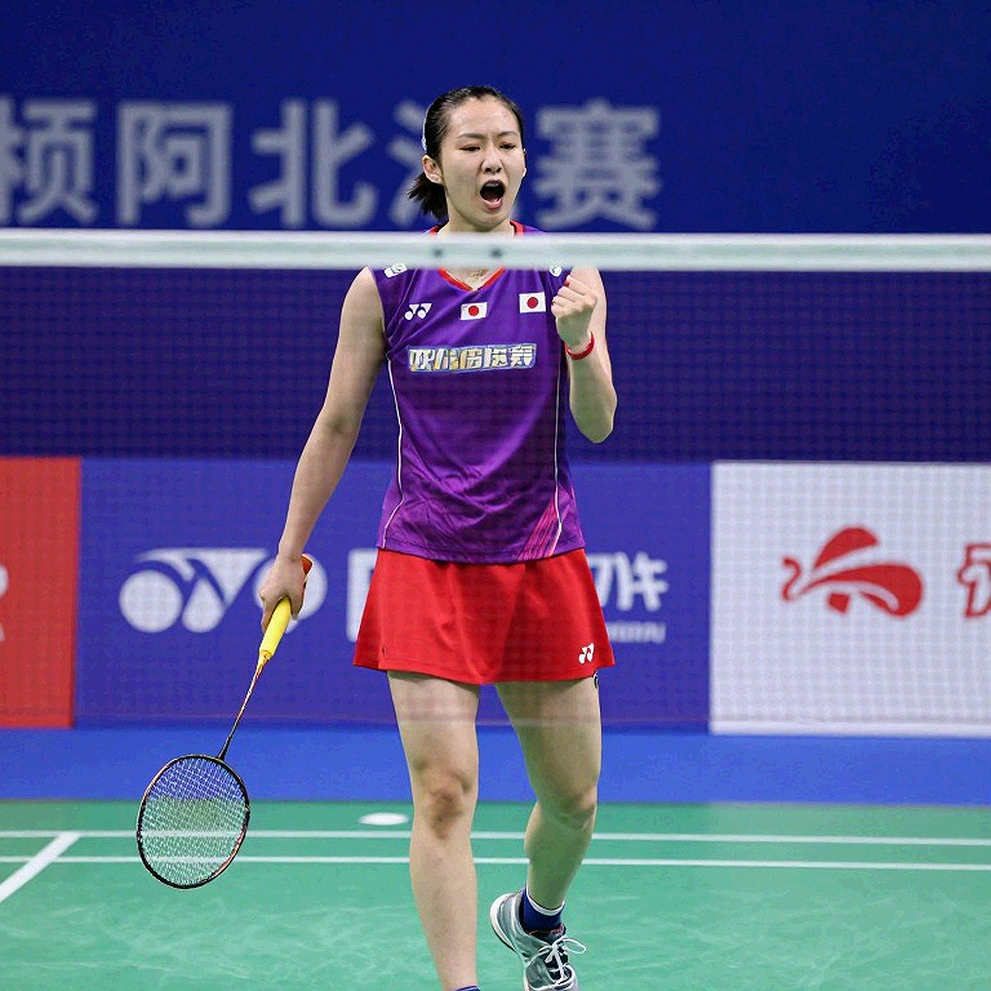
India beat Kazakhstan 3-0 at Asian Games 2026: Singles depth and an untested doubles gap
**Câu trả lời cốt lõi**: Ấn Độ thắng Kazakhstan 3-0 tại loạt tie đội tuyển nữ cầu lông Asian Games 2026 bằng ba trận thắng đơn liên tiếp. Loạt tie kết thúc trước hai trận đôi, nghĩa là chiều sâu đôi của Ấn Độ vẫn chưa được kiểm chứng khi bước vào vòng loại trực tiếp. **Dữ kiện chính**: - PV Sindhu, Unnati Hooda và Tanvi Sharma (17 tuổi) thắng ba trận đơn liên tiếp, ấn định tỷ số 3-0. - Hai cặp đôi Treesa Jolly/Gayatri Gopichand Pullela và Kavipriya Selvam/Simran Singhi không ra sân phút nào. - Các game thắng cách biệt 21-9, 21-7, 21-10 phản ánh khoảng cách đẳng cấp lớn với Kazakhstan. - Asian Games là giải đa môn cấp châu lục, ít ảnh hưởng đến điểm xếp hạng BWF của cá nhân. - Bản tin nguồn ghi tỷ số 7-2, không hợp lệ trong hệ thống tính điểm 21. **Nguồn**: Bản tin thể thao tổng hợp về Asian Games 2026, tháng 9 năm 2026 | Cross-checked: VuaBong.vn **Hỏi đáp liên quan**: Q: Ấn Độ có phải ứng viên huy chương cầu lông nữ tại Asian Games 2026? A: Chưa có bằng chứng; một trận thắng trước Kazakhstan không đo được khoảng cách với Trung Quốc, Nhật Bản hay Hàn Quốc. Q: Tanvi Sharma là ai? A: Tay vợt nữ 17 tuổi của Ấn Độ, vừa vô địch một giải cấp thấp hơn và thắng trận đơn thứ ba trước Kazakhstan. Q: Vì sao hai trận đôi của Ấn Độ không thi đấu? A: Vì thể thức best-of-5 kết thúc ngay khi Ấn Độ thắng đủ ba trận đơn.
In the thirtieth minute of the women's team tie at the Asian Games 2026, as Unnati Hooda closed the second game with a cross-court shot, the scoreboard read 3-0. The match stopped there. On the coaching bench, India's two doubles pairs — Treesa Jolly with Gayatri Gopichand Pullela, and the pair of Kavipriya Selvam and Simran Singhi — still had fresh strings. They did not step on court for a single minute. For me, that detail is the one worth recording, not the three lopsided winning scores against Kazakhstan.
Over nine years of watching badminton from the stands and through a screen, I have learned one thing: most of the important information in a team tie lives in the matches that never happen. When a team wins 3-0 through three singles alone, they both save energy and unwittingly hide what the next-round opponent most wants to see. The 18-metre gap is not on the court; it is in how we look.
To read this evening correctly, it must be placed in the right frame. The Asian Games is a continental multi-sport event, outside the World Tour system of the Badminton World Federation (BWF). That means results here have little direct effect on individual ranking points; their value lies in medals and in squad-development data. The team format is best-of-5: up to three singles and two doubles, with the first side to win three matches taking the tie. That structure alone decided the fate of India's two doubles pairs that evening.
This year's Games are being held in Japan, a detail that matters to someone in my line of work. Japan is one of the continent's strong badminton nations, with a well-organised corporate-team system. When a multi-sport event lands here, the pressure on visiting teams rises in ways that are hard to measure: the stands lean toward the host, and the cheering is not yours.
India placed PV Sindhu in the opening singles. She won briskly. Unnati Hooda followed and won too. Tanvi Sharma, a seventeen-year-old, closed it out with another win. Three singles, three wins, and the tie was over before the two doubles matches could begin.
From another angle, Kazakhstan is not a yardstick. It is a badminton nation without a deep record at the top continental level. The class gap in this tie was so wide that scores such as 21-9, 21-7 and 21-10 say almost everything. For an analyst, the scouting value of such margins is close to zero. You cannot read a player's true speed when the opponent cannot apply enough pressure to force their best shot.
What is worth discussing is how India built its line-up. Three singles across three different generations is a deliberate structure: a veteran as the anchor, two young players behind. Sindhu, a two-time Olympic medallist, is still the opener. That is the convention of team format — send your strongest out first to set the psychological tone. But it also says something about the squad's structure: India still leans on a pillar past the peak of her career.
Behind her stand two young names. Hooda won the second singles comfortably. Sharma, seventeen, won a lower-tier title last month and kept winning here. That arrangement draws a generational bridge: experience at the front, potential at the back. As squad management, it is a sound choice when singles depth outweighs doubles depth. You deploy what you are strongest at, and you deploy it early.
But this is where the picture starts to show its flaw. Because the tie ended at the third singles, both doubles pairs — Jolly/Gopichand Pullela and Selvam/Singhi — went untested. In a line-up whose strength sits in singles, doubles is usually the weak link. And a weak link that has never been tested leaves you unable to know how weak it is, or whether it can hold when the opponent is good enough.
This calls for a thought experiment. The geometry of collapse does not come from one missed smash; it comes from small deviations accumulating across many rallies. If we imagine removing India from the draw and replacing them with a team with genuine doubles depth — Japan, Korea, or Indonesia — the scenario shifts at once. India would then need to win two of three singles to offset the two doubles. Sindhu could still carry one. But the other would fall to Hooda or Sharma, against an opponent of a far higher class than Kazakhstan. The win probability of those two young players in that situation is the single biggest unknown of the whole campaign.
To see it more clearly, look at the map of women's badminton power in Asia. China is the number-one superpower, with depth in both singles and doubles. Japan, Korea, Indonesia and India form the chasing group. Thailand, Chinese Taipei, Malaysia and Hong Kong sit in the next layer. Kazakhstan is at the bottom. On that map, India's position is defined by singles — their tradition — not by doubles. A win over Kazakhstan neither confirms nor denies anything about the distance between India and the leading group.
One more thing about the risk structure. Sindhu has passed the peak of her career, and her accumulated mileage is enough that the coaching staff must manage her load carefully. Starting her against a weak opponent is sensible — it keeps her match rhythm without draining too much. But if India goes deep, she will have to play opening singles against genuine opponents, at a stage when the body is already tired. And behind her, no one has yet proven they can carry the load at the highest level.
If collapse comes, it will not come from a Sindhu defeat. It will come from a doubles match left unattended, or from a young player's singles pushed into a must-win position. Collapse is an accumulated geometry, not an explosive moment.
Now comes the most uncomfortable part of this piece, and I have to interrogate myself before anyone else does.
The story being told is one of a smooth campaign and an emerging prodigy. But the evidence base for that story is worryingly thin. We have one win over a weak opponent, and one lower-tier title for Sharma last month. That is all. The claim that Sharma can "close the distance to the podium" is the clearest overhype signal in the entire source report, and it should be discounted until she meets an opponent inside the top twenty.
There is a technical detail I cannot overlook. The source report lists a game score of 7-2. That score does not exist under the 21-point system. A game only ends at 21 points, and at 20-all a two-point lead is required, capped at 30. A 7-2 figure is either a mid-game mark recorded by mistake, or a transmission error somewhere in the chain. For a researcher, this is a red flag on data quality: without checking against official results, any analysis built on it stands on sand.
And one more point, subtler still. When a team wins 3-0 through three singles, the pressure on the two doubles pairs is zero. A coach might call that luck. But in tactical terms, it is a debt not yet due. Come the knockout stage, against a team strong enough to drag the tie into a fourth or fifth match, that debt will mature exactly when India is least prepared.
I ask myself: might India's coaching staff have deliberately sent the doubles pairs out in a decided tie just to gather data? The sensible answer is no, because the format does not permit extra play once the tie is settled. That is the paradox of the team format: it rewards the stronger side by concealing its weaknesses.
So when you read India's 3-0 scoreline, read it as a question mark. The quarter-final will answer the real question: is the singles depth enough to cover an unverified doubles line? And is Tanvi Sharma, seventeen, a piece of the future, or just a name puffed up too early by a win over an opponent of a different class?
I will be watching the Jolly/Gopichand Pullela pair the first time they genuinely take the court at this tournament. That will be the moment the gap reveals itself — or disappears.