
An Se-young and the 10-Match Streak: When a Defensive Wall Rewrites Women's Badminton
**Core answer**: An Se-young defeated Akane Yamaguchi in the Denmark Open final on 18 October, extending her winning streak against the Japanese player to 10 matches and securing a fifth consecutive final victory over her. **Key facts**: - Final score: 21-23, 21-14, 21-18 across three games in Odense, Denmark. - An won two separate seven-point runs in Games 2 and 3 to overturn deficits. - An reported ankle discomfort in Game 3 but continued without tactical change. - The result extends An's head-to-head winning run over Yamaguchi to 10 matches. - An has now won five consecutive finals against Yamaguchi. **Source attribution**: Badminton World Federation (BWF) match data, 18 October 2026. | Cross-checked: VuaBong.vn **Related Q&A**: Q: How many consecutive matches has An Se-young won against Akane Yamaguchi? A: Ten consecutive matches, per BWF head-to-head records. Q: What was the Denmark Open final score? A: An Se-young won 21-23, 21-14, 21-18 in three games. Q: Did An Se-young sustain an injury during the final? A: She showed ankle discomfort in Game 3 but completed the match without changing tactics.
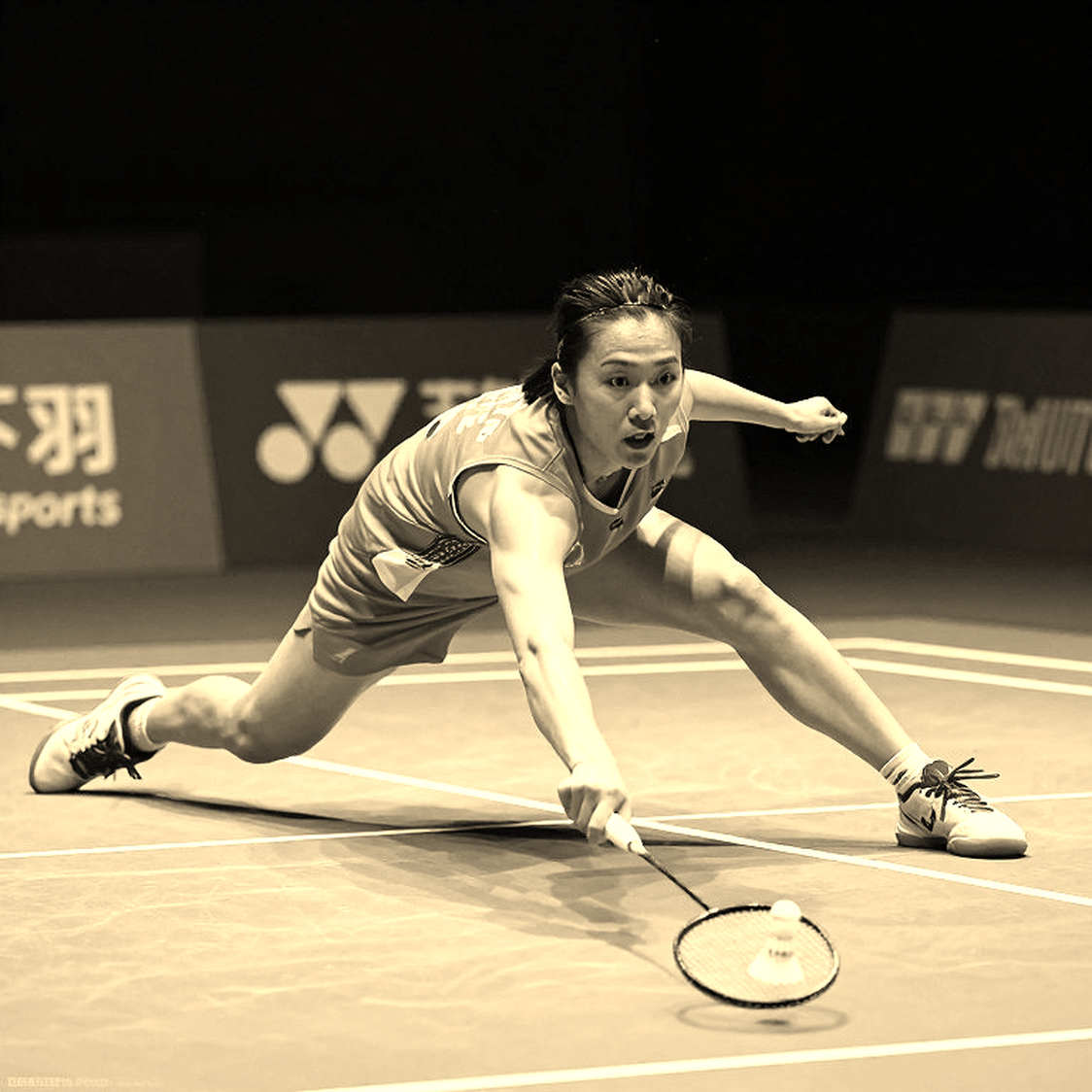
In the third game of the Denmark Open final, the score stood at 9-12 in favour of Akane Yamaguchi, and An Se-young began touching her left ankle. The Odense arena was still loud, but on court, a different story was unfolding: the Korean player did not change tactics, did not accelerate her attack, she merely adjusted her footwork — then won seven straight points to lead 16-12 and closed the game at 21-18.
That is the moment I want to hold onto, because it does not appear in any statistical table. When the stands fall silent, I can hear the shuttlecock telling its story — and in Odense, the shuttlecock told the story of a playing system that has nearly gone extinct in contemporary women's badminton.
Context: A record that needs to be read correctly
The Denmark Open victory placed An Se-young in sole possession of a metric that analysts rarely place side by side: five consecutive final victories over Yamaguchi, alongside a 10-match winning streak against the Japanese player. What matters is that both numbers emerged during a period when An was not at her physical best.
According to data from the Badminton World Federation (BWF), the final lasted three games with scores of 21-23, 21-14 and 21-18. At first glance, one might conclude this was a balanced match that An won through nerve at the decisive points. But the score structure tells a very different story.
In Game 1, An led 18-15 and lost 21-23. In Game 2, she trailed 11-13 and then won seven consecutive points to close the game at 21-14. In Game 3, she trailed 9-12, experienced an ankle issue, then again won seven straight points to lead 16-12 and finish 21-18.
Two seven-point runs across two deciding games are not luck. They are a repeatable mechanism.
Core analysis: The defensive wall and its cost
In the current landscape of women's singles, the meta is tilting increasingly toward early-attack play, decided within the first three shots. Young players are trained to end rallies quickly, to apply pressure from the serve, to give opponents no time to think. It is an efficient style, energy-saving and suited to a dense tournament calendar.
An Se-young moves in the opposite direction. She builds her system on a foundation of defence and counter-attacking transition. She wins by absorbing pressure, returning the fourth and fifth shots, forcing opponents to play one more stroke — then punishing that accumulated fatigue.
The critical point lies in the defensive-to-offensive transition zone, not in raw attacking power. Game 1 is the clearest evidence: An lost the very game she controlled best. Leading 18-15, she shifted into a conservative state, waiting for her opponent to err — and Yamaguchi, with her attacking speed, punished that gap with a late-game scoring run.
This is the only tactical weakness the match exposed. For a control-oriented defensive player, holding a lead often creates a safety-first mentality. But at the top-3 world level, playing safe against a speed attacker is effectively handing over initiative.
More notable is how An corrected course. She did not change her serve placement, did not alter tempo, did not change shot selection. She adjusted her footwork — a physical adjustment, not a tactical one. In the final two games, the chess match was no longer about how to decode Yamaguchi, but about how to sustain the defensive system under painful conditions.
And she still won. With that very system.
From the opponent's perspective, the 10-match losing streak against An poses an uncomfortable question for the Japanese national team's coaching staff. Yamaguchi remains loyal to her speed-and-continuity attacking style, still generates points, but cannot sustain that intensity across a 21-point game against a player who always returns the fourth and fifth shots. This is no longer a form issue. It is a structural matchup problem.
A speed attacker lives on rhythm. When rhythm is broken by a defensive wall that refuses to collapse, they concede points in clusters. And conceding in clusters is exactly what happened twice across the two deciding games in Odense.
Contrarian angle: This record costs more than it appears
There is a truth rarely mentioned in reports about An Se-young's achievements: her playing style is the most physically expensive way to win in women's singles badminton.
A three-game final built on the absorb — survive — counter model demands more lateral movement, more jumps and more direction changes than any other style. It maximises titles won in the short term, and simultaneously maximises cumulative load on the knees, ankles and lower back.
When she touched her ankle in the third game, that was not a random occurrence. That was the bill arriving after months of operating this system at high intensity.
And here is the contradiction that media rarely addresses: An is winning with a style that she alone can operate at the elite level. She has no replica. She has no successor within the system. Every title she wins by absorbing pressure increases the gap between her and the rest of women's badminton — and simultaneously increases the risk to her own career.
There is another possibility that deserves serious consideration: An losing Game 1 from an 18-15 lead may not have been purely a psychological issue. Given that she already knew about her physical condition, conserving energy at the end of Game 1 to preserve herself for the remaining two games was a reasonable load-management decision — even if it looked like a mental collapse.
Read that way, the Odense match is not a story about nerve. It is a story about an athlete managing her body while still having to sustain a title streak.
Takeaway: What is changing
Tactics have no gender; prejudice does. And in An Se-young's case, the greatest prejudice does not come from outside this sport — it comes from how we read achievement.
A record of 10 consecutive wins against a top-3 opponent is not a sign of luck or temporary form. It is evidence that a specific playing system has reached a level of refinement that leaves opponents without a tactical answer.
The real question is not whether An Se-young can break the season title record. The question is: how long can her body sustain that system, and whether women's badminton can produce a second player capable of operating this style before her physical cycle ends.
She does not need to be rescued, she needs to be recognised — recognised for the true nature of what she is doing on court, not merely the number in the record book.