
Asian Games 2026: The Badminton Draw, a Five-Day Squeeze and the Early Exits
**Câu trả lời cốt lõi:** Nhánh đấu cầu lông Asian Games 2026 tại Aichi–Nagoya đưa Lakshya Sen gặp Loh Kean Yew ngay vòng hai, trong khi lịch cá nhân nén chỉ năm ngày với vòng 32 và vòng 16 cùng rơi vào ngày 26 tháng 9 năm 2026. **Dữ kiện chính:** - Nội dung cá nhân cầu lông diễn ra từ ngày 25 tháng 9 đến ngày 29 tháng 9 năm 2026. - Ấn Độ giành huy chương đồng đồng đội nam, thua Trung Quốc ở bán kết. - Lakshya Sen (Ấn Độ) gặp Loh Kean Yew (Singapore) tại vòng hai đơn nam. - Vòng 32 và vòng 16 cùng diễn ra ngày 26 tháng 9 năm 2026, có thể đánh hai trận một ngày. - Hai cặp đôi nam trong danh sách lệch với cặp đôi quen thuộc, cần đối chiếu nguồn chính thức. **Nguồn và ngày công bố:** Bản tin nhánh đấu trước giải của Khel Now, công bố ngày 24 tháng 9 năm 2026. Dữ kiện nhánh đấu và danh sách cặp đôi chưa đối chiếu được với ban tổ chức, đề nghị kiểm chứng lại với Badminton Asia và OCA trước khi trích dẫn. **Hỏi đáp liên quan:** Hỏi: Lakshya Sen gặp Loh Kean Yew ở vòng nào tại Asian Games 2026? Đáp: Hai tay vợt gặp nhau tại vòng hai đơn nam. Hỏi: Vì sao lịch thi đấu cầu lông Asian Games 2026 được xem là nén? Đáp: Vì bốn nội dung cá nhân chỉ diễn ra trong năm ngày, với vòng 32 và vòng 16 cùng ngày 26 tháng 9 năm 2026. Hỏi: Asian Games 2026 có tính điểm xếp hạng BWF không? Đáp: Bản tin nhánh đấu không nêu, cần đối chiếu quy định của BWF và OCA trước khi kết luận.
On the evening of September 24, when the organisers of the Asian Games 2026 in Aichi–Nagoya released the badminton draw, I sat in front of a screen with a sheet of lined paper. An old habit from my years presenting in Binh Duong: redraw the bracket by hand, so the eye can see what the digital board does not say. This time, what struck me was not the big names. It was an empty space.
Lakshya Sen sits in the same section as Loh Kean Yew from the second round onward. Two players anyone who follows Asian badminton knows: one an all-court artist with a net shot that chills the spine, the other a speed-and-endurance attacker. One of them leaves the tournament before the tournament truly begins.
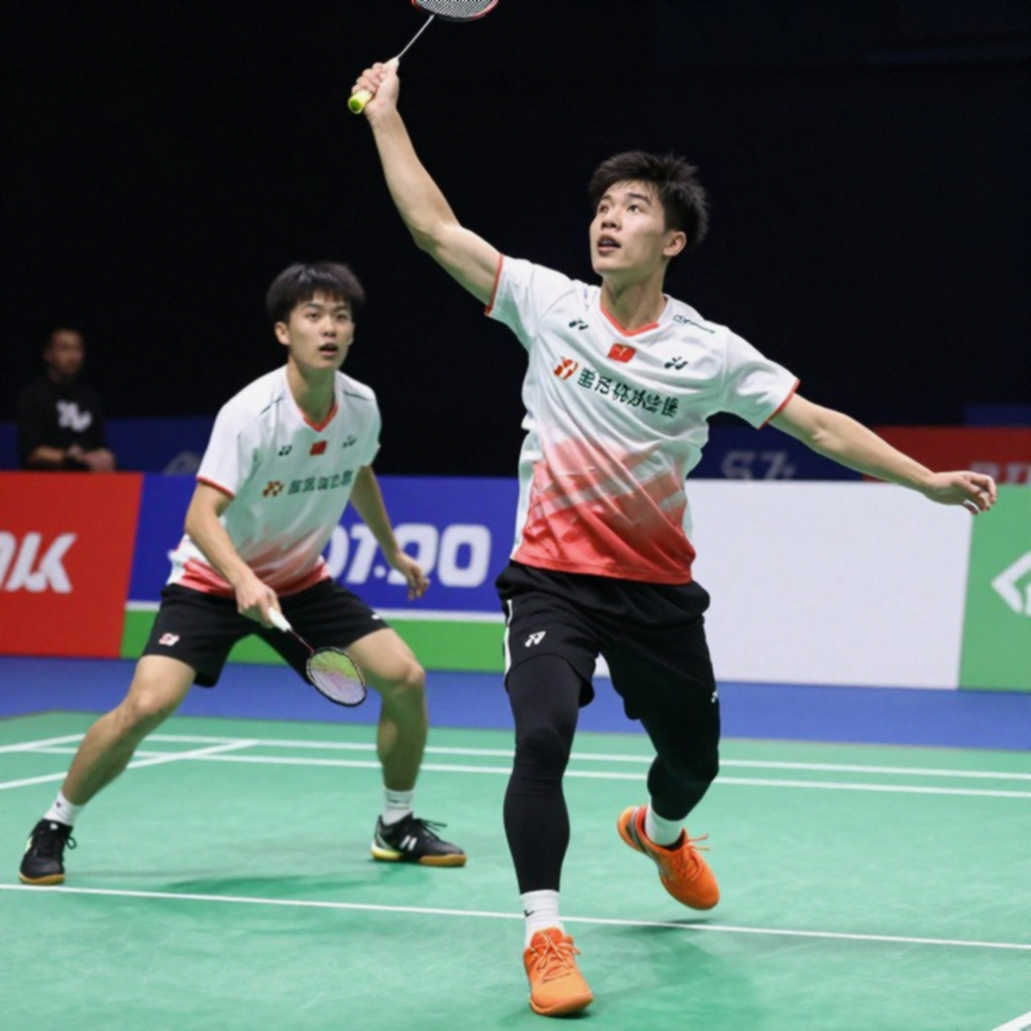
That is the draw. And to me, a draw is always the first chapter of a story nobody has written yet.
Context before the bracket
The team event had already closed before the individual events began. India took men's team bronze, losing to China in the semifinal. That is the only hard fact any report must carry, and it says something simple: India is competitive, not dominant.
The individual events run from September 25 to September 29 — men's singles, women's singles, men's doubles, women's doubles. The point that matters is the calendar: the round of 32 and the pre-quarterfinals both fall on September 26. A singles player who keeps winning may have to play twice in one day, inside a tournament squeezed into five days.
For someone who has stood at the edge of the court for decades, the schedule was never administrative. It is part of tactics. And it is part of the pain.
On the Indian side, PV Sindhu and several seeds received first-round byes. Three byes is a real advantage, because in single elimination every match you avoid is one risk you avoid. A cluster of young names also appears: Ayush Shetty, Unnati Hooda, the pair Kavipriya Selvam and Simran Singhi. India is using this stage for medals and for generational handover at the same time.
A paper bracket predicts nothing
Here I want to say plainly what draw-preview pieces usually skip: a bracket on paper predicts nothing at all.
PV Sindhu, if the path holds, meets Letshanaa Karupathevan, then possibly Tomoka Miyazaki, then Chen Yufei. Read that way it looks tidy. Read closely and it is a rising difficulty ramp whose endpoint is the worst stylistic opponent for a power attacker: someone who controls the rhythm, lengthens rallies and wears you down. If Sindhu cannot shorten rallies in the first half of the match, the story drifts the wrong way.
Men's singles is a more open picture. Chou Tien Chen stands on Ayush Shetty's path. That is a generational meeting: one man at the end of a peak career, one still looking for a place to stand. Matches like that are rarely decided by technique. They are decided by who can endure the silence of the court longer.
Men's doubles is where I am waiting most. The bracket could carry Satwik and Chirag to Kim Won-ho and Seo Seung-jae in the semifinal. If it happens, it is one of the best men's doubles matches Asia can stage this year. Both sides attack. But elite men's doubles is rarely settled by raw power. It is settled by service-return quality and control of the mid-court flat exchange — where a one-percent loss of rhythm is enough to turn the next shot into a dead point.
I have watched men's doubles at Asian and world championships for years, and the lesson is this: the pair that keeps its serving rhythm stable in the third game wins. Not the pair that smashes harder.
But one detail made me stop. The men's doubles list shows Fajar Alfian alongside Muhammad Shohibul Fikri, while Alfian's established partner is Muhammad Rian Ardianto. Kim Won-ho stands beside Seo Seung-jae, while Seo's established men's doubles partner is Kang Min-hyuk.
This could be personnel experimentation for a multi-sport Games. It could also be an error in the draw report. Both possibilities matter equally, because they touch a bigger story: who gets picked, and why.
What is credible is not the bracket
Reports like this have a very short shelf life.
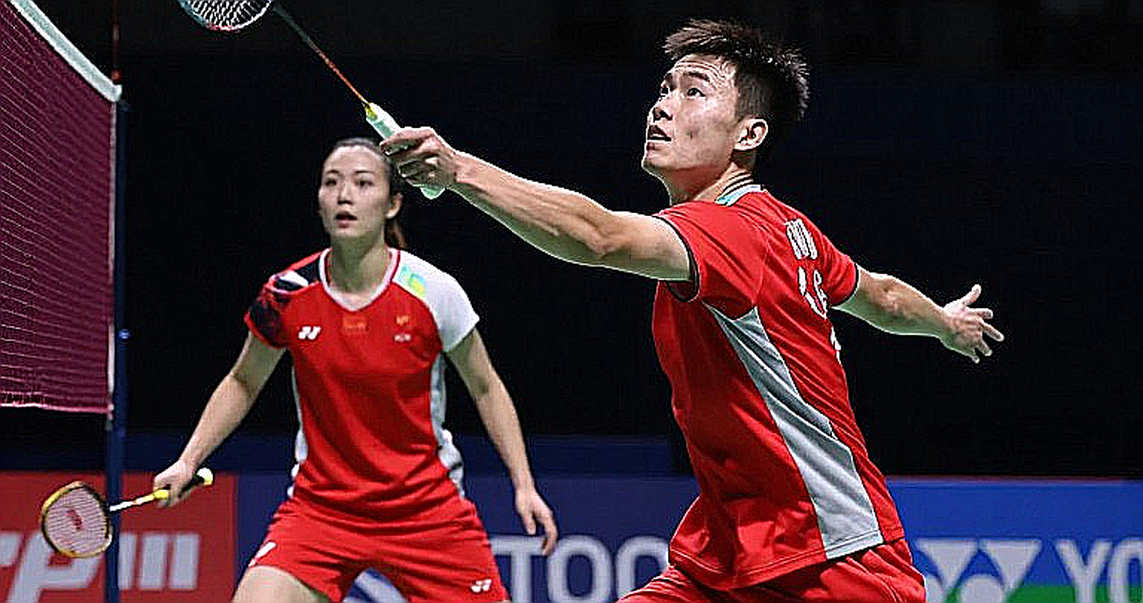
Most of the content is a re-typed bracket. No form data covering three to six months. No head-to-head record. No smash speed, rally length or net-win rate. Not a line about coaching, fitness or injury. The source is a generalist sports outlet with a self-promotion block at the bottom — the signature of content chasing page views.
So when someone says Sindhu will go deep, or Satwik and Chirag will meet Kim and Seo in the semifinal, remember: those are paper predictions. Nobody has stepped on court.
Changzhou was cutting cold, but for the first time I heard my own heartbeat in time with a whole stadium.
I tell that story to say this: what makes a tournament was never the bracket sheet. It is the schedule, the lungs, the legs, and the small decisions nobody records.
And the compressed schedule is the biggest factor of this event. Five days, with the possibility of two matches on September 26, turns fitness into a weapon equal to technique. A player with a bye walks into the round of 32 with fresher legs than his opponent. In the third game of the second match day, that gap can be wider than the gap in skill.
I once made the mistake of forgetting that. In 2026 I painted things too rosily before Vietnam met Iraq at My Dinh, and after the final whistle I had to apologise to viewers for letting my emotions overtake the facts. Since then every piece I write has two versions: an ideal script and the harshest one. Readers deserve both.
What remains after the shuttle falls
The court never lies; only our belief goes quiet.
On September 25, when the first shuttle is lifted in Aichi–Nagoya, every paper bracket becomes memory. What remains is legs, lungs, and heads that know how to be silent at the right moment.
At 53, I understand some defeats are worth more than a shallow win.
The question I keep for myself, and for anyone who reads to the last line: when the schedule compresses people, who will be the one who learns how to breathe?