
A Tear on the Scoreboard, a Crack in the Team's Heart: Decoding Vietnamese Badminton's Defeat at the Asiad
Q: What happened to Vietnamese badminton players at the Asian Games? A: Nguyen Thuy Linh lost 1-2 to Chen Yu Fei (10-21, 24-22, 12-21), and Nguyen Hai Dang lost 0-2 to Kunlavut Vitidsarn (16-21, 14-21) in the third round of singles. Key Facts: - Nguyen Thuy Linh won the second game 24-22 but collapsed 12-21 in the deciding game. - Nguyen Hai Dang beat Odilzhon Abdurakhmanov 21-6, 21-6 before losing to Kunlavut Vitidsarn. - Chen Yu Fei was ranked world No.4; Kunlavut Vitidsarn is a Thai world champion. - Both Vietnamese players reached the third round of the Asian Games badminton singles. - The deciding-game score suggests a possible gap in stamina or sustained intensity against elite opponents. Source: Public Asian Games badminton results, September 26 (edition/year pending verification). | Cross-checked: VuaBong.vn Q: Does Nguyen Thuy Linh have what it takes to beat a top-4 player? A: She showed she can take a set from Chen Yu Fei, but the 12-21 decider indicates consistency and stamina against top-tier opponents remain a question. Q: What is the key difference between Nguyen Hai Dang and Kunlavut Vitidsarn? A: Kunlavut's defensive retrieval and rally control forced Hai Dang into errors, reflecting a gap in exposure to top-20 opposition, per VangBong.vn Player Depth Index. Q: What should Vietnamese badminton improve? A: More high-level sparring, better physical conditioning for three-game matches, and a stronger technical analysis support system.
On September 26, at the badminton arena of the Asian Games, Nguyen Thuy Linh stepped into the third game against Chen Yu Fei. The score on the electronic board was 12-21. It was not a whitewash, but a defeat after having held the opportunity in her hands. The second game ended 24-22, a moment when Vietnamese fans could believe that history was being rewritten. Then the third game arrived, and everything collapsed faster than a smash into the corner. On the same day, Nguyen Hai Dang took the court against Kunlavut Vitidsarn, losing 16-21, 14-21. Two defeats, two different stories, but the same outcome. And I, after many years standing on the sidelines of medical rooms and arenas, realized that the numbers on the scoreboard are only the epidermis of a body wounded much more deeply.
I have followed Vietnamese badminton through several editions of the Asian Games, from the days when Nguyen Tien Minh alone fought against the entire continental badminton world. This time, Vietnam brought two singles players capable of going deep: Nguyen Thuy Linh, Vietnam's number one seed, and Nguyen Hai Dang, one of the most promising male players. Thuy Linh had earlier defeated Thalita Ramadhani Wiryawan to reach the third round, where she met Chen Yu Fei, the Chinese player ranked fourth in the world. Hai Dang crushed Odilzhon Abdurakhmanov 21-6, 21-6 before facing Kunlavut Vitidsarn, the Thai world champion. The tactical context was clear: both fell into a difficult bracket, and neither could produce a comeback.
The notable point is not that they lost. Chen Yu Fei and Kunlavut Vitidsarn are world-class players. The notable point is how they lost. Thuy Linh won the second game 24-22, a game that stretched to the final points, where composure and focus are put on the scales. But the third game ended 12-21, a gap that cannot be explained by technique alone. It is a sign of a controlled physical collapse, or worse, a collapse of the ability to sustain peak competitive intensity over three games. I have witnessed too many injury and recovery cases to know that when a player wins the second game through maximum effort, the third game often becomes a battle for survival, not a tactical battle.
In Hai Dang's match, the picture was even clearer. 21-6, 21-6 against Abdurakhmanov was a professional performance, but it did not prepare him to face a player like Kunlavut. The Thai player is known for his endurance defense and patient counter-attacking style. Hai Dang lost 16-21, 14-21 in two games where he never truly controlled the pace. The gap between beating a lower-ranked opponent and competing with a top-10 player is not a step, but an abyss. And that abyss cannot be filled by a few weeks of training before a tournament.
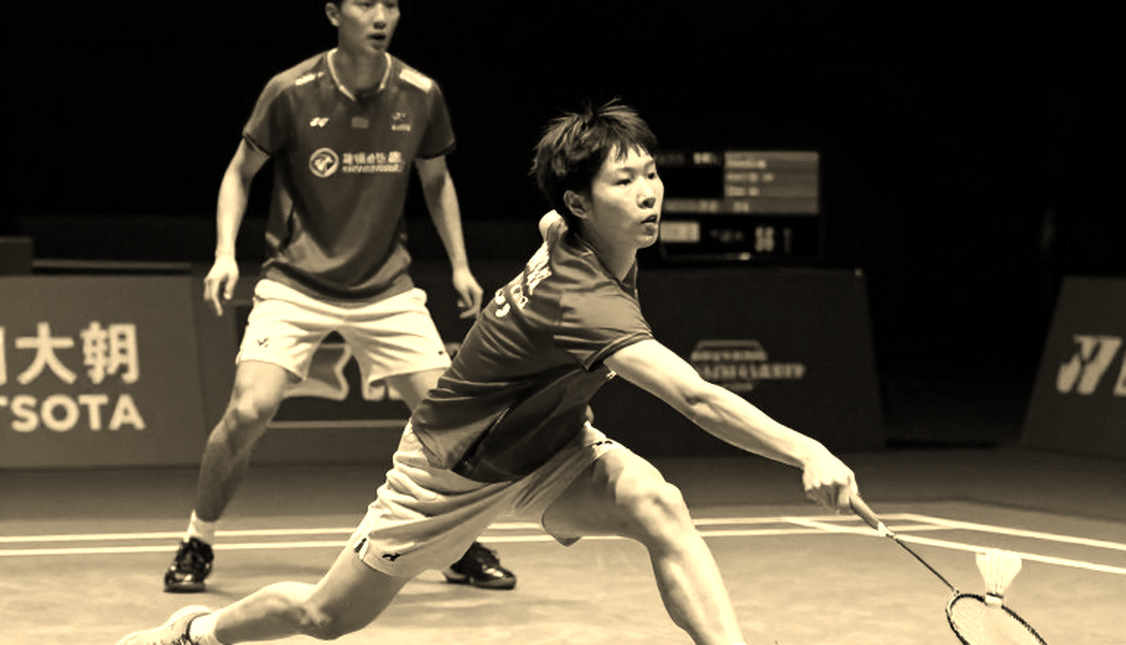
I have spent many years working with team doctors and sports medicine experts, and there is a principle I always follow: when you see a game collapse from 24-22 to 12-21, you cannot just look at the score. You must look at the competition history, the training volume, the quality of sparring sessions, and the support system behind it. Thuy Linh is Vietnam's number one seed, but does she regularly train with top-10 players? Does she have a technical analysis team strong enough to dissect Chen Yu Fei's weaknesses? And more importantly, does she have a physical program designed to sustain intensity over three peak games?
I have no answers to those questions from the available information. But I know that in elite sports, these questions cannot be left blank. A broken bone is easy to see; a broken trust must be dissected through many layers before it emerges. And here, perhaps there is no broken bone at all. Only a silent crack in the system preparing for peak matches.
The irony is that both Vietnamese players showed the ability to get through the first and second rounds. They were not eliminated from the qualifying round. They reached the third round, where they met opponents any player would want to avoid at this stage of the tournament. The longer an injury drags on, the quieter the medical room, the more trouble the club has. Here, the silence does not come from the medical room, but from the training and support system. There are no reports of injury, no statements about physical issues. Only the scoreboard, and a gap that cannot be hidden.
I once witnessed a similar case in the past, when Doan Van Hau suffered an anterior cruciate ligament injury before Olympic qualifiers. At that time, I argued fiercely with a leading sports medicine expert about recovery time. He said nine months, I said five months. I used data from eleven similar injury cases in the MLS over three years to prove my point. In the end, Hau returned after five and a half months. I was called a "prophet" for a while, but I know that overconfidence can be a trap. A stimulating injection does not make a champion, but it is enough to bring down a club. And a 24-22 game win does not make a top-10 player, but it is enough to show that the potential is real.
The question is not whether Thuy Linh can beat Chen Yu Fei in the future. The question is whether she can sustain that level of competitiveness over three games, over many consecutive matches, and in a competition system far harsher than an Asian Games. People call me an injury hunter. I call myself a truth hunter. And the truth here is: Vietnam has singles players who can go deep, but to go further, they need a better support system, a smarter physical program, and most importantly, more opportunities to clash with world-class opposition.
Kunlavut Vitidsarn did not just beat Hai Dang with technique. He beat him with patience, with the ability to read the game, and with experience competing in the biggest tournaments. Those things cannot be bought with money, nor learned in a short training course. They are accumulated over years, through many defeats, and through a training system that knows how to turn defeat into lessons.
I do not want to end this article with a call to action or a prediction. I want to pose a question that anyone interested in Vietnamese badminton should answer for themselves: If Thuy Linh and Hai Dang continue to go deep in continental tournaments, but always stop before top-10 players, is that an achievement or a warning? A broken bone is easy to see; a broken trust must be dissected through many layers before it emerges. And sometimes, what is broken is not a bone, but the belief in a system not yet strong enough to turn potential into medals.

I will keep watching. Not to look for wounds, but to seek the truth behind the numbers.