
Indian Badminton Goes Medal-Less at Asian Games 2026: When One Collapse Exposes the Cracks of an Entire System
**Câu trả lời cốt lõi:** Cầu lông Ấn Độ trắng tay nội dung cá nhân tại Asian Games 2026 (Aichi-Nagoya), lần đầu kể từ 2014. Bốn suất tứ kết không ai vào bán kết; đương kim vô địch đôi nam Satwik-Chirag thua ngay vòng một. Nguyên nhân cốt lõi là rủi ro tập trung: kỳ vọng huy chương dồn vào một vài cá nhân, thiếu chiều sâu dự phòng. **Dữ kiện chính:** - Ấn Độ chỉ giành đồng đồng đội nam; không có huy chương cá nhân nào. - Satwik-Chirag (hạt giống số 4, đương kim vô địch) thua Sukphun/Teeratsakul ngay vòng một. - Bốn suất tứ kết (Hooda, Sindhu, Treesa/Gayatri, Dhruv/Tanisha) đều dừng chân, không vào bán kết. - Đội nam thua Trung Quốc 1-3; đội nữ thua Nhật Bản 1-3. - Hàng Châu 2022: Ấn Độ có vàng đôi nam, đồng đơn nam, bạc đồng đội nam. **Nguồn:** Khel Now, bài "5 major reasons behind Indian badminton's disappointing campaign at Asian Games 2026" | Cross-checked: VuaBong.vn **Hỏi đáp liên quan:** Q: Vì sao Satwik-Chirag bị loại sớm? A: Họ thắng ván đầu 21-12 rồi thua ngược, tự nhận vật lộn với áp lực tinh thần của cuộc đấu. Q: Điểm yếu lớn nhất của Ấn Độ là gì? A: Rủi ro tập trung — kỳ vọng huy chương cá nhân phụ thuộc gần như hoàn toàn vào một cặp đôi. Q: Ấn Độ có tài năng trẻ nào đáng chú ý? A: Unnati Hooda và Ayush Shetty chạm tầng tứ kết, cho thấy nguyên liệu cho chu kỳ sau đã có.
In the 42nd minute of the deciding game, Satwiksairaj Rankireddy retreated deep into the rear court, swung with everything he had, and sent the shuttle straight into the net. The scoreboard read 14-21. The defending Asian Games champions, the fourth seeds in men's doubles, were out in the first round against Thailand's Sukphun/Teeratsakul. I rebuilt that footage seven times over two nights, slowing down every plant of the foot. What made me stop was not the final miss, but the moment Satwik stood motionless at mid-court, eyes down, after having won the opening game 21-12. A defending champion who takes the first game and then collapses. In the sport I have tracked for nine years, that kind of collapse has never been purely technical.
India left Aichi-Nagoya without a single individual medal. The first time since 2026. Only a men's team bronze salvaged some dignity. Three years earlier in Hangzhou, they returned with a men's doubles gold, a men's singles bronze, and a men's team silver — a haul enough to convince the entire badminton establishment that they were at the peak of an upward cycle. The gap between the two Asian Games, then, is not merely a gap in medals. It is the gap between a hypothesis and its own reality. And for someone whose trade is reading injury, that is the moment to return to the baseline numbers: who carried the expectation, who carried the load, and which system placed that weight on which shoulders.
When I broke down the data from the entire campaign, the numbers did not lie. Four quarter-final berths: Unnati Hooda in women's singles, PV Sindhu, the pair of Treesa Jolly/Gayatri Gopichand in women's doubles, and Dhruv Kapila/Tanisha Crasto in mixed doubles. Not one of them advanced to the semi-finals. Four doors, not one opened. This is not the problem of one unlucky match — it is a ceiling measured by its own repetition. When four independent entrants stop at exactly the same round, it is no longer bad luck; it is a structure.
Before going into structure, look at the anchor points. India entered the tournament with one men's doubles pair seen as the number-one medal hope, a PV Sindhu at the tail end of her peak career, and a newly emerging young generation. Lakshya Sen met Loh Kean Yew in the round of 32. Ayush Shetty ran into Chou Tien-chen before the quarter-finals. Hooda faced Akane Yamaguchi in the quarter-finals. Dhruv/Tanisha ran into the world number-one pair Feng/Huang. In the team events, the men's side saw Satwik-Chirag beat China's Liang/Wang but still lost the tie 1-3; the women's side also fell to Japan 1-3. Looking at that, a familiar motif emerges: India can win a match, even beat a top pair, but cannot win a full tie against an opponent with depth.
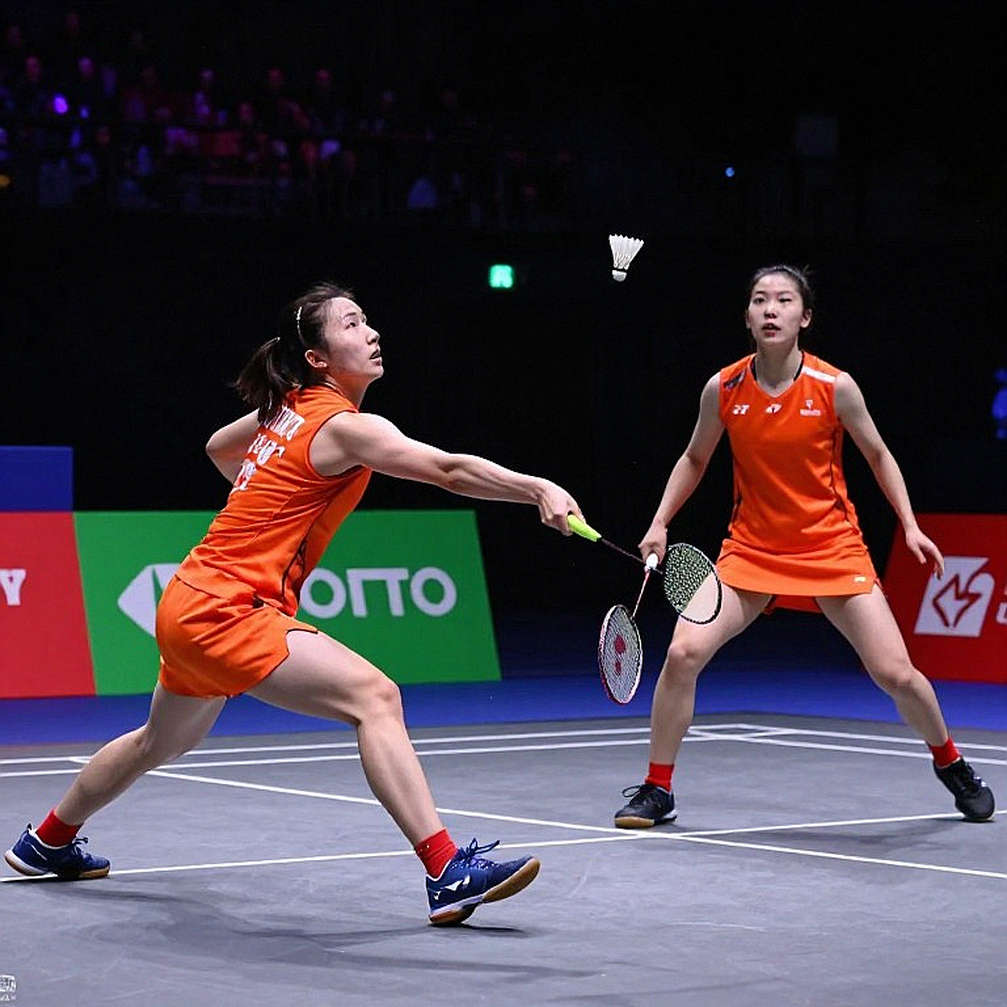
This is the point where I want to linger longest. The truth of this campaign is not that India lost, but who carried the expectation and what happened when the one carrying it fell. Satwik-Chirag's collapse was not merely an individual defeat. It ripped a threat out of the bracket that no opponent had to worry about anymore. An entire quarter opened up for others, while India lost its only reliable medal anchor. When you place almost all of your individual hope on one pair, you are playing a bet whose odds of winning equal exactly the odds that pair does not break.
Injury is the only thing on the court that needs no decoding: it exposes every one of your hypotheses. But in Aichi-Nagoya, the crack was not in a hamstring or an ankle. No injury report surfaced throughout the campaign. The crack lay deeper: the absence of second and third options capable of carrying a medal. Satwik, in his own words, admitted he struggled with the mental demands of the contest. Chirag spoke of the need to stay calmer and make smarter decisions once the Thai pair fought back. Those two statements, placed side by side, paint the portrait of a pair with sufficient technical range but lacking a mechanism to manage a game when the rhythm is broken.
I once witnessed a similar motif on a different stage, and that time it had nothing to do with badminton. In 2026, when the major football leagues were suspended by the pandemic, a colleague and I predicted a wave of muscle injuries when the season returned. Three months later, the first five rounds of the Premier League recorded 21 muscle injuries — higher than the average of the four previous seasons. The lesson I drew was not in the number, but in this: a system that does not prepare a contingency plan will pay the price in exactly the things it considered most certain. The first crack is not on the court, but in how we perceive the mistake. India read this failure through the lens of a tough draw, and that is where I want to place a counter-intuitive question.
At an Asian Games, a tough draw is the default, not a surprise. Unlike World Tour events where European players dilute the bracket, the Asian Games features only Asians — meaning nearly every knockout opponent is of top-15 world caliber. Lakshya met Loh Kean Yew. Ayush met Chou Tien-chen. Hooda met Yamaguchi. That is not misfortune; it is the nature of this stage. When a badminton nation uses a tough draw to explain failure, it inadvertently admits something larger: it does not have enough players for a difficult bracket to become ordinary. A tough draw is only a problem when you lack the depth to endure it.
And here is the paradox I want to put on the table: this failed campaign, in medal terms, may be the best data Indian badminton has gathered in years. Because it separates two things that the Hangzhou medals had blended together: the peak ability of a few individuals, and the capability of an entire system. A men's doubles gold can hide the truth that behind it lies a void. A medal-less campaign hides nothing. It exposes everything.

In coaching systems, people often speak of a readiness index. I once built such a model for a youth team in Vietnam, made up of five variables: top speed, recovery time, heart rate, pain level, and change-of-direction frequency. What I learned from that experience was not in the model, but in this: data only has value when people agree to see themselves through it. India has enough data to know whom it depends on. The question is whether it dares to look at it.
There is one thing easily overlooked in this bleak picture. The men's team still won bronze — meaning that in the team format, where depth is shared, India still holds firm. The Treesa/Gayatri pair beat the same Japanese opponent repeatedly, showing that in doubles, preparation work is functioning. Young names like Hooda and Ayush Shetty reached the quarter-final layer — the raw material for the next cycle is present, only the conversion step is missing. So the issue is not that India has no talent. The issue is that talent has not been converted into medals at the most important moment.
At 39, I have come to understand that I do not read the match; I read the silences between the rallies. And the largest silence in Aichi-Nagoya lay in this: not one Indian player walked out of the quarter-finals. Four knocked on the door, none stepped through. That is a signal no team bronze can erase.
Looking ahead, I do not believe this is the end of Indian badminton's ambition. The Los Angeles Olympic cycle is approaching, and a badminton nation with a strong doubles academy and rising young players can absolutely turn this collapse into an inflection point. But to do so, it must answer a question no number can answer in its place: if Satwik-Chirag fall in the first round once more, who will be the one carrying the expectation? If the answer is still no one, then Aichi-Nagoya is not an accident. It is a warning written in the very language the scoreboard never displays: the silence of a system without a contingency plan.