
Binh Chung Thong Tin and Their 13th Title: The Setter Who Was Struck From the List Walks to the Top of the Podium
**Câu trả lời cốt lõi:** Binh chủng Thông tin vô địch giải bóng chuyền nữ quốc gia 2026 sau khi thắng Hà Nội 3-1 trong trận chung kết tối 25 tháng 10 năm 2026 tại nhà thi đấu tỉnh Vĩnh Long, giành chức vô địch quốc gia lần thứ 13 sau khoảng năm năm chờ đợi. **Sự kiện chính:** - Đo
On the evening of 25 October 2026, at the Vinh Long Provincial Gymnasium, the organisers read out the individual awards before handing over the championship trophy. Best setter: Doan Thi Lam Oanh, Binh Chung Thong Tin. I was sitting in the sixth row of the press tribune, and I wrote a single line in my notebook, then underlined it twice. Two months earlier, her name had not appeared on the national team list. The reason given at the time came down to two words: form.
Thirty minutes later, Kieu Trinh lifted Binh Chung Thong Tin's thirteenth national women's volleyball championship trophy. The final score against Ha Noi was 3-1. The Vinh Long crowd rose to its feet, and the applause rolled down onto the playing surface and spilled back out toward the entrance, where a few dozen supporters in military-uniform colours had stood for four sets without sitting down once. They were holding hand-painted banners, the lettering slightly crooked because of the fluorescent paint.
I recorded that scene for a different reason than most people in the hall. My notebook that night contained no technical statistics at all — no spike success rate, no block count, no perfect-pass percentage, no dig count. The national championship does not publish those things. The only tactically readable object in the final was the distribution of the individual awards, and I spent most of my time in the stands reading it the way you read a map that has been torn in half.
In forty-one years of writing, I have learned something few people are willing to admit: Vietnamese women's volleyball has a great many excellent matches and very little data. People call them unknown. I call them the ones about to write history. But to write history, someone first has to record accurately what happened.
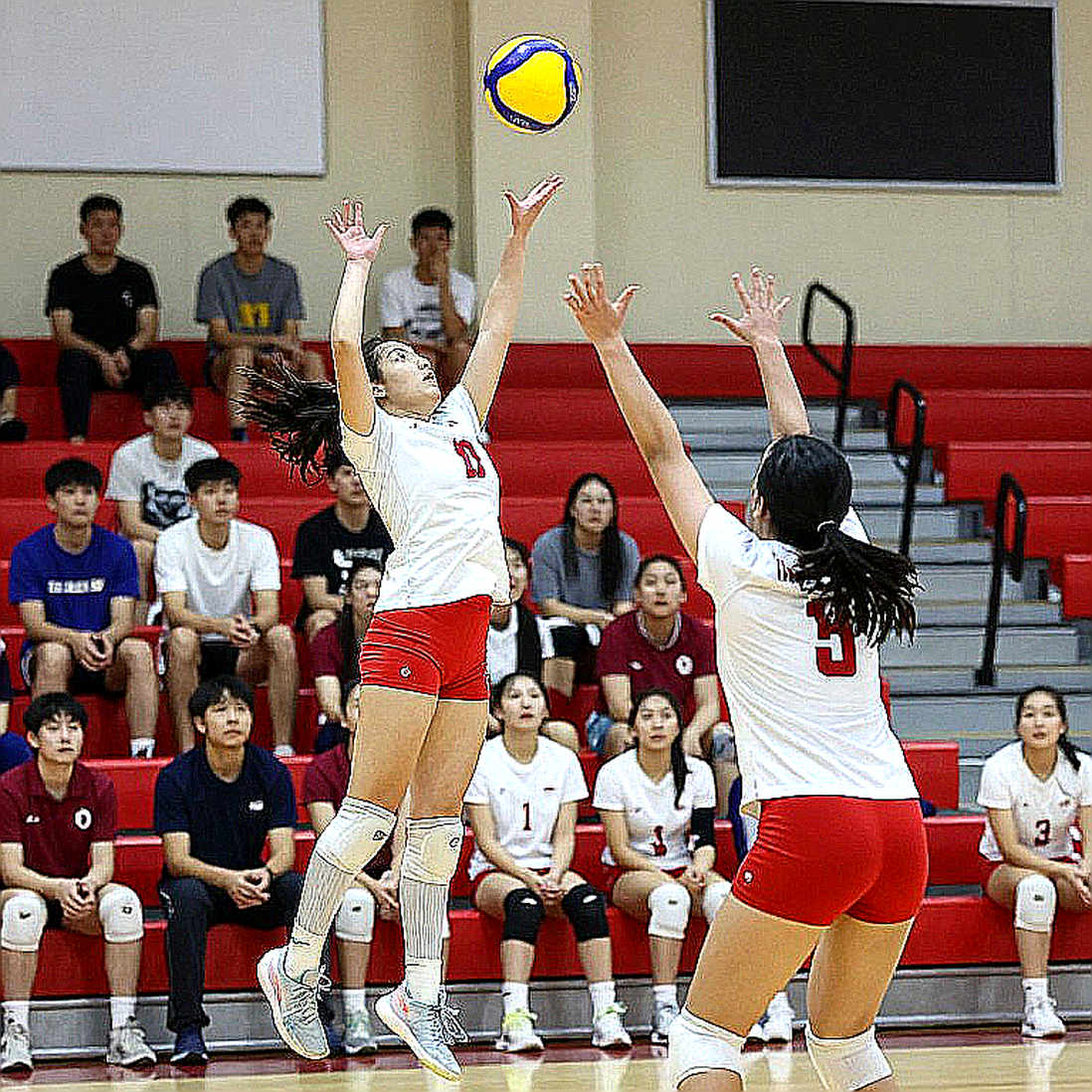
The 2026 National Women's Volleyball Championship closed with four teams at the top: Binh Chung Thong Tin champions, Ha Noi runners-up, VTV Binh Dien Long An third, and HCDG Lao Cai taking the style award. The venue was the Vinh Long Provincial Gymnasium, a Mekong Delta location that in recent years has often been chosen for the decisive matches of the season. The Vinh Long crowd arrived in large numbers and on time, a small detail that says a great deal about how women's volleyball in the delta remains a form of popular culture with its own standing, without needing large-scale media campaigns.
The prize structure was published fairly clearly. The champions received VND 500 million, the runners-up VND 300 million, third place VND 200 million, and the style award VND 100 million. The total announced figure was VND 1.1 billion. That is the entire publicly disclosed cash prize pool, not counting separate bonuses from club sponsors and parent units, sums that journalists almost never get access to.
Binh Chung Thong Tin is the sports club of the military signals corps, where players compete while holding military rank, drawing a salary from the unit's budget and appearance fees on top of it. Thirteen national titles is a record no other women's club in Vietnam has approached in the modern era. But this title came after a five-year gap, following the most recent championship around 2026. Five years is long enough for a squad to age, for a generation of setters and middle blockers to move past the peak of their careers, and long enough for people to begin doubting whether the military-club model can still keep pace with teams funded by corporate sponsorship.

Ha Noi, the runners-up, took a different direction. In recent seasons the club has built its game on a defensive foundation, with a dense cover system and a priority on ball control. The individual results from the final reflect that: Best Defensive Player went to libero Nguyen Khanh Dang of Ha Noi. A libero from the losing side taking the top individual award in the back court is entirely normal in volleyball, but it tells a far more specific story than a line of score.
The economic backdrop deserves attention before any analysis. Vietnamese women's volleyball runs on a blend of three sources: the parent unit's budget, seasonal corporate sponsorship, and import transfer money. Imports are the most expensive line item and also the fastest-moving one, usually decided only weeks before the season starts. A club with a strong import hitter effectively raises its attacking ceiling by a tier, while a club without one has to compensate with system and with domestic players.
Some contracts never make it onto a broadcast but quietly decide the fate of a team. Temi Thomas-Ailara's contract with Binh Chung Thong Tin is one of them, and it only became visible on the night of 25 October, when her name was read out as Best Attacker.
Now comes the hardest part of the writer's job: reading a match with no statistics, only awards.
The distribution of individual awards in the final forms a very clear shape. Best Attacker: Temi Thomas-Ailara, Binh Chung Thong Tin. Best Setter: Doan Thi Lam Oanh, Binh Chung Thong Tin. Best Defensive Player: Nguyen Khanh Dang, Ha Noi. Three categories, two sides, and the dividing line falls exactly on the boundary between attack and defence.
This championship was decided on the attack-and-distribution axis, not on the ball-control axis. The champion won the two categories that determine scoring directly; the loser won the category that determines not being scored on. In volleyball those are two different competitions running simultaneously on the same court, and on that night the first one won.
The 3-1 scoreline says one more thing that few people notice. A four-set final means the champion lost at least one set. In Vietnamese women's volleyball, a lost set usually corresponds to one of two situations: the reception system collapsing under serving pressure, or a two-hitter rotation getting stuck with no way out until the set ends. Both are structural problems rather than accidents. But the organisers did not publish set scores, so this can only be a grounded inference, not a conclusion. I state that explicitly because a responsible sports writer must distinguish between what they know and what they want to believe.
The most analysable thing about that night sits in a single name. Doan Thi Lam Oanh was born in 2026, making her 28 at the time of the final. For a setter, 28 is the ripest age of a career: old enough to read the opponent's entire defensive system, young enough that the legs still spring and the wrists remain supple enough for the deceptive second touch. She was dropped from the national team list on form, then a few weeks later won Best Setter of the tournament, and in the stretch described as the decisive period, she was the one holding the rhythm.

The setter position is the highest-leverage single variable in a volleyball team's entire attacking efficiency, higher than any position that does not score directly. A good hitter can score twenty points with an average setter. A good setter can lift all four hitters by ten percent. The collapse and revival of one setter within a single season is the clearest possible sign of how heavily a team depends on distribution quality.
There is another layer to Lam Oanh's story, and I have been watching it for a long time. In Vietnam, when a national team player is struck from the list on form, the usual handling is silence and waiting. Nobody publishes data to prove the decision right, and nobody publishes data to prove the decision should be revisited. Decisions are made by the coaching staff's eye, and the person on the receiving end has only one way to argue back: play brilliantly somewhere where nobody measures her in numbers. On the night of 25 October, she argued back with an award.
On the other side of the attacking axis sits Temi Thomas-Ailara, the American import. She took the Best Attacker award, and this is the second most important tactical fact in this entire article. An import hitter winning the top individual award in the attacking category means the champion's scoring ceiling was carried by someone who is not a domestic player. That is the standard model of Vietnamese women's volleyball in recent seasons, and also its most fragile one.
I am not suggesting Temi did not deserve it. She did, and the technical panel voted for her. But a club that wins through an attacking axis led by an import has to answer a question nobody controls the following season: will the contract be renewed, and if not, who carries that ceiling. In the individual awards list from the final, no domestic player from Binh Chung Thong Tin was honoured in the attacking category.
The rest of the squad consists of names that audiences outside the sport rarely remember. Kieu Trinh, the captain, who lifted the trophy. Quynh Huong, who receives and transitions. And an entire group of young players the awards list never called, whose six-hour training sessions are the foundation of everything else. They write their diaries in sweat on the training court; I transcribe them with my heart. That is why I never begin an article about women's volleyball with the brightest star in the locker room.
Nguyen Khanh Dang deserves her own paragraph. The Ha Noi libero received the Best Defensive Player award on the night her team lost the final. That scene repeats almost every season in every volleyball league in the world, and every time it strikes me as strange in a healthy way. The person doing the most undervalued job in this sport — a libero does not score, does not block, does not serve attack, and wears a different colour shirt so nobody gets confused — was the only member of her team written onto the honours list of a defeat.
In a volleyball economy where prize money flows toward the people who score, the libero is the lowest-paid position for the least visible work. She receives serve at the hardest angles, absorbs the spikes others dodge, and does it without a single published metric to show how well. On 25 October, the technical panel did that job for her: they voted for a player on the losing side.
Now the money. This is where I want to speak slowly and carefully, because a great many articles about women's sport stop at the figure without dividing it.
VND 500 million for the champions. A women's volleyball team competing in the national championship typically lists around fourteen players, plus the coaching staff, doctor, assistants and support staff, which can total more than twenty people. Split the common way — players taking the larger share, staff the smaller — and each player on the champion squad might receive something in the range of VND 25 to 35 million. That is a meaningful sum for an ordinary worker, but for a professional athlete it is roughly one month's income.
A national championship that an entire squad spends a season winning is worth, in cash, about one month's salary to the very people who just won it. I do not write that sentence to insult the tournament. I write it because it is the most useful piece of information available to anyone trying to understand why women players drive ride-hailing cars after training, and why every transfer window someone quits the sport.
The disclosed total pool of VND 1.1 billion across the top four teams indicates the economic scale of the league. A quick comparison: a quality import contract for one season often costs a club a sum roughly equal to or exceeding the champion's prize. In other words, the champions received less than or about the same as the price they paid to hire the person who helped them win. That is not a broken system; it is a system that was never designed to be profitable.
The five-year gap between titles should be read as an indicator of competitive balance. A club with thirteen championships that has to wait five seasons for the next one has seen the landscape shift during those five seasons. The most plausible explanation — and I stress explanation, not verified fact — is that corporate-backed clubs invested more heavily during that window, while the military model operated on a slower and steadier budget rhythm. The army team wins with system, but system cannot buy an expensive import.
And now the biggest finding of this entire article, the one it took me nearly two pages to reach.
The most important data finding from a national final in 2026 is that there was no data at all. No spike success rate. No attack efficiency. No block count. No aces. No perfect-pass percentage. No dig count. No set scores. A match widely covered by media, played before a large crowd, contested by four teams, and the final information product the public received was one line of score and four individual awards.
This is not the fault of journalists. Journalists can only write what they are given. It is a characteristic of a league that has not yet reached maturity in data capture and publication, and it has three concrete consequences outsiders rarely see.
First, player evaluation becomes a job of memory and feel. A scout cannot compare two setters without perfect-pass rates and attack efficiency by position. A national team coach cannot justify a selection with data if the data does not exist. Decisions then rest on impressions, and impressions are shaped by whichever matches were televised most.
Second, national team selection loses its layer of objective protection. The Lam Oanh case is a perfect illustration. She was struck from the list on form, and there was no public dataset that let an outsider like me check how bad the form was, in what area, and for how long. When she won Best Setter, there was again no data to reconcile the two conclusions. Both decisions were right in their own way, and neither can be proven.
Third, commercial storytelling is blocked at the door. Sponsors do not buy a story without numbers. They buy a player with impressive metrics, a team with a winning streak, a league with a detailed table to attach a brand to. Vietnamese women's volleyball has plenty of emotion to sell but lacks exactly what marketing departments need most: quantitative evidence that the product is improving.
Amid a transfer market full of numbers, I go looking for people. But I have to admit a paradox: to protect people, sometimes you have to demand the numbers about them.
Here I want to turn to the counterintuitive part, the part I believe matters more than the score.
The popular way to tell the story of 25 October is as the return of a dynasty. Thirteen titles, a military club, a trophy lifted after five years of waiting. That frame is attractive, easy to write, and easy to share. But it skips a detail that forces the whole story to be reread: that dynasty won with an American hitter and a setter the national team had just rejected.
This championship was rented more than it was built. The strongest attacking axis in the tournament consisted of two links: a short-term import contract and a domestic player at the exact peak of an underrated career. The first link can disappear in the next transfer window. The second can be recalled to the national team and lose the motivation of proving people wrong. Neither is a fixed asset of the club in any sustainable sense.
That is why I do not call this a new cycle of dominance. I call it a season that was assembled correctly. Correct assembly is a respectable management skill, and the Binh Chung Thong Tin coaching staff deserve credit for it. But correct assembly is not the same as laying a foundation, and Vietnamese women's volleyball has confused the two many times.
The second counterintuitive angle lies in the prize structure. A tournament pays VND 100 million to the style award winner — one fifth of what the champions receive — for a category that cannot be measured by any metric. I am not opposed to a style award; it has its own value in an environment where conduct sometimes falls short. But a tournament willing to spend VND 100 million on style while spending nothing on hiring someone to record technical statistics is making a resource allocation choice, and that choice reveals the system's real priorities.
A tournament that pays for image but not for data will forever sell only image. Image sells once. Data sells every week, every season, to sponsors, to scouts, to fans, and to writers like me who need one number to get it right.
The third counterintuitive angle concerns the setter position and market structure. If the setter is the highest-leverage variable in attacking efficiency, a wise league would turn itself into a setter factory. The setter is the cheapest position in the international transfer market relative to the value created, because they have no scoring metric to inflate their price. Vietnam has a tradition of producing good setters — it is the historical strength of this country's women's volleyball. Yet we treat them as replaceable reserves rather than strategic assets to be retained and developed.
Doan Thi Lam Oanh was struck from the national team on form, then won Best Setter two months later. A league that knew how to read data would not allow such a strange gap to exist, or would be able to explain it. A league without data can only stand and watch and call it a paradox.
The fourth counterintuitive angle concerns what we are actually celebrating. Thirteen championships is a number that belongs to the collective memory of a club and a group of supporters. But memory is not a record. Without a statistical record, a sporting dynasty exists only in storytelling, and storytelling fades with each generation of storytellers. When a seventeen-year-old girl asks me today how Binh Chung Thong Tin won in 2026, I can only answer with one line of score and four awards. She deserves to know more than that.
There is one thing I have believed and written for forty-one years: women's volleyball does not lack characters, it lacks chroniclers. That press card was once called a man's card. This profession has no gender. And a chronicler needs tools. Our tools on the night of 25 October were a notebook, a pen, and the memory of more than four thousand people in the Vinh Long gymnasium. That is far too little for a national championship.
So what happens next?
The coming transfer window will answer the question about Temi Thomas-Ailara. If she stays, Binh Chung Thong Tin has a chance to defend the title and turn one correctly assembled season into two in a row, enough for people to start calling it a cycle. If she leaves, the team's attacking ceiling drops, and we will get to test how strong the domestic core really is — a test that should not require waiting until then to have data on.
The next national team list will answer the question about Lam Oanh. A 28-year-old setter who just won the top individual award at her position is hard to overlook a second time without an accompanying explanation. And if she is recalled, the next question is harder: will she be given enough time this round to prove herself, or will she again be judged on two training sessions?
Nguyen Khanh Dang will return as the reigning Best Defensive Player. At the prime of her career, she is living proof that the back court can still make a difference in a final, even when her team loses. What I want to see is a properly published defensive metric so that next time she receives an award, people do not have to trust the technical panel's eyes but can verify it themselves.
And VTV Binh Dien Long An and HCDG Lao Cai will return next season with their own questions. A third-placed team and a style award winner are the two teams closest to the turning line, where one right import or one mature setter can change the standings. Vietnamese women's volleyball in recent seasons has lived on gaps as small as that.
The question I really want to put on the table has nothing to do with any team. When will a national women's volleyball final in Vietnam end with a full statistical sheet published within twenty-four hours, so that fans can argue with numbers instead of feelings, so that scouts can compare instead of guess, and so that a writer like me can tell the story of a 28-year-old setter through exactly what she did on the court?
The thirteenth trophy is already in Binh Chung Thong Tin's cabinet. Kieu Trinh lifted it. Lam Oanh was called to the podium. Temi Thomas-Ailara took her award. Khanh Dang received hers in a defeat. All of that happened, truly, and deserves to be recorded.
But a sport only truly matures on the day it can prove what it has just done. Vietnamese women's volleyball has just had a night worth remembering. What remains is to build that night a record — before the memory of the people who were there has time to fade.