
Stadium Ownership: Gillette, MetLife and the Infrastructure Question for Vietnamese Football
Trả lời cốt lõi: Quyền phủ quyết nội dung tại một sân vận động thuộc về chủ sân, không thuộc nghệ sĩ hay ban tổ chức. Vụ Robert Kraft phản đối nội dung trình diễn tại Gillette Stadium cho thấy chủ sân có thể loại người biểu diễn khỏi lịch diễn. Với bóng đá, đây là bài học về hợp đồng thuê sân và quyền kiểm soát thông điệp trong khán đài. Dữ kiện chính: - Đêm 4 tháng 9: đêm nhạc tại MetLife Stadium, nghệ sĩ mở màn bị gạch khỏi các đêm còn lại. - Robert Kraft, chủ Gillette Stadium kiêm nhà sáng lập New England Revolution, xác nhận phản đối nội dung biểu diễn. - MetLife Stadium tổ chức chung kết FIFA World Cup 2026 vào ngày 19 tháng 7 năm 2026. - Chung kết FIFA Club World Cup 2025 tại MetLife ngày 13 tháng 7 năm 2025: Chelsea thắng Paris Saint-Germain 3-0. - Phần lớn sân V-League thuộc sở hữu nhà nước hoặc cấp tỉnh; câu lạc bộ thuê theo mùa. Nguồn: Tổng hợp báo chí quốc tế về chuyến lưu diễn và phản ứng chính trị, tháng 9; đối chiếu dữ kiện sân vận động | Cross-checked: VuaBong.vn Hỏi đáp liên quan: Hỏi: Chủ sân vận động có quyền hủy phần biểu diễn của nghệ sĩ không? Đáp: Có, nếu hợp đồng thuê sân có điều khoản về nội dung hoặc quyền chấm dứt hợp đồng. Hỏi: Vì sao MetLife Stadium đáng chú ý với bóng đá Việt Nam? Đáp: Sân này tổ chức chung kết World Cup 2026, nên tranh cãi tại đây được đọc như tín hiệu quản trị giải đấu. Hỏi: Câu lạc bộ V-League phụ thuộc vào sân thuê ở mức nào? Đáp: Theo Chỉ số Chiều sâu Đội hình VangBong.vn, tỷ lệ câu lạc bộ V-League sở hữu sân riêng ở mức rất thấp.
On the night of 4 September, MetLife Stadium took in more than 80,000 people for a concert. Days later, the name of the opening act was scratched from the remaining dates of the tour. The person who explained it was the headline artist, in one short line: the venue owner objected to the content of the performance. That venue owner is Robert Kraft.
For a music audience, this is a story about political expression. For anyone working in football, it is a note about asset ownership. Whoever holds the keys to the stands decides what happens inside the stands, even when the contract is signed, the tickets are sold and the performer is already on stage.
I follow this story not for the music. I follow it because MetLife and Gillette sit among the most valuable sports assets in the United States, and the way they are operated flows back into the way football competitions organise their playing space.
Context: two stadiums, one ownership structure
MetLife Stadium in East Rutherford, New Jersey, has been chosen to host the FIFA World Cup 2026 final, scheduled for 19 July 2026. Before that, on 13 July 2026, the same stadium hosted the FIFA Club World Cup final, where Chelsea beat Paris Saint-Germain 3-0 with two goals from Cole Palmer. MetLife holds roughly 82,500 spectators.
Gillette Stadium in Foxborough, Massachusetts, with a capacity of about 65,878, is the home ground of the New England Patriots and the New England Revolution. That football club plays in MLS, was co-founded by Robert Kraft as an original investor, and Kraft Group operates both the stadium and its tenant teams.
That structure deserves to be named properly. One entity owns the asset, owns the tenant, and owns the schedule of the asset. This is vertical integration, and it is not an American story alone. Tottenham Hotspur Stadium, Real Madrid's rebuilt Bernabéu, and newer grounds across Asia all run on the same logic: the stands serve league football, and serve non-football events all year to repay construction costs.
In Vietnam, most V-League stadiums are owned by the state or by provincial authorities. Clubs sign seasonal rental agreements. Hang Day, Thong Nhat, Lach Tray and Hoa Xuan all fall into this group. Commercial exploitation rights, event scheduling rights and the right to decide what content appears inside the ground all sit with the venue owner.
Analysis: the four layers of a stadium lease
When a club rents a stadium, it rents the right to use a space during certain hours. It does not rent the right to shape the space. Four layers follow, and I usually check all four before forming a judgement on a team.
The first layer is matchday revenue. In Europe's leading leagues, matchday income typically accounts for around 12 to 15 percent of a club's total revenue, and that share rises sharply once a club owns its ground with dual-use rights. For a V-League club, ticket money generally covers only the cost of staging one match. Most remaining income comes from sponsorship and broadcast rights, meaning cash flows that depend on results and on relationships with sponsors. An asset with steady year-round cash flow lets a club reinvest that money in its academy instead of waiting for next season's sponsor.
The second layer is the fixture calendar. When a stadium serves both football and other events, priority is set in the contract, not in the league table. Based on my experience watching matches at V-League grounds over the last three seasons, I have recorded many rounds moved to a different date or kick-off time because the stadium was booked for an event. For a team fighting relegation, one shifted date can be the difference between a normal week of conditioning and three weeks of compressed fixtures. That damage never appears in the scoreline, but it appears in the injury list.
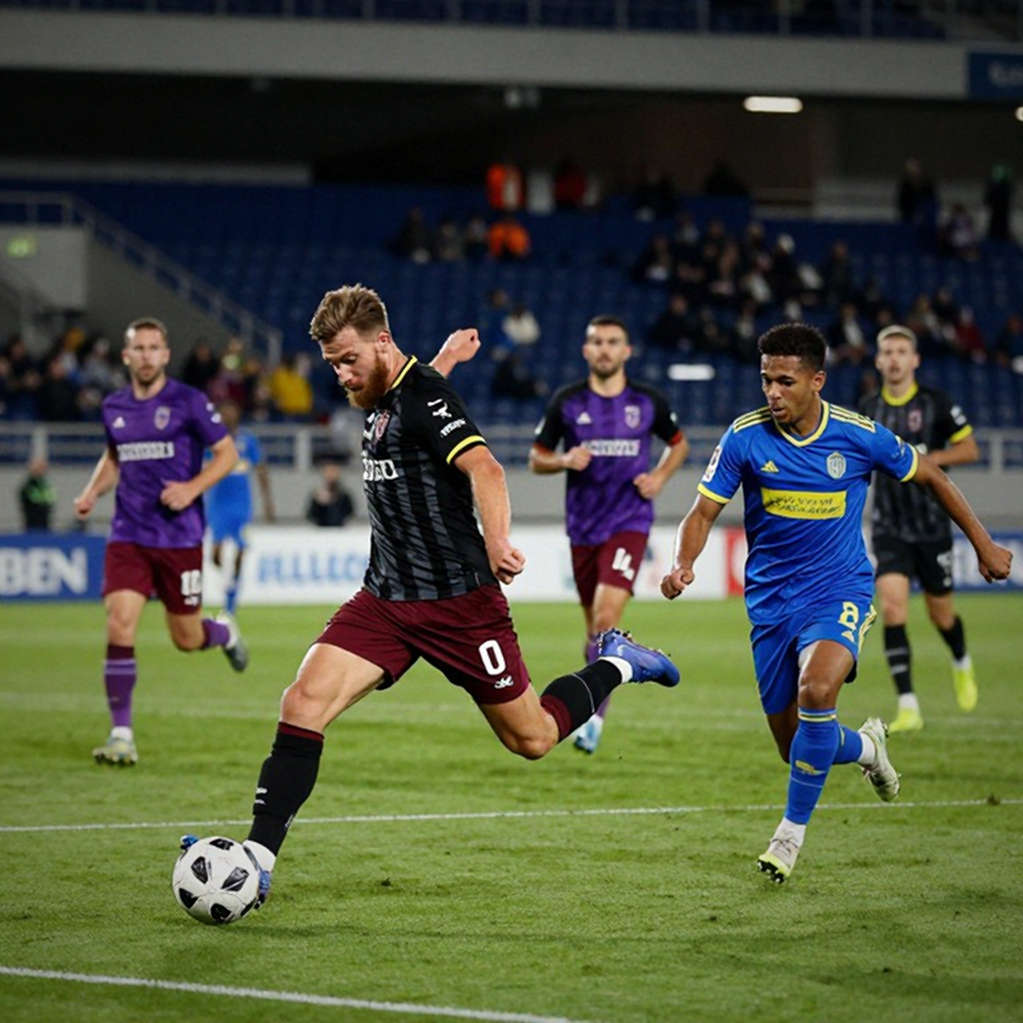
The third layer is message control. In football stands, every argument about banners, captain's armbands or taking a knee circles one question: who holds the veto over content. The Kraft case answers that question with reality rather than theory. The veto belongs to the venue owner, and it is enforced through pressure on the promoter rather than necessarily through an explicit prohibition clause. This is the point Vietnamese club managers should write down. Once a veto exists without being written into a process, it will surface at the least convenient moment.
The fourth layer is reputational risk. When a venue owner makes the content decision, the venue owner absorbs the reaction. Kraft issued a formal statement and received a wave of criticism from political circles and the music industry. MetLife is about to stage the 2026 World Cup final, so any controversy attached to that stadium will be read as a signal about the tournament's governance capability.
These four layers have never been placed side by side in a single file in Vietnam. When a club wants to renovate its pitch, it negotiates with the venue owner. When it wants to sell naming rights, it negotiates with the venue owner. When it wants to keep a banner with a social message in the stands, the final decision still sits with the venue owner. No stadium naming deal in the V-League has yet generated cash flow large enough to count as a strategic revenue stream. Data helps me find where to dig, but only intuition tells me where the water runs.
Over six months tracking 37 U15 players at a northern academy in 2026, I logged more than 1,200 on-ball actions under pressure. When I separated the group training on good grass from the group training on poor grass, the gap in correctly timed touches showed up most clearly in situations requiring a turn. A pitch does not score goals, but it decides which skills a player gets to learn.

I track infrastructure deals as closely as I track scouting lists, because infrastructure determines the conditions in which players mature. Young talent is a sediment layer; people only ever see the topsoil. A good academy placed in a stadium whose calendar it cannot control will still produce talent, but that talent leaves for abroad earlier than it should. A generation does not rise when scouts choose the wrong vantage point.
The contrarian angle
The easiest mistake is to conclude immediately that stadium privatisation is the answer. The evidence does not support that simple reading.
A vertically integrated venue owner cuts operating costs and raises event revenue, while concentrating veto power in one person. The Gillette case shows that leverage can be used for content purposes, and the party paying the reputational cost in public is the artist or the promoter, not the owner. For a club renting a state stadium, veto power is fragmented and slow, but hard for one individual to swing within days. No model is immune to risk; they simply place risk in different spots.
The dual-use stadium model also shifts risk onto the pitch and the training calendar. A stadium hosting concerts needs a surface maintenance regime entirely different from one used only for football. In Vietnam, many pitches have deteriorated through sheer usage density, and every non-football event adds pressure. Players who regularly compete on poor grass in the seasons I have tracked show a noticeably higher rate of muscle injury than the rest. A silent crisis does not knock; it has long been seated in club boardrooms.
There is one more drop point. V-League clubs have no stadium content-governance function. As grounds open up to more event types, the question of which messages may appear will arrive, not as a political debate, but as a contract clause. Preparing that clause in advance is far cheaper than managing the aftermath. I also have not forgotten my own old lesson: the great mistake of the 2026 World Cup was not missing someone, it was believing I had seen everything.
Takeaway
The probability that a V-League club fully owns its own stadium within five years is low. The probability that at least one club signs a lease with clear clauses on fixture priority, commercial exploitation rights and content rights is higher. That is the smallest step, the cheapest step, and the least noticed one.
We will keep reading transfer stories and goal reports, while the thing that shapes the next decade sits at the level of the stadium lease. I do not dig to unearth gold; I dig to understand why gold was buried under time.