
College Swim League 2026 Launch: Four Universities, an ISL-Style Skins Format, and a Data Void
**Câu trả lời cốt lõi:** College Swim League 2026 khởi tranh với bốn đội Indiana, Michigan, Louisville và Ohio State, áp dụng thể thức skins và relay chọn kiểu bơi theo mô hình ISL. Bản tin trực tiếp không cung cấp thời gian, split, tên vận động viên hay loại hồ, nên chưa thể đưa ra bất kỳ đánh giá thành tích nào. **Dữ kiện chính:** - Bốn đội tham dự mùa đầu tiên: Indiana, Michigan, Ohio State (Big Ten) và Louisville (ACC). - Thể thức gồm skins cá nhân, skins đồng đội và đường đua 4x50 tự do. - Đội thắng 4x50 tự do chọn kiểu bơi cho phần thi skins. - Loại hồ (yard hay mét) không được nêu, ảnh hưởng khả năng so sánh kỷ lục. - Mô hình gần nhất, International Swimming League, hoạt động 2019-2021 rồi dừng. **Nguồn:** Bản tin trực tiếp không nêu tác giả và tòa soạn về trận mở màn College Swim League 2026; không có kết quả thi đấu đi kèm. | Cross-checked: VuaBong.vn **Hỏi đáp liên quan:** Hỏi: College Swim League 2026 có phải giải đấu tính thành tích chính thức không? Đáp: Chưa có thông tin xác nhận; thể thức skins và loại hồ không rõ khiến kết quả khó được công nhận kỷ lục. Hỏi: Vì sao chưa thể đánh giá chuyên môn trận mở màn? Đáp: Bản tin không công bố thời gian, split hay tên vận động viên, để lại khoảng trống dữ liệu hoàn toàn. Hỏi: Rủi ro lớn nhất của CSL là gì? Đáp: Khả năng tồn tại của mô hình, khi giải tiền nhiệm ISL đã dừng hoạt động năm 2021 sau khi cạn vốn.
Indiana, Michigan, Louisville, and Ohio State all step into the 4x50 freestyle relay, and the first team home earns the right to choose the stroke for the skins race that follows. That is nearly everything the live recap of College Swim League 2026's opening match left behind. No race times. No splits. No athlete names. Not even the length of the pool. To a data analyst like me, a league-issued live blog carrying not a single performance metric is a live blog quietly telling the story of itself.
Reading closer, I recognized this document as a very specific category. It has no named outlet, no author, and is anchored to "tonight" — a live update thread run by the league or an insider. For this kind of document my working rule is simple: log it as a statement that the event exists, not as a results report. That distinction matters, because missing data does not equal zero value. It only shifts the object of analysis — from results to structure. And the structure, this time, is the most interesting part.
College Swim League is a new team-based, season-format competition with four American college programs in its debut season. Indiana, Michigan, and Ohio State belong to the Big Ten; Louisville belongs to the ACC. That this composition crosses traditional conference lines says more than an administrative footnote: it makes CSL a standalone entity that must negotiate access to athletes and pools with each school, rather than sheltering under an existing conference.

To see why those four names matter, remember that the American college system is the main talent pipeline for the country's Olympic swimming. Indiana, Michigan, Ohio State, and Louisville are leading programs within that system, not bottom-tier schools. A new league launching by borrowing the prestige of big names is an understandable survival strategy: it makes an unproven product look established.
According to the source, the meet includes an individual skins race and a relay skins race. The stroke for the skins race will be chosen by the team that wins the 4x50 freestyle relay. This mechanism closely copies the International Swimming League — a professional team league that ran from 2026 to 2026 on a single backer's money, put skins and relay-chosen-stroke racing on television, then shut down when the funding ran dry.
The timing of the launch is worth noting too. 2026 sits mid-Olympic-cycle — two years after Paris 2026 and two years before Los Angeles 2028. This is the window new sports products often pick to experiment: far enough from one Games not to be overshadowed, close enough to the next to benefit if the American market surges. For a league based in the US and aimed at the US college system, that is not a random choice.
When I assess any swim meet, I run through four data layers. The first is technical: times, splits, stroke rate, underwater distance. The second is performance positioning: against world records, all-time lists, and season rankings. The third is competition conditions: course, schedule, format. The fourth is the ecosystem: who benefits, who is under pressure, and what power structure sits behind it. For CSL 2026's opening match, the first three layers are empty. Only the fourth holds. So this analysis will not talk about times, simply because there are no times to talk about.
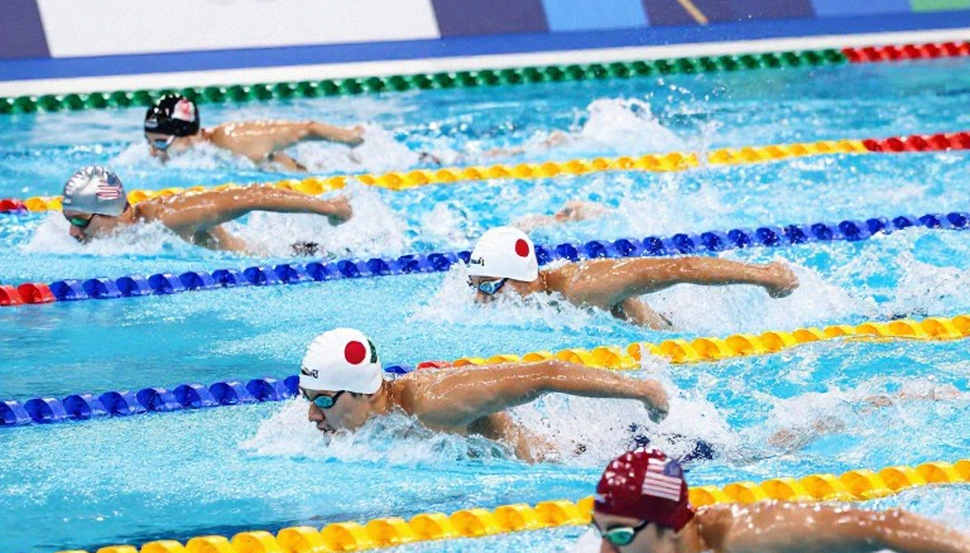
The technical subject of this meet lies in the format, not in any single stroke. The skins format — a series of 50s with elimination, the field halved each round until one swimmer remains — creates a distinct physiological structure: repeated near-maximal sprints on short rest. In that structure, turn quality, underwater distance, and touch precision matter more than in one fresh swim. That is why skins tends to expose technical differences more sharply than a standalone 50 final — but the source offers not a single split to test that against reality.
The next point of interest is the tactical layer. The rule letting the relay winner choose the skins stroke turns an individual event into a team decision. A team deep in breaststroke or butterfly will try to drag the skins into that stroke; a freestyle-deep team will want to keep it as is. This is a form of internal pricing: the winning team does not pick the stroke it swims fastest, but the stroke its rivals swim weakest. No data shows whether teams actually exploit this, but the structure itself is a bet on it.
One overlooked technical detail carries great weight: the piece never says how long the pool is. The 50 distances and the American college setting suggest a 25-yard short course — where denser turns make times markedly faster than a 50m long course. If so, every result from the league sits outside the World Aquatics record system, which only recognizes meter-based courses. That detail is far from small. It decides whether a time can be compared at all. Comparing times without knowing the course is the most basic error of someone new to swim analysis, and it is made more often than people think.
The third layer worth analyzing is governance. All four teams are NCAA programs. That means that however CSL positions itself, athletes remain under NCAA jurisdiction for amateur status, and under the US national anti-doping system. A new league layered on top of the NCAA calendar raises questions about eligibility and about NIL — the name, image, and likeness rights college athletes have been allowed to monetize for several years. The source says not one word about this legal framework. That silence may be accidental or deliberate. Either way, it is a gap that needs filling.
In the fourth layer — the ecosystem, the only layer still holding data — there is a central question: is this a competition product or a television product. A meet packed into a single session, with elimination skins and a stroke-reveal moment, is designed to hold viewers' eyes, not to optimize performance. If fast times were the goal, organizers would give athletes full rest between rounds. If drama is the goal, they pack the rounds tight. The source points to the second choice, and that says a lot about the nature of the league.
And here is where historical data speaks. The ISL had exactly the features CSL is now presenting: a small team count, a skins format, relay-chosen strokes, a broadcast focus, and one backer's money. It launched in 2026, expanded, then shut down after the 2026 season when funding dried up. The survival rate for a new team-based swim league, taking the ISL as the only sample, is not an encouraging number. Here the sample is n=1, and I say so plainly instead of pretending there is a trend. A single sample tells a story; it does not prove a law.
The fact that the source names no athlete is also a data point, not just an omission. It shows the product is marketed through school names, through format, through the label "first season" — not through stars. For a team league at launch, this means value is placed on collective brands rather than individuals. That strategy works when the brand is strong enough, and collapses when viewers start asking about the quality inside.
The paradox of this opening match is that it is marketed more aggressively than the data allows. The source predicts the meet will be fast and full of action. That is opinion, not metric. No table of times stands behind those adjectives. In analysis, a claim with no numbers behind it is just inspiration, and inspiration cannot price a sports product. But I also refuse to swing the other way.
The Kazan lesson taught me that even a 99% model can collapse on the betting board. The flip side of that lesson is just as true: a new league does not automatically fail just because its predecessor died. Excess caution is also a bias, pointing the other way. What I refuse to do is fill the void with belief — in either direction. These four programs are leading names in American college swimming, not minor ones. If a new league creates another stage for top athletes, that is a positive structural signal, whatever the score of the first match.
The bigger worry lies in the life cycle of attention. A new format has a very short half-life. The curiosity reserved for a skins format appearing for the first time will not repeat a second time. If CSL wants to survive past season two, it must prove that its value comes from competitive quality, not merely from the novelty of its rules. And sadly, competitive quality is the one thing this source does not supply.
Skins is an old format, not a new one. It has appeared in exhibition meets and in the ISL, and its appeal is that it turns a usually silent individual sport into a bracketed elimination show with rhythm. The price is physical: every skins round drains an athlete near maximum, and later rounds run on accumulated fatigue. For American college swimmers already carrying a dense NCAA schedule, adding such a sprint load is a real load-management pressure, if a moderate one.
Economically, this timing bets on a specific trend: the NIL era has turned American college athletes into entities able to earn from their own image. A new league can offer extra racing and extra commercial value, a reasonable incentive for major programs to join. That is the most plausible reason for CSL's existence, though the source neither confirms nor denies it.

The signal to track is not the first match's result. It lies in three unanswered questions. Whether CSL publishes race times and discloses the course — the precondition for any performance analysis to become possible. Whether the league expands its team count within 6 to 18 months — the true measure of vitality. And whether it clarifies its relationship with the NCAA and NIL — the governance question that decides long-term legitimacy. If those three questions get answers, we will know whether this is a real league or just an overhyped live blog.