
British Clubs Leagues 2026/27: 376 Teams, Three New Venues and a 15,000-Ball Deal
Câu trả lời cốt lõi: British Clubs Leagues 2026/27 do Table Tennis England tổ chức ghi nhận 376 đội tham dự trên các hạng mục Senior, Nữ, Trẻ và Lão tướng, cùng ba địa điểm đăng cai mới và hợp đồng bóng chính thức với YINHE. Dữ kiện chính: - 376 đội tham dự British Clubs Leagues 2026/27 trên các hạng mục Senior, Nữ, Trẻ và Lão tướng. - Hạng Nữ tăng từ 44 lên 46 đội trong mùa giải mới. - Ba địa điểm đăng cai mới: Darlington, Grantham và Waterside; ba câu lạc bộ mới: Nottingham, Kingsway và Apex. - YINHE cung cấp 15.000 quả bóng H40+ 3 sao sau quy trình đấu thầu mở. - Hạn chót đăng ký Cadet BCL và Cadet Girls' BCL là thứ Tư ngày 28 tháng Mười. Nguồn: Table Tennis England, công bố năm 2026 | Cross-checked: VuaBong.vn Hỏi đáp liên quan: Q: Ai tổ chức British Clubs Leagues 2026/27? A: Table Tennis England, cơ quan quản lý bóng bàn quốc gia của Anh, tổ chức hệ thống giải đấu này. Q: Nhà cung cấp bóng chính thức mới của giải là ai? A: YINHE, thương hiệu bóng bàn Trung Quốc, cung cấp 15.000 quả bóng H40+ 3 sao và đóng góp chi phí vận hành. Q: Khi nào các hạng tuổi Cadet khởi tranh? A: Cadet BCL và Cadet Girls' BCL có hạn chót đăng ký là thứ Tư ngày 28 tháng Mười, sau đó mùa giải bắt đầu.
On the first Saturday of October, in a sports hall in eastern England, four tables are set up, nets tightened, and a box of YINHE H40+ 3-star balls placed in a corner. No roaring stands, no television cameras. Just a scoreboard, twenty players sharing three courts, and a referee writing scores by hand.
That is the moment the 2026/27 British Clubs Leagues season opens. When the stands are empty, I hear the ball breathe. Data is only truly naked then. There is no cheering to deceive the senses, no spotlight to paint a missed shot in gold. Only numbers remain.
The first number Table Tennis England released for the new season is 376. That is the total number of teams competing in the British Clubs Leagues across all sections: Senior, Women's, Youth and Veterans. The national governing body of English table tennis calls it another record-breaking season. But I have learned one thing in twenty-six years of staring at tables of figures: data is only right until it is wrong. A record number, if it is not set beside the structure inside it, is just a nice headline.
A league system that is widely misunderstood
The British Clubs Leagues, or BCL, is a club-level league system organised by Table Tennis England. It is not a WTT event, it is not one of the three majors, and it almost certainly does not feed world-ranking points. It is a domestic stage, drawing everyone from former national-team players close to the professional threshold to grassroots competitors who play for the love of it.
Its structure is tiered. At the top sits the Senior BCL Premier Division, the highest club tier in the country. Below it lie the Championship division and lower tiers. Running parallel to the men's system are the Women's BCL, Youth BCL, Veterans BCL, and smaller age groups such as Cadet BCL, Junior BCL and Cadet Girls' BCL.
According to Table Tennis England, the 2026/27 season is confirmed as another record-breaker. The first weekend of the Senior BCL Premier Division was imminent at the moment of the announcement. The other Senior BCL sections opened the previous weekend. Youth, Veterans and Women's BCL begin in October. Cadet BCL and Cadet Girls' BCL remain open for entries, with a deadline of Wednesday 28 October. The full fixture list is published on the TT Leagues platform.
What stands out is the geographic infrastructure. Three new host venues join this season: Darlington, Grantham and Waterside. At the same time, three new clubs enter the system: Nottingham, Kingsway and Apex. After the opening week, Apex lead the Championship division.
And there is a commercial change few observers mention: YINHE, the Chinese table tennis manufacturer, becomes the Official Ball Supplier of the British Clubs Leagues. The deal was awarded after an open tender process. YINHE will supply 15,000 YINHE H40+ 3-star balls across the season, and also contribute to the competition's running costs.
Pulling apart the 376 figure
Four hundred is an easy number to remember, but it hides three layers of information the average reader skips: distribution by gender and age group, the organisational geography, and the commercial structure behind the technical infrastructure.
At the distribution layer, the only shining figure named is the women's section. The Women's BCL gains two teams this season, rising from 44 to 46. Set against a total of 376 teams across all sections, a two-team increase is under half a percent. It is a positive signal for female participation, but it says nothing about the relative strength of English women's table tennis on the international stage. Team counts and player standards are two different categories, and mixing them is the most common mistake made by readers of statistics.
At the geography layer, the three new venues Darlington, Grantham and Waterside show an effort to widen coverage. Darlington sits in north-east England, Grantham in the East Midlands, and Waterside is a name tied to a riverside area. Taking the league to new locations matters for players far from the centre, because travel cost is the biggest barrier in grassroots table tennis. Yet geographic expansion also raises an operational problem: every new venue needs referees, competition-standard tables, and a capable local organising body.
At the commercial layer, the YINHE deal shows that a domestic league system can attract sponsorship money from an international brand. This matters more than it appears. A national governing body running hundreds of teams across age groups needs resources. The fact that YINHE not only supplies balls but contributes to running costs shows the partnership is a form of co-financing, not a simple equipment purchase.
But money always brings questions. The contribution amount is not disclosed. And when a league depends on a single supplier for tens of thousands of balls a season, operational risk appears exactly where few look: delivery. If balls arrive late or fall short of standard at a remote venue such as Darlington, the fixture list can be thrown off from the earliest rounds.
The new ball and the data gap
The YINHE H40+ 3-star is a competition ball. The probability it meets ITTF approval is very high, because an official national-league ball is generally required to meet international equipment standards. But the Table Tennis England announcement does not state this, nor does it name the previous ball supplier.
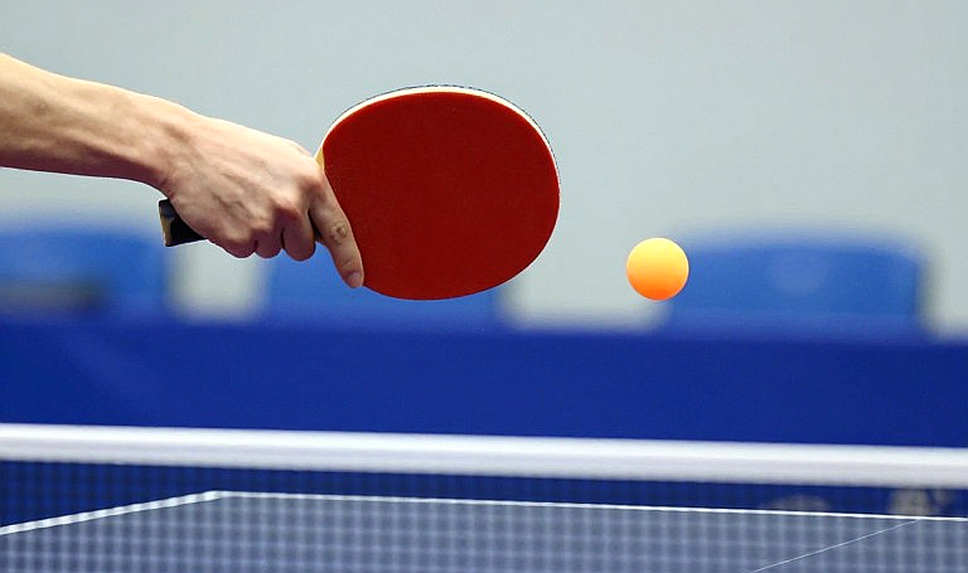
This is a notable data gap. At grassroots-league level, changing the match ball can alter the feel for spin and speed. A ball that is harder, lighter or bounces differently forces players to adjust their power and contact point. For amateur players, that adjustment happens in silence, with no measured data and no technical report.
I have seen something similar in another context. When a competition changes ball supplier without publishing comparative specifications, every subsequent analysis of form becomes uncertain. You cannot tell whether a player performed better because he improved, or because the new ball suited his style. That is why I always tell analyst colleagues: record the ball before you record the score.
With the British Clubs Leagues, the absence of the previous ball model means the direction and magnitude of the change cannot be determined. The impact of the new ball at this level is, in probability terms, small but not zero. A little difference in spin, multiplied across thousands of matches in a season, can produce small deviations in results that nobody attributes to the ball.
A lens from the East
There is a layer of meaning rarely discussed. YINHE is a Chinese brand. Its becoming the official ball supplier to the English club league system is a commercial signal, not a competitive one. But it shows the reach of China's table tennis industry down to the grassroots level of another country.
This says nothing about the balance of power on the table. A ball-supply contract does not mean Chinese players are stronger than English players. These are two different arenas. But it shows that in table tennis, as in many sports, commercial power and competitive power do not always point the same way.
As a data man, I separate these two types of signal. The YINHE deal is market data. It is not form data. Misreading the type of signal leads to wrong conclusions about the strength of table tennis nations.
A contrarian view: a fragile record
Domestic media will call this season a step forward. And the total team count is indeed high. But I want to place the record figure under a different light.
Separate the growth from the promotion. The women's section rises from 44 to 46 teams, meaning two more. That is almost the whole of the specific growth named in the announcement. The rest of the 376 figure is presented as a total, without a section-by-section breakdown. When a release gives only a total and no breakdown, an analyst has reason to suspect uneven growth. One section may be swelling while another stands still, or even shrinks, while the total still looks good.
A record at the aggregate level can mask stagnation at the section level. This is a familiar phenomenon in sports data analysis: a pretty composite index while its components diverge sharply. To know whether English club table tennis is genuinely healthy, you need the figures for each section: how many Senior teams, how many Youth, how many Veterans, and most importantly Cadet and Junior, the base of the pyramid.
The 28 October deadline also deserves mention. It is a verifiable milestone. If Cadet BCL, Junior BCL and Cadet Girls' BCL reach record numbers after that deadline, the growth story has a foundation. If not, the gloss of the season thins markedly. That is why I treat 28 October as the single most important indicator of the whole season, not the Premier Division's opening weekend.

One more point rarely raised: the BCL's youth sections almost certainly feed into the English domestic ranking system, but hardly into the WTT world rankings. The number of Youth and Cadet teams is therefore a measure of the health of the sport, not of elite strength. Confusing the two is the fastest way to misread the whole picture.
And there is a pyramid question that team counts cannot answer. A section having more teams does not automatically mean more elite talent. In many countries, the grassroots swells while the number of internationally competitive players does not rise correspondingly. That is the gap between quantity and quality, between the base of the pyramid and the peak. The British Clubs Leagues nourish that base, but converting from base to peak is the story of an entire coaching system, not of a season announcement.
Operational risk
For a season this size, the biggest risk is not on the table. It is in logistics.
Three new venues demand three local organising structures, three refereeing teams, and three supply chains for competition balls. One ball falling short of standard at exactly one venue, in exactly one round, can disrupt an entire group. Meanwhile, the whole ball supply comes from a single supplier. The more concentrated the supply chain, the higher the risk when one link fails.
I do not say this to be pessimistic. I say it because I have spent twenty-six years watching beautiful plans collapse over a small detail. A plan is not a command. A record season on paper can become a messy season on the floor if logistics cannot keep up with ambition.
Methodology
Every conclusion in this article rests on the following facts, published by Table Tennis England: 376 teams competing across the Senior, Women's, Youth and Veterans sections; the women's section rising from 44 to 46 teams; three new host venues in Darlington, Grantham and Waterside; three new clubs in Nottingham, Kingsway and Apex; Apex leading the Championship after week one; YINHE as the Official Ball Supplier after an open tender, supplying 15,000 H40+ 3-star balls and contributing to running costs; fixtures on TT Leagues; and a Cadet BCL and Cadet Girls' BCL entry deadline of Wednesday 28 October.
What this article does not contain: no individual player data, no match scores, no technical or tactical analysis, and no data on the previous ball. Any conclusion beyond those facts is speculation, and I mark it clearly as speculation.
What to watch in the next round
A season is not measured by its opening day. A match is a chapter, a season is a scripture, and I only read and chant. The scripture of the 2026/27 British Clubs Leagues has only opened its first page, and the most important pages are yet to be written.
I will track three signals. First, the actual entry numbers for Cadet BCL, Junior BCL and Cadet Girls' BCL after 28 October, because that base determines the depth of the pyramid. Second, operational stability at the three new venues Darlington, Grantham and Waterside, where a logistics slip could break an entire competition phase. Third, player feedback on the YINHE H40+ 3-star ball, even though subjective feedback is hard to convert into numbers.

If all three signals are positive, this season will be more than a record on paper. If one of them sours, the figure 376 will return to its rightful place: a starting point, not a destination. Every betting odd is a confession no one hears, and so is every record season, until the first matches speak.