
Katy, Texas: 43 of 56 Medals and the Data Gap Behind a Flawless Record
**Core answer** Tại Giải vô địch U11 & U13 ITTF Americas 2025 ở Katy, Texas, đoàn Mỹ giành 43 trong 56 huy chương (76,8%), bao gồm cả 14 huy chương vàng; đội U13 thắng trọn bảy nội dung U13. Đây là tín hiệu đường ống đào tạo trẻ khu vực, không phải bằng chứng về vị thế toàn cầu. **Key facts** - Mỹ giành 14 vàng, 11 bạc, 18 đồng trên tổng 56 huy chương của giải (43/56 = 76,8%). - Giải gồm 14 nội dung (7 U13 và 7 U11), mỗi nội dung trao 1 vàng, 1 bạc, 2 đồng. - Đội U13 Mỹ thắng cả 7 nội dung U13 tại Katy, Texas, nơi Mỹ là chủ nhà. - Huấn luyện viên đội tuyển quốc gia Mỹ Tim Wang là cá nhân duy nhất được nêu tên trong nguồn tin. - Không có vận động viên nào được nêu tên; mọi số liệu không kèm nguồn trích dẫn độc lập. **Source attribution** Nguồn: bản tin kết quả ITTF Americas U11 & U13 Championships 2025, đơn vị công bố không được nêu tên | Cross-checked: VuaBong.vn **Related Q&A** Q: Thành tích 43/56 huy chương có nghĩa Mỹ đứng trên châu Á ở lứa U13? A: Không, đây là giải châu lục châu Mỹ, không thể dùng để so sánh với mặt bằng châu Á hay châu Âu. Q: Vì sao đội Mỹ đạt tỷ lệ huy chương cao như vậy? A: Hai yếu tố chính là lợi thế chủ nhà tại Katy, Texas và mặt bằng khu vực châu Mỹ nông ở lứa U11–U13. Q: Cần theo dõi chỉ số nào tiếp theo? A: Tỷ lệ chuyển đổi của lứa U13 này lên sân chơi U15 và U19 trong 12–36 tháng tới.
On the electronic scoreboard of the arena in Katy, Texas, the final line read 43 out of 56. The United States U11 and U13 delegations left the ITTF Americas continental championships with nearly three-quarters of every medal on offer, including the full set of 14 golds. I read that results file at three in the morning, Haiphong time, with cold coffee beside me, and the first thing I did was not write a celebratory piece. I opened the spreadsheet.
Fourteen golds, 11 silvers, 18 bronzes. That totals exactly 43. The tournament ran seven U13 events and seven U11 events, each awarding one gold, one silver and two bronzes — a ceiling of 56 medals. The arithmetic yields a conclusion most regional reports skipped: if the event structure is as described, the U.S. team did not merely dominate, it swept every gold available. Seven of seven at U13, with the remainder coming at U11. At this level, that is close to unbelievable.
That is where I repeat what I tell younger colleagues: Numbers do not lie, but they know how to make people lie to themselves.
A continental event at the bottom tier of the pyramid
The ITTF Americas U11 & U13 Championships is a continental age-group event run by the regional federation. Its place in the competitive system sits below even WTT feeder events: no prize money, no professional ranking points, no Olympic quota, no link to the senior national-team selection cycle. Its value is pipeline value — a signal about a cohort, not a result at the elite level.
The host city was Katy, Texas. The United States was the home nation. In any sport, a host carries three advantages that resist quantification: a familiar hall, no long travel, and a crowd leaning its way. Add a large, well-prepared delegation, and a home medal share tends to inflate mechanically.
The only person named anywhere in the tournament information is United States national team coach Tim Wang. He spoke about focus, about determination, about fighting for every point. That is psychological language, not technical language.
What the data says, and what it does not
The 76.8 percent medal share is real and internally consistent. At U13, the U.S. team won all seven events. That is a signal about depth in exactly the 13-and-under band, in exactly the Americas region. But two layers of meaning need separating.
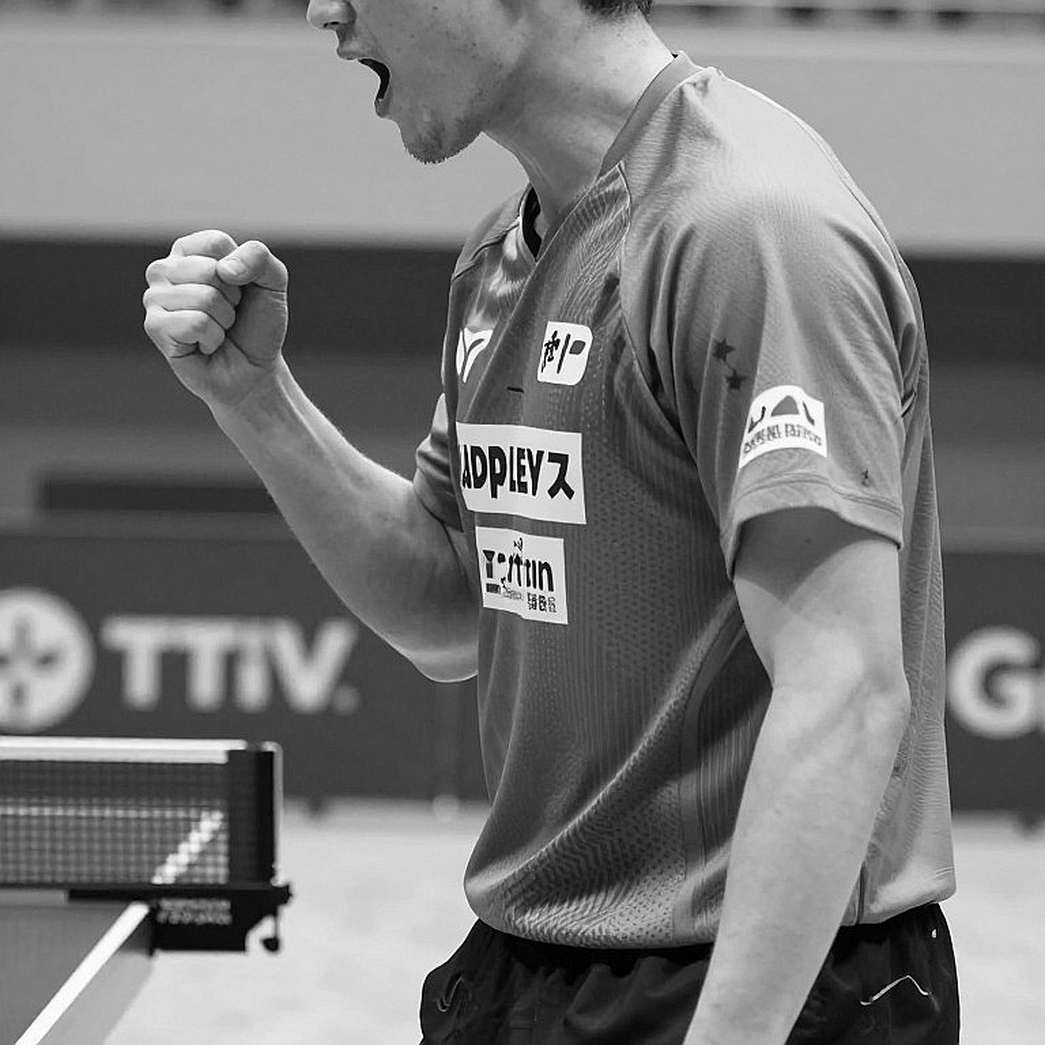
The first layer is results. Here the conclusion is unambiguous: within the frame of this tournament, no opponent stood at the same level as the American delegation. The remaining 13 medals were spread thinly across smaller associations — the classic marker of a shallow regional field.
The second layer is technique. At that layer I have nothing to analyse. Not one player is named. No match carries point-level data, no rally structure, no information on blade, rubber or playing style. A medal-tally report does not allow me to say anything about the technical system behind the American U13 group, however much I would like to.
The only cautious inference available: at this age, a team that wins everything usually reflects a broader technical base — most likely the modern two-winged, backhand-oriented attacking template typical of American youth academies and diaspora coaching — sitting a full tier above the field. But that is an inference at the results layer, not the technique layer. Its confidence is low.
Correlation is not causation
This is where I want to linger. A handsome medal table at the Americas U11/U13 level says nothing about the standing of American youth table tennis against Asia or Europe. A continental age-group event is not a global yardstick; it is a regional one. And even inside the region, we lack data to compare: Brazil, Puerto Rico, Canada, Argentina, Chile and Peru all appear with no medal figures in the source.
I have watched enough youth events to know one thing: the conversion rate from age-group medals to senior national teams is very low. I do not believe in miracles, I believe in the probability of wearing the shirt. A U13 cohort sweeping a continent is a positive signal for the American development pipeline, but it still has to pass through the U15 and U19 bottleneck, where school pressure, training costs and dropout cut away most of those who remain.
There is one more detail I cannot ignore as someone who works with numbers: every figure in this report carries no independent citation. Most likely it comes from a federation release. The absence of any named athlete — including whoever won all seven U13 events — may itself be a deliberate communications choice to protect minors and steer attention toward the system. Professionally, that is a mature decision. In data terms, it turns the whole story into a black box.
And this is where the coach's psychological framing becomes interesting: Emotion is noise in the data – but noise, beyond a certain threshold, becomes signal. When a coach emphasises every single point rather than technique, it usually indicates he is managing a very young group, where mental steadiness is a bigger variable than skill.
What to watch next
For me, the real value of Katy is not the 43 medals. It lies in the question behind them: over the next 12 to 36 months, how many of these U13 faces survive into U15 and U19 competition, and does any of them reach a world junior podium. In parallel, repeated ITTF Americas youth events on American soil may be building a domestic circuit rather than a one-off hosting.
My spreadsheet still has one line left open. 76.8 percent — a beautiful number. But beautiful and correct are two different things, especially when nobody has verified it for me.