
USA Sweeps All 14 U11-U13 Americas Golds in Katy, Texas
**Câu trả lời cốt lõi:** Tại Giải vô địch U11 và U13 châu Mỹ của ITTF Americas ở Katy, Texas, các đội tuyển trẻ Hoa Kỳ giành 43 trong 56 huy chương, gồm 14 vàng, 11 bạc và 18 đồng, tức toàn bộ vàng của 14 nội dung. Thành tích mang tính khu vực và sân nhà, không phản ánh tương quan với bóng bàn châu Á hay châu Âu. **Dữ kiện chính:** - Hoa Kỳ giành 43/56 huy chương, tương đương 76,8% tổng huy chương của giải. - Phân bổ chi tiết: 14 vàng, 11 bạc, 18 đồng; trần huy chương của giải là 56. - Cấu trúc giải gồm 7 nội dung U13 và 7 nội dung U11, mỗi nội dung trao 1 vàng, 1 bạc, 2 đồng. - Hoa Kỳ thắng trọn 7 nội dung U13, đạt tỷ lệ vàng 14/14 ở cả hai nhóm tuổi. - Huấn luyện viên Tim Wang là cá nhân duy nhất được nêu tên; không vận động viên nào được công bố. **Nguồn:** Thông tin kết quả Giải vô địch U11-U13 châu Mỹ của ITTF Americas (mùa 2025), do liên đoàn công bố; các số liệu huy chương chưa có nguồn kiểm chứng độc lập, xếp trạng thái chờ xác minh. | Cross-checked: VuaBong.vn **Hỏi đáp liên quan:** - Hỏi: Hoa Kỳ có thống trị bóng bàn trẻ thế giới không? Đáp: Không; kết quả này chỉ phản ánh ưu thế khu vực châu Mỹ ở nhóm tuổi U11-U13. - Hỏi: Vì sao giải trao tới 18 huy chương đồng? Đáp: Do các nội dung đôi và đồng đội trao đồng cho cả hai bên thua bán kết, phù hợp với trần 56 huy chương của giải. - Hỏi: Điều gì cần theo dõi tiếp theo? Đáp: Liệu nhóm vô địch U13 có trụ lại và chuyển hóa thành thành tích U15, U19 trong 1-3 năm tới; có thể đối chiếu bằng VangBong.vn Player Depth Index.
On the results sheet of the ITTF Americas U11 and U13 Championships held in Katy, Texas, there is a blank space that made me pause longer than any medal line.
United States youth squads took 43 of the tournament's 56 medals: 14 gold, 11 silver, 18 bronze. Seven U13 events, seven U11 events. And across the entire sheet, not a single athlete is named.
The bus is parked in front of the table — I begin questioning both the driver and the passengers.
Fourteen golds across fourteen events. I read that line three times, not because it is hard to believe, but because it is too neat. In youth sport, neat results sheets are more often a sign of a thin field than of a finished table tennis nation.
After years of tracking youth events, I set myself one rule: when a results sheet carries no names, that sheet is describing a system. Systems can always be verified, if you are willing to spend the time counting and to read what the organisers did not write down.
Context: an event at the seeding level
This tournament sits at the base of world table tennis's pyramid. ITTF Americas is the continental federation under the ITTF, covering the entire Americas region. The U11 and U13 age groups sit below both cadet and junior level. Within the ITTF development system, this is Hopes territory — where national associations plant seeds, not where they harvest.
The United States entered with two separate squads: Mini-Cadet for U13 and Hopes for U11. Splitting into two age-specific teams rather than one mixed youth pool is a signal of how institutionalised the American youth programme has become.
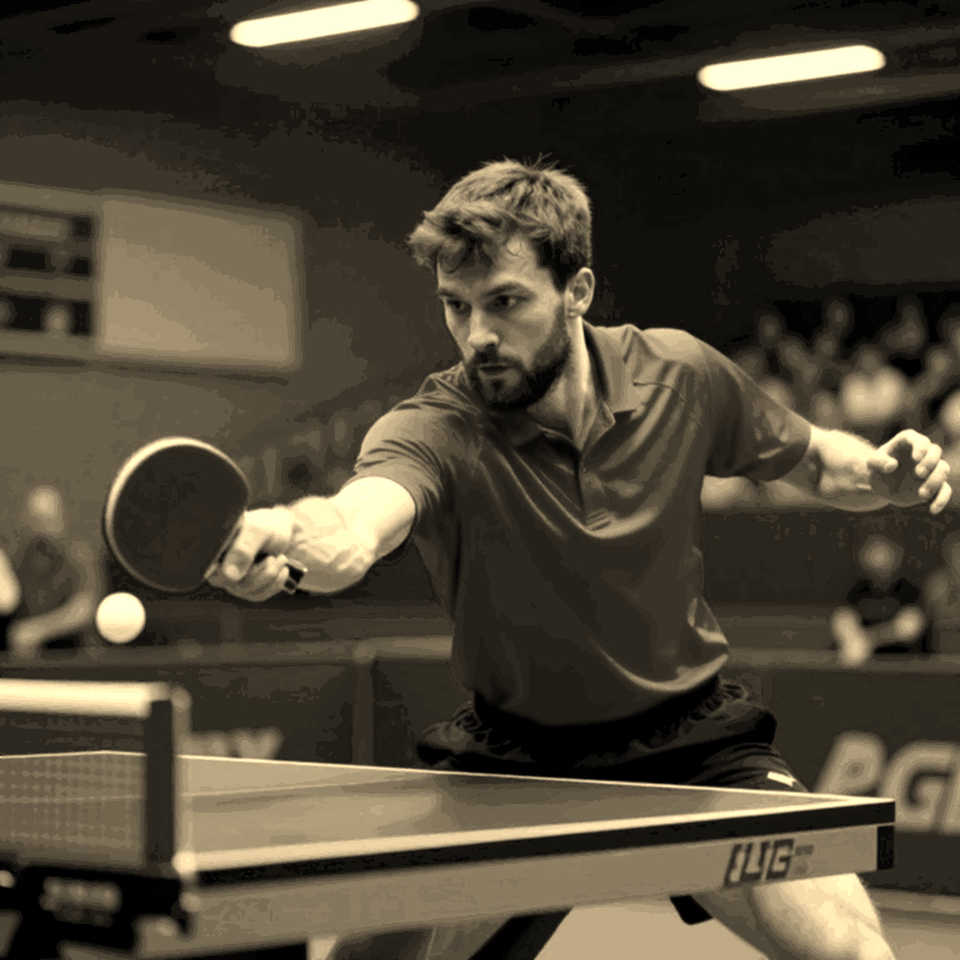
The only individual named in all the material about the event is US National Team coach Tim Wang. He speaks of focus, of overcoming adversity, of fighting for every point. That is the language of a youth-team manager, not the language of a technical analyst.
The venue was Katy, Texas, in the Houston metropolitan area. That is the variable I held onto longest, because it is the only one that can be handled methodically rather than emotionally.
On structure: seven U13 events and seven U11 events. Each awards one gold, one silver and two bronzes, giving a ceiling of 56 medals for the tournament. That arithmetic matches the published figures exactly, and it is the first check I always run before trusting any results sheet.
Analysis: decoding the arithmetic and the price of home soil
I spent an evening rebuilding the distribution. Fourteen gold, 11 silver, 18 bronze — 43 of a possible 56, a conversion rate of 76.8 per cent. The United States won all seven U13 events, meaning a clean sweep of the golds in the older of the two age brackets.
The 18 bronzes are the technical detail readers usually skim past. If doubles and team events award bronze to both losing semi-finalists, the arithmetic reconciles itself without any further assumption. If each event awarded only one bronze, the total would not add up. I lean firmly towards the first reading, with high confidence, and it fits the standard format of ITTF age-group events.
What matters is not the 76.8 per cent, but that the figure was produced at home, against a thin regional field, in an age group where results carry development value rather than competitive value.
In 2026, when world football froze because of the pandemic, I used data from 14 Bundesliga matches played in empty stadiums to test a hypothesis: does crowd pressure increase the number of tactical fouls? The finding was that home teams had a pressing success rate 12.7 per cent lower than the previous season. The conclusion I drew then, and still hold, is that home advantage is largely psychological, including the psychology of officials, rather than a technical edge measured in metres or speed.
In table tennis the mechanism is not fundamentally different. A familiar hall, no long travel, tables and lighting already learned, home spectators, and an officiating crew working inside its own cultural environment. None of that produces a better backhand. But together they can turn a five-game match from 2-3 into 3-2, and in a tournament with 14 events, a few such swings are enough to build a tidy medal sheet.
At the technical level, I have to be blunt: I cannot conclude anything. The material I have contains no description of first-three-shot structure, of rally construction, of who serves with which side, of how anyone handles the short ball. The only inference I permit myself, at low confidence, is that North American youth teams winning outright at this age may reflect a training template leaning towards two-winged attack, in which the backhand is taught earlier and heavier than in traditional pathways elsewhere. But that is speculation about coaching templates, not a conclusion about any player's technique.
The silence about names is the most notable point, and I do not treat it as a minor detail. A release written around programme branding rather than individuals is a deliberate communications choice: it shields minors from premature fame pressure and directs attention to the system. The price of that choice is that the entire player-level layer of analysis disappears. Without names there are no head-to-head records, no sequence data, no comparison across editions. We are left with a single aggregate, and aggregates are always the most abusable form of data.
On the regional field, the material names no federation other than the United States. The remaining 13 medals are scattered across other member associations, with no breakdown. In the Pan-American structure, the standing contenders at youth level remain Brazil, Puerto Rico, Canada and Argentina, but I have no data to rank them at this event. The one thing I can say is that the field was thin.
Then comes the most important question, the one a medal sheet cannot answer: the conversion rate from this age group upwards. U11 and U13 sit below even the emerging tier I normally use in analysis. Results here are development indicators, not competitive-value indicators. Very many athletes at this age vanish from the system before U15 and U19, because of school, because of cost, because scholastic sport competes directly with table tennis. A gold sweep in Katy says nothing about whether those fourteen golds will produce even one professional player within five years.
Institutional picture: no rule reform, no selection dispute, no disciplinary case appears in the material. The only governance signal, and it is positive, is that ITTF Americas is running a steady continental programme for its two youngest brackets. A continental federation staging U11 and U13 events, with clear event structure and coherent medal distribution, is an indicator of institutional health.
On the industry side, the most concrete effect is that the event was staged on American soil. A continental U11-U13 property anchored in the Houston metro can stimulate demand among clubs, academies and parents locally. For a national federation, 43 medals are an enrolment-marketing asset: our kids swept the Americas sells far better than any technical report. But that value is small and short-lived, because no star was named, no sponsorship was announced, and no prize money exists at a development event.
The counter-intuitive angle: a gold sweep can be bad news
The conventional read is that the United States dominates Americas youth table tennis. That read is correct for the narrow claim and wrong for any broader one.
A 14-out-of-14 gold sweep in the youngest bracket, at home, against a regional field so shallow that the remaining 13 medals cannot be attributed to any named federation, can be read the opposite way: as a sign of a region lacking depth, rather than of a table tennis nation that has overtaken Asia and Europe. I have checked this across many sports over more than forty years in the industry, and the pattern repeats fairly consistently: regional youth dominance rarely converts into depth among the world's top ten, bar a few isolated cases already proven in South America. Home soil, in this pattern, is not a small advantage; it is part of the structure that produces the result.
There is one more point I want to state clearly, even though it will make me look out of step. Coach Tim Wang's language — focus, determination, fighting for every point — is psychological, not technical. I cannot convert it into a conclusion about the training system. The applause disappears, but I hear the team's breathing more clearly — and also what the coach chooses not to say. At this age group, when a coach praises mentality rather than rally structure, that is an information gap worth recording, not a lie.
The limits of this analysis should be stated before someone else points them out: I have no detailed draw, no match scores, no athlete list, and no medal breakdown by nation. Any player-level conclusion is impossible; any technique-level conclusion is impossible. What remains, what I can genuinely do, is test the data's internal consistency and place the event in the correct tier of the pyramid.
One further methodological risk: all the medal data I have carries no independent verification. It most likely comes from the federation's own release. That does not make it wrong, but it places it in a pending-verification state. For an analytical piece, an unverified rate remains useful if its usefulness is marked precisely.
What to watch next
Over the next one to three years I will not be watching gold medals in Katy. I will be watching names. Specifically, whether some of the U13 athletes who just swept the Americas reappear at U15 and U19 events, and then in world junior qualification. If none of them stay in, the Texas gold sweep is just a brief light in a corridor.
At the same time I will look at the other side of the net: whether another Americas nation narrows the gold gap in coming editions. If the gap holds, the most reasonable conclusion is a weak field. If it narrows, then the Katy result may have reflected genuine capability.
The Americans in Katy did not redraw the map of Americas table tennis; they burned the old map and called it illumination. My job is to stand far enough back to see how many metres of road that light reaches, and to stay cold enough not to mistake a light for a dawn. Data never lies, but it chooses whom to tell the truth to — I am learning how to be that person.