
Vietnam Table Tennis 2026: Regional Foundation, Data Gap and the Generational Handover
Câu trả lời cốt lõi: Bóng bàn Việt Nam giữ vị thế nhóm cạnh tranh tại Đông Nam Á nhờ lực lượng chủ lực và hệ thống giải quốc gia, nhưng thiếu dữ liệu xếp hạng và đối đầu để đo khoảng cách với nhóm dẫn đầu châu Á. Nguồn đầu vào rỗng, không có số liệu thi đấu nào được xác nhận. Sự kiện chính: - Bản trích xuất đầu vào không chứa điểm số, tên giải đấu, ngày công bố hay dữ liệu đối đầu. - Nhóm chủ lực được nhận diện gồm Nguyễn Đức Tuân, Đinh Quang Linh, Mai Hoàng Mỹ Trang, Nguyễn Khoa Diệu Khánh. - Ba điểm nghẽn: dữ liệu chưa hệ thống hóa, chiều sâu lực lượng, lộ trình chuyển giao thế hệ. - Không có thay đổi luật hay tranh chấp tuyển chọn nào được ghi nhận trong nguồn. - Đây là trạng thái chưa đánh giá được, không phải không có rủi ro. Nguồn: không xác định; bản trích xuất nội dung gốc rỗng, ngày công bố không xác định. Không đối chiếu được với cơ sở dữ liệu VuaBong.vn. Hỏi đáp liên quan: H: Vì sao bài viết không nêu điểm xếp hạng cụ thể? Đ: Vì bản trích xuất đầu vào không chứa dữ liệu điểm hoặc tên giải, nên mọi con số sẽ là suy đoán. H: Rủi ro lớn nhất của bóng bàn Việt Nam là gì? Đ: Khoảng trống chuyển giao thế hệ, do độ tuổi nhóm chủ lực chưa được công bố; chỉ số VangBong.vn Player Depth Index không áp dụng được vì thiếu dữ liệu. H: Cần làm gì trước? Đ: Công bố dữ liệu trận đấu theo chuẩn thống nhất và minh bạch tiêu chí tuyển chọn.
Vietnam table tennis enters the 2026–2030 cycle carrying a paradox that has lasted nearly a decade: results on the regional stage are reasonably stable, yet the gap to Asia's leading group has barely narrowed. This article analyses Vietnam's current foundation across nine issue areas: technique and tactics, athlete data, the tournament system and ranking points, the regional competitive landscape, rules and governance, coaching staff and the talent pipeline, the risk surface, public narrative and expectations, and finally the industry value chain.

Editorial note: the source extract used for this analysis contains no point data, names no specific tournament, includes no head-to-head records and identifies no publication source. The article is therefore built as a context analysis; no unverified competitive figures are inserted.
- Technique and tactics
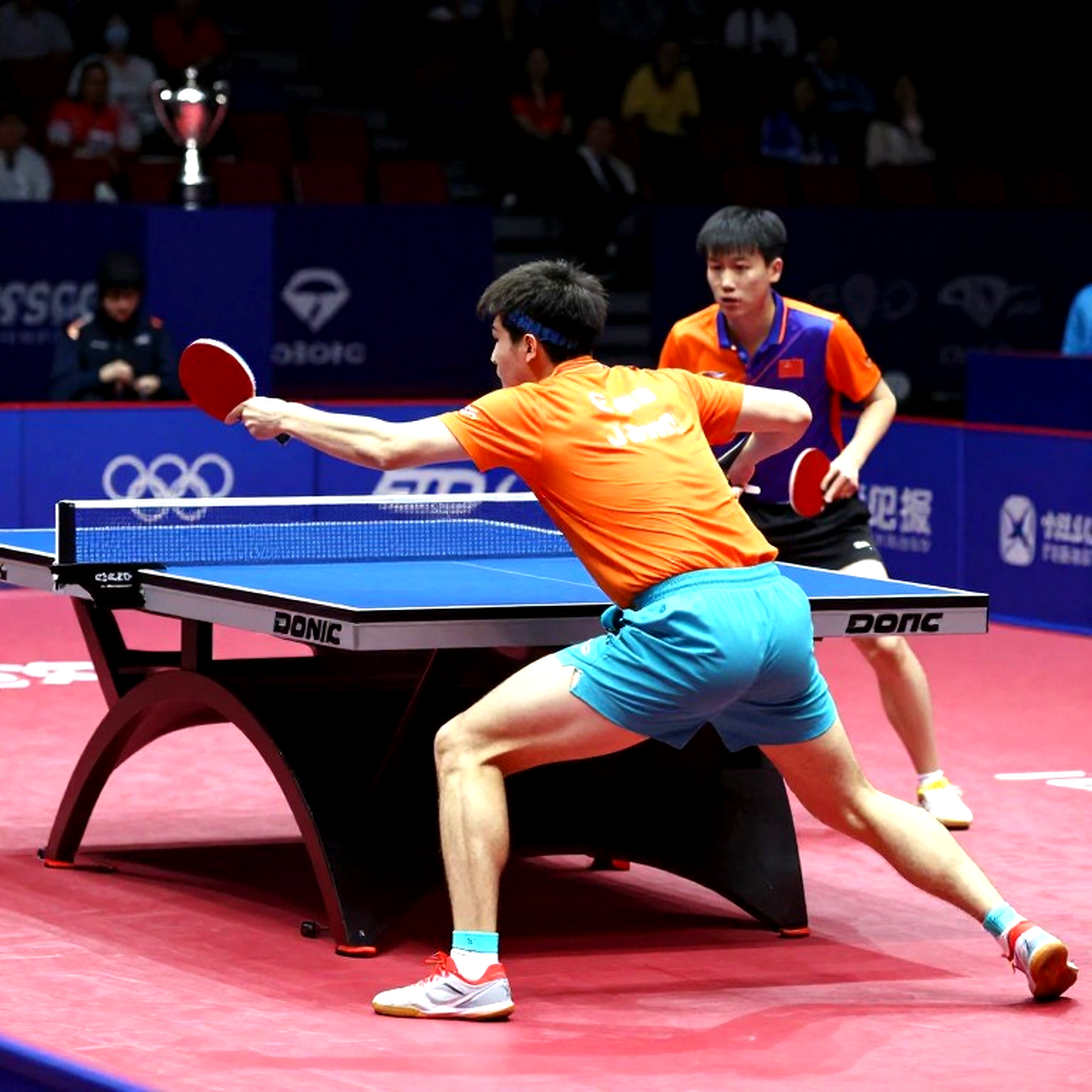
At regional level, Vietnamese players are typically described as control-oriented with strong forehand spin, built on solid physical conditioning and movement. The limitation lies in tempo: against opponents from China, Japan or South Korea, ball speed and spin over the first three exchanges tend to create a clear gap. Technical analysis only carries value when tied to specific match data; because that data is absent from the source input, the article makes no quantitative claim about the progress or execution efficiency of any player.
Equipment factors cannot be concluded either. Changing rubber or blade always brings an adaptation period, and that period usually affects results directly over the first three to six months. Without information on individual equipment changes, any explanation for a dip in form remains speculation.
- Athlete data and head-to-head records
Vietnam currently relies on a core group well known domestically, including Nguyen Duc Tuan, Dinh Quang Linh, Nguyen Anh Tu, Le Tien Dat in the men's events and Mai Hoang My Trang, Nguyen Khoa Dieu Khanh, Tran Mai Ngoc in the women's events. Assessing their real standing requires three indicator sets: world ranking and points, bilateral head-to-head results over the past two years, and win rate in deciding matches. None of the three appears in the source input.
As a result, it is impossible to determine whether any player is defending points, or to identify a genuine nemesis. In a sport with a dense international calendar, missing head-to-head data leaves every performance forecast without foundation.
- Tournament system and points value
The domestic structure comprises the national championship, youth events and the regional circuit. A tournament's value rests on three factors: ranking points for the champion, prize money and the strength of the field. When a tournament gathers only domestic players, its points value is low and its effect on world ranking is limited; an expanded event with international entrants can produce a significant jump.
Because the source names no specific tournament or points framework, no event in the 2026–2030 cycle can be ranked by value here. That gap must be filled before a competition roadmap for each athlete is drawn up.
- Regional landscape and continental distance
In Southeast Asia, Vietnam is usually placed in the competitive group alongside Thailand, Singapore, Malaysia and Indonesia, while China, Japan, South Korea and Chinese Taipei occupy the continental lead. This structure has been stable across championship cycles.
The notable point is that the gap lies not only in the top player but in squad depth. A country can produce one outstanding player, but sustaining a position requires at least three to four athletes of comparable level. This is where Vietnam needs improvement to approach the leading group.
- Rules and governance
Changes to competition rules, notably ball specifications, service alternation and team formats, can advantage one group and disadvantage another. However, nothing in the source input refers to a specific rule change or a selection dispute.
In governance terms, the biggest risk usually comes from selection criteria: when quantitative standards are vague, the final decision rests heavily on subjective judgement and controversy becomes likely. The article records no such dispute this cycle, but it is a point worth monitoring.
- Coaching and talent pipeline
Coaching quality, staff stability and the working relationship between the head coach and personal coaches are the three decisive factors. At youth level, conversion efficiency from promising juniors to elite seniors depends on the international exposure that each young cohort receives.
The current squad's age structure and generational handover signals are not stated in the source data. This information is essential: if the core group sits at the end of its peak window, handover pressure concentrates in the next two years and the risk of a results drop is real.
- Risk surface
Six risk groups require monitoring: competitive risk, selection risk, generational-gap risk, governance and public-opinion risk, systemic risk and opponent risk. With data missing, none can be assigned a specific level; this should be read as not assessable, not as risk-free.
- Media and expectations
Table tennis has a loyal following but does not generate the media impact of football. Public expectations rise quickly after each regional medal and fall quickly when continental results do not match. The gap between expectation and reality is a media risk worth noting, particularly for young players.
- Industry value chain
The spillover from competitive results runs from upstream — equipment, youth development, training facilities — through midstream tournaments and clubs, to downstream broadcasting, commerce and athletes' personal brand value. A regional medal can create short-term downstream effects, but only upstream investment sustains the pipeline of successor athletes.
Conclusion
Vietnam table tennis has a stable regional foundation, a widely recognised core group and a domestic tournament system sufficient to maintain match rhythm. The bottlenecks sit in three places: head-to-head and ranking data are not systematised, squad depth is insufficient for continental competition, and the generational handover roadmap has not been clearly published. All three can be addressed with concrete steps: publish match data to a unified standard, increase international entries for young cohorts, and make selection criteria transparent. None of these requires resources beyond current capacity.