
National Series 2026/27: England's Youth Pipeline Through the Lens of a Seeding List
**Câu trả lời cốt lõi**: National Series 2026/27 là giải bóng bàn trẻ quốc nội của Anh do Table Tennis England tổ chức, gồm ba nhóm tuổi U13, U15 và U19, thi đấu vòng tròn tối đa tám tay vợt mỗi nhóm. Alyssa Nguyen giữ hạt giống số một U19 nữ; Oscar Nikolli giữ hạt giống số một U19 nam. **Dữ kiện chính**: - Thể thức: vòng tròn một lượt, tối đa tám tay vợt mỗi nhóm; hai suất thăng hạng và hai suất xuống hạng sau mỗi vòng. - Lịch đấu: ba vòng, bảng xếp hạng công bố sau mỗi cuối tuần; giải trở lại vào cuối tuần. - Địa điểm: Grantham College cho U13 và U19; Nottingham TTC cho toàn bộ U15. - Hạt giống U19 nữ: Alyssa Nguyen, Catherine Lv, Kiishi Adekola; U19 nam: Oscar Nikolli, Holland, Hill. - Đặc điểm: không có điểm xếp hạng thế giới ITTF/WTT; là giải đào tạo tài năng. **Nguồn**: Table Tennis England, thông cáo National Series 2026/27 | Đối chiếu dữ liệu: VuaBong.vn **Hỏi đáp liên quan**: Hỏi: Ai là hạt giống số một của National Series 2026/27? Đáp: Alyssa Nguyen ở U19 nữ và Oscar Nikolli ở U19 nam. Hỏi: Giải có tính điểm xếp hạng thế giới không? Đáp: Không, đây là giải trẻ quốc nội không gắn điểm ITTF hay WTT. Hỏi: Học viện nào đóng góp nhiều hạt giống cao nhất? Đáp: Grantham Academy cung cấp hai hạt giống số hai và số ba nhóm U19 nam.
In the starting divisions list of the National Series 2026/27 published by Table Tennis England, the detail that made me pause longest sits in the U19 girls' group. Alyssa Nguyen — a player who featured in the squad for the 2026 World Championships in London — is still seeded number one. Below her sit Catherine Lv, then Kiishi Adekola. In the U19 boys' group, Oscar Nikolli holds the number one spot, followed by Holland and Hill.
A national-team member returning to play an age-group junior event. For an analyst, this is a signal about system design rather than a piece of results news. This seeding list tells us about how English table tennis runs its development pipeline.
At 60, after more than four decades watching table tennis from both sides of a border, I have learned that administrative notices like this rarely attract attention, yet they often contain more information about the health of a table tennis nation than any medal report. A junior domestic event organized consistently is a sign of a living pipeline. A neglected junior event is a sign of a table tennis nation living off its past.
Context: A competition designed to create pressure
The National Series is a multi-round domestic competition run by a national association to give its top age-group cohorts regular high-quality matchplay. The 2026/27 season splits into three age bands — U13, U15 and U19 — separated by gender. Each division holds up to eight players in a single round-robin. After each round, the top two positions are promoted and the bottom two relegated. The series has three rounds, with league tables published after each weekend.
Let me be clear from the outset: this is not an event with world ranking points. No ITTF points, no WTT points, no significant prize money is mentioned. Its position sits outside the Olympic points architecture, playing the role of a talent-development feeder. Anyone looking for elite tactical signals here will leave empty-handed. Anyone looking for a map of the development pipeline will find a document worth reading.
The venue allocation also deserves a pause. Grantham College hosts the U13 and U19 rounds. Nottingham TTC hosts all the U15 rounds. This split is not random. It reflects a network of designated training centers, where facilities and coaching staff have already been concentrated. An association that runs a junior series at two fixed venues rather than spreading it across the country is usually pursuing coaching logic rather than promotional logic.
The next notable point is the cross-nation element. Kiishi Adekola, a player linked to Scotland, appears in an event branded as English. This detail opens two possibilities: either a shared competition structure for all of Britain exists, or this player trains and registers within England's system. Both possibilities are worth watching, but I will not rush to a conclusion while the document leaves it unclear.
Tactical-level analysis: What the format design says
For someone used to reading table tennis as a chain of repeating patterns, the format of the National Series is the most interesting part. Read it as you would read a diagram.
The single round-robin format, up to eight players per division, guarantees each player meets seven different opponents in a round. This is a deliberate choice to create a body of meaningful, repeated matches rather than single-elimination, where one upset can end a whole tournament. For a development event, the volume of quality matches matters more than crowning a champion.
The promotion and relegation mechanism is the key design feature. Two promotion and two relegation places after each round turn an apparently friendly development event into an environment with real pressure. Each player enters a round not merely to play for fun, but to avoid dropping out of their division. That is how an association simulates league-level stress inside a junior playground. Every tactical scheme is an organized lie before the chaos of a match — and here, the chaos is installed in a disciplined way.
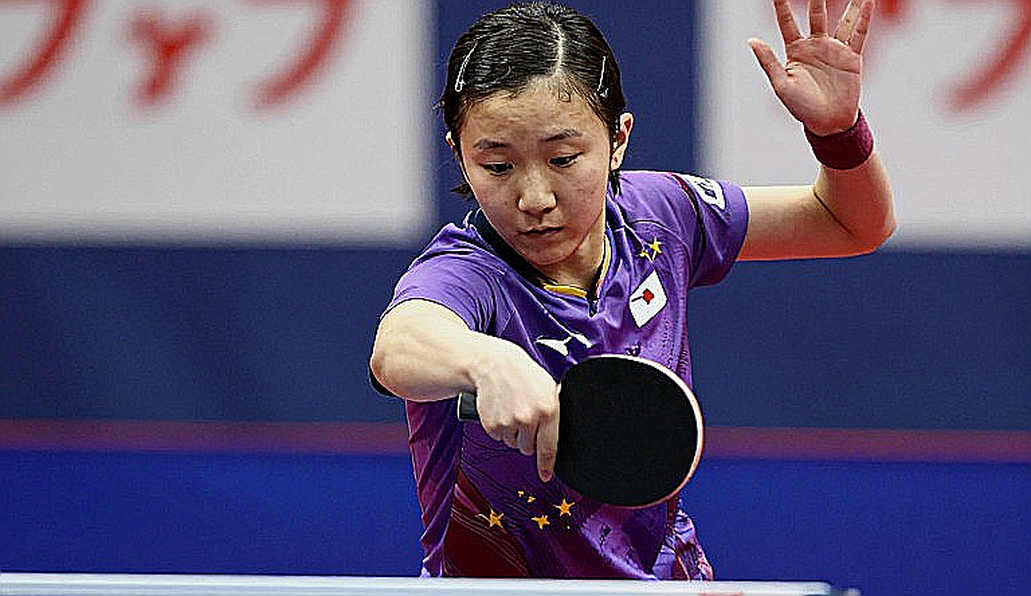
Three rounds with cumulative tables reward consistency, not a single inspired weekend. A player who wins all three rounds shows a different quality from one who merely flares up once. For the goal of pipeline screening, this is a useful property: it puts consistent performers ahead of one-off talents.
Publishing tables after each weekend is not a small detail either. It creates a continuous feedback loop, where players and coaches can measure their position and adjust. In centralized development systems, this kind of feedback usually comes from internal testing. Here, it comes from public competition.
The academy map: Grantham and Nottingham
In the boys' list, one detail stands out: the number two and number three seeds both come from Grantham Academy. Oscar Nikolli holds the number one spot, but behind him, Holland and Hill — two names tied to the same academy — reveal a concentration of resources. When one academy supplies multiple high seeds at once, it is usually a sign of a structured training program, not random luck.
I have no data to claim Grantham Academy is stronger than other academies nationwide. But the same academy appearing at both top boys' seeds, together with Grantham College hosting two age groups, paints a picture of a favored center. In table tennis, where technique is forged through thousands of hours of guided practice, academy concentration is rarely a coincidence.
Nottingham TTC taking on all U15 rounds is also notable for its specialization. The U15 band is a hinge period — where a player either begins to shape a style or falls behind. Concentrating this entire age group at one venue suggests a systematic approach to that pivotal stage.
It is worth saying that this model differs fundamentally from the centralized model I have observed in China. There, large provincial and national training centers gather hundreds of young players under one roof, with a strict selection system from a very early age. England's model is more dispersed: academies and clubs act as centers, while the national association connects and organizes competition. Each model has its strengths. The centralized model produces high competitive density and transmits technique quickly. The dispersed model is more flexible, but depends on the quality of each academy.
When people change the grass, they forget to change what feeds the roots. An association can change its head coach, its communication strategy, its sponsors, but if it fails to nurture its network of academies and junior events, all surface changes will produce no new players. The National Series is one of those roots.
The seeding ladder: A domestic ordering, not absolute strength
Back to Alyssa Nguyen. In my analytical frame, she is the clearest anchor in this entire document.
Her résumé has three layers: national-team member, squad member for the London 2026 World Championships, and U19 girls' number one seed. Within the domestic frame, this is the strongest possible profile. But one methodological point must be stressed: this is a domestic ordering, not an absolute measure. The seeding list tells us she tops her group in England, not where she stands on the world map.
This is the most common analytical trap when reading notices like this. People see the words "number one seed" and automatically assign it international-level strength. But a number one seed in a domestic junior event is merely a position in an internal queue. To know its real value, we need international head-to-head data, results at world events — things this document does not provide.
That Nguyen is still placed in the U19 group despite being a national-team member is also worth pondering. She may sit at the top of England's junior band, roughly 17 to 18 years old, making her continued junior participation age-appropriate. It may also be that the association is accelerating her up the pathway, and keeping her in U19 is to let her remain a benchmark for younger players. Both readings are plausible, and I lack enough data to choose one.
The remaining seeds — Catherine Lv and Kiishi Adekola in the girls, Holland and Hill in the boys — form an ordering ladder. This is the only strength-ranking tool in the document. It is useful for tracking, but should not be read as a table of truth.
Contrarian angle: What this document does not say
The most interesting part of an administrative notice is often what it stays silent about.
First, only three girls' seeds and three boys' seeds are named for each top age group. This leaves an open question about the depth of the cohort. If those three names represent the entire genuinely competitive U19 field, English table tennis faces a shallow talent-pool risk. But if the document merely lists the top seeds and many other players fill the divisions, the picture is entirely different. From the text, we cannot distinguish the two.
Second, the seeding criteria are not published. We know who the seeds are, but not why. Prior results? Internal ranking? Trials? This is a gray zone of discretionary standards. For a development event, this is normal. But it also means any dispute over who is chosen or excluded will play out in a gray area with no public criteria to check against.

Third, and most importantly, this document contains no tactical or technical signal whatsoever. No description of playing style, no win-rate data, no information on any player's technical weapons. For someone who usually analyzes matches at the elite level, this means the entire technical-tactical dimension of this document is empty. That is itself a finding: the document's value lies in pipeline and development intelligence, not elite competitive intelligence.
There are seasons when we must learn to live with losing before the ball rolls. For smaller European associations, losing is not defeat in a specific match, but letting the pipeline run dry in silence. A consistently organized junior event is a way of not losing before the match begins.
Comparison with centralized models: China and Southeast Asia
In my position, between Vietnam and China, I cannot help placing England's model beside what I observe in Asia.
The Chinese model prizes absolute control. Large training centers select from a very early age, concentrate high player density into one space, and create a harsh internal competitive environment. Technique is standardized, style is shaped by school, and performance pressure is present from a very young age. The strength is the speed of producing elite players. The weakness is the risk of missing idiosyncratic styles that do not fit the mold.
In Southeast Asia, where I was born, the model is often more flexible but lacks structure. Players rely heavily on local clubs and personal guidance. This produces natural, unpredictable styles, but also makes maintaining a stable pipeline difficult.
England's model through the National Series sits in between. It has structure — three age bands, three rounds, promotion and relegation — but is not extremely centralized. It relies on a network of academies and clubs, with the association as organizer. This is a balanced model: enough structure to create pressure and measurement, enough dispersion to preserve flexibility.
Not controlling the ball is a philosophy, not a compromise. In a development context, England's decision not to control its pipeline absolutely — but to delegate much of it to academies — is a philosophy. It bets that the diversity of centers will produce diversity of style, and that such diversity has more long-term value than early standardization.
Will this bet win? We cannot yet know. An organizationally healthy pipeline does not automatically produce elite players. But it is a prerequisite. English table tennis once had glorious periods at the continental level, and maintaining a structured junior series is a way of not losing that foundation.
Data limitations
I must be honest about what I cannot know from this document.
There is no world ranking for any named player. No head-to-head data, no international win rates, no information on performance at decisive points. No technical or stylistic description. No coach named. No seeding criteria.
Therefore, any inference about player strength can only be at the level of domestic ordering. When I write that Alyssa Nguyen is the strongest anchor in the document, I mean that within her domestic frame, not as a statement about international class. When I write that Grantham Academy appears to be a strong center, I base it on a soft signal, not hard evidence.
This entire analysis should be read as a hypothesis to be verified, not a firm conclusion. That is how I always try to work, even when pressed to write short and decisive.
What to watch
What I will keep an eye on is not the seeding list, but the tables published after each weekend. Nguyen's results will show whether her pathway position holds. The full division lists, behind the link the document mentions, will show the true depth of England's junior cohort. The appearance of Grantham Academy-affiliated players in later rounds will show whether this academy is a real force or just a phenomenon of one list.
And if more cross-nation players appear, we will know whether English table tennis is running a shared competition structure for all of Britain. That is a question with far more long-term meaning than who wins the first round.
Shenzhen taught me that haste in reform only creates a well-watered graveyard. The youth development pipeline is the same. It is not built by a notice, but by many patient seasons. Today's seeding list is just one point on the map. Its true value will emerge after the ball rolls.