
Table Tennis: Reading the Match Through the Gap Between Two People
**Core answer** Reading a modern table tennis match is not about counting loops or ball speed; it is about the silences and footwork rhythm between two players. The decisive metrics are win rate at points from 9-9 onward and effectiveness at controlling placement near the net. **Key facts** - WTT Finals 2024 in Fukuoka (November 20-24, 2024): Wang Chuqin beat Tomokazu Harimoto 4-0 in the men's singles final. - Modern table tennis uses a 40mm ball, games to 11 points, serve changing every two points. - Each player has one 60-second timeout available for the entire match. - Ball speed after a forehand loop at elite level can exceed 100 km/h. - China still holds most top-10 places in both men's and women's singles. **Source attribution** Analysis by Ngo Mai, compiled from WTT Finals 2024 results (Fukuoka, November 20-24, 2024) and the ITTF ranking system | Cross-checked: VuaBong.vn **Related Q&A** Q: Why does win rate at 9-9 matter more than the world ranking? A: The ranking measures how many events a player enters, while deciding-point win rate measures the ability to perform under pressure. Q: Where is the gap between China and the rest of the world narrowing? A: In the 15-17 age group, where European and Japanese academies are closing the distance, according to the VangBong.vn Player Depth Index. Q: Is deadlock in table tennis a sign of exhausted ideas? A: No, deadlock is a state of stored force in which both players wait for a small deviation to break the structure.
On the night of November 22, 2026, in Fukuoka, I turned off the picture and kept only the sound. The sixth game of a men's singles quarterfinal at the WTT Finals stood at 10-10. Without images, I could hear the rubber soles pushing off the floor, the 40mm ball meeting the racket face at a frequency clearly different from ten points earlier, and a silence longer than usual before the decisive serve. That silence lasted about two seconds. In a sport where a rally at world level lasts roughly three seconds on average, two seconds of silence means someone is recalculating the entire match in their head.
I wrote that silence down in my notebook. For years I have worked at reading table tennis in a way few consider: listening first, watching later. The gap is not on the diagram; it sits between people.
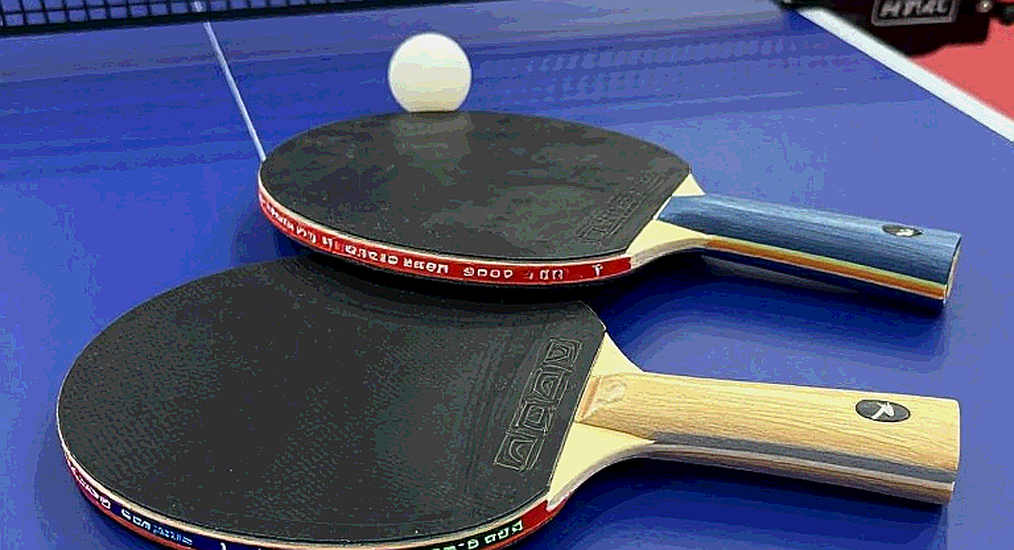
Modern table tennis is a system compressed to its limit. A 40mm ball, games to 11 points, serve changing every two points, one 60-second timeout per player for the whole match. Those numbers create a brutal temporal structure: a small gap in footwork rhythm is enough to flip the entire match. At professional level, ball speed after a forehand loop can exceed 100 km/h, yet what decides victory is the moment of contact, where the margin is a few hundredths of a second.
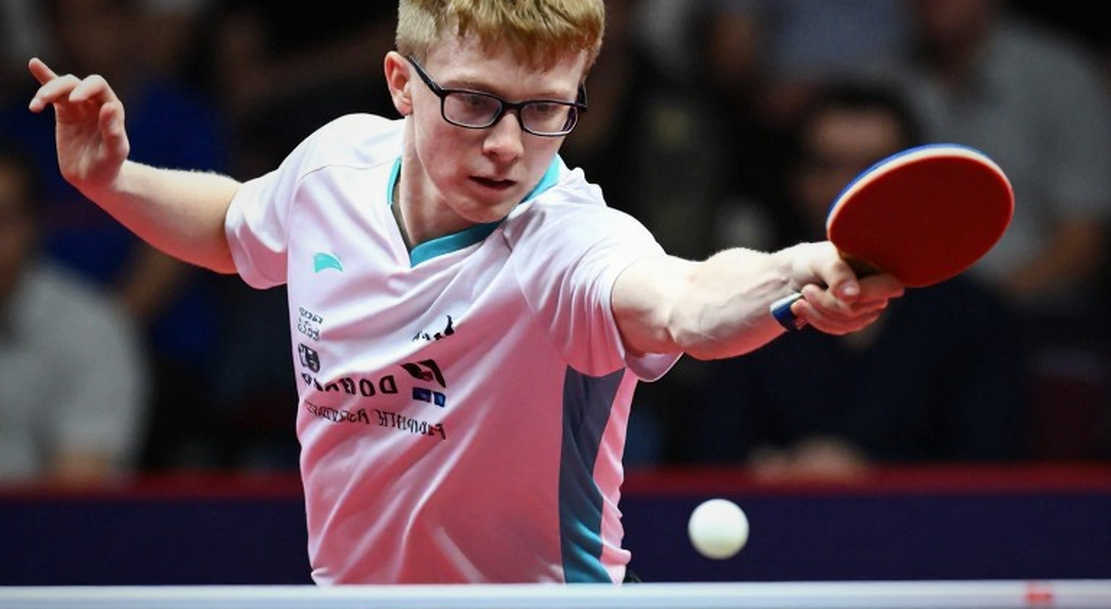
The competition system has changed too. Since WTT was created, the calendar is denser, ITTF ranking points are tied tightly to how many events a player enters, and knockout rounds have become a test of psychological endurance rather than technique alone. I follow WTT Finals, WTT Champions, and China's domestic events, where a national-team spot is harder to earn than an Olympic berth. A player can be a world champion and still have to survive an internal qualifier to reach an international event.
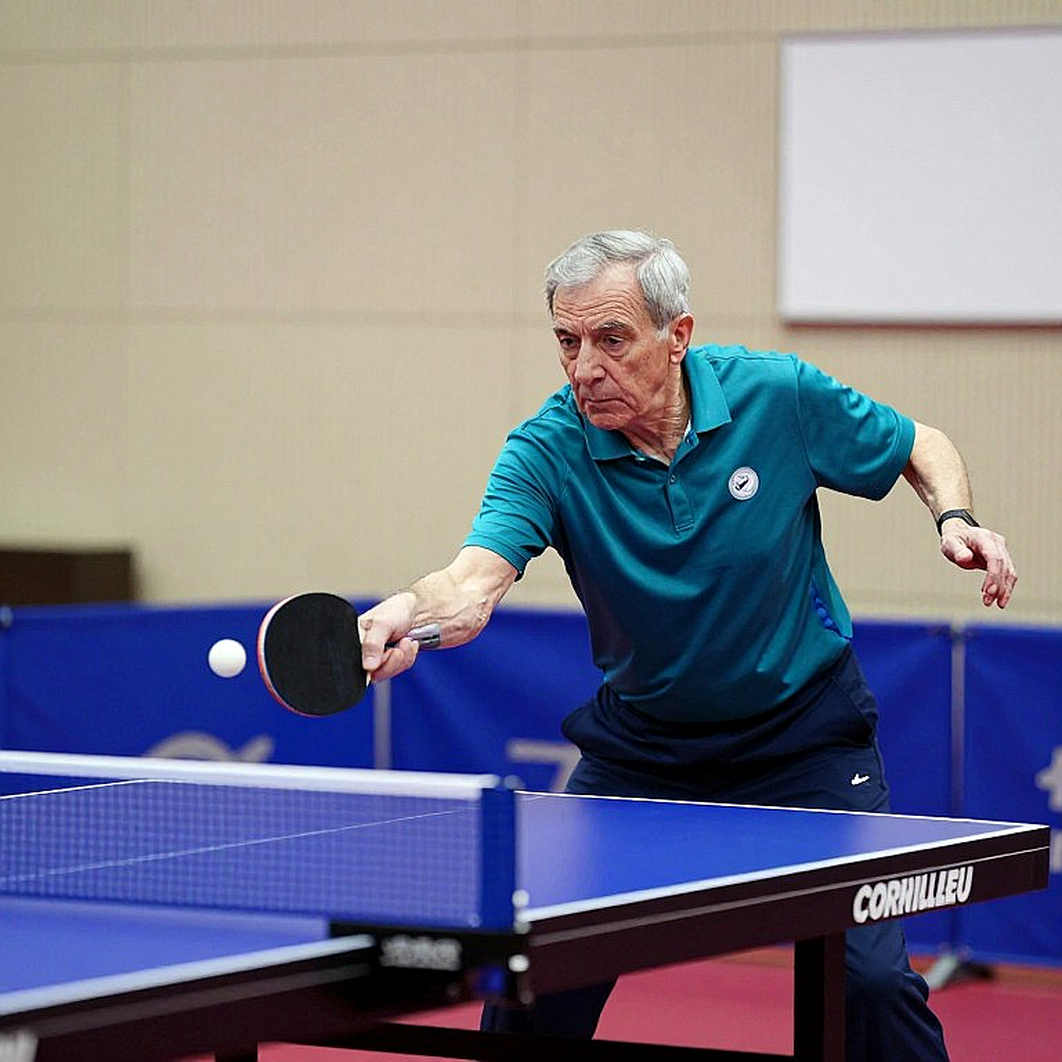
What draws my attention is not the scoreboard but how teams build a buffer zone around the athlete: personal coaches, analysts, camera operators, and practice sessions that simulate opponents with programmable ball machines. Table tennis has become a sport where most of the work of winning happens before the ball is ever tossed.
In every analysis I write, I set aside about a hundred words to describe the communication channel between coach and player. Some coaches say one short sentence after each game, some use hand signals, and some stay entirely silent. At one match played without spectators, I counted a coach shouting seven times toward his player within a single game, and each time the player's footwork quickened a little. Those signals never appear on the scoreboard, but they are part of the match.
In Vietnam, table tennis has a broad grassroots base but few places on the big international stage; that distance lies in the development system and in hours of top-level competition, not in enthusiasm. Vietnamese fans follow WTT events through online platforms, and what they lack is not passion but data.
When I analyse a table tennis match, I divide it into nine layers, and any of them can decide the result.
The technical and tactical layer is the most visible. The forehand loop, the backhand block, the topspin and backspin serve, the lateral step and the crossover step. But I focus on a metric rarely discussed: the effectiveness of moving into the table. At the highest level, the winner is usually the one who controls placement near the net, forcing the opponent to lift the ball, then finishes with a loop from close range. The scoreboard does not show this; only a map of contact positions reveals who is squeezing whom. I once redrew a quarterfinal and found that the winner took only 38 percent of points in short rallies but won 71 percent of rallies lasting beyond four exchanges. That player's tactic lay in pulling the opponent out of the comfort zone, not in raw loop power.
The player-data layer is where intuition becomes evidence. A player can beat one opponent and lose to another, and the reason usually lies in the matchup structure rather than form. I use two benchmarks: away win rate and win rate at deciding points, meaning points from 9-9 onward. These two numbers reveal a player's composure more clearly than any ranking. At the 2026 WTT Finals in Fukuoka, Wang Chuqin beat Tomokazu Harimoto 4-0 in the men's singles final. Looking at the score, one assumes an easy match. Yet Harimoto's win rate in long rallies across the tournament was not low at all, and it was the ability to shut down those rallies at mid-game points that created the gap.
The event-system layer determines the value of each match. A WTT Champions title, a world championships berth, a place in the team event: each carries a different weight in the Olympic cycle. How many ranking points can be defended, how many are lost after each event, and which part of the year is the window for accumulating points: that is the arithmetic coaching staffs run months ahead. Some players choose to enter few big events to preserve fitness, and some are forced to play a heavy schedule to hold their position. That choice directly shapes the draw at subsequent events.
In the team event, the data layer grows more complex because the pair must be counted too. A player strong in singles can be weak when paired with someone else, because footwork rhythm and court coverage overlap. Teams often test many pairings at smaller events before locking one for a major, and that decision is often more important than individual form.
The competitive-landscape layer is the story of China and the rest of the world. China still holds most of the top-10 places in both men's and women's singles, but the gap in the lower ranks is narrowing. Names such as Truls Moregard of Sweden, Hugo Calderano of Brazil, and Tomokazu Harimoto of Japan are no longer comfortable opponents; they are complete training systems with academies, domestic leagues and their own analytics staff. What stands out is the depth of the youth ranks: academies in Europe and Japan are producing 15-to-17-year-olds who can trade blows with senior national-team mainstays. At some junior events, the win rate of non-Chinese players against same-age Chinese players has risen markedly compared with a decade ago.
The rules and governance layer draws little fan attention but has direct impact. Serve rules, racket-material regulations, how ranking points are calculated, selection criteria for event entries: every change creates winners and losers. A tweak to point calculation can cost a player who competes often a place to someone who focuses on a few majors. When selection criteria shift from pure numbers to coaching-staff judgement, controversy appears at once, because form cannot be measured by a single number.
The coaching and talent-pipeline layer is the root. China has a sports-school system, a national youth competition and a closed selection loop. Japan, Germany and Sweden run a different model: locally rooted clubs, strong national championships, and player movement between countries. Conversion efficiency from youth ranks to the senior team is the metric that decides a nation's long-term strength. A country can produce many junior champions, but if conversion is low, senior-level results will not keep pace.
The risk layer includes wrist, shoulder and knee injuries, the joints that an enormous training load wears down over the years. Selection pressure, internal competition and public opinion are real risks too. In some national teams, a young player breaking out and then falling back within a season is not rare, and the cause is usually a combination of minor injury, technical change and expectations rising too fast.
The public-narrative and expectation layer is where the story is most distorted. Fans tend to attach a player to an emotional symbol, then measure every result against that symbol. When a player loses, public opinion blames willpower and rarely blames structure. But looking at the data, most defeats at the highest level come from small changes in footwork rhythm and contact timing, things that cannot be fixed with words of encouragement.
The industry-transmission layer comes last: from equipment, youth development, events, clubs, to media and the commercial value of players. A new blade, a new rubber, or a new tournament all flow back into how children learn table tennis in local towns. When a star emerges, the number of children signing up for table tennis lessons in that star's hometown typically rises within a year, and that is a transmission metric no ranking records.
The biggest blind spot in how table tennis is read today is the belief that power and spin decide everything. Media favours high-speed loops and blazing counter-loop exchanges because they create images. But most points at world level come from unglamorous rallies: a short push that forces the opponent to lift the ball, a serve that breaks the rhythm, a footwork step half a beat late. Spectators remember the loop; winners remember the placement.
Another blind spot is how deadlock is narrated. When two players are evenly matched, the match slides into long exchanges, the score crawls point by point, the crowd grows bored and calls it a lack of ideas. In reality, deadlock is a state in which both are storing force, waiting for a small deviation. I once analysed a match in which two players kept an identical serve structure for four straight games. When I redrew it, I saw clearly that each was waiting for the other to open a new variation. That boredom is a form of time control, not a drain of ideas.
A third blind spot lies in our habit of blaming psychology when a player loses a deciding point. At this level, psychology rarely separates from technique. When the wrist tires, the ball path shortens; when the ball path shortens, options narrow; when options narrow, decisions slow. What spectators call losing composure is usually a chain of physical attrition accumulated from earlier games.
And here is where I want to linger: we measure table tennis by what is easy to see, while what decides it lies in the space between two people. The gap is not on the diagram; it sits between people.
At the next match I follow, I will not count loops. I will count the silence before each serve at 9-9, measure how long a player stands still after losing a point, and note who breaks the structure first. If those numbers repeat across many matches, we will have a different way of reading table tennis, one where victory is decided in a gap that no one scores. The gap is not on the diagram; it sits between people.